
Inner thighs are the underrated supporting actors of your lower body. They don’t get the glamorous “mirror muscles” attention,
but they’re working hard every time you walk, run, cut side-to-side, climb stairs, or keep your knees from doing the awkward
“caving in” thing during squats.
Quick reality check before we jump in: “toning” isn’t a magical setting you switch on like airplane mode. What most people mean
by toned thighs is stronger muscles + better muscle definitionwhich usually comes from smart strength training,
consistent movement, and a routine that supports overall health. You can’t spot-reduce fat from one area, but you can absolutely
build strong adductors (inner thigh muscles), improve leg shape, and feel more stable and athletic.
This guide gives you 10 inner thigh (adductor) exercises you can do at home or in a gym, with form tips,
modifications, and a simple plan to use them. No circus tricks requiredunless you count balancing on one leg while your brain
screams, “Why are we like this?”
Why Inner Thigh Strength Matters (Beyond Looks)
Your inner thighs (the hip adductors) help pull your legs toward the midline, stabilize your pelvis, and support your knees and hips.
Strong adductors can help you move better laterally (think: sports, dancing, hiking on uneven ground) and may reduce the chance of
groin tweaks when you’re activeespecially if you warm up and progress gradually.
- Better knee tracking during squats, lunges, and jumps
- More hip stability for running, cutting, and changing direction
- Improved balance and lower-body control
- Stronger “side-to-side” movement, not just forward/back
Before You Start: The 90-Second Warm-Up
Inner thigh work can feel “surprising” if you haven’t trained it much. Do this quick warm-up first:
- March in place (20–30 seconds)
- Bodyweight good mornings (10 reps)
- Hip circles (5 each direction per side)
- Side steps (10 steps each way)
If you have sharp pain, a recent injury, or ongoing hip/groin issues, get guidance from a qualified clinician or coach.
During training, you should feel effort and muscle burnnot stabbing pain or a “pulling” sensation that gets worse.
The 10 Best Inner Thigh Exercises
For each move, you’ll get: what it targets, how to do it, and how to scale it up or down.
Pick 3–5 exercises per workout depending on your time and equipment.
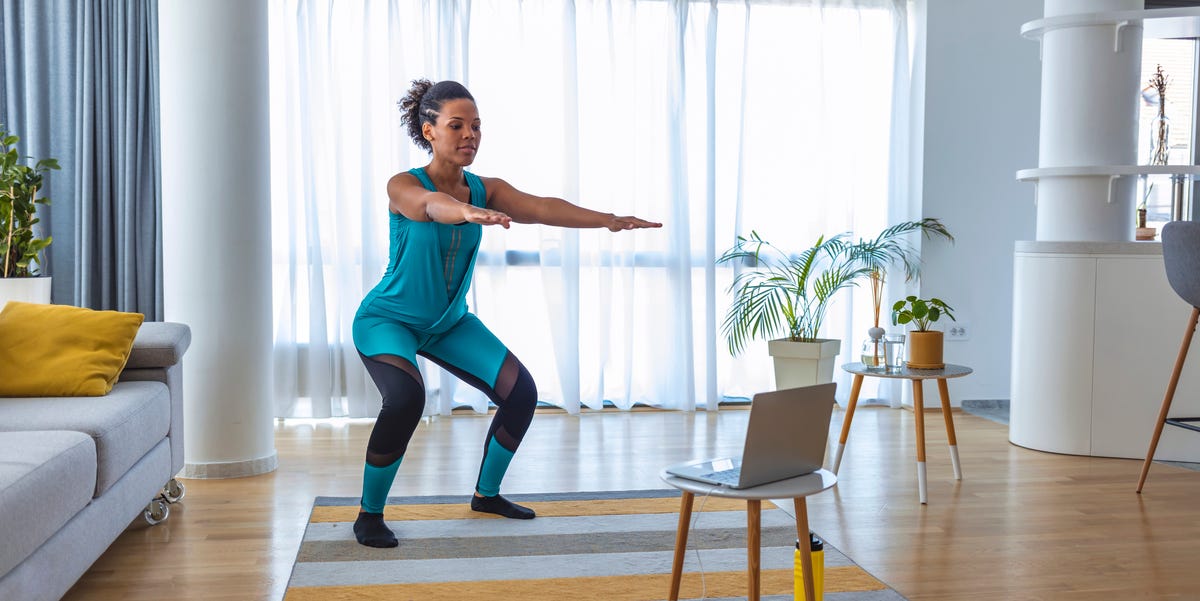
1) Sumo Squat (Wide-Stance Squat)
Targets: Adductors, glutes, quads, core
A wider stance shifts more demand to the inner thighs while still training the big leg muscles.
Think “strong legs,” not “how low can I go while panicking.”
- Stand wider than hip-width. Toes slightly turned out.
- Brace your core like you’re about to laugh at a bad joke.
- Sit your hips down and back. Keep knees tracking over toes.
- Drive through your feet to stand tall and squeeze glutes at the top.
Common mistake: Knees collapsing inward. Push them gently out as you lower.
Make it easier: Reduce depth or hold onto a sturdy surface.
Make it harder: Hold a dumbbell/kettlebell (goblet style) or add a slow 3-second lower.
2) Lateral Lunge (Side Lunge)
Targets: Adductors (especially the straight leg), glutes, quads
This is one of the most direct “inner thigh meets real life” movementsbecause life is rarely straight lines.
- Stand tall, feet hip-width.
- Step your right foot out wide and sit into your right hip.
- Keep the left leg straighter and the left foot planted.
- Push off the right foot to return to center. Repeat both sides.
Form cue: Keep your chest proud and spine long; don’t fold like a lawn chair.
Make it easier: Shorter step and smaller range of motion.
Make it harder: Hold weights or turn it into a lateral lunge with a knee drive.
3) Cossack Squat (Deep Side Squat)
Targets: Adductors, glutes, ankle/hip mobility, core
This is a deeper, mobility-friendly cousin of the lateral lunge. It’s also a humbling reminder that joints have opinions.
- Take a wide stance.
- Shift into one side, bending that knee while the other leg stays straighter.
- Keep the heel down if possible; toes may turn up on the straight leg.
- Drive back to center and switch sides.
Make it easier: Don’t go as deep; hold onto a support.
Make it harder: Add a goblet hold or pause 2 seconds at the bottom.
4) Side-Lying Hip Adduction (Inner Thigh Lift)
Targets: Adductors (isolation), hip control
Simple, effective, and deceptively spicy. If you’re thinking, “This looks too easy,” your inner thigh is about to disagree.
- Lie on your side. Bottom leg straight, top leg bent with foot on the floor in front.
- Lift the bottom leg up slowly 6–10 inches.
- Lower with control. Repeat, then switch sides.
Make it easier: Smaller lift and fewer reps.
Make it harder: Add an ankle weight or slow down the lowering phase.
5) Copenhagen Plank (Adductor Plank)
Targets: Adductors, obliques, shoulders, full-body stability
This is the “boss level” adductor exercise. Start with easier variations and work up.
- Side plank setup: forearm on the floor, body in a straight line.
- Place your top leg on a bench/chair (knee or shin supported is easier than ankle).
- Lift hips and hold. Keep shoulders stacked and core braced.
Make it easier: Support on the knee (short lever), or keep the bottom knee on the floor.
Make it harder: Support at the ankle (long lever) or add small controlled hip dips.
6) Glute Bridge + Adductor Squeeze (Pillow or Ball)
Targets: Adductors, glutes, hamstrings, core
This one trains inner thighs while teaching your hips to extendgreat for posture and athletic power.
Bonus: you can do it while pretending the pillow owes you money.
- Lie on your back, knees bent, feet flat.
- Place a pillow or small ball between your knees.
- Squeeze gently, then lift into a bridge (hips up, ribs down).
- Lower with control. Keep squeezing the whole time.
Make it easier: Smaller bridge range.
Make it harder: Hold the top for 3 seconds or do single-leg bridges (without losing the squeeze).
7) Standing Hip Adduction (Band or Cable)
Targets: Adductors, hip stability
Great if you want a clean, joint-friendly way to directly train the inner thighespecially in a gym with a cable stack,
or at home with a resistance band.
- Anchor a band low (or use an ankle strap on a cable).
- Stand tall holding onto a stable support.
- Move your working leg across your body in a smooth arc.
- Control the returndon’t let the band fling you like a cartoon character.
Make it easier: Lighter band and smaller range.
Make it harder: Pause 1 second at the “across” position or slow the return.
8) Sliding Adductor Lunge (Towel/Slider)
Targets: Adductors (eccentric control), glutes, core
This is a top-tier move for controlled strength. It also reveals whether your floors are truly “slide-friendly.”
- Stand with one foot on a towel/slider (smooth surface).
- Shift weight into the planted leg as the sliding foot moves out to the side.
- Keep hips back and torso stable.
- Use inner thigh + glute strength to pull the leg back in.
Make it easier: Smaller slide distance.
Make it harder: Hold a weight or slow the “slide out” to 3 seconds.
9) Lateral Step-Up (Side Step-Up)
Targets: Adductors (stabilization), glutes, quads, balance
Most step-ups are forward. This one goes sideways and challenges your hip and knee control in a different plane.
- Stand beside a sturdy step/box.
- Place the inside foot on the step and drive up to stand.
- Control the lower back down. Repeat, then switch sides.
Make it easier: Use a lower step and hold a rail/wall for balance.
Make it harder: Add a knee drive at the top or hold dumbbells.
10) Skater Hops (Lateral Bounds)
Targets: Adductors/abductors (dynamic control), glutes, calves, coordination
This is your athletic finisher: powerful side-to-side movement that demands stability.
If you’re new to impact, start slow and keep hops small.
- Stand on one leg, slight bend in the knee.
- Hop gently to the other side and land softly on the opposite leg.
- Keep your knee aligned over your foot; control the landing.
- Continue side-to-side like a speed skater (minus the ice, plus the living-room rug).
Make it easier: Step side-to-side instead of hopping.
Make it harder: Bigger bounds or add a brief pause on the landing.
How to Put These Into a Simple Weekly Plan
You don’t need all 10 exercises in one day (unless your hobby is limping dramatically). Aim for
2 lower-body strength sessions per week, and plug in inner thigh work as part of a balanced leg routine.
Beginner Inner Thigh Routine (2x/week)
- Sumo Squat 2–3 sets of 8–12 reps
- Lateral Lunge 2 sets of 8–10 reps per side
- Glute Bridge + Adductor Squeeze 2 sets of 10–15 reps
- Side-Lying Hip Adduction 2 sets of 12–15 reps per side
Intermediate Routine (2–3x/week)
- Cossack Squat 3 sets of 6–10 reps per side
- Sliding Adductor Lunge 3 sets of 6–10 reps per side
- Copenhagen Plank (scaled) 2–3 holds of 15–30 seconds per side
- Standing Hip Adduction 2–3 sets of 10–15 reps per side
- Skater Hops (optional finisher) 2 sets of 20–30 seconds
Progression tip: When you can complete the top end of the rep range with good form,
increase resistance slightly (heavier weight, thicker band) or add a set.
Form Fixes That Make Inner Thigh Work Actually Work
- Slow down the lowering (eccentric). Inner thighs respond well to control.
- Own the knee alignment. Track knee over toes; don’t let it cave.
- Brace your core. A stable trunk helps hips do their job.
- Use pain as information. Muscle burn is fine; sharp pain is a stop sign.
Common Questions (Because Everyone Asks)
How long until I notice results?
Many people notice improved strength, stability, and “I feel more solid on my feet” within a few weeks of consistent training.
Visible changes typically take longer and depend on training consistency, recovery, and overall activity habits. The win you can count on:
your legs will get stronger and movement will feel better.
Do I need a hip adduction machine?
Nope. Machines can be convenient, but bodyweight, bands, sliders, and lateral lunges train inner thighs extremely well.
If you do use a machine, keep the motion controlled and avoid slamming through reps.
Should I stretch inner thighs every day?
Gentle mobility work can feel good, especially after training. But strength matters toomany “tight” feelings improve when the area
gets stronger and more coordinated. A balanced approach (warm-up + strength + light stretching) tends to work best.
Extra: Real-World Experiences and What People Usually Notice (500+ Words)
People often start inner thigh training for a very specific reasonmaybe they want their legs to feel firmer, or they’ve noticed
their knees wobble during squats, or they play a sport where quick side-to-side movement matters. What’s interesting is that the
most noticeable changes are often performance changes first, not appearance changes.
One common experience is the “Wait… my inner thighs can get sore?” moment. If you’ve mostly done straight-line workouts (like basic
treadmill walking or standard squats only), your adductors might not have been challenged much through lateral movement or direct
strengthening. After a first session with lateral lunges, sliding adductor lunges, or a Copenhagen plank variation, it’s normal to
feel soreness in places you didn’t realize were on the guest list. The key is not to panic-sprint into a brand-new intense routine.
People who do best usually start with a small dosetwo exercises, two setsthen build from there.
Another frequent “aha” is how inner thigh training improves stability. For example, someone might notice that their
squat feels smoother because their knees track more consistently, or that they can step down stairs with more control. Athletes often
describe feeling more confident cutting to the side, especially when they practice lateral step-ups and skater hops with controlled landings.
Even non-athletespeople who just want everyday strengthreport that carrying groceries, walking on uneven pavement, or climbing a few
flights of stairs feels less shaky.
People also learn quickly that inner thigh work is not just “inner thigh.” Many of these exercises are sneaky full-body moves. A properly
braced sumo squat lights up inner thighs, sure, but it also demands core stability and glute strength. The Copenhagen plank is famous for
making people realize their shoulders and obliques have entered the chat. And the sliding adductor lunge? That one teaches control, balance,
and patiencebecause if you rush it, your foot may slide farther than your dignity wanted.
A very practical experience is discovering personal “best moves.” Some people love lateral lunges but can’t stand side-lying adduction.
Others feel the exact opposite: they prefer isolated work because it helps them focus and build confidence without juggling balance.
The best routine is the one you’ll actually repeat. If you hate an exercise, you don’t have to force itswap it for another on the list
that hits the same muscles. The goal is consistent, quality effort over time.
Finally, there’s the mindset shift many people report: training inner thighs stops being about chasing a specific look and becomes about
feeling capable. When you notice you can hold a Copenhagen plank longer than last month, or you can perform a deeper cossack squat without
wobbling, that’s tangible progress you can measure. And in a world full of quick fixes, measurable strength gains are refreshingly honest:
you put in the work, your body adapts, and everyday movement gets easier.
Conclusion
If you want stronger, more “toned” thighs, focus on what your inner thighs were designed to do: stabilize your hips, support your knees,
and help you move powerfully side-to-side. Choose a handful of the exercises above, train them consistently, progress slowly, and keep your
form clean. Your future selfwalking, running, lifting, playing, livingwill thank you.