30 Coolest Answers To “What Perks Did You Enjoy As A Kid Because Of Your Parents’ Job?” From A Viral Twitter Thread

Note: This article is an original, paraphrased, web-ready synthesis inspired by public discussion around the viral Twitter/X prompt, broader workplace-family research, and common U.S. employee perk examples. No original tweet text is reproduced.
Every family has a secret economy. Some kids grew up with birthday money from grandparents. Some had a cousin who always “knew a guy.” And some, thanks to their parents’ jobs, enjoyed perks so oddly specific that they sound like deleted scenes from a sitcom: free airline seats, unlimited printer paper, backstage theater access, theme park visits, restaurant leftovers, library privileges, museum sleepovers, and the occasional ability to wander through an empty school like the world’s smallest principal.
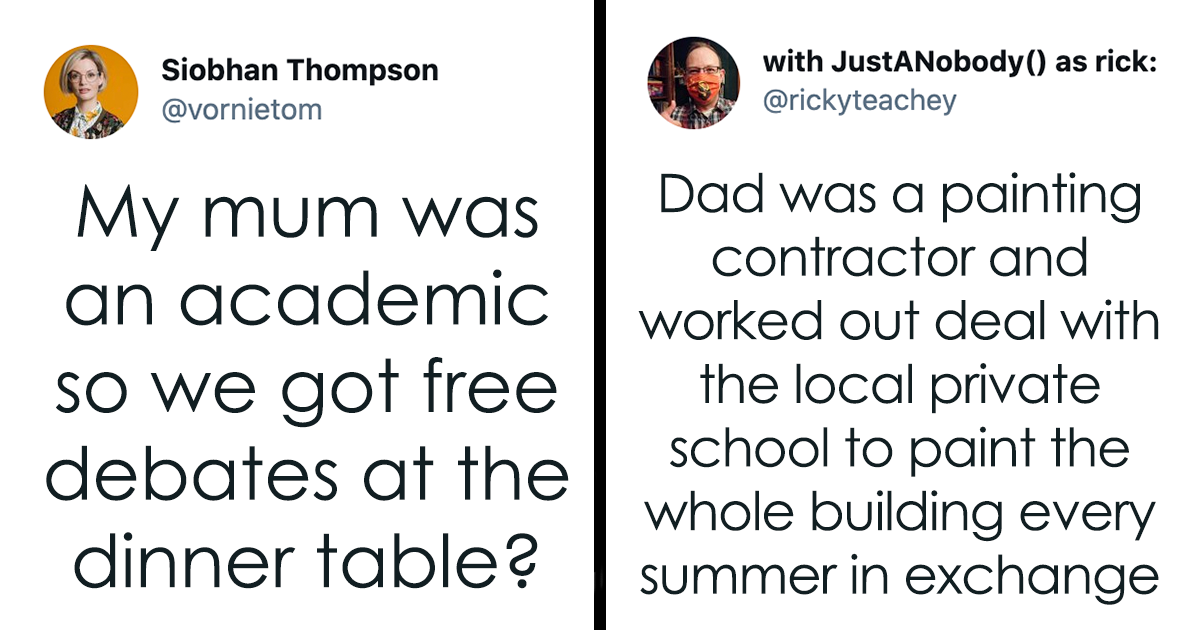
That is why the viral Twitter thread asking, “What perks did you enjoy as a kid because of your parents’ job?” struck such a big nostalgic nerve. It was not just about free stuff. It was about the strange little bonuses that came from living near an adult’s working life. To a child, a parent’s workplace can feel like a magic portal. To adults, it may be an office, a shop, a campus, a hangar, a kitchen, or a hospital. To a kid, it can be a kingdom with vending machines.
Below is a freshly written, SEO-friendly look at the 30 coolest types of answers people shared or could instantly recognize from that kind of thread. Some perks were glamorous. Some were wonderfully ordinary. All of them prove that childhood memories do not always come from expensive vacations. Sometimes they come from a parent bringing home cardboard boxes and saying, “Go build something.”
Why This Viral Twitter Thread Felt So Relatable
The question worked because it was simple, specific, and emotionally loaded. “What perks did you enjoy as a kid because of your parents’ job?” invites people to remember two things at once: the job their parent did and the way that job quietly shaped family life.
For many people, the “perk” was not luxurious in the adult sense. It was not stock options or dental insurance. It was riding in the back of a delivery truck, getting the good scraps from a bakery, watching a movie before everyone else, or having access to office supplies that made a rainy Saturday feel like an art residency. A grown-up may see leftover stationery. A child sees a comic book empire waiting to happen.
The thread also revealed how children interpret work differently. Kids rarely understand salary bands, corporate ladders, or PTO policies. They understand smells, sounds, access, and rituals. The smell of a restaurant kitchen. The squeak of a gym floor after hours. The quiet stacks of a library. The hum of a print shop. The soft thrill of being somewhere most people are not allowed to be.
30 Coolest Perks Kids Enjoyed Because Of Their Parents’ Jobs
1. Free or discounted airline travel
Children of airline employees often had the ultimate bragging right: standby flights. It was not always glamorous, because standby travel can mean waiting, changing plans, and learning patience at Gate B17. But when it worked, it meant surprise trips, family visits, and the occasional seat upgrade that made regular economy feel like sitting inside a lunchbox.
2. Theme park admission
Kids whose parents worked at amusement parks, resorts, or entertainment companies sometimes got discounted or complimentary admission. Imagine being the child who could say, “We might go to the park this weekend,” the way other kids said, “We might clean the garage.” That is a powerful form of playground currency.
3. Restaurant meals and kitchen treats
Restaurant-worker kids often remembered free meals, staff discounts, or the sacred ritual of bringing home leftovers. A parent who worked in a pizza place, diner, bakery, or sandwich shop could turn an ordinary weeknight into a feast. It also made those kids unusually serious judges of fries.
4. Unlimited paper, pens, and office supplies
Office supply perks may sound boring until you hand a kid a stack of printer paper, highlighters, binders, discarded folders, and sticky notes. Suddenly, they are running a school, a detective agency, a newspaper, and a suspiciously inefficient bank from the living room floor.
5. Library access and first pick of books
Children of librarians often enjoyed early exposure to books, quiet corners, reading programs, and sometimes discarded copies. That kind of perk can shape a lifetime. Free snacks disappear. A habit of reading can stick around long enough to become a personality trait.
6. College tuition discounts
For families connected to universities, dependent tuition benefits were among the most meaningful perks. A kid may not appreciate it at age seven, but by senior year of high school, tuition assistance starts looking less like a perk and more like a financial superhero cape.
7. Behind-the-scenes theater access
Parents who worked in theaters, concert halls, or performing arts centers gave their children a peek behind the curtain. The glamour was not just the show. It was seeing costumes, lighting rigs, rehearsals, prop tables, and the strange truth that magic often comes with gaffer tape.
8. Movie theater screenings and popcorn
Movie theater kids sometimes got free tickets, early screenings, or discounted concessions. The popcorn alone deserves its own retirement plan. Growing up near a cinema meant learning that the real smell of happiness is butter-flavored and slightly unreasonable.
9. Sports arena access
If a parent worked at a stadium, gym, rink, or arena, kids might enjoy empty courts, cheap tickets, team events, or a chance to see athletes up close. Even sweeping seats after a game could feel exciting when the scoreboard was still glowing.
10. Zoo or aquarium experiences
Children of zoo, aquarium, or animal-care workers sometimes got behind-the-scenes glimpses of animals most visitors only saw from a distance. Not every kid gets to casually mention feeding time, animal enrichment, or the fact that penguins have more attitude than expected.
11. Museum access
Museum-worker families often enjoyed free admission, exhibit previews, educational events, and quiet time in galleries. For a child, having a museum feel familiar can make history, science, and art less intimidating. Dinosaurs become neighbors. Paintings become old friends.
12. Bakery leftovers
A parent working in a bakery could turn day-old pastries into treasure. Cookies, rolls, donuts, bread, and cakes that could no longer be sold still had one very important destination: a child with zero complaints and excellent chewing skills.
13. Farm-fresh food
Kids from farming families often had access to fresh eggs, fruit, vegetables, dairy, or meat. They may also have had chores that were absolutely not optional. The perk came with work, but so did a deep understanding of where food really comes from.
14. Hardware store treasures
Children of hardware store employees or contractors often grew up with wood scraps, paint samples, nails, tools, and odd materials for projects. Give a child leftover lumber and you may get a birdhouse, a sword, or a structure that violates several local building codes.
15. Fire station visits
Kids with firefighter parents often remembered station visits, fire trucks, helmets, and community events. The perk was partly cool equipment and partly pride. Not many parents can point to a giant red truck and say, “That’s where I work.”
16. Police, EMT, or public safety stories
Children of first responders often grew up with access to public safety events, tours, and a strong sense of service. The stories could be exciting, but they also taught responsibility, caution, and respect for difficult jobs.
17. Hospital cafeteria adventures
Healthcare-worker kids sometimes remembered hospital cafeterias, vending machines, ID badges, and long hallways. It may not sound glamorous, but to a child, a badge scanner is basically a spaceship control panel.
18. Teacher-parent school privileges
If your parent worked at your school, you may have had early access to classrooms, supply closets, gym equipment, or the playground before anyone else arrived. Of course, the downside was that you could not get away with anything. Surveillance level: parent.
19. Summer camp discounts
Parents working in recreation centers, schools, camps, or youth programs sometimes got discounted childcare or activity access. For kids, that meant swimming, crafts, games, field trips, and the annual mystery of why every camp song is impossible to forget.
20. Music store or instrument access
A parent in a music shop, school band program, recording studio, or church music role could open the door to instruments and lessons. Even if the child only learned three guitar chords, those three chords were probably played with heroic confidence.
21. Print shop scraps and banners
Print shops produced one of the most underrated childhood perks: giant paper. Kids could draw posters, banners, maps, fake movie ads, and murals. A roll of scrap paper could transform a hallway into an art gallery with very questionable spelling.
22. Hotel pool access
Children of hotel workers sometimes remembered swimming pools, breakfast buffets, or family rates. To adults, a hotel is lodging. To kids, it is a building where pancakes, elevators, tiny soaps, and chlorine live together in harmony.
23. Grocery store discounts
Retail and grocery jobs could bring home practical perks: discounts, special employee sales, or occasional product samples. It may not beat a roller coaster, but discounted snacks have built many happy childhood afternoons.
24. Tech gadgets and early computer access
Children of engineers, IT workers, or office technicians often grew up around computers, cables, software, and retired devices. Some became tech-savvy early. Others mostly learned how to unplug things and create household panic.
25. Radio station or media swag
Media-worker kids could end up with promotional shirts, concert tickets, CDs, posters, or studio visits. They also learned that a microphone makes everyone feel important, even when they are only announcing that lunch is ready.
26. Airline, hotel, or travel industry upgrades
Beyond flights, travel-industry families sometimes enjoyed hotel discounts, rental deals, lounge access, or last-minute trips. The catch was flexibility. The reward was a childhood map full of places visited because a seat happened to open.
27. Factory seconds and product samples
Parents who worked in manufacturing, food production, clothing, cosmetics, or consumer goods sometimes brought home samples or slightly imperfect products. Children rarely care if a cookie is misshapen. In fact, a weird cookie has character.
28. Access to empty buildings
Some of the best answers involved empty spaces: skating rinks after hours, school gyms, theaters before shows, offices on weekends, or stores before opening. An empty workplace can become a private universe when you are young enough to run without embarrassment.
29. Professional knowledge at home
Not every perk was physical. Some children got homework help from teachers, science explanations from researchers, financial lessons from accountants, repair skills from mechanics, or medical vocabulary from nurses. That kind of knowledge can quietly become confidence.
30. Time with a parent in their world
The coolest perk may have been the simplest: seeing a parent as a capable adult outside the house. Watching a parent fix, teach, fly, cook, design, care, build, lead, or solve problems can change the way a child sees them forever.
The Real Reason These Childhood Perks Matter
The funniest answers in the viral thread were about snacks, free flights, theme parks, and forbidden office supplies. But underneath the humor is a bigger idea: children remember proximity. They remember being allowed into a parent’s world.
That is one reason “Take Your Child to Work” style programs have remained popular in the United States. They turn work into something visible. Children see that jobs are not abstract adult obligations. They are places where people solve problems, cooperate, handle stress, follow rules, and sometimes drink terrible break-room coffee with the determination of Olympic athletes.
These experiences can also help kids imagine future careers. A child who visits a laboratory may become curious about science. A child who watches a chef work may learn that food is both art and logistics. A child who sees a parent manage customers may develop respect for patience, service, and the heroic ability to smile while someone complains about coupons.
Of course, not all jobs come with fun extras. Many parents work long hours, stressful shifts, or roles without family-friendly benefits. That makes the happy stories even more interesting. They show how families often create meaning from whatever access they have. A parent may not have free tickets or tuition discounts, but they may bring home stories, skills, tools, or a sense of pride.
What These Perks Reveal About Work, Family, And Memory
Kids value access more than luxury
Adults measure benefits in dollars. Children measure them in access. A free trip is wonderful, but so is being allowed behind a counter, inside a booth, past a locked door, or into a room labeled “Employees Only.” The thrill is not always the value of the item. It is the feeling of being included.
Small perks can become big memories
A stack of scrap paper, a free cookie, or a quiet hour in an empty gym can become a core memory. Childhood has a strange way of enlarging small things. That is why people can forget expensive gifts but remember the exact smell of their parent’s workplace.
Workplace culture spills into family life
Parents bring parts of work home, whether they mean to or not. Sometimes that means stress. Sometimes it means free stationery. Sometimes it means a child grows up understanding airplanes, classrooms, restaurants, or hospitals better than their peers. Jobs shape family routines, conversations, schedules, and even imagination.
Why The Internet Loves Questions Like This
The internet can be noisy, but nostalgia questions often cut through the chaos. They are easy to answer, fun to read, and surprisingly revealing. People love comparing childhood oddities because those details feel personal without being too private.
This particular question also creates instant variety. One person remembers riding in police cars during community events. Another remembers bakery boxes. Another remembers tuition help. Another remembers a parent bringing home outdated office equipment that became the centerpiece of an imaginary newsroom. The answers are different, but the emotional pattern is the same: “My parent’s job gave me a tiny doorway into a bigger world.”
There is also a delightful unfairness to some of the stories. A kid whose parent worked for an airline may have seen multiple countries before learning long division. A kid whose parent worked in a candy factory may have had enough sweets to become a neighborhood legend. Meanwhile, other kids were excited because their parent brought home bubble wrap. And honestly, bubble wrap still holds up.
Extra Reflections: Growing Up Around A Parent’s Job
When people talk about childhood perks from parents’ jobs, they often focus on the “cool” part first. That makes sense. Free flights, backstage passes, and theme park tickets are easy to romanticize. But the most lasting experiences are often more layered. A child does not just receive a perk; they absorb an atmosphere.
For example, a kid whose parent works in a restaurant may remember free meals, but they may also remember speed, noise, teamwork, and the controlled chaos of a dinner rush. They learn that food does not magically appear. Someone preps it, cooks it, plates it, serves it, cleans up after it, and does all of that while pretending not to be tired. That child may grow up tipping better because they know the ballet happening behind the kitchen door.
A child of a teacher may enjoy extra classroom access, but they also see how much work happens after the final bell. They notice papers being graded at the dining table, lesson plans spreading across Sunday afternoons, and school supplies purchased out of personal money. The perk may be using the laminator. The lesson is dedication.
A child of an airline worker may remember travel, but they also learn uncertainty. Standby flying is an adventure with a built-in plot twist. Will there be seats? Will the family make the connection? Will everyone end up eating airport pretzels for dinner? That kind of childhood can teach flexibility, patience, and the strange art of packing light.
Children of healthcare workers may get cafeteria visits or badge-based access, yet they also sense seriousness. Hospitals are full of people having hard days. Growing up near that environment can make a child more aware of care, privacy, exhaustion, and compassion. The same is true for children of first responders, who may feel pride mixed with worry.
Then there are the quiet trades: mechanics, electricians, carpenters, plumbers, printers, delivery drivers, warehouse workers, farmers, clerks, custodians, and countless others. Their children may not receive flashy perks, but they often inherit practical knowledge. They know how to fix things, organize things, reuse things, and respect the people who keep everyday life functioning. A cardboard box from a warehouse can become a spaceship. A broken appliance can become a lesson. A parent’s calloused hands can become a symbol of love.
That is why the viral thread feels bigger than a funny list. It reminds readers that work is not separate from family life. Work leaves fingerprints on childhood. Sometimes those fingerprints are made of powdered sugar, printer ink, sawdust, jet fuel, library dust, or popcorn butter. Sometimes they are made of sacrifice. Either way, they become part of the story kids tell later.
The best perk, in the end, may not be the free thing at all. It may be the chance to see a parent as someone skilled, needed, and respected. For a child, that can be more memorable than any discount.
Conclusion
The viral question about childhood perks from parents’ jobs became popular because it unlocked a sweet, funny, and deeply human category of memory. These stories are not just about free stuff. They are about access, pride, imagination, and the small privileges that made ordinary childhood feel extraordinary.
Whether the perk was flying standby, eating bakery leftovers, roaming an empty school, visiting a museum after hours, using endless printer paper, or simply watching a parent do meaningful work, the emotional core is the same. Children remember when they were invited into a grown-up world and allowed to feel like insiders.
And if your parent’s job never came with free flights or theme park tickets, do not worry. There is still a good chance you got something valuable from it: resilience, humor, work ethic, practical skills, or the lifelong ability to appreciate a really good office pen.