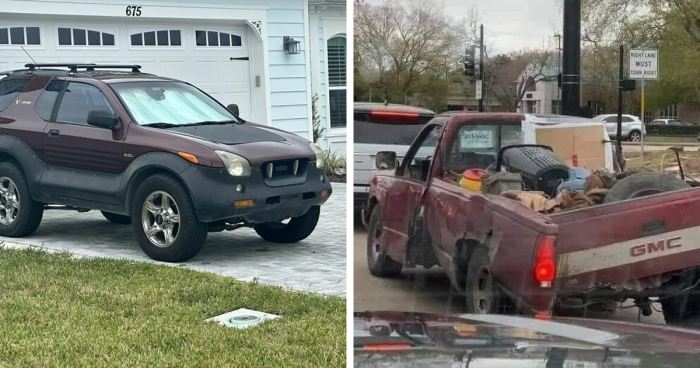

Every so often, the automotive world gets bored with making sensible sedans, practical SUVs, and pickup trucks that look like pickup trucks. Then someone in a conference room stands up, points at a napkin sketch, and says, “What if we built this?” That is how we got some of the most ridiculous cars ever made: convertible SUVs, three-wheeled commuter pods, fake luxury compacts, amphibious optimism machines, and vehicles shaped like appliances that had a very emotional week.
To be fair, many weird cars were not lazy mistakes. Some were bold experiments. Some predicted trends before buyers were ready. Some were practical in ways that were hidden under a very questionable face. And some were simply bad ideas wearing hubcaps. This list looks at 30 ridiculous cars that people actually approved, funded, engineered, marketed, sold, and in many cases defended with a straight face.
Why Ridiculous Cars Keep Happening
Ridiculous cars happen because automakers are always chasing the next big category. Before crossovers became normal, companies tried strange wagon-SUV hybrids. Before lifestyle trucks became popular, brands experimented with pickup-roadster mashups. Before electric vehicles became mainstream, designers imagined cars that looked as if they had escaped from a low-budget science-fiction movie.
The problem is simple: a car can be creative and still be deeply confusing. Buyers may admire courage, but they still need doors that make sense, visibility that does not require prayer, cargo space that holds actual cargo, and styling that does not frighten pets.
30 Ridiculous Cars That Somehow Made It Past The Meeting
1. Pontiac Aztek
The Pontiac Aztek is the official mascot of “what were they thinking?” It was meant to be an adventurous crossover for active young buyers, complete with available camping accessories. Unfortunately, it looked like several design proposals were stapled together during a power outage. The funny part? Its basic idea was ahead of its time. The tragic part? Its face arrived first.
2. Nissan Murano CrossCabriolet
Nissan looked at a comfortable midsize crossover and asked, “What if this had two doors and no fixed roof?” The result was a tall, soft-top convertible SUV with all-wheel drive and a luxury price tag. It was unique, yes. It was also the kind of unique that makes people pause in parking lots and whisper, “Is that factory?”
3. Chrysler PT Cruiser
The PT Cruiser was a retro-styled compact wagon with 1930s attitude and early-2000s plastics. It sold well at first because it was affordable, roomy, and different. Then the novelty wore off, rental lots filled up, and the car became a rolling punchline. Still, it deserves credit for proving that Americans would buy weird if weird came with cup holders.
4. Chevrolet SSR
The Chevrolet SSR tried to be a pickup, a convertible, a hot rod, and a daily driver all at once. That is a lot of jobs for one vehicle, especially one with a retractable hardtop and a bed that looked more ready for golf clubs than lumber. Later versions gained more power, but the concept remained wonderfully absurd.
5. Plymouth Prowler
The Plymouth Prowler looked like a factory-built street rod, which sounds amazing until you remember that street rods are supposed to feel rebellious, not committee-approved. It had dramatic open front wheels, wild colors, and a V6 instead of the V8 many buyers expected. It was both cool and frustrating, like ordering a cheeseburger and receiving a sculpture of one.
6. AMC Gremlin
The AMC Gremlin looked as if someone designed a normal compact car and then deleted the rear with a meat cleaver. Introduced on April Fool’s Day, it had a name that literally meant mechanical trouble. Somehow, it worked. It was cheap, distinctive, and timed well for an era of rising fuel concerns. Ridiculous? Absolutely. Stupid? Not entirely.
7. AMC Pacer
The AMC Pacer was marketed as futuristic, roomy, and friendly. It also had so much glass that passengers appeared to be riding inside a fishbowl. The Pacer was wide, round, odd, and unforgettable. It did offer clever packaging, but its styling became its permanent identity. Some cars age like wine. The Pacer aged like a lava lamp.
8. Ford Edsel
The Edsel was supposed to be Ford’s grand new division, the answer to a market that Ford believed was hungry for another medium-priced brand. Instead, it became one of the most famous product flops in American history. Its grille became legendary for all the wrong reasons, and the timing was miserable. The Edsel did not just miss the target; it arrived after the target had gone home.
9. Ford Pinto
The Ford Pinto was intended to be an affordable compact for a changing market. Its legacy, however, is dominated by fuel-tank controversy and safety criticism. Many Pintos served ordinary transportation duty, but the name became shorthand for disastrous engineering decisions. When a car becomes a punchline in safety conversations, the brochure has lost the argument.
10. Yugo GV
The Yugo entered the American market as extremely cheap transportation. Unfortunately, “cheap” became its entire personality. It was slow, basic, flimsy, and often mocked as one of the worst cars sold in the United States. Still, it had a strange honesty: no one accused the Yugo of pretending to be fancy. It was an economy car with no illusions and very little sound insulation.
11. DeLorean DMC-12
The DeLorean had stainless-steel body panels, gullwing doors, and styling by a master designer. That should have been enough to make it a legend. Then buyers discovered that it was expensive, underpowered, and not quite the exotic sports car its looks promised. Pop culture saved it. Without a certain movie time machine, it might have been remembered mostly as a shiny disappointment with excellent doors.
12. Hummer H2
The Hummer H2 was huge, aggressive, thirsty, and proud of it. It turned military-inspired styling into suburban theater. For some buyers, that was the point. For critics, it represented excess on wheels. It was less a vehicle than a declaration shouted through a chrome megaphone. Subtlety was not available, even as an option.
13. Fiat Multipla
The Fiat Multipla is famous for looking like two cars stacked during a panic. But here is the twist: it was genuinely practical. Six seats, clever interior space, and a compact footprint made it useful. The exterior, however, looked like it had been designed by a committee of aquarium fish. The Multipla is proof that a brilliant layout can still lose the beauty contest by several counties.
14. Renault Avantime
The Renault Avantime tried to combine a minivan, coupe, luxury car, and grand tourer. Its huge doors needed special hinges, its shape defied easy explanation, and its target customer was apparently “someone whose children moved out but whose minivan feelings remained unresolved.” It was creative, brave, and commercially doomed.
15. BMW Isetta
The BMW Isetta is adorable now, but imagine seeing one in serious traffic. This tiny bubble car had a front-opening door and microcar proportions that made it look like a refrigerator with a steering wheel. In postwar Europe, it made economic sense. In modern traffic, it looks like the answer to a question asked by a very optimistic toaster.
16. Amphicar Model 770
The Amphicar promised to be both car and boat. That sounds magical until you realize it was not especially good at being either. On land, it was slow. On water, it was also slow, but wetter. Still, the idea remains irresistible. Every owner became the captain of a traffic jam and the driver of a bathtub.
17. Peel P50
The Peel P50 is one of the smallest production cars ever built. It had one seat, tiny wheels, and the general presence of a motorized suitcase. It was designed for extreme urban minimalism, which is respectable. But as transportation, it requires a driver with confidence, humor, and no need to bring home groceries larger than a sandwich.
18. Reliant Robin
The Reliant Robin had three wheels, lightweight construction, and a loyal following. It also became famous for looking deeply unstable, especially in pop culture. Three-wheelers can make sense for cost and efficiency, but the Robin’s single front wheel gave it a cartoonish reputation. It is beloved, mocked, and somehow both feelings are correct.
19. Subaru 360
The Subaru 360 was tiny, light, and charming in Japan. In the United States, surrounded by large American cars, it looked like a soap bubble trying to commute through a bowling alley. Its modest power and minimal structure made it a hard sell. Subaru eventually built a strong American reputation, but the 360 was not the smoothest hello.
20. Subaru Baja
The Subaru Baja was a car-truck-wagon thing with all-wheel drive and a small open bed. It was quirky and practical for certain people, but it confused mainstream buyers. Was it a pickup? A lifestyle wagon? A tiny adventure mullet? Today it has a cult following, but when new, it was a niche inside a niche wearing plastic body cladding.
21. Lincoln Blackwood
The Lincoln Blackwood was a luxury pickup with a carpeted, trunk-like cargo area and styling that suggested it wanted to haul antique furniture but only if the weather was polite. It was too fancy for truck work and too strange for luxury buyers. The idea of a premium pickup was not wrong, but the execution forgot that pickups need to do pickup things.
22. Cadillac Cimarron
The Cadillac Cimarron was supposed to help Cadillac compete with smaller luxury imports. Instead, it looked and felt too much like a dressed-up economy car. Buyers noticed. A badge can add prestige, but it cannot magically turn a modest compact into a world-class luxury sedan. The Cimarron was a tuxedo printed on a T-shirt.
23. Chevrolet HHR
The Chevrolet HHR followed the retro-wagon path after the PT Cruiser had already made the neighborhood weird. It had useful space and decent practicality, but the styling felt like a sequel made after the joke had peaked. It was not terrible; it was just late to a costume party where everyone else had changed back into normal clothes.
24. Nissan Juke
The Nissan Juke was small, sporty, and visually fearless. Its bug-eye lighting and bulging shape made it one of the most polarizing crossovers ever sold. Some people loved its personality. Others thought it looked startled. The Juke deserves credit for being memorable in a segment often filled with automotive oatmeal.
25. Smart Fortwo
The Smart Fortwo made perfect sense in crowded European cities. In much of America, it looked like half a car that had escaped from a valet stand. It was easy to park and efficient, but highway driving demanded bravery. It was a city solution sold in a country where many people consider “nearby” to mean 25 miles away.
26. Toyota Mirai, First Generation
The first Toyota Mirai was an important hydrogen fuel-cell experiment wrapped in deeply unusual styling. Toyota deserves credit for pushing clean technology, but the early Mirai looked like the future had been assembled from air vents. Limited fueling infrastructure made it even harder to sell. It was clever science wearing a very complicated face.
27. Aston Martin Cygnet
The Aston Martin Cygnet was basically a tiny city car given luxury trim and an Aston badge. It existed partly to help with fleet emissions goals, but to casual observers it looked like James Bond had been assigned a shopping cart. Rare? Yes. Fascinating? Definitely. Ridiculous? With hand-stitched leather.
28. Dodge Nitro
The Dodge Nitro looked tough, upright, and ready to intimidate a grocery store. Unfortunately, its styling wrote checks its road manners struggled to cash. It represented an era when blocky SUV attitude sometimes mattered more than refinement. The Nitro was the automotive equivalent of wearing sunglasses indoors.
29. GMC Envoy XUV
The GMC Envoy XUV had a sliding roof over the cargo area, turning an SUV into a sort of enclosed pickup when needed. It was clever in theory, complicated in practice, and not something many buyers were begging for. Sometimes solving a problem no one has creates a new problem called “inventory.”
30. Tesla Cybertruck
The Tesla Cybertruck may be the most recent proof that ridiculous cars are not extinct. With stainless-steel panels, sharp angles, wild performance, and a shape that looks downloaded from a video game before the textures loaded, it is impossible to ignore. Supporters call it revolutionary. Critics point to polarizing design and repeated recalls. Either way, it has already earned a permanent parking space in the museum of automotive arguments.
What These Ridiculous Cars Teach Us
The funniest thing about ridiculous cars is that they are often built from one good idea stretched too far. The Aztek understood outdoor lifestyle buyers before crossovers dominated America. The Multipla understood interior packaging. The Baja understood that some drivers wanted a car-like pickup. The Cybertruck understands that electric trucks do not have to look like regular trucks. The problem usually appears when one clever idea becomes the whole personality of the vehicle.
Design matters because cars are emotional purchases. People may say they buy only for reliability, mileage, safety, and value, but then they name their cars, wash them on weekends, and take offense when someone insults the taillights. A car can be practical, but if it looks like a kitchen appliance that joined a gym, buyers may hesitate.
Marketing also matters. A strange car needs a clear explanation. The more unusual the vehicle, the faster buyers need to understand why it exists. “Convertible crossover” sounds fun for about six seconds, then people start asking about rear visibility, trunk space, roof repairs, winter weather, and whether their neighbors will hold meetings.
of Real-World Experience: Living With Automotive Weirdness
Spending time around ridiculous cars teaches you something that spec sheets cannot: weird vehicles create conversations. Park a beige crossover at a gas station and nobody cares. Park a Pontiac Aztek, DeLorean, Prowler, Multipla, or Cybertruck, and suddenly strangers become automotive philosophers. Some will laugh. Some will defend it. Some will say, “My uncle had one,” which is the beginning of every great parking-lot story.
The experience of owning or even riding in a strange car is not always about excellence. It is about personality. A normal car disappears into daily life. A ridiculous car turns every errand into a tiny parade. You become aware of people looking. You learn which jokes are coming before they say them. You discover that children are often more honest than adults. A child will point at a Fiat Multipla and ask, “Why does it look like that?” An adult will pretend not to stare, then take a photo from behind a gas pump.
There is also a special pride in loving the unloved. Owners of oddball cars often know exactly what the critics say, and they enjoy the car anyway. That is part of the charm. The Subaru Baja owner knows the bed is small. The Smart Fortwo owner knows highway trucks look enormous. The Prowler owner knows everyone wanted a V8. The DeLorean owner knows the car became famous for a fictional flux capacitor, not lap times. None of this ruins the fun. In many cases, it creates the fun.
Ridiculous cars also reveal how unpredictable automotive taste can be. A design mocked in one decade can become collectible in another. Cars that once seemed embarrassing can return as nostalgic icons because they remind people of a bolder, stranger time. The market eventually gets bored with perfection. Perfect cars are useful, but flawed cars are memorable. Nobody tells a dramatic story about a flawlessly average sedan that started every morning and offended nobody.
From a driver’s perspective, the best weird cars are the ones that deliver a clear reward. Maybe the reward is clever seating, tiny size, open-air driving, shocking acceleration, or simply the joy of owning something different. The worst weird cars are the ones that make daily life harder without giving enough personality back. A strange vehicle must pay rent in smiles.
That is why ridiculous cars continue to matter. They are proof that the auto industry still takes risks, even when those risks occasionally leave tire marks across common sense. Without bad ideas, we might not get brilliant ones. Without awkward experiments, we might never discover new categories. Today’s crossover, electric truck, compact adventure vehicle, or city EV may owe a small debt to yesterday’s rolling punchline.
So yes, laugh at these cars. They deserve it. But also appreciate them. Every ridiculous car on this list made the road a little less boring. In a world of safe choices and copy-paste styling, that counts for something.
Conclusion
The 30 ridiculous cars above prove that automotive history is not just a parade of elegant classics and engineering masterpieces. It is also full of strange bets, awkward shapes, bold experiments, and ideas that sounded much better in the conference room than on the showroom floor. Some failed because they were ugly. Some failed because they were expensive. Some failed because buyers simply did not know what to do with them.
But ridiculous does not always mean worthless. Many of these cars gained cult followings because they dared to be different. They gave drivers stories, collectors conversation pieces, and the rest of us something to laugh about during traffic. Sensible cars move people. Ridiculous cars move opinions.
Note: This HTML body is written for web publishing, with clean structure, natural keyword usage, and no unnecessary citation placeholders or source-code explanations.