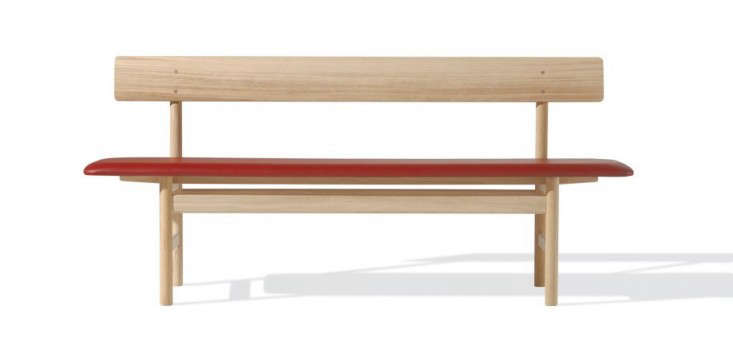

The 3171 Bench by Børge Mogensen is the kind of furniture that does not shout for attention, perform tricks, or demand its own spotlight. It simply stands there looking sensible, beautifully proportioned, and suspiciously confident. Designed in 1956 for Fredericia, this Danish modern bench combines a solid-wood structure, an upholstered seat, and an elegantly restrained backrest. Nothing appears unnecessary, yet nothing important is missing.
That balance explains why the Mogensen 3171 Bench still feels relevant decades after its introduction. It works as dining furniture, hallway seating, a quiet architectural feature, or a practical place where guests can settle in without navigating a forest of individual chair legs. More importantly, it represents Mogensen’s belief that good furniture should serve everyday life rather than behave like an untouchable museum exhibit.
What Is the Børge Mogensen 3171 Bench?
The 3171 is a backed dining bench designed by Danish furniture architect Børge Mogensen and produced by Fredericia. The original design dates to 1956, a particularly productive period in Mogensen’s career and near the beginning of his long relationship with the manufacturer.
Its official dimensions are approximately 67.5 inches long, 19.1 inches deep, and 30.3 inches high, with a seat height of about 18.1 inches. In metric measurements, that is 171.5 centimeters wide, 48.5 centimeters deep, and 77 centimeters high, with a 46-centimeter seat height. The proportions make it compatible with many standard dining tables while preserving a visually light profile.
The frame is made from solid wood, typically oak in a selection of finishes. A single piece of solid wood forms the broad backrest, while the upholstered seat uses a supportive core with foam beneath fabric or leather. The result feels more comfortable than a bare wooden bench without becoming visually heavy like a small sofa that accidentally wandered into the dining room.
Børge Mogensen and the Idea of Furniture for Real Life
Børge Mogensen was born in Aalborg, Denmark, in 1914. He first trained as a cabinetmaker before studying furniture design and architecture in Copenhagen. This combination of practical workshop experience and architectural education shaped his entire career. Mogensen understood how wood behaved, how joints carried weight, and how furniture interacted with the human body.
He studied under Kaare Klint, a central figure in modern Danish furniture design. Klint encouraged his students to analyze historic furniture types, human measurements, construction methods, and patterns of daily use. Rather than inventing strange shapes simply to look original, designers were expected to improve proven forms through careful observation.
“`
From FDB Møbler to Fredericia
In 1942, Mogensen became head of the design studio at FDB Møbler, a Danish cooperative that sought to provide well-made, affordable furniture for ordinary households. During this period, he developed a reputation for simple wooden pieces that could be manufactured efficiently and used for many years.
After opening his own studio in 1950, Mogensen gained greater freedom to explore craftsmanship, natural materials, and robust construction. In 1955, he began collaborating closely with Fredericia and its owner, Andreas Graversen. The partnership produced many designs now associated with Mogensen’s mature style: plainspoken forms, generous proportions, exposed structures, and materials intended to improve with age.
The 3171 Bench appeared one year into that relationship. It captures the moment when Mogensen’s democratic ideals met Fredericia’s cabinetmaking expertise. It was practical enough for family dining but refined enough for carefully designed interiors.
“`
The Design Anatomy of the 3171 Bench
“`
A Long Horizontal Silhouette
The first thing people notice is the bench’s strong horizontal composition. The upholstered seat extends beyond the supporting frame at both ends, producing a gentle visual lift. Above it, the solid-wood backrest repeats the same long line. These two horizontal planes are connected by restrained vertical supports and round legs.
This arrangement gives the 3171 Bench architectural clarity. You can immediately understand what supports what. There are no decorative panels hiding the structure and no sculptural gymnastics asking visitors to admire the designer’s cleverness. The bench looks calm because every component has a visible job.
A Backrest Carved for Comfort
The back is made from a substantial single piece of solid wood. Its softened edges and subtle shaping prevent it from feeling like an ordinary plank attached to two posts. Although the backrest is visually simple, its height and angle provide useful support during dining, conversation, or the traditional post-dinner debate over who gets the final piece of pie.
Round Legs and Honest Joinery
Rounded legs keep the structure from appearing severe. Horizontal stretchers reinforce the frame and create a satisfying rhythm beneath the seat. Mogensen did not treat construction as something embarrassing that needed to be hidden. Instead, the frame becomes part of the visual identity.
The contrast between the precise wooden structure and the softer upholstered seat also gives the bench personality. The wood provides order and strength; the upholstery provides warmth. Neither element attempts to overpower the other.
“`
Materials, Upholstery, and Finish Options
Modern versions of the Børge Mogensen 3171 Bench are generally offered in solid oak with finishes such as soap treatment, oil, light oil, smoked oil, or black lacquer. Availability can vary by retailer and market, but each treatment changes the personality of the same underlying design.
Soaped oak preserves a pale, natural Scandinavian appearance. It works particularly well in rooms with soft daylight, white walls, limestone, wool, and other quiet materials. Oiled oak brings out more warmth and grain contrast, making the bench feel richer and slightly more traditional. Smoked oak creates a deeper architectural presence, while black-lacquered oak emphasizes the graphic outline of the frame.
The seat may be upholstered in leather or textile. Cognac or natural leather creates a warm, familiar combination with oak and develops a visible patina over time. Black leather sharpens the silhouette and makes the bench easier to place in modern interiors. Fabric offers a broader range of textures and colors, from subtle gray wool to more expressive upholstery choices.
The seat construction includes a supportive core and foam padding. This matters because the 3171 is not merely a decorative bench placed beneath a painting. It was designed for actual sitting, including long meals and conversations that begin with dessert and somehow end with someone explaining cryptocurrency.
Comfort and Everyday Function
Dining benches can be visually attractive but physically unforgiving. A flat wooden slab may look wonderful in a photograph and feel significantly less wonderful after forty minutes. The 3171 avoids that problem with an upholstered seat, supportive height, and a proper backrest.
Its length can accommodate multiple people, depending on individual space requirements. Because there are no arms dividing the seat into fixed positions, guests can adjust naturally. This flexibility is useful for family meals, dinner parties, restaurants, libraries, reception areas, and collaborative workspaces.
The open area beneath the bench also prevents a dining setup from looking crowded. Compared with several separate chairs, one long bench reduces visual interruption. It can make a modest room feel calmer while still providing generous seating.
“`
Where the 3171 Bench Works Best
- Dining rooms: Place it along one side of a rectangular table, with chairs opposite.
- Open-plan kitchens: Use it to define the dining zone without adding a bulky visual barrier.
- Entryways: Provide comfortable seating for shoes, bags, and brief household negotiations.
- Living rooms: Position it against a wall or behind a floating sofa as an architectural accent.
- Hospitality spaces: Use it in restaurants, lounges, or waiting areas where durable communal seating is appropriate.
The 3171 is intended primarily for indoor use. Owners should resist the temptation to move it permanently onto a patio simply because oak appears outdoors in nature. Upholstery, indoor finishes, direct sunlight, rain, and dramatic temperature changes are not natural allies.
“`
How to Style the Mogensen 3171 Bench
“`
Pair It With a Substantial Dining Table
The bench has enough visual strength to accompany a solid-wood dining table without disappearing beneath it. A rectangular table with straightforward legs usually creates the most natural partnership. Leave enough clearance for people to sit down and stand comfortably.
Mix It With Individual Chairs
A dining set does not need to look as though every piece arrived in the same cardboard box. Pair the bench with spindle-back chairs, woven-seat chairs, or other Danish modern designs. Repeating the wood tone or upholstery color is often enough to make the combination feel intentional.
Use Texture Instead of Excess Decoration
The 3171 Bench responds well to natural materials: wool rugs, linen curtains, ceramic tableware, leather, stone, and unfinished or lightly finished wood. A room containing this bench rarely needs a parade of tiny decorative objects. The grain, joinery, and upholstery already provide visual interest.
Allow the Bench to Breathe
Because the design depends on proportion and negative space, avoid surrounding it with too much furniture. Its extended seat edges and open lower frame deserve to remain visible. Shoving storage baskets, folded blankets, six pairs of shoes, and a confused houseplant underneath it rather defeats the point.
“`
Authenticity, Vintage Examples, and Buying Considerations
Original and later-production examples of Mogensen benches occasionally appear through established vintage dealers and auction houses. Buyers examining a vintage 3171 should consider the frame dimensions, construction, wood species, upholstery history, manufacturer identification, provenance, and overall condition.
Reupholstery is common in older seating and is not automatically a disadvantage. A professionally restored seat may make the bench more practical for daily use. However, collectors should ask what was replaced, whether the frame was altered, and whether aggressive refinishing removed too much original material.
For current production, purchasing from an authorized Fredericia retailer provides clearer information about available finishes, upholstery grades, warranties, and lead times. Because the bench is available in multiple combinations, requesting physical wood and upholstery samples is sensible. A photograph on a bright screen cannot reliably explain how smoked oak or natural leather will behave in your dining room at 7 p.m.
“`
Measure More Than the Empty Wall
Before ordering, confirm the table height, table length, room circulation, and distance needed to pull the bench away from the table. Painter’s tape can be used to mark the bench footprint on the floor. This low-tech exercise is less glamorous than a digital rendering but surprisingly effective.
“`
Care and Long-Term Ownership
Solid wood is one of the bench’s greatest strengths. It can develop a rich patina, and some surface wear may be repairable by an experienced furniture professional. Cleaning and maintenance should always match the specific finish. Soaped, oiled, lacquered, and smoked surfaces do not necessarily require the same products.
Dust the wooden frame with a soft cloth and address spills promptly. Avoid harsh household cleaners, abrasive pads, and excessive water. Leather should be protected from prolonged direct sunlight and maintained only with products suitable for its particular type and finish. Fabric upholstery benefits from regular gentle vacuuming and quick attention to stains.
Felt glides can help protect hard floors, while maintaining stable indoor humidity reduces unnecessary movement in solid wood. The bench is durable, but it is still furniture rather than gym equipment. Standing, jumping, or balancing dramatically on the seat is best left out of the ownership experience.
Why the 3171 Bench Still Matters
The Børge Mogensen 3171 Bench remains appealing because it solves a familiar problem without tying the solution to a passing trend. People still gather around tables. They still need comfortable seating. They still appreciate furniture that can tolerate daily life while making a room feel considered.
Its restrained design also allows the materials to age honestly. Oak becomes warmer, leather develops character, and small signs of use can become part of the object rather than evidence that it should be replaced. That quality separates enduring furniture from products designed mainly to survive until the next style cycle.
Mogensen’s bench is minimalist, but not cold; sturdy, but not clumsy; refined, but not precious. It demonstrates that simplicity is not the absence of design. It is what remains after a designer has solved enough problems to remove everything unnecessary.
Living With the 3171 Bench: A Real-World Experience
The most revealing way to understand the 3171 Bench is to imagine using it through an ordinary week rather than admiring it in a perfectly lit showroom. On Monday morning, it functions as efficient breakfast seating. Two people can slide into place without moving several chairs, while the open frame keeps the dining area from feeling crowded before anyone has found the coffee.
During the day, the bench becomes surprisingly versatile. A laptop, notebook, and cup can turn one end into a temporary work spot. The supportive backrest makes this more comfortable than working from a backless bench, although proper desk seating remains preferable for long sessions. In an entryway, the seat height feels natural for putting on shoes, and the broad surface provides enough room for a bag without forcing the person next to it to perform a balancing act.
At dinner, the advantages of communal seating become clearer. Individual dining chairs establish fixed positions, while the 3171 allows people to shift slightly as guests arrive. Three closely seated diners may fit where two generously spaced diners sat earlier. Children can sit together, adults can spread out, and nobody has to solve the mystery of where to store an extra chair for the rest of the year.
The upholstered seat changes the experience substantially. It offers enough softness for a leisurely meal while maintaining a structured, upright posture. The bench does not encourage the deep lounging associated with a sofa, which is helpful when eating. Its wooden backrest feels firm, but the shaping and placement provide reassuring support rather than the sensation of leaning against construction lumber.
Visually, the bench tends to make a room feel more organized. Replacing three chair backs with one continuous line reduces clutter, particularly in an open-plan home where the dining area can be seen from the kitchen and living room. The long seat and backrest echo the lines of a dining table, creating a composition that looks intentional even when the tabletop is temporarily occupied by mail, homework, and a bowl containing one increasingly ambitious banana.
Material selection has a noticeable effect on daily experience. Pale soaped oak and light fabric create an airy atmosphere but may require more attentive stain management. Oiled oak with cognac leather feels warmer and tends to display aging as character. Black leather is visually crisp and generally practical, though dust and crumbs can be more obvious than owners might expect. The bench is elegant, but it does not possess the supernatural ability to make toast crumbs invisible.
Movement is the main practical difference between a bench and separate chairs. A long bench is heavier and may require cooperation when repositioning it. People seated in the middle may also need those at the ends to adjust when leaving the table. These are small compromises, but they matter in narrow spaces or households where everyone gets up repeatedly during meals.
Over time, the most satisfying aspect is likely to be the bench’s lack of theatricality. It does not become exhausting to look at. It accepts changing wall colors, rugs, tables, and lighting without appearing misplaced. Instead of dominating the room, it quietly improves the structure of the space. That is perhaps the most authentic Børge Mogensen experience: the furniture serves faithfully, ages visibly, and waits for the humans to provide the drama.
Conclusion
The 3171 Bench by Børge Mogensen is an enduring example of Danish modern furniture designed around real human needs. Its solid-wood frame, upholstered seat, supportive back, and balanced dimensions allow it to perform equally well as dining seating or an architectural accent. Behind its modest appearance lies careful study of construction, proportion, comfort, and everyday behavior.
For buyers seeking furniture that is practical without being ordinary, the Mogensen 3171 Bench offers a persuasive answer. It does not rely on novelty. Its appeal comes from better things: honest materials, thoughtful craftsmanship, adaptable function, and a form that still looks composed after nearly seven decades.