
Note: This article is based on current U.S. food-safety guidance from USDA/FSIS, FoodSafety.gov, CDC, university extension resources, and pork-cooking experts. It is written for web publication in standard American English.
Pork has had quite the reputation makeover. For years, many home cooks believed pork had to be cooked until it was gray, dry, and about as exciting as a cardboard coaster. That old habit came from understandable food-safety concerns, but modern guidance is clearer: pork can be safe, juicy, and even slightly pink in the center when cooked correctly.
The key phrase is “cooked correctly.” Guessing by color, cutting into the meat too early, or relying on a recipe timer alone can lead to two unhappy outcomes: undercooked pork that is unsafe to eat, or overcooked pork that requires a gallon of applesauce to forgive it. Neither is the goal.
This guide explains 4 ways to check that pork is cooked through, with the most reliable method first. You will learn how to use a meat thermometer, how to understand pork’s safe internal temperature, how to judge texture and juices, and how resting time helps finish the job. Whether you are cooking pork chops, tenderloin, ribs, roast pork, ground pork, or ham, these tips will help you serve pork that is safe, tender, and full of flavor.
Why Pork Doneness Matters
Pork needs to reach a safe internal temperature to reduce the risk of foodborne illness. The important detail is that different pork products have different temperature targets. Whole cuts such as pork chops, pork steaks, pork tenderloin, and pork roasts should reach 145°F followed by a 3-minute rest. Ground pork should reach 160°F. Leftover pork should be reheated to 165°F.
That means a thick pork chop and a pork burger should not be treated the same way. A whole pork chop has bacteria mostly on the surface, where heat reaches quickly. Ground pork is different because grinding can move bacteria throughout the meat. That is why ground pork needs a higher internal temperature.
Another important point: pork can still look a little pink at 145°F. That does not automatically mean it is undercooked. Color is a clue, not a verdict. The thermometer is the judge, jury, and tiny metal hero of your kitchen.
1. Use a Meat Thermometer: The Most Reliable Method
The best way to check that pork is cooked through is to use a meat thermometer. No amount of squinting, poking, or “my grandma always did it this way” can beat an accurate internal temperature reading. A thermometer tells you what is happening in the center of the meat, where doneness matters most.
Safe Internal Temperatures for Pork
Use these pork temperature guidelines as your starting point:
- Pork chops, pork steaks, pork tenderloin, and pork roasts: 145°F, then rest for 3 minutes.
- Fresh ham or uncooked smoked ham: 145°F, then rest for 3 minutes.
- Ground pork: 160°F.
- Leftover pork or casseroles containing pork: 165°F.
- Ribs, pork shoulder, and pork butt: safe at 145°F, but often cooked much higher, around 190°F to 205°F, for tenderness.
Notice that “safe” and “tender” are sometimes different goals. A pork shoulder may technically be safe at 145°F, but it will not be the silky pulled pork of your dreams at that point. Tougher cuts with lots of connective tissue need low, slow cooking to become tender.
How to Insert a Thermometer Correctly
For the most accurate reading, insert the thermometer into the thickest part of the pork. Keep the probe away from bone, fat, and gristle because those areas can give misleading readings. If you are checking a thin pork chop, insert the probe from the side so the tip reaches the center.
For roasts or irregular cuts, check the temperature in more than one spot. Large pieces of meat do not always cook evenly, especially if one end is thicker than the other. If the lowest reading is below the safe temperature, keep cooking.
Instant-Read vs. Leave-In Thermometers
An instant-read thermometer is great for quick checks near the end of cooking. Remove the pork from the heat briefly, insert the probe, wait for the reading, and continue cooking if needed. A leave-in probe thermometer is useful for roasts, pork loin, and thick cuts because it stays in the meat while it cooks and alerts you when the target temperature is reached.
If you cook pork often, a digital instant-read thermometer is one of the best kitchen tools you can own. It prevents dry pork, protects food safety, and keeps you from performing the awkward “cut it open and hope” routine at the dinner table.
2. Check the Thickest Part and Multiple Spots
Even when using a thermometer, where you check matters. Pork does not cook like a flat pancake unless, of course, you have committed some unusual culinary crime against a pork chop. Thick cuts, bone-in cuts, stuffed cuts, and rolled roasts can all have temperature differences from one area to another.
Why the Thickest Part Matters
The thickest part of a pork cut is usually the last area to finish cooking. If that part reaches the correct temperature, the thinner sections are typically safe as well. This is especially important for pork loin, pork tenderloin, bone-in chops, and large roasts.
For pork chops, aim for the center of the chop, avoiding the bone. For pork tenderloin, check the thickest section. For a pork roast, check the center and then test another area if the shape is uneven. For stuffed pork, the stuffing itself must also reach a safe temperature, because it absorbs juices from the meat.
Bone-In Pork Needs Extra Attention
Bone affects how heat moves through meat. Pork near the bone may cook slightly differently from the rest of the cut. That does not mean bone-in pork is difficult; it just means you should avoid pressing the thermometer directly against the bone. The bone can throw off your reading and make you think the meat is hotter or cooler than it really is.
Ground Pork Requires a Firm Temperature Target
For ground pork, the safe internal temperature is 160°F. This applies to pork burgers, meatballs, sausage patties, dumpling fillings, and meatloaf made with pork. Because bacteria can be mixed throughout ground meat, do not rely on browning alone. Ground pork can turn brown before it is fully safe, and it can also remain slightly pink after cooking depending on ingredients and cooking conditions.
When checking pork meatballs or sausage, test the center of the thickest piece. For meatloaf, insert the thermometer into the middle of the loaf. If the pork is mixed with poultry, follow the poultry temperature target of 165°F.
3. Look at Juices, Color, and Texture as Supporting Clues
Visual signs can help you understand what is happening, but they should not replace a thermometer. Think of color, juices, and texture as friendly assistants. Helpful? Yes. Fully in charge? Absolutely not.
Is Pink Pork Safe?
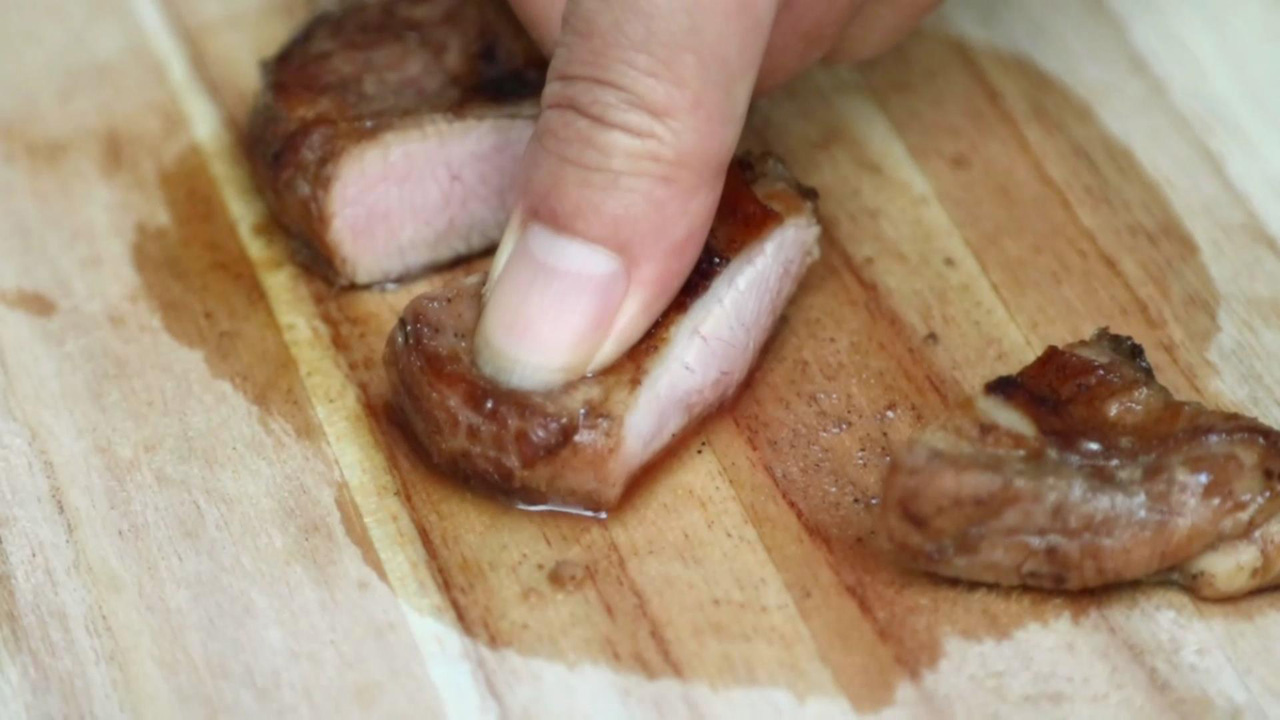
Yes, pork can be safe when slightly pink if it has reached the correct internal temperature. Whole cuts of pork cooked to 145°F and rested for 3 minutes may still have a blush of pink in the center. This is normal, especially with modern lean pork, brined pork, smoked pork, or cuts cooked quickly over high heat.
The old idea that all pork must be cooked until completely white or gray is outdated. In fact, cooking every pork chop until it is bone-dry is one reason many people think they do not like pork. They may not dislike pork; they may dislike pork that has been cooked into a kitchen eraser.
What Clear Juices Can Tell You
When pork is cooked, the juices often run clearer than they do when the meat is raw. If you cut into a pork chop and the juices are very red or blood-like, it may need more time. However, clear juices alone are not a perfect doneness test. A thermometer is still the safest way to confirm.
Also, cutting into pork too early releases moisture. If you slice a chop immediately after it leaves the pan, those juices spill onto the cutting board instead of staying in the meat. That is tragic, and frankly, the pork deserved better.
Texture and Firmness
Cooked pork becomes firmer as it heats. A raw pork chop feels soft and slippery, while cooked pork feels springier and more structured. With practice, experienced cooks can estimate doneness by touch, but this method is not reliable enough for food safety, especially for beginners.
Texture is more useful as a quality check. Pork chops and tenderloin should feel firm but not hard. Pulled pork should be tender enough to shred. Ribs should bend and show some pullback from the bone. Ground pork should lose its raw, sticky texture and become fully cooked throughout.
4. Let Pork Rest Before Serving
Resting pork is not just fancy chef behavior. It is part of the cooking process. For whole cuts of pork, the recommended rest time is 3 minutes after the meat reaches 145°F. During this time, the temperature remains steady or rises slightly, and the heat continues working through the meat.
What Resting Does
Resting allows juices to redistribute, which means the pork stays juicier when sliced. If you cut into a pork chop the second it leaves the skillet, the juices rush out. If you wait a few minutes, more of that moisture stays where it belongs: inside the meat.
Resting also helps finish the safety process for whole cuts. The combination of reaching 145°F and holding for 3 minutes is the standard for pork chops, steaks, roasts, tenderloin, and fresh ham.
How Long Should Pork Rest?
For pork chops, pork tenderloin, and smaller cuts, rest for at least 3 minutes. For larger roasts, 10 to 20 minutes may be better for juiciness and easier slicing. Cover the pork loosely with foil, but do not wrap it so tightly that the crust turns soggy.
Ground pork does not require the same 3-minute rest rule for safety once it reaches 160°F, but letting it sit briefly can still improve texture and moisture. Meatballs, pork burgers, and meatloaf all benefit from a short pause before serving.
Common Pork Cuts and How to Check Them
Pork Chops
For pork chops, check the center of the thickest part. Bone-in chops may need slightly more careful testing because meat near the bone can cook unevenly. Remove chops from the heat at 145°F, rest for 3 minutes, and do not panic if the middle is faintly pink.
Pork Tenderloin
Pork tenderloin is lean and cooks quickly, which means it can go from juicy to dry in a hurry. Use a thermometer near the end of cooking and pull it at 145°F. Rest before slicing into medallions. The result should be tender, moist, and lightly rosy in the center.
Pork Loin Roast
Pork loin roast is larger than tenderloin and benefits from even heat. Check the center of the roast and another thick area if needed. Let it rest longer than a small chop so the juices settle before carving.
Ground Pork
Cook ground pork to 160°F. This includes sausage, pork patties, pork meatballs, pork dumpling filling, and pork-based meatloaf. Browning is not enough. Use a thermometer in the center of the thickest portion.
Ribs and Pork Shoulder
Ribs and pork shoulder are special cases. They are safe before they are deliciously tender. For ribs, look for tenderness, bend, and meat pulling back slightly from the bones. For pork shoulder, cook until the meat reaches a shreddable texture, often around 195°F to 205°F. A thermometer helps, but tenderness is the real finish line for these cuts.
Mistakes to Avoid When Checking Pork Doneness
Relying Only on Cooking Time
Cooking times are estimates. Thickness, starting temperature, pan material, grill heat, oven accuracy, and bone content can all change how quickly pork cooks. A recipe may say “cook for 8 minutes,” but your pork chop does not own a watch. Check the temperature.
Cutting Into Pork Too Early
Cutting into pork to check doneness releases juices and can dry out the meat. If you must cut, do it only after checking temperature or when you have no thermometer available. Even then, understand that this method is less reliable.
Forgetting Carryover Cooking
Pork continues to cook after it leaves the heat. This is called carryover cooking. The thicker the cut, the more noticeable it can be. If you cook a pork loin roast until it is far above the target temperature before resting, it may become dry by the time it reaches the plate.
Using an Uncalibrated Thermometer
A thermometer is only helpful if it is accurate. If your thermometer has been dropped, stored carelessly, or seems suspicious, test it in ice water or boiling water according to the manufacturer’s instructions. A bad thermometer is just a confident liar with a probe.
What to Do If Pork Is Undercooked
If you slice into pork and discover it is undercooked, do not serve it and hope for the best. Return it to the heat and cook until it reaches the proper internal temperature. For chops or tenderloin slices, you can place them back in a skillet over medium heat. For a roast, return it to the oven. For ground pork, continue cooking until the center reaches 160°F.
If pork has already been sitting out for too long, food safety becomes a separate concern. Cooked pork should not be left at room temperature for more than 2 hours, or more than 1 hour if the environment is very hot. When in doubt, it is safer to discard questionable food than to gamble with your stomach.
of Real Kitchen Experience: Lessons From Checking Pork the Right Way
The biggest lesson I have learned from cooking pork is that confidence comes from temperature, not guessing. The first few times someone cooks pork chops, it is easy to hover over the pan like a nervous security guard. You flip too often, press the meat with a spatula, cut into the center, frown at the color, and then cook it “just a little longer” five separate times. By the end, the chop may be safe, but it also may have the charm of a leather wallet.
A meat thermometer changes that. Once you get used to checking the thickest part, pork becomes much less mysterious. A thick pork chop can be seared until golden, finished gently, checked at 145°F, and rested. When you slice it, the center may be slightly pink, the juices stay in the meat, and suddenly pork tastes like something you would happily make again. That moment is when many home cooks realize they were not bad at cooking pork; they were simply overcooking it out of fear.
Another useful experience is learning that every cut behaves differently. Pork tenderloin cooks quickly and rewards careful timing. Pork shoulder is the opposite. It needs patience, low heat, and enough time for connective tissue to break down. If you try to cook pork shoulder like a pork chop, you will be disappointed. If you cook pork tenderloin like pork shoulder, you may end up with something that needs a sauce, a prayer, and possibly a disguise.
Ground pork teaches a different lesson: appearance can fool you. Sausage patties and pork meatballs may brown beautifully on the outside before the center is fully cooked. That is especially true when the heat is too high. The outside races ahead while the inside lags behind like it missed the bus. Lower, steadier heat and a thermometer reading of 160°F solve the problem.
Resting time is another small habit that makes a big difference. It feels tempting to cut into pork immediately, especially when it smells amazing. But waiting a few minutes helps the juices settle. With pork chops, that short rest can be the difference between a juicy bite and a puddle on the plate. For roasts, the rest is even more important because slicing too soon can drain the meat quickly.
One practical tip is to check pork earlier than you think you need to. If a recipe says a chop will take 10 minutes, start checking around 7 or 8 minutes. You can always cook pork longer, but you cannot uncook it. That sounds obvious, but it is the golden rule of juicy pork.
Finally, trust the thermometer over the color. Slightly pink pork can be safe. Completely gray pork can still have been handled unsafely after cooking. Doneness is about temperature, rest time, and proper food handling. Once those habits become automatic, cooking pork feels less like a risk and more like a simple, satisfying kitchen win.
Conclusion
Checking that pork is cooked through does not have to be stressful. The most reliable method is to use a meat thermometer and follow the right internal temperature for the cut. Whole pork cuts such as chops, roasts, tenderloin, and fresh ham should reach 145°F and rest for 3 minutes. Ground pork should reach 160°F, while leftovers should be reheated to 165°F.
Color, juices, and texture can offer clues, but they should supportnot replacetemperature checks. A little pink in a properly cooked pork chop is not a kitchen emergency. In many cases, it is a sign that you avoided overcooking it. With the right thermometer technique, proper resting time, and a basic understanding of different pork cuts, you can serve pork that is both safe and delicious.