
If your home is “organized” but you still can’t find scissors, you’re not failing at adulthoodyour system is.
A lot of us were taught that organization is about looking tidy: matching bins, pretty labels, maybe a few
satisfying before-and-after photos for moral support. But professional organizers will tell you the same
slightly rude truth: pretty organization that fights your daily habits will lose. Every time.
The good news? You don’t need a custom closet or a pantry worthy of a cooking show. You need a setup that
matches real life: how you enter the house, what you cook on weeknights, how you get dressed on Monday
mornings, and what papers actually matter (spoiler: not that coupon from 2022).
Why “Looks Organized” Often Doesn’t Work
Pros tend to organize around routines, not vibes. The biggest difference is that routines create
rules you can follow when you’re tired, rushed, or mildly annoyed at everything. Aesthetic-only systems
ask you to be a calm, well-rested person who gently refolds sweaters at 10 p.m. That person is fictional.
So let’s talk about five spots where people commonly do it backwardsand the pro-approved fixes that make
your space easier to use, not just nicer to look at.
1) Closets: Organizing for Fantasy-You, Not Real-You
What people do wrong
Most closet chaos comes from one of these mistakes:
- Overfilling the space and expecting the door to still close politely.
- Organizing by color first (cute) instead of by type and how often you wear it (useful).
- Giving every item “equal priority” so your everyday jeans are buried behind a suit you wore once.
- Buying organizers without measuring, which is like ordering shoes without knowing your size.
How the pros fix it
A functional closet works like a small store: clear sections, easy reach, and “best sellers” up front.
Try this simple pro-style reset:
-
Pick your categories first. Example: work tops, casual tops, workout gear, jeans, dresses, outerwear.
If it’s a small closet, keep categories broadtoo many micro-groups become hard to maintain. -
Create a “Zone 1” at eye level. Put the things you reach for most (weekday basics) in the easiest spot.
Special-occasion items can live higher, lower, or further back. -
Decide what gets hung vs. folded. Sweaters and knits often do better folded so they don’t stretch.
Structure pieces (blazers, dresses) usually hang well. - Use matching hangers to reduce visual clutter and keep items from sliding off.
- Build in one “exit ramp.” Keep a donation bag or bin in the closet so cast-offs don’t pile up on the floor.
Quick example
If you work out three times a week, put workout clothes in a single section you can grab in one motion.
If you wear business casual daily, those pieces deserve the prime real estate. Your closet should reflect
your calendar, not your aspirational Pinterest board.
2) Pantries: The “Stack It Deep and Forget It” Problem
What people do wrong
Pantries usually go sideways for one simple reason: you can’t see what you have.
When items are stacked deep, duplicates multiply, food gets lost, and expiration dates quietly laugh at you.
Common missteps include:
- Storing items in tall “towers” that topple like Jenga when you remove one can of tomatoes.
- Mixing categories (“snacks” next to “baking” next to “random seasoning packet museum”).
- Buying containers before you know what you’re storing and how much space you truly have.
- Never doing a quick inventory, so you keep purchasing what you already own.
How the pros fix it
Pros aim for visibility + access. The goal is not to decant every item into a glass jar like you’re starring
in a lifestyle commercial. The goal is to stop buying your fourth cinnamon because the first three are hiding.
-
Pull everything out (yes, everything). This is how you find the ancient crackers that have become
a fascinating archaeological artifact. -
Sort by category and frequency. Examples: breakfast, snacks, baking, grains, canned goods, sauces,
dinner helpers, beverages. Put daily-use items at easy reach. -
Use “helpers” that bring items forward. Turntables for oils/sauces, tiered risers for cans,
and clear bins for packets or small snacks keep things visible. -
Keep backstock contained. Create a small bin labeled “Extras” for duplicates. When you finish ketchup,
you know exactly where the backup lives. - Label for speed, not aesthetics. Labels should help a tired human find “pasta” in two seconds, not win a font contest.
Quick example
If you pack lunches, dedicate one shelf or bin as a “lunch zone” with snacks, baggies, and quick-grab items.
That single decision can cut weekday chaos in halfand reduce the urge to buy overpriced snacks “because we’re out.”
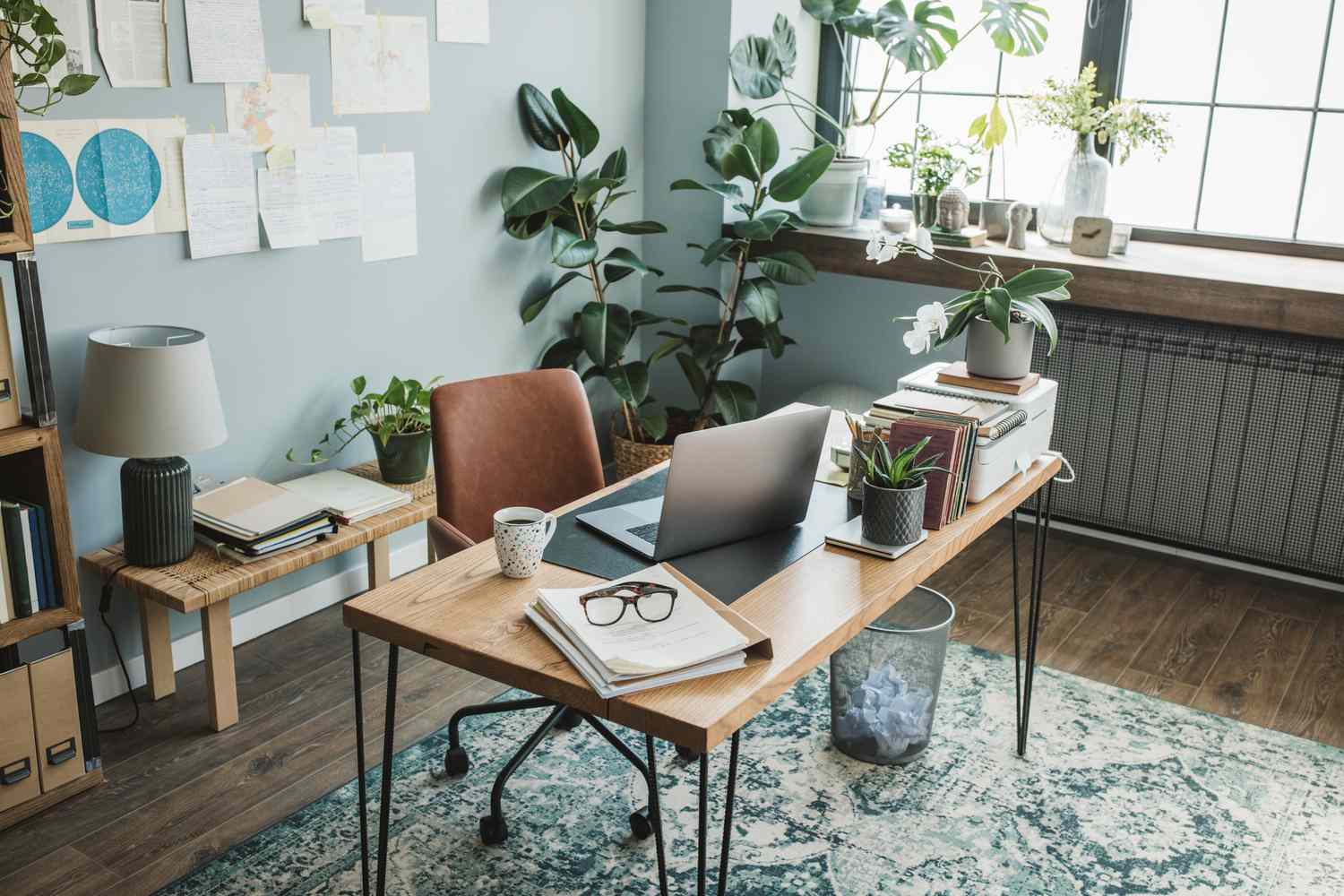
3) Home Offices: Paper Isn’t the EnemyPaper Without a System Is
What people do wrong
Many home offices become a dumping ground for “important-ish” stuff: bills, school forms, manuals, warranties,
and that one document you keep moving around because it feels adult. The usual mistakes:
- Keeping multiple piles in multiple rooms (paper goes feral when it migrates).
- Creating a filing system with 37 categories, then never using it again.
- Saving papers “just in case” without a review habit.
- Not having a consistent spot for incoming mail, so it lands wherever gravity wins.
How the pros fix it
A pro-style paper system is shockingly simple, because complicated systems collapse at the first busy week.
Here’s an approach that works for most households:
-
Create one landing spot for paper. A small tray, wall pocket, or vertical sorter near where mail enters the home
works better than spreading paper across countertops. -
Use three core categories: “Action,” “File,” and “Recycle/Shred.”
If you want one bonus folder, add “To Read” (and set a weekly date to clear it). -
Make “Action” ridiculously obvious. Bills, forms, RSVPsanything that needs attention soon belongs here.
Don’t hide it. Visibility is the point. -
Limit “File” to what matters. Think tax documents, insurance, medical records, home records, and warranties you truly need.
Many manuals can be found online, which means you may not need to store a three-inch paper booklet for your toaster. - Schedule a weekly 15-minute paper reset. Put it on your calendar like a tiny appointment with your future self.
Quick example
If you have kids, create a “School” folder in the Action section for permission slips and announcements.
That way backpacks don’t become the world’s least reliable filing cabinet.
4) Entryways: The Drop Zone That Turns Into a Disaster Zone
What people do wrong
The entryway is where your day begins and endswhich means it collects the evidence: shoes, bags, keys, coats,
packages, and the emotional baggage of the commute. Most people don’t “organize” it; they just hope it behaves.
The classic errors:
- No designated place for keys, so the “key location” becomes “wherever you last panicked.”
- Shoes scattered because there’s no simple corral for them.
- Coats and bags thrown over chairs (the chair is not a closet, even if it’s doing its best).
- Trying to store too much here, making the area feel crowded and stressful.
How the pros fix it
Pros design entryways around a single question: What do you need to do in the first 30 seconds after you walk in?
Build the space to support that moment.
- Create a tiny “landing zone.” A tray or bowl for keys and wallet. Make it the easiest place to drop them.
- Add vertical storage. Hooks for bags, backpacks, and jackets. Vertical solutions work even in small spaces.
- Contain shoes on purpose. Use a small rack, a boot tray, or a bin. Give shoes a home that’s easy to follow.
-
Keep it limited. Only store what you actually use here: daily shoes, current-season outerwear, and everyday bags.
Off-season items can live elsewhere. -
Optional upgrade: a “launch pad.” If mornings are chaos, keep a small spot for what must leave the house
(return packages, library books, forms to sign).
Quick example
If everyone drops their stuff on the same chair, don’t scold the chair. Put hooks near the chair.
The system should chase the habitnot the other way around.
5) Storage Bins: Buying Containers Instead of Solving the Problem
What people do wrong
Storage bins are helpful… until they become a closet-sized version of “I’ll deal with this later.”
Many people make the same mistakes:
- Buying bins before decluttering, then filling them with random items because the bins exist now.
- Storing mixed categories together (“holiday decor” + “old cords” + “mystery items from 2017”).
- Not labeling bins, turning your garage into a scavenger hunt with zero prizes.
- Using opaque bins for frequently needed items, so you open five containers to find one thing.
How the pros fix it
Pros treat bins as the final step, not the first. The bin is not the solution; it’s the container for the solution.
- Declutter first. Keep what you use, need, or truly love. Let the rest go.
-
Group by category and purpose. “Camping,” “Gift wrap,” “Winter coats,” “Tools,” “Memory items.”
One category per bin whenever possible. -
Choose bin types based on access. Clear bins for frequent use, opaque bins for long-term storage,
sturdy lidded bins for basements/garages where dust is a problem. - Label in plain language. Not “Misc.” Not “Stuff.” Use labels that answer: “What is this?” and “When do I need it?”
-
Store by season and frequency. Put high-use bins at eye level and front-and-center.
Rarely used items can go higher or further back.
Quick example
If you do holiday decorating every year, those bins should be easy to reach. If you use a fondue pot once a decade,
it can live in a higher, less accessible spot without ruining your daily life.
Make It Stick: The 10-Minute Maintenance Rhythm
Pros don’t magically live in perfect homesthey maintain simple systems. Try this “tiny but mighty” rhythm:
- Daily (2–3 minutes): reset the entrywayshoes in the bin, keys on the tray, bags on hooks.
- Weekly (10–15 minutes): clear the paper “Action” folder and do a quick pantry scan for backstock/expiring items.
- Monthly (20 minutes): closet editmove one donation bag out and rotate anything seasonal if needed.
If your system requires an hour a day, it’s not an organization system. It’s a second job with no paycheck.
Real-Life Experiences and Lessons (Extra )
Let’s get real for a minute: most homes don’t fall apart because people don’t own enough bins. They fall apart
because life is loud. Someone’s hungry, someone’s late, and suddenly your “system” is a pile with confidence.
Here are a few realistic scenarios that show what actually worksand why.
Experience #1: The “I’ll Remember Where I Put It” Entryway
You walk in holding groceries, your phone is sliding off your arm, and your keys are somewhere in the chaos.
In that moment, nobody thinks, “I should place these keys in my designated minimalist key bowl.”
They think, “Surface. Any surface.” The fix isn’t willpowerit’s placement.
Put the key tray where your hand naturally drops keys. If that’s the counter by the door, stop fighting it and
make that counter work: a tray, one hook, one small shoe bin. Suddenly, the entryway behaves without a lecture.
Experience #2: The Closet That’s Organized… Except on Mornings
A closet can look impressive at night and still be a mess every morning. Why? Because it wasn’t organized
around how someone gets dressed. If you’re always grabbing the same jeans, two hoodies, and one “emergency
nice top,” those items need the easiest access. The pro move is “front-load” your real routine.
Put the everyday uniform in Zone 1 and store the special-occasion pieces where they won’t steal prime space.
That change alone can make mornings fasterand your closet stays tidy because you aren’t yanking everything out.
Experience #3: The Pantry That Punishes You for Cooking
If you cook at home, your pantry takes daily hits. The pantry “organized” by height or label style tends to fail
because it ignores cooking flow. Try organizing by how you actually build meals: a pasta zone, a sauce zone,
a snack/lunch zone, a baking zone. When you can grab everything for a task from one area, you put it back faster.
The funniest part? This system often looks better, even though it was designed for function.
Experience #4: The Paper Pile That’s “Important,” Somehow
Paper becomes clutter when it doesn’t have a next step. The Action/File/Recycle system works because it forces a decision.
The lesson here is not to become a filing wizardit’s to become a decision-maker. If a paper requires action,
it goes in one place. If it’s needed long-term, it gets filed. If not, it leaves. The moment you stop letting paper
“hover,” your home office feels lighter without buying anything.
Experience #5: Storage Bins That Turn Into Time Capsules
People often use bins to avoid decisions. The bin becomes a “later” box, and later becomes never.
A better approach is to treat bins like a library: one subject per bin, labeled clearly, placed based on how often
you “check it out.” If you need gift wrap every month, it shouldn’t live behind the treadmill and three mystery totes.
When bins are organized by category and frequency, you stop rebuying duplicates and you stop dreading the garage.
The bonus lesson: if you can’t name what’s in a bin, you probably don’t need it.
In short: organization isn’t about being perfect. It’s about making your home easier to run on a normal Tuesday
the kind of day where you’re hungry, busy, and not interested in folding towels into origami.
Conclusion
If you take one thing from the pros, let it be this: organize for access and habits.
Closets work when they reflect your lifestyle. Pantries stay tidy when you can see what you own. Home offices calm down
when paper has a single path. Entryways behave when “drop zones” are designed on purpose. Storage bins help when they
store categoriesnot procrastination.
Start with one area that annoys you the most. Fix the routine. Then (and only then) add the bins, labels, and other
fun “organized” accessories. You’ll earn the pretty pictureand you’ll also be able to find the scissors.