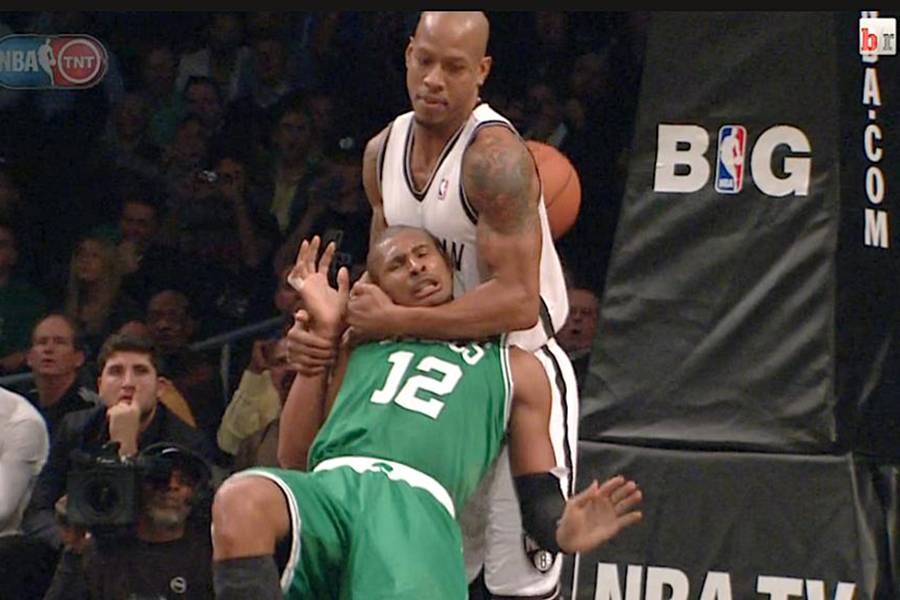

Competition is often described with polite little phrases such as “healthy rivalry,” “market dynamics,” and “may the best brand win.” Then you enter a crowded market and discover that “healthy rivalry” occasionally looks like three competitors copying your headline, undercutting your price, and suddenly becoming very interested in the same customer segment.
That is when sharp elbows can be useful.
Not dirty elbows. Not dishonest elbows. Not “let’s anonymously trash our rivals online” elbows. Those tactics usually boomerang, often with the grace of a shopping cart rolling downhill. The sharp-elbow tactics that actually work are disciplined, ethical, and strategically uncomfortable for competitors because they force everyone else to react to your strengths instead of your noise.
In competitive spaces, the goal is not to become louder than everyone else. The goal is to become harder to ignore, harder to replace, and much harder to beat at the things your best customers care about most.
What “Sharp Elbow” Competition Really Means
A sharp-elbow strategy is a move that creates pressure in the market without crossing ethical or legal lines. It makes competitors uncomfortable because it exposes a gap in their offering, weakens their assumptions, or forces them to spend more time reacting than improving.
For example, a local accounting firm does not need to claim it is “the best accounting firm in America.” That phrase is vague enough to fit on a bumper sticker and almost as useful. Instead, it could become the fastest specialist for independent contractors who need quarterly tax planning, bookkeeping support, and plain-English answers within one business day.
That is sharper. It is specific. It creates a clear customer promise. It also makes broad, slow-moving competitors look a little like they are trying to serve everyone with one oversized spoon.
The following five tactics can help a business compete more aggressively while protecting trust, margins, and long-term reputation.
1. Claim a Narrow Battlefield Before Bigger Competitors Notice
Stop Trying to Win Every Customer
One of the toughest moves in a crowded market is also one of the most effective: deliberately choosing who you are not trying to serve.
Many businesses enter competitive spaces with a buffet-style strategy. They offer something for startups, enterprises, families, students, luxury buyers, bargain hunters, and possibly people who own parrots. The result is usually bland positioning. Customers cannot tell why the business is different, and competitors do not feel threatened because they can easily match a generic message.
A sharper approach is to select a high-value segment with a clear need and build the offer around it. Rather than selling “digital marketing services,” an agency might specialize in helping multi-location dental practices improve local search visibility and appointment inquiries. Rather than launching “healthy snacks,” a food brand might focus on high-protein office snacks for busy professionals who are tired of surviving on vending-machine mysteries.
Make Your Niche Feel Like a Home Field Advantage
The point is not to make the market smaller forever. The point is to become unusually credible in one important corner of it. When customers feel that a company understands their situation, language, deadlines, and frustrations, the company stops looking interchangeable.
A useful positioning formula is:
We help [specific customer] achieve [valuable outcome] without [common frustration].
For example: “We help independent fitness studios fill trial classes without relying on confusing ad dashboards or generic marketing packages.”
That statement does more work than a long paragraph of adjectives. It tells the audience who the business serves, what problem it solves, and what pain it removes.
How to Use This Tactic
- Identify the customer group that has the strongest need and the clearest buying trigger.
- Study the frustrations competitors routinely ignore.
- Create messaging, packages, case studies, and service processes specifically for that segment.
- Use customer language instead of internal industry jargon.
- Measure whether the niche produces better conversion rates, retention, referrals, or profit margins.
Big competitors may have bigger budgets, but they often have slower decision-making, broader offers, and less patience for small-but-profitable niches. A focused company can move before the giant finishes scheduling a meeting about scheduling a meeting.
2. Win the Moments Competitors Treat as Small Details
Customers Remember Friction More Than Features
In many industries, products are similar enough that customers struggle to compare them. They may all have the same basic features, similar prices, similar promises, and suspiciously similar stock photos of people laughing at laptops.
That is why customer experience can become a sharp-elbow weapon.
Customers may not remember every feature on your pricing page, but they remember whether a sales representative replied quickly, whether onboarding was painless, whether a delivery arrived when promised, and whether a real human helped when something went wrong.
A business that removes friction at important moments can make a competitor’s ordinary service feel painfully slow. This does not require gimmicks. It requires choosing a few customer moments that truly matter and becoming excellent at them.
Choose the Moments That Affect Buying Decisions
For a software company, the critical moment may be the first seven days after signup. For a home-service company, it may be the period between booking and arrival. For an online retailer, it may be the product comparison page, shipping updates, and return process. For a consultant, it may be the speed and clarity of the first proposal.
Consider a regional home-cleaning company. Its competitors may all advertise “reliable service.” That phrase is so common it has practically moved into a retirement community. A sharper company could offer real-time arrival updates, a simple service checklist, a clear satisfaction process, and a follow-up message that asks whether the client wants recurring service.
None of these ideas are magic. Together, however, they create a smoother experience that customers notice and competitors struggle to copy consistently.
How to Use This Tactic
- Map the customer journey from first search to repeat purchase.
- Find the top three moments where customers hesitate, complain, abandon carts, or ask repetitive questions.
- Create a service standard for response time, clarity, and follow-through.
- Give employees authority to solve small problems without making customers wait for approval.
- Collect feedback after key milestones, not only after something has gone wrong.
Sharp competition often looks less like a dramatic attack and more like a company quietly becoming easier to buy from, easier to trust, and easier to recommend.
3. Use Pricing Fences Instead of Starting a Destructive Price War
Do Not Race to Become the Cheapest Option
When competitors slash prices, the natural reaction is to slash yours harder. That can feel satisfying for about five minutes, right up until the finance team starts looking at the margins like they have seen a ghost.
Price cuts can attract attention, but they also train customers to wait for discounts. Worse, they can turn a differentiated brand into a commodity. Once customers believe every option is basically the same, the cheapest one wins until nobody has enough profit left to provide a good experience.
A better sharp-elbow tactic is to use pricing fences. A pricing fence is a fair rule that gives different customers different ways to access value without giving away the entire store.
Examples include annual billing discounts, off-peak pricing, entry-level plans, bundled services, loyalty perks, limited-time packages, and premium support tiers. The key is that customers understand what they receive and why the price differs.
Make Price Match Value, Not Panic
Imagine two meal-prep companies competing in the same city. One offers a permanent 30 percent discount on everything. The other creates three clear plans: a basic weekday option, a family plan with larger portions, and a premium plan with nutrition coaching and priority delivery windows.
The first company is shouting, “Please choose us because we are cheaper!” The second is saying, “Choose the version that fits your life.” The second company has more room to protect margins, learn what customers value, and build a better long-term relationship.
How to Use This Tactic
- Create a clear entry option for price-sensitive buyers.
- Bundle higher-value services that customers find difficult to compare directly.
- Offer benefits for commitment, such as annual plans or repeat bookings.
- Use promotions with a purpose, not discounts that appear whenever the competition sneezes.
- Explain value in terms of time saved, risk reduced, convenience improved, or outcomes achieved.
Customers do not always choose the lowest price. They often choose the option that makes the decision feel safest, simplest, and most worthwhile.
4. Own the Proof Before Competitors Own the Conversation
Claims Are Cheap; Evidence Is Competitive
Every brand says it is trusted, innovative, customer-focused, and committed to excellence. By now, customers have heard these words so often that they may mentally translate them as, “We have a website.”
Sharp competitors replace vague claims with visible proof.
Proof can include customer testimonials, before-and-after examples, transparent processes, case studies, product demonstrations, response-time guarantees, certifications, public performance data, expert explainers, and clear comparison tools. The objective is not to attack competitors by name. The objective is to make your strengths easy to see.
A payroll provider, for example, could claim that it offers “excellent support.” Or it could publish its average response-time standard, explain its onboarding process, show a short demonstration of payroll setup, and share anonymous customer stories about reducing administrative headaches.
One approach asks people to believe. The other gives them reasons to believe.
Turn Your Sales Process Into a Trust Engine
Many businesses treat proof as something they add at the bottom of a landing page after the stock photos. That is a missed opportunity. Proof should show up throughout the customer journey.
It belongs in search content, social media, sales calls, proposals, product pages, onboarding emails, and renewal conversations. A strong proof system reduces buyer anxiety and gives customers an easy explanation for choosing you.
How to Use This Tactic
- List the five biggest questions or doubts customers raise before buying.
- Create one useful piece of evidence for each concern.
- Use real outcomes without exaggeration or selective storytelling.
- Make comparison information clear, fair, and easy to understand.
- Update proof regularly so it reflects current products, policies, and customer experiences.
Competitors can copy a feature. They can even mimic a slogan. It is much harder to copy a consistent body of evidence that shows why customers choose you and stay with you.
5. Build Ethical Switching Friction Through Better Workflow Value
Make Staying Easier Than Leaving
Customers should always be free to leave. But they should not feel eager to leave.
The best way to create retention is not to trap customers with confusing contracts, hidden cancellation steps, or unnecessary complexity. That kind of friction may keep people temporarily, but it also creates resentment, complaints, and a reputation that eventually catches up with the business.
Ethical switching friction comes from usefulness. Customers stay because your company has made their work easier, their information more organized, their service more personalized, or their results more reliable.
A business-to-business software provider can create value by saving customer preferences, building helpful reports, integrating with common tools, offering training resources, and assigning knowledgeable support contacts. A local retailer can create value through loyalty rewards, purchase history, useful reminders, and genuinely relevant recommendations.
The customer is not staying because the exit door is locked. The customer is staying because leaving would mean giving up convenience and confidence.
Build Relationships That Improve Over Time
The strongest customer relationships become more valuable with use. The business learns what the customer needs. The customer becomes more comfortable with the process. Service improves. Recommendations become more relevant. Both sides benefit.
This is especially powerful in crowded markets because competitors may be able to offer a similar product, but they cannot instantly recreate months or years of trust, context, service history, and well-earned familiarity.
How to Use This Tactic
- Identify useful customer data that improves service, while respecting privacy and consent.
- Create onboarding that helps customers reach a meaningful early win.
- Offer education, templates, tools, or advice that help customers get more value from their purchase.
- Reward repeat buyers with benefits that feel relevant rather than random.
- Make cancellation straightforward, then use feedback to improve why customers leave.
Retention is not glamorous. Nobody makes an action movie called The Return Customer. Yet a loyal customer base is one of the strongest defenses a company can build in a competitive market.
What Sharp Elbows Should Never Become
Competitive intensity can be healthy. It pushes businesses to innovate, clarify their value, improve service, and move faster. But there is a line between competing hard and competing irresponsibly.
Do not coordinate prices with competitors. Do not divide customers, territories, or markets. Do not use fake reviews, misleading comparisons, hidden fees, false scarcity, copied intellectual property, or deceptive claims. Do not pressure employees to misrepresent products just to close a sale.
Those tactics may create a short burst of activity, but they damage trust and expose the business to serious consequences. The best sharp-elbow strategies are powerful precisely because they are sustainable. They make the business better rather than merely making the competition look worse.
Experience in Competitive Spaces: What the Tactics Look Like in Real Life
In practice, competitive pressure rarely arrives with dramatic music. It usually shows up as a sales prospect saying, “Your competitor offered us something similar for less.” That sentence can make even experienced leaders want to reach for the discount button immediately. The better response is to pause and ask a more useful question: “Similar in what way?”
Often, the competitor is similar only at a surface level. The product may look alike, but the onboarding is weaker, the support is slower, the terms are less flexible, the expertise is thinner, or the customer experience is full of tiny annoyances waiting to hatch. Businesses that survive crowded markets learn to unpack the word “similar.” They help the customer see the difference without becoming defensive or insulting the other option.
Another practical lesson is that speed creates its own form of authority. A company that replies to a qualified lead within an hour, sends a thoughtful proposal the same day, and answers questions clearly can feel more capable than a competitor with a larger brand name. Speed does not mean rushing or making promises that cannot be kept. It means reducing unnecessary delay. In many markets, customers are not only buying a product; they are buying relief from uncertainty.
There is also a difference between chasing every opportunity and choosing the opportunities where you can genuinely win. A small company may be tempted to take every project, match every request, and customize every package. That approach can create revenue, but it can also create chaos. The more useful discipline is to recognize patterns. Which customers are profitable? Which customers refer others? Which projects produce strong outcomes? Which requests pull the team away from its real advantage?
Sharp competitors become comfortable saying no to distractions. They decline work that does not fit. They resist the urge to mimic every competitor feature. They protect their strongest service standards. This can feel risky at first because turning down business is emotionally difficult. Still, a company that tries to become everything for everyone often ends up becoming forgettable to everyone.
Experience also teaches that customers notice confidence, but they dislike arrogance. There is a big difference between saying, “We are the only smart choice,” and saying, “Here is exactly how our approach solves the problem you told us matters most.” The first statement creates resistance. The second creates relevance.
The most durable competitive advantage usually comes from repeating the right basics better than other people are willing to. Answer faster. Explain more clearly. Deliver more consistently. Learn from objections. Improve the process. Keep promises. Ask customers what nearly stopped them from buying. Then fix that obstacle before it quietly becomes a competitor’s opportunity.
That may not sound flashy. It may not make for a dramatic keynote speech with smoke machines and a suspiciously energetic soundtrack. But in competitive spaces, the businesses that keep winning are often the ones that turn discipline into a habit. Their sharp elbows are not random swings. They are focused moves, made with purpose, timing, and a clear understanding of what customers value most.
Conclusion: Compete Hard Without Losing the Plot
The most effective sharp-elbow tactics are not about creating chaos. They are about becoming more focused, more useful, more credible, and more difficult to replace.
Claim a narrow battlefield. Improve customer moments that competitors neglect. Use smart pricing instead of permanent discounting. Turn proof into a competitive asset. Build retention by making customers better off every time they do business with you.
In a competitive market, success rarely goes to the loudest company. It goes to the company that understands where it can win, executes with discipline, and gives customers a reason to choose it again tomorrow.