
Note: This article synthesizes established Sudoku rules, puzzle-generation principles, hand-setting methods, and difficulty-rating practices from reputable puzzle, math, and education resources.
Introduction: Making Sudoku Is More Than Erasing Numbers
Creating a Sudoku looks simple from the outside: draw a 9-by-9 grid, sprinkle in a few numbers, and wait for someone to stare at it during lunch break. Easy, right? Not exactly. A good Sudoku puzzle is not a random handful of digits hiding inside a square. It is a carefully designed logic puzzle with one valid answer, a smooth solving path, and just enough challenge to make players feel clever without making them question every life choice since third grade.
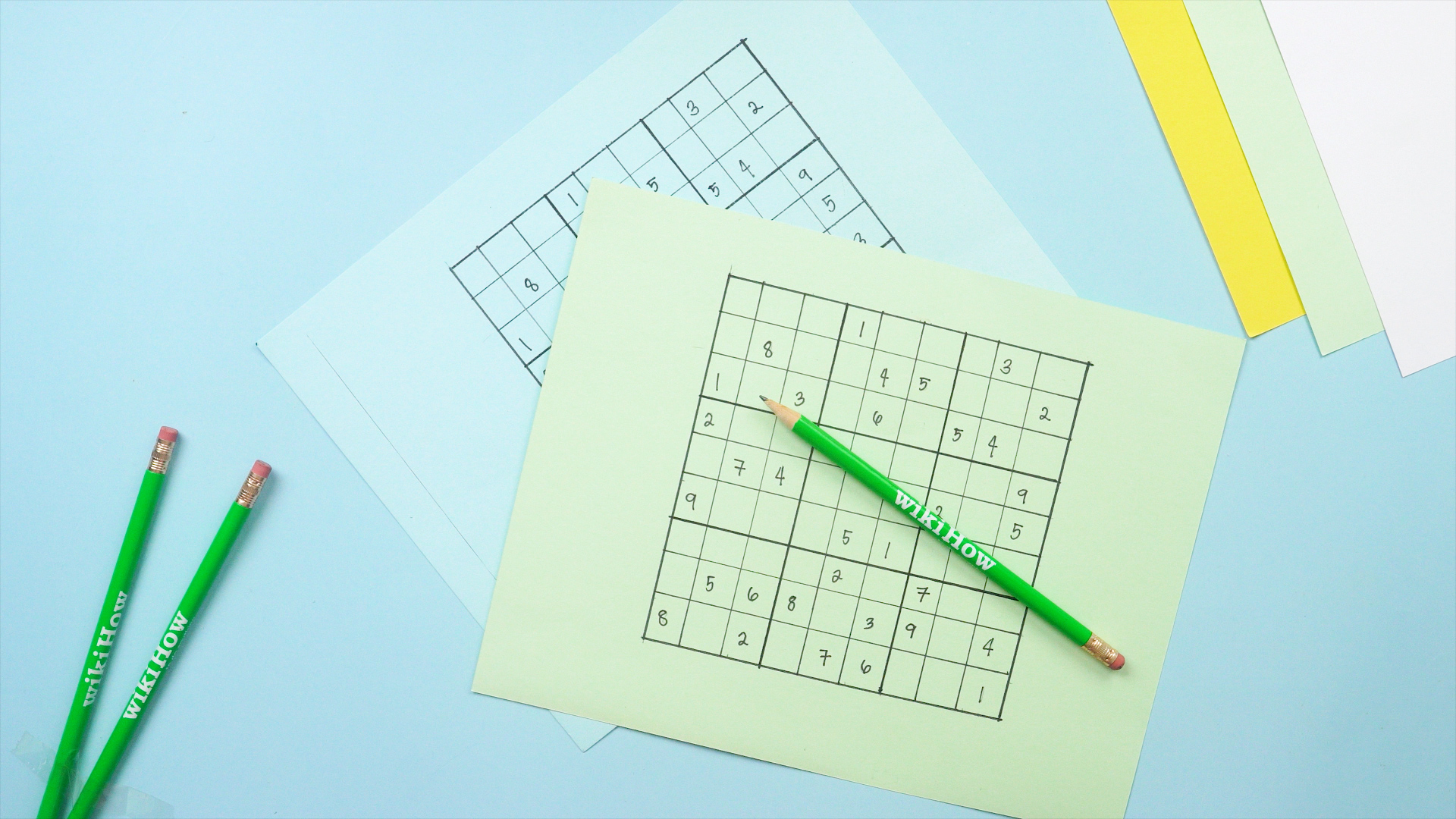
The classic Sudoku grid has 81 cells, divided into nine rows, nine columns, and nine 3-by-3 boxes. The goal is to place the digits 1 through 9 so that each digit appears once in every row, column, and box. When you create a Sudoku, your job is to build a puzzle that follows those rules while giving the solver only part of the completed grid. The hidden part must be logically recoverable. That is the magic trick.
Whether you want to make printable puzzles for students, design a brain teaser for your blog, build a Sudoku generator, or simply understand how those addictive little grids are born, this guide explains five practical ways to create a Sudoku. We will cover hand-setting, completed-grid construction, clue removal, computer generation, difficulty design, and real-world puzzle-making experience. Bring a pencil, an eraser, and humility. Sudoku has a way of laughing politely at overconfidence.
1. Start With a Valid Completed Sudoku Grid
The safest way to create a Sudoku is to begin with a fully solved grid. Think of this as building the house before deciding which windows to cover. A completed grid guarantees that every row, column, and 3-by-3 box already obeys Sudoku rules. From there, you can remove numbers to create the puzzle.
Use a simple base pattern
A common beginner-friendly method is to create a patterned solution grid. For example, start the first row with the digits 1 through 9, then shift the next rows in a structured way:
This grid works because each row, column, and box contains every digit from 1 to 9 exactly once. Of course, if you publish this pattern as-is, experienced solvers may spot the structure faster than a cat spots an unattended glass of water. To disguise the grid, shuffle rows within the same band, columns within the same stack, or swap digit labels. For example, every 1 can become a 7, every 7 can become a 4, and so on. These transformations preserve the solution while making the grid look fresh.
Why this method works
Starting with a completed Sudoku grid prevents illegal layouts. It also gives you a reliable answer key, which is essential if your puzzle will be printed, shared, or used in a classroom. The completed-grid method is ideal for beginners because it separates Sudoku creation into two easier jobs: first create the solution, then create the challenge.
2. Remove Clues Carefully and Keep One Unique Solution
Once you have a solved grid, the next step is clue removal. A “clue” is a number given at the start of the puzzle. Remove too few clues, and your Sudoku feels like filling out a tax form with most of the answers already typed in. Remove too many, and the puzzle may become impossible or, worse, have multiple solutions.
Remove numbers in pairs for a polished look
Many published Sudoku puzzles use visual symmetry. If you remove a number from the top-left area, you also remove the matching number from the bottom-right area. This does not make the puzzle automatically better, but it gives the grid a professional appearance. Symmetry is like a nice haircut for your Sudoku: not required, but people notice.
A simple approach is to remove two opposite clues at a time, then test whether the puzzle still has exactly one solution. If uniqueness fails, put one or both clues back. Continue until the puzzle has the difficulty and openness you want.
Do not judge difficulty by clue count alone
A common mistake is assuming that fewer clues always mean a harder Sudoku. Clue count matters, but it is not the whole story. A puzzle with 30 clues can be brutal if it requires advanced techniques, while a puzzle with 25 clues can be easy if every next move is obvious. Difficulty depends on the solving path, not just the number of visible digits.
For a beginner puzzle, leave many helpful clues and make sure the solver can progress using basic scanning, naked singles, and hidden singles. For a medium puzzle, remove more clues and allow pairs, pointing patterns, or box-line interactions. For a hard puzzle, you may design moments that require advanced eliminations. The key is to test the puzzle as a human would solve it, not merely as a machine would approve it.
3. Create a Sudoku by Working Backward From Solving Techniques
If you want to create a Sudoku that feels satisfying, design the puzzle around the experience of solving it. This is how hand-crafted Sudoku puzzles become memorable. Instead of randomly removing numbers, decide what kind of logic you want the solver to discover.
Choose a target solving path
Before placing or removing clues, ask: What should the solver learn or enjoy? A gentle puzzle might focus on row and box scanning. A medium puzzle might include hidden singles and pairs. A tougher puzzle might introduce an X-Wing, swordfish, or chain-based elimination. You do not need to turn every grid into a mathematical obstacle course. Sometimes a clean, elegant medium puzzle is more enjoyable than a monster puzzle that looks like it drinks black coffee and corrects your grammar.
For example, suppose you want a puzzle that teaches hidden singles. You can arrange clues so that in one row a digit has several possible empty cells at first glance, but after checking the columns and boxes, only one cell can actually contain it. That moment creates a satisfying “aha.” Good Sudoku design is full of these small discoveries.
Balance challenge and fairness
A fair Sudoku should not require guessing. Solvers may make notes, eliminate candidates, and use logic, but they should not have to say, “Well, let’s try a 6 and see if the universe explodes.” When creating a Sudoku, every step should be justifiable. If your puzzle requires trial and error, it may still be solvable, but it will feel less elegant.
One practical method is to solve your own puzzle after each major clue-removal stage. Write down the techniques required. If the puzzle jumps from easy singles to a complicated chain with no warning, consider adding a clue back. Smooth difficulty progression keeps players engaged and prevents the dreaded pencil-throwing incident.
4. Use a Sudoku Generator or Algorithm
If you are creating many puzzles, a Sudoku generator can save time. Online Sudoku puzzle makers, spreadsheet tools, and custom code can produce valid grids, remove clues, test uniqueness, and sometimes rate difficulty. This method is especially useful for teachers, bloggers, app developers, and anyone who needs more than one puzzle without spending the weekend whispering to graph paper.
How a basic Sudoku generator works
Most Sudoku-generation systems follow three major steps. First, they create a complete valid grid. Second, they remove numbers from the grid. Third, they check whether the resulting puzzle has exactly one solution. More advanced generators also run a logic solver to estimate difficulty based on the hardest technique needed.
A basic algorithm might look like this:
- Create a full valid Sudoku solution using backtracking or a known valid pattern.
- Randomly choose a clue to remove, often with symmetry rules.
- Run a solver to count solutions.
- If the puzzle still has one solution, keep the removal.
- If the puzzle has zero or multiple solutions, restore the clue.
- Repeat until the puzzle reaches the desired clue count or difficulty.
Why uniqueness testing matters
A Sudoku puzzle should have one solution. If it has multiple solutions, the solver can place numbers correctly according to the visible clues and still end up with different completed grids. That is not a puzzle; that is an argument waiting to happen.
To test uniqueness, a solver does not need to find every possible solution forever. It only needs to determine whether more than one solution exists. If it finds two, the puzzle fails the uniqueness test. This is why generator tools often use solution-counting logic rather than ordinary solving alone.
For casual puzzle makers, online tools are often enough. For developers, a backtracking solver with early stopping is a practical starting point. For polished publications, combine algorithmic generation with human review. Computers are great at producing grids, but humans are still better at noticing whether a puzzle feels fun, fair, and elegant.
5. Make Variations, Themes, and Printable Sudoku Puzzles
Classic 9-by-9 Sudoku is the standard, but it is not the only way to create a Sudoku experience. You can design smaller puzzles for beginners, themed puzzles for events, or variations with extra rules. This is where puzzle-making becomes creative rather than purely mechanical.
Create beginner-friendly mini Sudoku
For children or first-time solvers, try 4-by-4 Sudoku using digits 1 through 4 and 2-by-2 boxes. A 6-by-6 grid with 2-by-3 boxes is another helpful bridge before moving to the full 9-by-9 format. Mini Sudoku puzzles teach the same logic in a less intimidating space. They also reduce the chance that someone will look at your worksheet and suddenly remember an urgent appointment elsewhere.
Add a theme without breaking the rules
You can theme a Sudoku by shaping the starting clues into a letter, symbol, or seasonal design. For example, a Valentine’s Day puzzle might have clues arranged in a rough heart shape. A classroom puzzle might use a symmetrical star or initials. The challenge is making sure the theme does not destroy uniqueness or create awkward solving gaps.
You can also create Sudoku variants, such as diagonal Sudoku, killer Sudoku, thermo Sudoku, or nonconsecutive Sudoku. These add extra constraints beyond the classic row-column-box rule. Variants can be exciting, but they must be explained clearly. Never assume the solver knows your custom rule. A puzzle without clear instructions is not mysterious; it is just rude in grid form.
Prepare the puzzle for print or web
For printable Sudoku, use clean lines, readable numbers, and enough white space for pencil notes. Include the answer key on a separate page or hidden below a spoiler section. For web publishing, optimize the puzzle image or interactive grid for mobile screens. Many players solve Sudoku on phones, so tiny numbers and cramped cells can ruin the experience.
Common Mistakes When Creating a Sudoku
Removing clues without testing
The biggest mistake is deleting numbers and assuming the puzzle still works. Every clue removal can change the solution structure. Test often. A puzzle can look beautiful and still be broken, much like a fancy chair nobody can sit in.
Making the puzzle too easy by accident
If every row or box has only one obvious missing number, the puzzle may solve itself too quickly. That is fine for absolute beginners, but not for players seeking a challenge. To increase difficulty, remove clues that force the solver to compare multiple regions rather than complete one area at a time.
Making the puzzle too hard without purpose
Hard does not automatically mean good. A puzzle that requires obscure logic from the first move can frustrate solvers. Difficulty should feel earned. Give the player a path, not a locked door with a tiny sign reading “good luck.”
Forgetting the answer key
Always save the completed grid before publishing. If you lose the solution, you may have to solve your own puzzle from scratch. This is technically possible, but so is eating soup with a fork. Avoid unnecessary suffering.
Experiences From Creating Sudoku Puzzles
The first time you create a Sudoku, you may expect it to feel like arranging numbers. In reality, it feels more like hosting a dinner party for logic, patience, and mild chaos. You start with a perfect completed grid, remove a few numbers, admire your work, and then discover the puzzle has three solutions. Sudoku is polite about it, but only barely.
One useful experience is learning that symmetry is attractive but not magical. A symmetrical puzzle often looks professional, especially when printed, but symmetry does not guarantee quality. I have seen symmetrical grids that solved beautifully and symmetrical grids that collapsed in five moves. The real test is the solving path. Does the solver always have a logical next step? Does the puzzle build momentum? Does it offer little rewards along the way? These questions matter more than whether the givens look like a snowflake.
Another lesson is that clue count can be misleading. Early creators often chase low-clue puzzles because they look impressive. But removing clues just to reduce the number can create a brittle puzzle. A 24-clue Sudoku may be easier than a 32-clue Sudoku if its clues are placed generously. Difficulty comes from relationships between candidates, not from emptiness alone. Blank space is not sophistication; sometimes it is just blank space wearing sunglasses.
Testing by hand is the best teacher. A computer can tell you whether the puzzle has a unique solution, but it cannot fully describe how the puzzle feels to a person. When you solve your own Sudoku, you notice awkward stalls, boring sections, and sudden difficulty spikes. You may find that one extra clue turns a frustrating puzzle into an elegant one. You may also find that removing a clue you loved makes the puzzle better. Puzzle creation requires a willingness to sacrifice pretty ideas for a smoother solve.
It also helps to watch other people solve your puzzles. They will not solve the way you expect. They may find a shortcut, miss your intended trick, or get stuck somewhere you thought was obvious. This feedback is valuable. A good Sudoku creator learns to design for real solvers, not imaginary perfect ones with laser vision and infinite patience.
Finally, creating Sudoku builds respect for published puzzle setters. A clean, fair, medium-difficulty Sudoku may look effortless, but it often reflects careful testing, adjustment, and restraint. The best puzzles do not scream, “Look how clever I am!” They quietly invite the solver into a logical conversation. When the final number falls into place, the solver should feel satisfied, not ambushed. That is the goal: a puzzle that challenges the mind, behaves fairly, and maybe even makes someone smile while they mutter, “Just one more.”
Conclusion: A Great Sudoku Is Designed, Not Dumped Into a Grid
Learning how to create a Sudoku means learning how to balance structure, logic, difficulty, and presentation. You can begin with a valid completed grid, remove clues carefully, design around solving techniques, use a Sudoku generator, or create themed and printable variations. Each method has its strengths. Beginners may prefer starting with a completed pattern and symmetrical clue removal. Advanced creators may enjoy hand-crafting a solving path or building a generator that tests uniqueness automatically.
The most important rule is simple: a real Sudoku puzzle should have one unique solution and a fair logical path. Everything elsesymmetry, clue count, theme, difficulty label, printable designis in service of that experience. Create puzzles that respect the solver’s time, reward observation, and avoid guessing. Do that, and your Sudoku will be more than a grid of numbers. It will be a tiny, elegant machine for making brains happy.