50 Of The Most Disturbing Facts About The World That Might Freak You Out, As Shared By This TikToker

The worws, baby animals, and finding five dollars in an old jacket. Others involve headless cockroaches, books once covered in human skin, and the uncomfortable realization that cruise ships have morgues.
TikTok creator Ebrahim Abbas became known for sharing unsettling facts, horror stories, strange historical details, and mysteries connected to the Middle East and beyond. His rapid-fire videos are ideal rabbit-hole material: one moment you are casually scrolling, and the next you are researching whether crocodiles can gallop.
However, viral facts often arrive without context. Some are accurate, some are partly true, and others have been repeated so many times that the internet has collectively adopted them without checking the paperwork. The following list revisits 50 disturbing facts associated with the viral series while separating documented reality from exaggeration, folklore, and digital campfire stories.
Disturbing Facts About People, Medicine, and the Human Body
-
Medical debt affects an enormous share of Americans
A major 2022 survey found that 41% of American adults had some form of debt caused by medical or dental bills. The statistic does not mean 41% enter debt every year, but the underlying reality remains deeply unsettling.
-
Sunburn is visible evidence of cellular damage
Ultraviolet radiation damages DNA and triggers inflammation. Severely damaged skin cells may undergo programmed death to keep them from becoming dangerous, although sunburn itself is more complicated than millions of cells simply choosing an honorable exit.
-
A tooth can help restore a person’s sight
Osteo-odonto-keratoprosthesis, nicknamed “tooth-in-eye surgery,” uses tissue from a tooth to support an optical cylinder implanted in the eye. It sounds like improvised medieval medicine, but it can restore vision in carefully selected patients.
-
You swallow mucus throughout the day
Your respiratory system constantly produces mucus that traps dust, germs, and other particles. Much of it travels down the throat unnoticed. Estimates vary, but swallowing a substantial amount daily is normaland now considerably less easy to ignore.
-
Faces can appear distorted after prolonged mirror staring
Experiments have shown that staring at one’s reflection in dim light can produce strange facial distortions and unfamiliar figures. Visual adaptation and fading effects are better explanations than Bloody Mary finally answering her messages.
-
Hearing may persist near the end of life
Researchers have detected brain responses to sound in some actively dying, unresponsive patients. That does not prove hearing is always the final sense to disappear, but it supports speaking gently around someone who appears unconscious.
-
Isolation in Antarctica may affect the brain
A small study of nine expedition members found changes in parts of the hippocampus after 14 months at an Antarctic research station. The finding involved prolonged isolation and an extreme environmentnot a guaranteed brain-shrinking effect from a short polar vacation.
-
Emotional blunting can occur with antidepressants
Some people taking antidepressants report feeling emotionally muted. That is very different from a drug erasing love or compassion, as viral posts sometimes claim. Medication effects vary, and concerning changes should be discussed with a qualified clinician.
-
Medication errors are a serious health risk
The claim that exactly 7,000 people die annually because of doctors’ handwriting is widely repeated but poorly supported. Prescription and medication errors are real, however, which is one reason electronic prescribing has become so important.
-
A severed human head is not proven to remain conscious for 20 seconds
Stories about blinking heads after executions have circulated for centuries. Brief residual brain activity may occur after blood flow stops, but there is no reliable evidence proving 20 seconds of human awareness after decapitation.
Creepy Animal Facts Nature Apparently Approved
-
Cats may scavenge a deceased owner
Forensic reports have documented pets feeding on human remains when trapped without food. It is not something every cat will inevitably do, but perhaps keep that in mind the next time yours judges you from across the room.
-
Some crocodiles can gallop
Certain crocodilian species can lift their bodies and move rapidly using a bounding or galloping gait. They cannot chase a vehicle down the highway, but “I will simply outrun it” is still not a recommended emergency plan.
-
Cockroaches can survive without their heads
Cockroaches breathe through openings along their bodies and do not depend on their heads to circulate blood. A decapitated roach may survive for days or weeks before dehydration finally accomplishes what the missing head could not.
-
Some spider mothers allow their young to eat them
Matriphagy is a reproductive strategy in which offspring consume their mother. It provides the spiderlings with valuable nutrition and gives “I sacrificed everything for my children” an alarmingly literal definition.
-
Some butterflies drink blood
Butterflies usually seek nectar, but some species obtain salts and nutrients from sweat, tears, mud, dung, carrion, or exposed blood. Their public-relations department has understandably concentrated on flowers.
-
Pacu fish have strangely human-looking teeth
Pacu possess square, molar-like teeth adapted for crushing nuts, seeds, and other foods. Photographs make their mouths look disturbingly human, although the fish are not secretly preparing to ask about your dental insurance.
-
Squeaky toys may activate a dog’s prey drive
The high-pitched sound and movement of a squeaky toy can resemble small prey, making the toy especially exciting. That cheerful squeak may therefore represent a miniature hunting simulation taking place beside your couch.
-
Climate change does not simply make every spider larger
Environmental changes can affect growth, reproduction, and distribution in particular spider populations. The viral claim is far too broad, though. Humanity faces legitimate climate threats without needing to advertise an approaching army of truck-sized arachnids.
-
Human bites are more common than shark bites
Hospitals treat far more human bites than shark bites because humans spend considerably more time near other humans than near hungry sharks. The comparison is statistically unsurprising but socially disappointing.
-
Ancient microbes can remain preserved in ice
Scientists have recovered ancient viruses and microorganisms from permafrost and ice. Thawing can revive some microbes, but the claim that glaciers contain thousands of diseases that will all escape and infect humanity is unsupported exaggeration.
Dark Historical Facts That Sound Invented
-
An early Little Red Riding Hood was much darker
In an old French version of the tale, the wolf tricks the girl into consuming her grandmother’s flesh and blood. Fairy tales were originally less “happily ever after” and more “please supervise medieval bedtime reading.”
-
Dentures were sometimes made from human teeth
Before modern dental materials, teeth were purchased, stolen, or removed from corpses. So-called Waterloo teeth were associated with battlefield casualties, although human teeth had been used for dentures before and after the famous battle.
-
Harvard owned a book bound with human skin
Testing confirmed that a copy of Des destinées de l’âme had been bound using skin taken without consent from a deceased woman. Harvard removed the human remains from the binding in 2024.
-
Europeans consumed powdered mummies as medicine
For centuries, substances sold as “mummy” appeared in European medical remedies. Human remains were ground into powders or tinctures intended to treat bleeding and other illnessesa historical reminder that “natural medicine” can become extremely unnatural.
-
Lead was once a fashionable cosmetic ingredient
Lead-based preparations were used to create pale complexions in several historical periods. The look came with poisoning, hair loss, skin damage, and organ problems, making today’s complicated beauty routines appear almost relaxing.
-
People invented coffins with emergency alarms
Fear of premature burial inspired “safety coffins” equipped with bells, flags, breathing tubes, or escape mechanisms. The inventions were real, although claims that accidental live burial happened constantly are difficult to prove.
-
A real corpse was displayed in an amusement attraction
The preserved body of outlaw Elmer McCurdy was mistaken for a mannequin for years. In 1976, workers discovered the truth when an arm broke during the relocation of a funhouse display.
-
Disneyland’s pirate attraction reportedly used real skeletons
Accounts from Disney historians and former staff say real human skeletons were originally used because artificial versions looked unconvincing. Most were later replaced, though rumors persist about whether every bone left the attraction.
-
The Paris Catacombs contain about six million people
The underground ossuary holds remains transferred from overcrowded Parisian cemeteries. They were not all victims of one plague, and the correct estimate is roughly six millionnot the viral claim of 60 million.
-
Original fairy tales were packed with punishment and death
Early versions of familiar stories contained mutilation, forced marriages, cannibalism, execution, and revenge. They reflected adult fears and moral warnings long before animation studios added talking furniture and catchy musical numbers.
Space, Disaster, and Environmental Facts
-
We see the Sun as it existed eight minutes ago
Sunlight takes about eight minutes and 20 seconds to reach Earth. If something dramatic happened to the Sun, we would remain blissfully unaware for several minutespossibly while complaining that the Wi-Fi seemed slow.
-
Earth is regularly approached by previously unnoticed asteroids
Asteroid 2017 AG13 passed within roughly half the distance between Earth and the Moon shortly after astronomers discovered it. It was not on a collision course, but its late detection demonstrated how difficult small objects can be to spot.
-
Supervolcanoes are real, but they are not “overdue”
Large volcanic systems can produce catastrophic eruptions. However, volcanoes do not follow calendars, and the U.S. Geological Survey specifically rejects claims that Yellowstone is thousands of years overdue for a supereruption.
-
More than 200 bodies may remain on Mount Everest
Exact counts are uncertain, but many climbers who died on Everest have never been recovered. Extreme altitude, weather, terrain, and recovery risks can make bringing a body down nearly impossible.
-
Some bodies become landmarks on dangerous climbing routes
Visible remains have occasionally been used informally as reference points by climbers. This unsettling practice reflects the mountain’s conditions rather than disrespect: survival often leaves little room for ceremony.
-
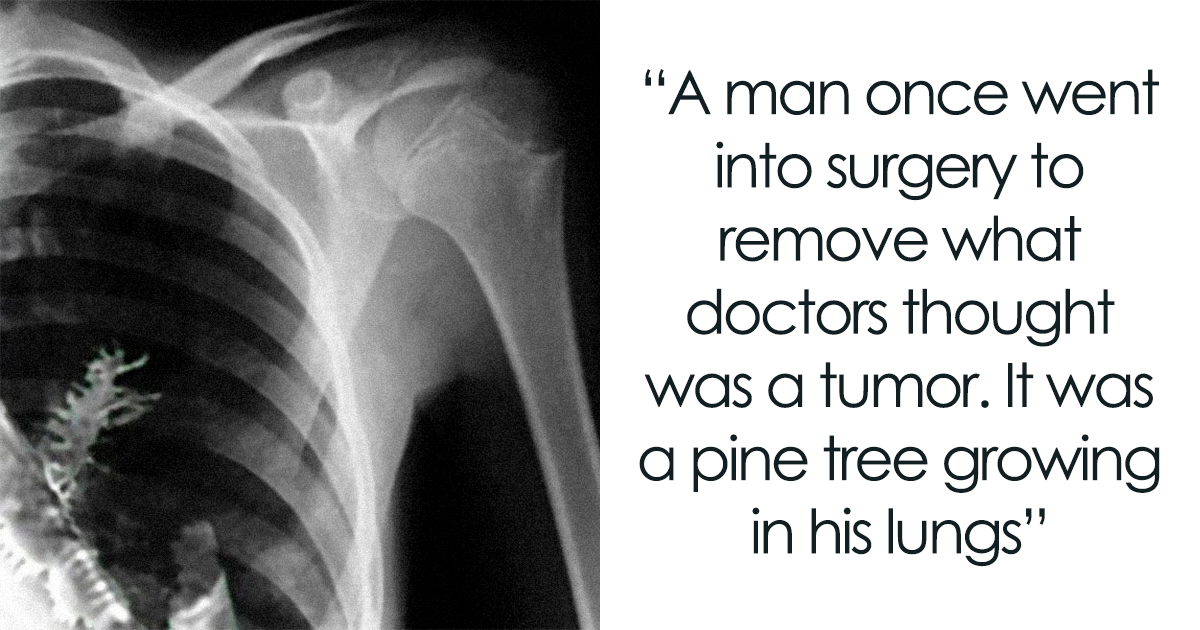
A supposed tree growing in a man’s lung became worldwide news
A Russian patient was reported to have a small fir sprout removed from his lung. The story remains controversial because a healthy tree cannot grow normally without light, and publicly available medical evidence was limited.
-
Horror movies may slightly increase calorie use
One small study suggested frightening films could raise heart rate and energy expenditure. Watching a horror marathon is not equivalent to exercising, unfortunately, especially when accompanied by a family-sized bucket of popcorn.
-
Pool “chlorine smell” often comes from chloramines
Chlorine reacts with sweat, dirt, and urine to form irritating chemicals called chloramines. These compounds can cause red eyes and respiratory irritation, particularly in poorly ventilated indoor pools.
Disturbing Facts About Society, Technology, and Everyday Life
-
There are more vacant homes than unhoused people in the United States
National housing data support the numerical comparison, but it does not mean every vacant property is habitable, affordable, available, or located where it is needed. The mismatch still highlights a grim structural problem.
-
Many American homicides remain unsolved
Clearance rates vary by year and jurisdiction, but a substantial percentage of murders are never cleared. The viral “one in three” formulation has sometimes been conservative rather than exaggerated.
-
Facebook may eventually contain more profiles of dead people than living users
Demographic modeling suggests memorialized and inactive accounts belonging to deceased users could eventually outnumber those belonging to living people. Social media is quietly becoming one of history’s largest accidental archives.
-
Cruise ships commonly have morgue facilities
Large ships may remain far from ports for days while carrying thousands of passengers, including older travelers. Refrigerated spaces allow the respectful storage of a deceased passenger until the vessel reaches an appropriate port.
-
Your phone is covered in microbes
Phones frequently carry bacteria transferred from hands, faces, desks, kitchens, and bathrooms. The popular claim that every phone is exactly 10 times dirtier than a toilet seat is marketing-friendly but scientifically inconsistent.
-
UVB-76 is real, but probably not haunted
The Russian shortwave station nicknamed “The Buzzer” broadcasts repetitive tones interrupted by occasional coded voice messages. Its precise purpose remains unclear, although military communication is considerably more plausible than paranormal activity.
-
Waiting at traffic lights consumes a visible chunk of life
Claims that the average person loses exactly five months depend heavily on driving frequency, location, and lifespan. Still, commuters spend enough time staring at red lights to develop meaningful relationships with nearby bumper stickers.
-
You probably have only a few thousand weekends remaining
An 18-year-old who lives to about 80 has roughly 3,200 weekends ahead. The total is not a prophecy, but converting life into weekends has a special talent for making Saturday afternoon feel financially valuable.
-
Restricted computers may be sold to Amish users
Technology rules differ among Amish communities. Some businesses use specialized computers without entertainment features or unrestricted internet access, demonstrating that technological adoption is more nuanced than a universal ban on electronics.
-
The “dead Disney performer on a bench” story is an urban legend
A viral claim says a performer who dies in costume must be posed as though resting. No credible evidence supports this alleged policy. It belongs beside tunnels under every theme park and employees who are never allowed to point.
-
A deceased rapper was displayed at a nightclub memorial
In 2022, the body of Maryland rapper Goonew appeared upright onstage during a public memorial event. The venue later apologized, while the family explained that the presentation reflected the send-off they had chosen.
-
A large percentage of online “facts” are impossible to trace
The viral claim that 44% of worldwide news is inaccurate lacks a credible universal study. The broader lesson is sound, however: a precise number can look authoritative even when nobody can locate its original source.
-
The “36 murderers” statistic is internet arithmetic, not established science
No reliable research proves that the average person walks past exactly 36 murderers. The number appears to have been created by combining uncertain assumptions about population, movement, and crime rates.
What It Feels Like to Enter the Disturbing-Facts Rabbit Hole
The experience usually begins innocently. You open a social platform during lunch, expecting a cooking video or perhaps a dog wearing sunglasses. Then a creator calmly announces that a corpse once spent decades touring amusement attractions because everyone thought it was a prop. Lunch is now postponed.
Disturbing facts work because they interrupt our sense of normality. A morgue on a cruise ship is logical when you think about the number and age range of passengers, yet most travelers never consider it while choosing between the buffet and miniature golf. Learning that the facility exists does not make the ship more dangerous. It simply opens a door that everyday life politely keeps closed.
The same thing happens with facts about the human body. Swallowing mucus is not a new behavior that begins after reading about it. Your body has been quietly managing that system since childhood. Nevertheless, conscious awareness can transform an ordinary biological process into something you suddenly wish had remained confidential.
Many readers respond by fact-checking one claim, discovering three related stories, and losing an hour to increasingly specific searches. “Can crocodiles gallop?” becomes “How fast can a crocodile gallop?” followed by “Do crocodiles climb trees?” At some point, the original TikTok has ended, but your browser contains 17 tabs and your relationship with wetlands has permanently changed.
This experience also reveals why misinformation spreads so efficiently. A short, frightening sentence is memorable. A careful explanation containing limitations, sample sizes, and alternative interpretations is less likely to dominate a 20-second video. “Antarctica shrinks your brain” travels faster than “a small study observed structural changes among nine people living in an isolated station for 14 months.” The first version creates instant alarm; the second creates understanding and possibly a desire to read the study.
Humor becomes a useful pressure valve. Joking about a judgmental cat or an athletic crocodile allows readers to process uncomfortable material without treating tragedy as entertainment. The best dark-fact content creates curiosity while remembering that many entries involve real people, illness, inequality, or death.
After enough scrolling, the facts begin dividing themselves into categories. Some are genuinely important, such as medical debt and unsolved homicides. Others are strange but harmless, such as pacu teeth. A third group consists of urban legends wearing a lab coat and carrying an impressive-looking percentage.
The healthiest way to enjoy the genre is to preserve both curiosity and skepticism. Ask where the number originated, whether the claim applies universally, and whether an estimate has quietly become a certainty during years of reposting. The world does not need invented horrors. It already contains headless cockroaches, medicinal mummy powder, and traffic lights that consume portions of our finite weekends.
That may be the most unsettling conclusion of all: reality is usually weird enough without assistance from the algorithm.