
Ancient Egypt has a public-relations advantage that most civilizations can only dream about. It has pyramids, gold masks, mysterious writing, dramatic gods, beautifully painted tombs, and enough mummies to keep documentary television busy until approximately the end of time.
Yet the most revealing photographs of ancient Egypt are not always the grandest. A worn sandal can say more about ordinary life than a colossal statue. A scratched limestone note may feel more personal than an official royal inscription. Even a photograph of an excavation trench can show how carefully archaeologists must reconstruct a story from objects that have spent several thousand years refusing to explain themselves.
The following 59 ancient Egypt photographs and photographic subjects offer a broader view of life along the Nile. Together, they reveal engineering, religion, food, work, fashion, family, art, medicine, death, and the occasional cat enjoying a level of cultural influence modern pets can only envy.
Monuments That Look FamiliarUntil You Look Closely
1. The Great Pyramid Without Its Original Shine
Modern photographs show rough limestone blocks, but the Great Pyramid was originally covered with smooth, pale casing stones. In bright sunlight, it would have looked less like a rocky mountain and more like an enormous geometric beacon.
2. A Surviving Patch of Pyramid Casing
Images of remaining casing stones help viewers imagine the precision of the finished monument. The pyramid builders were not merely stacking large rocks; they were creating carefully aligned architecture with dressed exterior surfaces.
3. The Sphinx Carved From the Plateau
The Great Sphinx was largely cut from the natural limestone bedrock. Photographs taken from the side make this easier to understand, especially where the body appears to emerge directly from the surrounding geology.
4. The Sphinx’s Weathered Face
Close-ups reveal centuries of erosion, damage, and restoration. They also remind us that the familiar bare-stone appearance is incomplete: traces and historical evidence indicate that ancient Egyptian sculpture was often brightly painted.
5. Djoser’s Step Pyramid
The Step Pyramid at Saqqara shows pyramid design in development. Built as a series of stacked mastaba-like levels, it formed the center of a much larger funerary complex rather than standing alone as a desert photo opportunity.
6. The Bent Pyramid’s Changing Angle
A photograph of the Bent Pyramid at Dahshur immediately reveals its unusual profile. The builders altered the slope partway up, probably responding to structural concerns. Even ancient megaprojects occasionally required a mid-construction rethink.
7. The Red Pyramid’s Cleaner Geometry
Nearby, the Red Pyramid presents a more consistent angle and is often considered the first successfully completed true pyramid. Seen beside the Bent Pyramid, it resembles the refined second draft of an extremely ambitious architectural experiment.
8. Pyramid Interior Passages
Photographs inside pyramids replace Hollywood spaciousness with narrow corridors, steep inclines, and tightly fitted masonry. These were carefully planned ritual and burial spaces, not enormous treasure-filled ballrooms with convenient gift-shop exits.
9. The Grand Gallery
The corbelled walls of the Great Pyramid’s Grand Gallery rise dramatically above a steep passage. Its engineering remains impressive precisely because the space is functional, controlled, and far more sophisticated than a simple tunnel through stone.
10. Karnak’s Forest of Columns
Images of Karnak’s Hypostyle Hall show columns so large that visitors can appear toy-sized. The columns were once vividly painted, meaning the original experience involved not only massive scale but also intense color and religious imagery.
Tomb Photographs That Bring Ancient Beliefs Into Focus
11. A Corridor Covered With Hieroglyphs
Photographs inside royal tombs show that decoration was not limited to one ceremonial wall. Text and imagery could cover corridors, ceilings, pillars, and burial chambers, surrounding the deceased with a carefully constructed sacred environment.
12. Stars Painted on a Tomb Ceiling
Blue ceilings dotted with yellow stars transformed burial chambers into symbolic skies. The deceased was not simply being sealed underground; the tomb represented a place of renewal, cosmic order, and passage into another form of existence.
13. The Sky Goddess Nut
Images of Nut stretched across ceilings show the goddess arching over the world. She was associated with the sky and the daily rebirth of the sun, making her an especially appropriate presence in funerary settings.
14. The Weighing of the Heart
In this famous scene, the deceased person’s heart is weighed against the feather of Ma’at, representing truth and order. The image communicates a moral idea: successful entry into the afterlife required more than expensive burial equipment.
15. Ammit Waiting Beside the Scales
The creature Ammit combines features of a crocodile, lion, and hippopotamus. She waits to consume a heart that fails the test. Ancient Egyptian theology apparently believed serious consequences deserved an equally serious-looking animal.
16. Anubis Attending a Mummy
The jackal-headed god Anubis appears in funerary scenes as a protector and embalming deity. His image does not prove that jackals performed surgery, which is probably reassuring to everyone involved.
17. Tomb Paintings of Farming
Scenes of plowing, harvesting, and processing grain record essential activities while presenting an idealized world of abundance. Tomb art was not always a documentary snapshot; it could depict the secure, productive life hoped for in eternity.
18. Nebamun Hunting in the Marshes
The celebrated marsh scene associated with Nebamun includes birds, fish, plants, family members, and a remarkably energetic cat. It combines elite recreation with ideas about fertility, control, regeneration, and triumph over disorder.
19. Musicians at a Banquet
Photographs of banquet scenes show harps, lutes, clapping performers, elegant clothing, food, drink, and scented cones. They remind viewers that ancient Egyptian culture included entertainment, celebration, and social displaynot just solemn processions toward tombs.
20. An Unfinished Tomb Drawing
Incomplete decoration can be more informative than a polished wall. Visible grids, corrections, and preliminary outlines expose the working methods of artists who followed conventions but still had to measure, sketch, revise, and satisfy demanding clients.
Images of Work, Writing, and Everyday Life
21. The Village of Deir el-Medina
Ruins of this settlement housed skilled workers who decorated royal tombs. Their homes, documents, and discarded notes provide unusually detailed evidence about wages, disputes, marriages, absences, religion, and neighborhood life.
22. A Limestone Ostracon
Ostraca were inexpensive fragments of pottery or stone used for writing and drawing. Photographs preserve everything from administrative records to sketches, jokes, practice exercises, and personal messagesthe ancient equivalent of scrap paper with surprisingly good survival odds.
23. A Seated Scribe Statue
Scribe statues portray literacy as a respected skill. Because writing supported administration, taxation, temples, diplomacy, and royal memory, a trained scribe could wield influence without needing to lift a pyramid block personally.
24. Hieroglyphs in Extreme Close-Up
Detailed photographs reveal chisel marks and remaining pigment. Hieroglyphs could represent sounds, words, or categories of meaning, forming a flexible writing system rather than a straightforward collection of decorative picture puzzles.
25. Hieratic Writing on Papyrus
For many practical and literary texts, scribes used faster cursive scripts instead of formal monumental hieroglyphs. The difference is roughly comparable to carving a ceremonial inscription versus scribbling a shopping list before the market closes.
26. A Reed Pen and Ink Palette
Scribal equipment often included reed pens and compartments for pigments, commonly black and red. Red ink could mark headings, important words, corrections, or dangerous entities, proving that color-coded paperwork is far older than the modern office.
27. Bread-Making Models
Small tomb models show grain grinding, dough preparation, and baking. Bread was a dietary foundation, appearing in many varieties and supporting households, work crews, temples, and offerings to the dead.
28. Beer Production
Models and wall scenes also depict brewing. Egyptian beer was a staple with nutritional and social importance, although its ingredients, strength, and texture did not necessarily resemble a modern refrigerated bottle from the local supermarket.
29. Granaries and Grain Accounting
Images of storage facilities illustrate the economic importance of grain. It could be collected, measured, redistributed, and used to compensate workers, making grain management a practical foundation of state organization.
30. The Workers’ Settlement Near Giza
Archaeological photographs of housing, bakeries, animal bones, and administrative areas challenge stories that the pyramids were built exclusively by chained masses. Evidence instead points toward organized labor forces that included supported and specialized workers.
31. An Ancient Wooden Sandal
A sandal transforms “ancient Egyptians” from an abstract civilization into people who had uncomfortable feet, worn straps, and opinions about whether footwear was still usable for one more day.
32. A Child’s Toy
Wheeled animals, dolls, balls, and miniature objects show that childhood included play. Some objects may have held ritual meanings, but many also look delightfully familiar to anyone who has stepped on a toy in the dark.
33. A Senet Game Board
Senet began as a board game and acquired religious associations connected with passage through the afterlife. Complete rules have not survived, leaving modern players with the authentic historical experience of arguing about what is legal.
34. Cosmetic Containers
Stone vessels, spoons, jars, mirrors, and applicators reveal sophisticated grooming practices. Cosmetics could be decorative, socially meaningful, religiously relevant, and potentially useful in protecting the eyes or skin from environmental conditions.
35. Kohl Around the Eyes
Eye cosmetics created the iconic outlined appearance seen in Egyptian art. Compounds varied, and research suggests some preparations may have provided practical benefits in addition to style. Ancient beauty routines were rarely “just makeup.”
36. A Bronze Mirror
Egyptian mirrors typically used polished metal rather than glass. Their circular or oval forms could evoke the sun, linking a personal grooming object with broader ideas of light, rebirth, and divine power.
37. Linen Clothing
Photographs of preserved textiles demonstrate remarkable weaving skill. Linen made from flax was widely used, while clothing styles and fabric quality varied according to period, occupation, status, and occasion.
38. An Elaborate Wig
Wigs appear in elite art and surviving burial equipment. They could communicate fashion and rank while allowing hairstyles impossible to maintain during an average afternoon beside the Nile.
Gods, Animals, and Protective Objects
39. A Cat Mummy
Not every mummified cat was a treasured household pet. Many animal mummies were produced as religious offerings, purchased by worshippers and dedicated to deities associated with particular species.
40. A Bronze Figure of Bastet
Bastet was often represented as a cat or cat-headed woman and was connected with protection, fertility, music, and domestic life. Her identity developed over time, as did many Egyptian deities.
41. An Ibis Mummy
Ibises were associated with Thoth, god of writing and knowledge. Large numbers were mummified as votive offerings, demonstrating how religious devotion could support organized networks of breeding, preparation, distribution, and temple activity.
42. A Falcon Image of Horus
Horus was closely linked with kingship and the sky. Some bronze falcon figures were not hollow symbols alone; scientific imaging has shown that certain examples contained actual bird remains.
43. A Scarab Amulet
Scarabs referred to renewal and the rising sun through associations with the scarab beetle. They appeared as jewelry, seals, commemorative objects, and protective amulets in both daily and funerary contexts.
44. The Eye of Horus
The wedjat eye symbolized restoration, protection, and wholeness. Its widespread use on jewelry, coffins, and amulets demonstrates how a compact visual sign could carry an impressive theological résumé.
45. A Blue Faience Amulet
Egyptian faience was a glazed, non-clay material whose brilliant blue-green surface evoked water, vegetation, life, and regeneration. It was used for beads, tiles, vessels, figurines, and amulets.
46. The Household God Bes
Bes appears with a broad face, feathered headdress, and energetic posture. He protected households, mothers, and children and was associated with music and joyproof that not every Egyptian deity specialized in solemn staring.
47. A Shabti Figure
Shabtis were placed in tombs to work on behalf of the deceased if labor was required in the afterlife. Wealthy burials could contain large groups, effectively assembling an eternal workforce in miniature.
Burial Objects and the Science Behind the Wrappings
48. A Painted Coffin
Coffins protected the body while surrounding it with names, prayers, gods, symbols, and idealized features. Their styles changed considerably across Egyptian history, so there was never one universal “Egyptian coffin look.”
49. Nested Coffins
Elite burials sometimes placed one coffin inside another, creating several layers of physical and magical protection. Opening them must have felt like the world’s most consequential set of nesting dolls.
50. A Canopic Jar
Canopic equipment was associated with organs removed during mummification, although practices varied by period. The familiar heads of the Four Sons of Horus became common on jar lids during particular phases of Egyptian history.
51. Linen Mummy Wrappings
Close-up photography reveals careful layering, knots, repairs, amulets, and resin-darkened cloth. Mummification was not a single fixed recipe; procedures differed according to date, region, wealth, preservation, and religious practice.
52. A Mummy’s CT Scan
Computed tomography allows researchers to examine bones, teeth, internal packing, amulets, and embalming techniques without physically unwrapping the remains. The resulting images can restore individuality to people once treated mainly as museum curiosities.
53. A Mummy Portrait
Roman-period portraits from Egypt combine local funerary customs with naturalistic painting traditions from the Mediterranean world. Their direct gazes can feel startlingly modern, although the portraits belonged to a distinct historical and cultural setting.
54. Tutankhamun’s Burial Chamber
Early photographs of the tomb documented objects in position before removal. Their value goes beyond drama: they preserve archaeological relationships that would disappear as conservators, excavators, and objects left the chamber.
55. Tutankhamun’s Golden Mask
The mask is famous for gold and craftsmanship, but its details also convey royal and divine identity. The nemes headdress, false beard, protective imagery, and inlaid materials formed a complete statement about transformed kingship.
56. A Tomb Before Excavation
Old field photographs show chambers packed with debris, baskets, equipment, and workers. Archaeology rarely begins with a spotless treasure on black velvet. It begins with context, dust, documentation, patience, and more dust.
57. Egyptian Excavation Workers
Historical photographs often center foreign archaeologists while leaving local Egyptian experts unnamed. Looking carefully at excavation crews encourages a more honest understanding of who actually located, moved, recorded, conserved, and understood ancient remains.
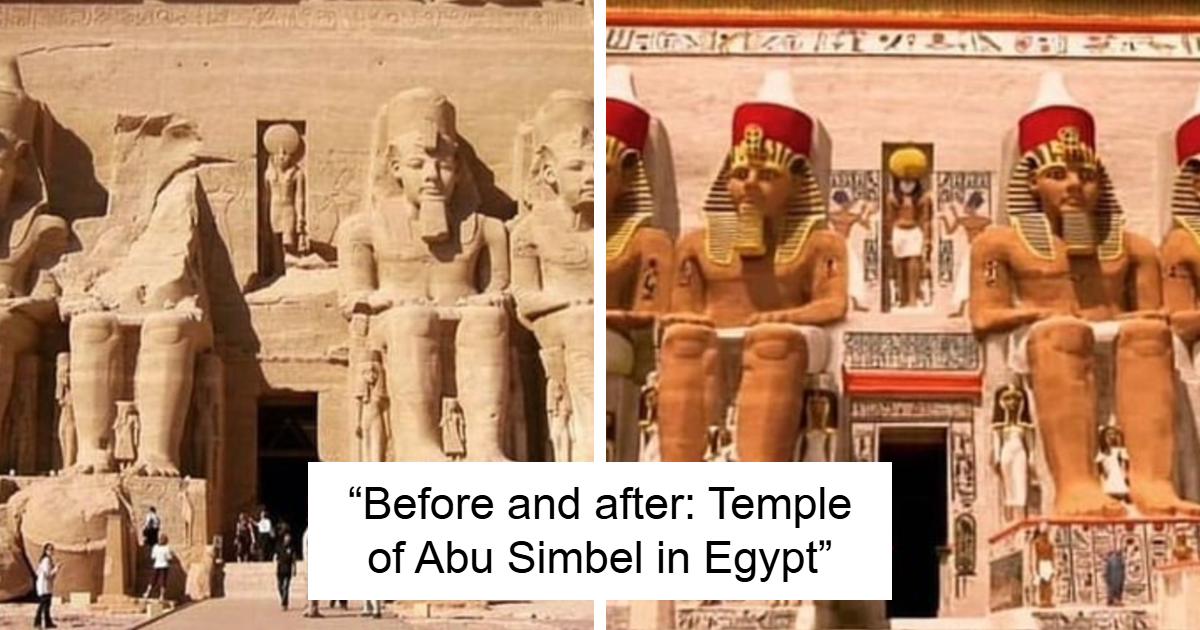
58. A Monument That No Longer Looks the Same
Archival photography can preserve walls, landscapes, inscriptions, and architectural details later altered by erosion, development, relocation, restoration, or tourism. In such cases, the photograph becomes archaeological evidence in its own right.
59. Multispectral Imaging of Faded Pigment
Modern cameras can record wavelengths beyond ordinary vision, helping researchers detect pigments, erased writing, preparatory sketches, and later alterations. Sometimes a “new discovery” has been sitting on the surface all along, politely waiting for better equipment.
What These Ancient Egypt Photographs Really Teach Us
The photographs reveal a civilization that cannot be reduced to pyramids and pharaohs. Ancient Egyptian society included administrators calculating grain, artists correcting sketches, children playing with toys, workers complaining about conditions, families preparing meals, and worshippers purchasing offerings for the gods.
They also show that ancient Egypt was neither culturally frozen nor visually uniform. Religious practices, coffin designs, political systems, artistic conventions, languages, and burial customs changed across more than three millennia. A Roman-period mummy portrait and an Old Kingdom relief are both Egyptian, but they emerged from very different historical worlds.
Most importantly, photography has become part of archaeology itself. Early field images record monuments before modern alteration. Conservation photographs document damage and repair. CT scans expose concealed structures without cutting through wrappings. Multispectral imaging recovers details invisible to the naked eye. The camera does not merely make the past look attractive; used carefully, it helps produce knowledge.
A 500-Word Experience: How to Explore Ancient Egypt Through Photographs
Viewing a large collection of ancient Egypt photographs is most rewarding when you resist the temptation to race directly toward the gold. The golden mask will still be there in five minutes. Start instead with the widest images: the Nile Valley, desert cliffs, pyramid fields, temple entrances, and excavation landscapes. These establish the physical world in which Egyptian civilization developed. Notice the narrow strip of fertile land beside the river and the sudden transition to desert. That contrast influenced food production, settlement, transportation, religion, burial locations, and even visual ideas about life and death.
Next, examine scale. In a photograph of Karnak, look for a person standing beside a column. In an image of the Great Pyramid, locate visitors near the lowest blocks. Human figures prevent monumental architecture from becoming an abstract postcard. They show just how enormous these structures are and encourage questions about quarrying, transportation, planning, skilled labor, food supplies, tools, and administration.
After the monuments, move toward smaller objects. This is where the experience becomes unexpectedly personal. Study the worn edge of a sandal, the uneven surface of a child’s toy, or the remaining black pigment in a cosmetic container. Ask where fingers touched the object and which areas show repeated use. A museum label may call something “wood, pigment, New Kingdom,” but the photograph can help you imagine the owner picking it up on an ordinary morning.
When examining tomb paintings, remember that they were not candid photographs of daily life. Artists selected and organized scenes to serve social, religious, and funerary purposes. A perfectly abundant harvest might express eternal prosperity rather than document one particular Tuesday on a farm. Look for differences in scale, posture, clothing, and position. Larger figures are not necessarily standing closer to the viewer; they may be more important.
Spend extra time with unfinished art. Guidelines, red corrections, incomplete carving, and abandoned sections reveal decisions hidden by completed surfaces. Finished art creates the illusion that every line arrived effortlessly. Unfinished art introduces the planners, draftspeople, painters, sculptors, and supervisors behind it.
Historical excavation photographs deserve similarly careful attention. Look beyond the celebrated archaeologist posing near the discovery. Who is carrying baskets? Who is stabilizing the wall? Who is recording an inscription? Local Egyptian laborers and specialists were central to archaeological work, although older captions frequently ignored their names and expertise.
Finally, compare early and modern images of the same object or site. Changes may reveal deterioration, restoration, pigment loss, environmental damage, or evolving conservation ethics. A contemporary scan may show what an early camera could not, while the older photograph may preserve a feature that has since disappeared.
By the end of the experience, the best photograph may no longer be the one containing the most gold. It may be a scrap of limestone covered with a quick sketch or a century-old image of a wall that no longer survives. Those quieter photographs turn ancient Egypt from a spectacle into a place inhabited by real peopleand that is the moment when the past begins to feel genuinely close.