
There is a very specific moment in parenting when you realize your adorable baby has become a tiny safety inspector with no clipboard, no fear, and a suspicious interest in outlets, cabinet doors, toilet water, and gravity. One day they are a soft little burrito. The next day they are trying to scale a bookshelf like it owes them money.
So let’s clear something up right away: when people ask, “Why don’t we see childproofing stuff in your house?” the answer is not, “Because we simply trust toddlers to make wise choices.” That would be like trusting a raccoon to organize your pantry. The real answer is that a safe family home does not always need to look like it was wrapped in pool noodles and warning labels.
Childproofing can be visible, invisible, beautiful, practical, temporary, permanent, or all of the above. The goal is not to win a design contest. The goal is to reduce the biggest risks while still letting your home feel like a home. In our case, we prefer childproofing that works quietly in the background: anchored furniture, smart storage, safer habits, fewer climbable temptations, and carefully chosen safety devices where they truly matter.
In other words, the best childproofing is not always the stuff you see. Sometimes it is the decision not to put a lamp cord where little hands can yank it. Sometimes it is the medicine stored high and locked away. Sometimes it is the dresser attached to the wall even though nobody notices. Safety does not have to shout. It just has to show up.
Childproofing Is Not About Making a House Bubble-Wrapped
The phrase “childproofing” can sound like a weekend project involving 97 plastic gadgets, three instruction manuals, and one adult lying on the floor whispering, “Why does this cabinet lock hate me?” But effective childproofing is more thoughtful than that. It starts with seeing your home from a child’s perspective.
Children are naturally curious. They climb, pull, open, taste, drop, splash, stack, tug, and test. This is how they learn. Unfortunately, it is also how they discover that a toilet brush is not a microphone and that a drawer can become a ladder. A safe home makes normal exploration less risky.
The trick is to focus on the real danger zones: falls, poisoning, burns, choking, drowning, strangulation, electrical hazards, furniture tip-overs, and sharp objects. Once those risks are addressed, not every corner needs to look like it is wearing a helmet.
Why Our Childproofing Is Hard to Spot
Most of our childproofing choices are built into how the house is arranged. Instead of covering every visible surface with foam, we try to remove the temptation or hazard entirely. That might mean moving fragile decor higher, keeping climbable furniture away from windows, choosing closed storage, or putting unsafe items behind locked doors.
This approach has one big advantage: it grows with the child. A baby who crawls has different risks than a toddler who climbs, and a preschooler who can open doors is basically a tiny magician in socks. A home safety system has to change over time. The less we rely on one-size-fits-all gadgets, the easier it is to adapt.
Invisible childproofing also helps adults stay consistent. If the safest choice is built into the room layout, nobody has to remember to put the scissors away “later.” Later is where safety plans go to take a nap. We try to make the safe option the automatic option.
The Big Safety Moves We Do Take Seriously
1. We Anchor Furniture and TVs
This is one of those safety steps that should be invisible but non-negotiable. Dressers, bookcases, media cabinets, and TVs can tip if a child climbs, pulls, or leans on them. Anchoring furniture to the wall is not glamorous, but neither is explaining why the bookshelf tried to become a pancake press.
We are especially careful with tall or heavy pieces, bedroom furniture, and anything with drawers that can be pulled out like stairs. If a piece can tip, it gets secured. The anchor kit may not be visible in photos, but that is exactly the point. It does its job quietly behind the scenes.
2. We Store Dangerous Items Up, Locked, or Both
Some childproofing does not need to be pretty. It needs to be boringly effective. Medicines, vitamins, cleaning products, laundry pods, matches, lighters, sharp tools, batteries, and personal care products should not be casually hanging out at toddler height like they are part of a buffet.
We like storage that creates layers: high shelves, locked cabinets, original labeled containers, and fewer dangerous items in everyday reach. Child-resistant packaging is helpful, but it is not the same as childproof. A determined child can treat a “child-resistant” cap like a puzzle toy with higher stakes.
3. We Use Gates Where Gates Actually Matter
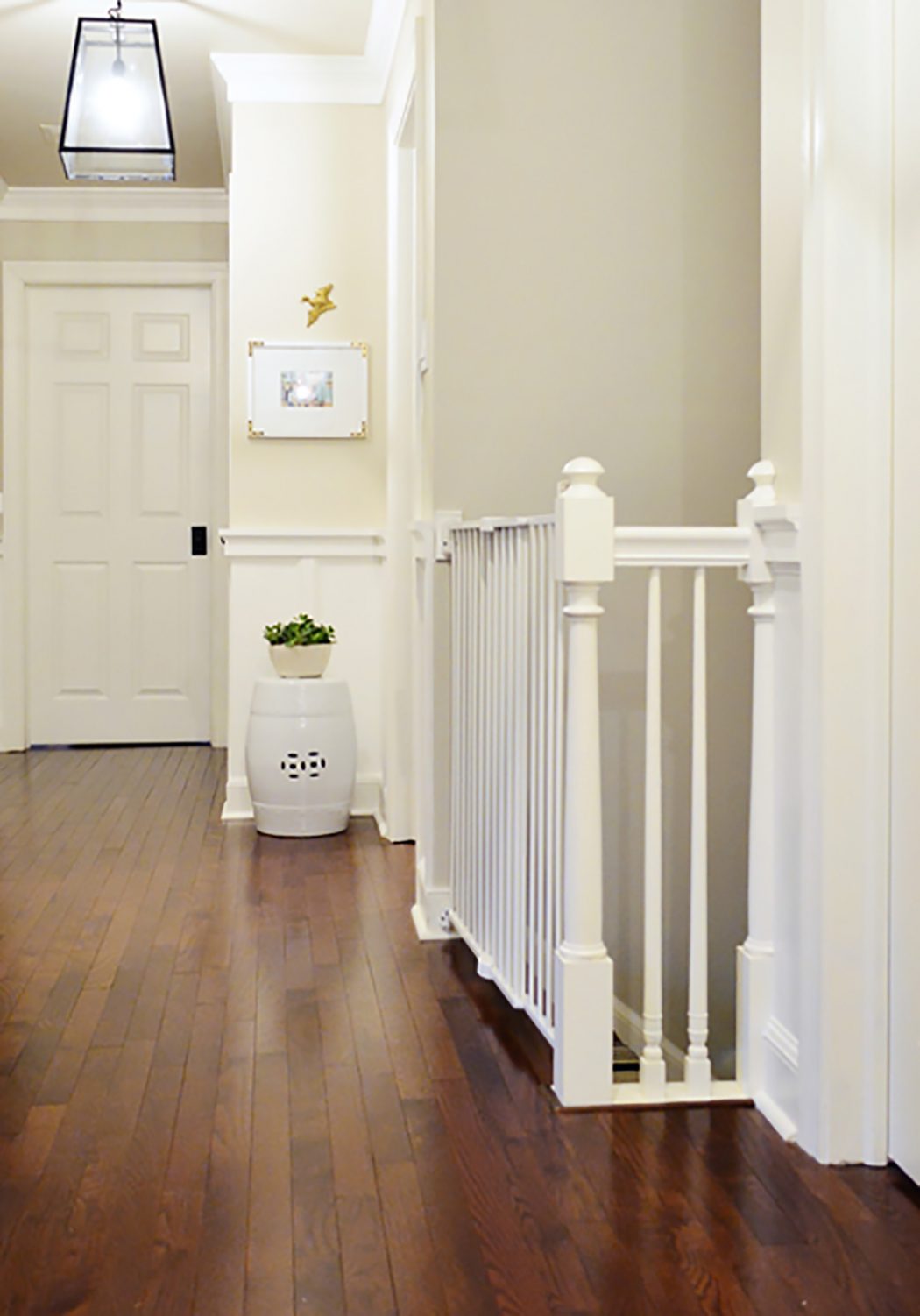
Baby gates are not design poetry. Nobody walks into a room and says, “Ah yes, this pressure-mounted barrier really completes the emotional arc of the staircase.” But stairs are a major fall risk, so gates at the top and bottom can be essential during certain stages.
The key is choosing the right gate for the location. Hardware-mounted gates are usually the safer choice at the top of stairs. Pet gates should not be used as child safety gates. And any gate that an adult cannot open without muttering under their breath may eventually be left open, which defeats the whole purpose.
4. We Think About Windows, Cords, and Climbing
Window safety is one of the most overlooked parts of childproofing. Screens are not safety barriers. They keep bugs out, not children in. Furniture should be moved away from windows whenever possible, and window stops or guards can help prevent dangerous openings.
Cords are another sneaky hazard. Blind cords, electrical cords, chargers, and dangling lamp cords can invite pulling, tangling, and climbing. We prefer cordless window coverings, tucked-away cords, and furniture arrangements that do not create little “pull here for chaos” stations.
5. We Make Kitchens Less Exciting in the Wrong Ways
The kitchen is where adults see dinner and children see a laboratory. Hot pans, sharp knives, glassware, cleaning products, trash, dishwasher detergent, and stove knobs all deserve attention.
Simple habits help: use back burners when possible, turn pot handles inward, keep hot drinks away from counter edges, unplug small appliances, store knives in locked or high spaces, and avoid leaving stools where a child can reach the counter. A curious toddler plus a step stool is basically a heist movie.
Why We Don’t Buy Every Childproofing Product
Childproofing products can be useful. Cabinet latches, outlet covers, knob covers, corner guards, toilet locks, anti-tip kits, and door locks all have their place. But buying every product in the safety aisle can create a false sense of security.
A gadget is only helpful if it is installed correctly, used consistently, and matched to the real risk. A flimsy cabinet latch that pops open when tugged is not protection; it is decoration with a day job. An outlet cover that becomes a choking hazard is solving one problem while auditioning for another.
That is why we prefer a risk-based approach. We ask: What can seriously hurt a child here? Can we remove the hazard entirely? Can we store it differently? Can we change the layout? Do we need a device? If yes, which one is sturdy, simple, and realistic for daily life?
Childproofing That Blends With Home Design
A beautiful home and a safe home are not enemies. They just need a mediator. Many childproofing choices can blend in when they are planned early.
For example, instead of placing breakable accessories on low tables, use baskets, soft books, chunky wood toys, or nothing at all. Instead of open shelving full of fragile objects, place everyday items lower and delicate items higher. Instead of a wobbly floor lamp, choose wall sconces, table lamps on secured furniture, or lighting with cords hidden behind furniture.
Storage is the unsung hero of family design. Closed cabinets, lidded bins, drawer organizers, and high shelves can make a room feel cleaner while keeping hazards out of reach. When childproofing is part of the design plan, it feels less like an emergency patch and more like common sense with better lighting.
The Role of Supervision: Still the Main Character
No childproofing system replaces supervision. A safe home reduces risk, but children are famously creative. They can turn a laundry basket into a vehicle, a couch cushion into a mountain, and silence into a legally concerning clue.
Supervision means staying close during high-risk activities, especially bathing, cooking, swimming, eating, climbing, and play with small objects. It also means checking the home regularly as children grow. The drawer they could not open last month may now open beautifully, usually at the exact moment you are on a phone call.
Good childproofing supports supervision. It buys time, blocks access, and reduces the odds of a normal parenting blink becoming an emergency.
A Room-by-Room Way to Think About Hidden Childproofing
Living Room
Anchor furniture, secure the TV, remove unstable decor, hide cords, choose soft or rounded furniture when possible, and keep small objects out of reach. Remotes with button batteries should be stored carefully because small batteries can be extremely dangerous if swallowed.
Kitchen
Lock cabinets with chemicals or sharp tools, use back burners, turn handles inward, keep hot drinks away from edges, and store breakables higher. Trash cans with child-resistant lids can also help, especially if they contain batteries, razors, food scraps, or packaging.
Bathroom
Never leave young children unattended in the bath, even briefly. Store medicines, razors, cleaners, cosmetics, and small grooming tools out of reach or locked away. Consider toilet locks if needed, and keep electrical tools unplugged and stored after use.
Bedrooms
Anchor dressers and bookcases, keep cords away from cribs and beds, avoid placing furniture near windows, and store small items safely. Drawers are tempting climbing tools, so dressers deserve special attention.
Laundry Area
Laundry packets can look colorful and interesting to kids, which is exactly the problem. Store detergents, pods, bleach, stain removers, and cleaning sprays high, locked, and in original containers.
Garage and Utility Spaces
These zones are hazard magnets. Paint, pesticides, tools, fuel, automotive products, ladders, and sharp equipment should be locked away. If a child can access the garage, treat it like a room that needs serious boundaries.
Common Childproofing Mistakes
One common mistake is childproofing once and assuming the job is finished. Children develop fast. A baby who could barely roll over becomes a toddler who can drag a chair across the room with the determination of a tiny furniture mover.
Another mistake is focusing only on visible products. Foam corner guards may be useful, but they are not a substitute for locked medicine, anchored furniture, safe sleep practices, water supervision, and choking prevention.
A third mistake is making the system too annoying for adults. If a lock is impossible to use, someone will stop using it. The best safety tools are the ones adults can live with every day.
Our Philosophy: Safe, Livable, Not Too Precious
We want a house where kids can explore without adults gasping every twelve seconds. That means we do not design rooms around precious objects at toddler height. We do not expect children to behave like miniature museum guests. We also do not believe every inch of the house needs to look like a daycare supply closet.
The sweet spot is a home that is flexible. It has safe zones, smart storage, durable materials, washable surfaces, fewer fragile temptations, and safety devices where they matter most. It lets kids be kids without letting the house become an obstacle course sponsored by poor decisions.
Experience: What This Looks Like in Real Life
In real life, invisible childproofing looks less like a dramatic makeover and more like a hundred small choices that slowly make the house calmer. It starts before visitors even notice anything. The dresser is anchored. The cleaning supplies are locked. The outlet behind the chair is covered. The heavy lamp that once sat proudly on a side table has been replaced by something less likely to become a medieval weapon.
One of the biggest lessons is that children notice whatever you do not want them to notice. If there is one loose cabinet knob in the entire house, they will find it. If there is one reachable drawer with birthday candles, batteries, tape, and mystery screws, they will open it like they have a search warrant. So our experience has been that childproofing works best when it is boring. Boring is beautiful. Boring means the dangerous stuff is not available, not interesting, and not part of the adventure.
We also learned that “out of sight” is not always enough. A toddler does not need to see a hazard to discover it. They can hear a cabinet click from three rooms away. They can sense a forbidden drawer through drywall. That is why storage has to be realistic. A low bathroom vanity with medicine inside is not safe just because the bottles are pushed to the back. A cleaning spray under the kitchen sink is still a problem if the cabinet opens easily. Good childproofing assumes children are smart, fast, and weirdly committed.
Another experience-based truth: the prettiest solution is not always the best solution, and the safest solution does not have to be ugly. Sometimes the answer is a simple latch. Sometimes it is moving the entire category of items somewhere else. We have had better luck redesigning routines than fighting with gadgets all day. For example, instead of locking five drawers full of random hazards, we clear the lower drawers and use them for kid-safe items like towels, plastic containers, or napkins. Suddenly the child gets a drawer to explore, and we get fewer gray hairs. Everybody wins.
There is also a social side to this. When guests visit, they may not immediately see safety devices, but the house has rules. Hot drinks stay away from edges. Doors to certain spaces stay closed. Small objects do not get left on low tables. Purses go up high because purses often contain medicine, coins, cosmetics, and other tiny treasures of doom. Visiting kids are wonderful, but they do not know your house. That means the adults have to do the thinking ahead of time.
Over time, the house becomes a little more normal again. Gates come down. Some locks disappear. Kids learn. Adults relax slightly, then immediately discover a new phase. That is parenting. Childproofing is not a single weekend project. It is a moving target with snacks. The goal is not perfection; it is prevention, awareness, and a home that welcomes children without pretending they are tiny adults with excellent judgment.
Conclusion
So, why don’t you see childproofing stuff in our house? Because a lot of it is hidden, built in, or handled through layout and habits. The safest choices are often not the loudest ones. Anchored furniture, locked storage, thoughtful room arrangements, safer kitchen routines, window awareness, cord control, and realistic supervision can do more than a cart full of random plastic gadgets.
That does not mean childproofing products are bad. Many are incredibly useful. It simply means they work best as part of a bigger plan. A family home should be safe, livable, and comfortablenot so precious that children cannot exist in it, and not so casual that real hazards are ignored.
Childproofing is not about fear. It is about freedom. When the biggest risks are handled well, kids can explore more safely, parents can breathe a little easier, and the house can still look like people with taste live there. Maybe tired people with crackers in the sofa cushions, but still people with taste.