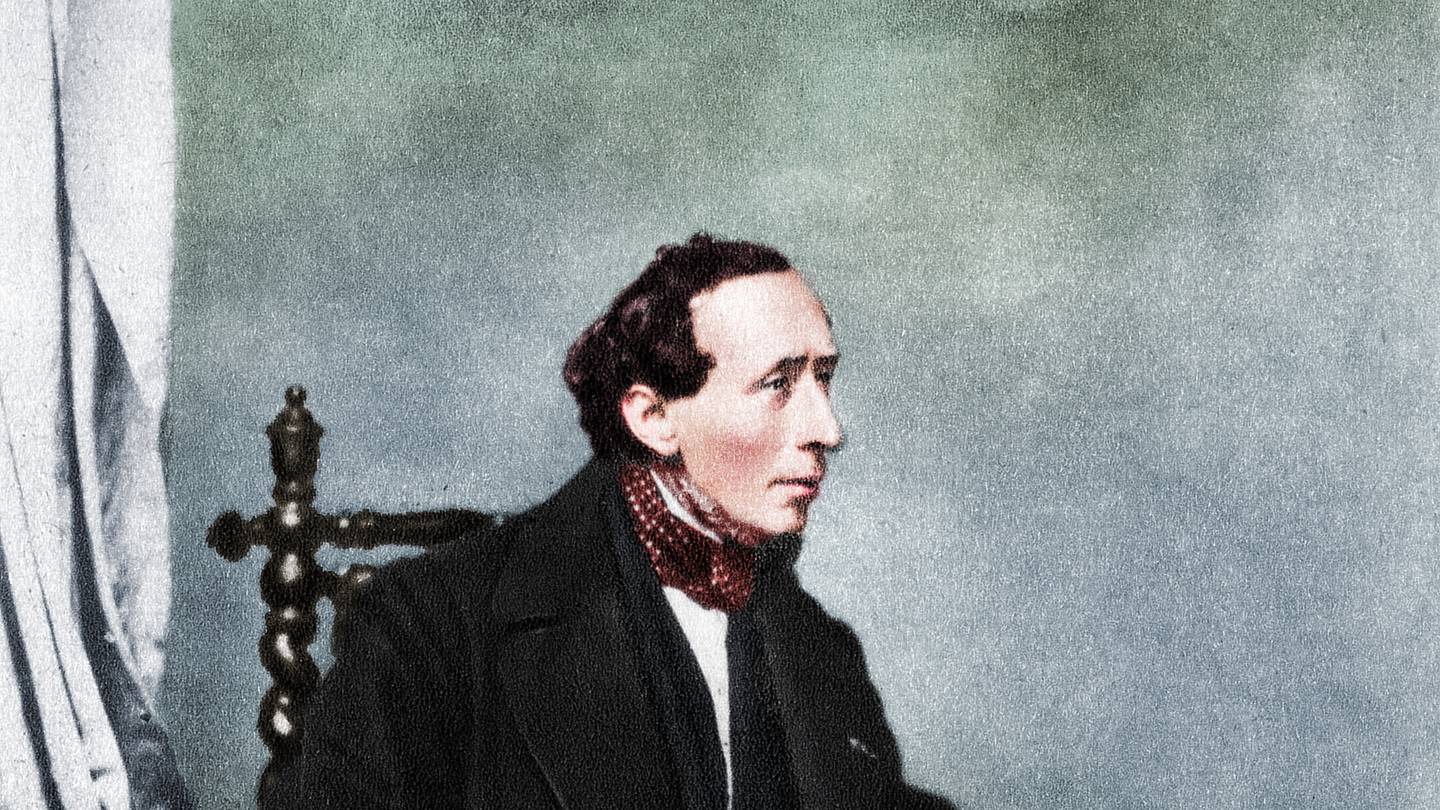

Hans Christian Andersen is so closely associated with fairy tales that it is easy to imagine him as a kindly grandfather who spent his afternoons inventing talking teapots for well-behaved children. The real Andersen was far more interesting. He was ambitious, anxious, theatrical, widely traveled, emotionally complicated, and capable of turning a social disaster into literary fuel.
Born in Odense, Denmark, in 1805, the Danish author eventually became famous for stories such as The Little Mermaid, The Ugly Duckling, The Emperor’s New Clothes, The Snow Queen, and The Princess and the Pea. Yet his life was not the smooth “once upon a time” suggested by his reputation. It involved poverty, rejection, paper art, obsessive travel, painful romances, and one impressively awkward visit to Charles Dickens.
These seven surprising facts about Hans Christian Andersen reveal a creator who did not merely write fairy tales. In many ways, he lived inside onecomplete with reversals of fortune, hidden wounds, strange props, and enough dramatic tension to keep a modern streaming service busy for several seasons.
Biographical overview verified through historical, archival, and literary references.
1. He Left Home at 14 to Become Famous on the Stage
Andersen’s childhood gave him two things that rarely arrive as a matching set: material poverty and extravagant imagination. His father was a shoemaker who read aloud, made toys, and built a small puppet theater for his son. Young Hans made costumes for dolls, memorized plays, and treated ordinary rooms as if they were backstage at the Royal Danish Theatre.
At age 14, he left Odense for Copenhagen with very little money and a heroic quantity of confidence. When his mother asked what he planned to do, his answer was essentially that he intended to become famous. It was not a business plan so much as a declaration to the universe.
He tried to enter theatrical life as a singer, actor, and performer. The stage did not deliver the glorious welcome he imagined, but his persistence attracted patrons who helped him continue his education. His early theatrical ambitions mattered even after he moved into literature. Andersen’s tales are full of quick dialogue, dramatic entrances, visual transformations, and objects that behave like actors waiting for their cue.
The failed performer did not disappear; he simply changed stages. Instead of standing under theater lights, Andersen created scenes in readers’ minds. That may explain why even a short story such as The Princess and the Pea feels carefully staged, with a storm, a mysterious visitor, a towering bed, and a punch line disguised as royal quality control.
Andersen’s childhood, puppet theater, and departure for Copenhagen at 14 are documented in biographical accounts.
2. Fairy Tales Were Only One Part of His Enormous Career
Modern readers often place Andersen in a tiny literary box labeled “children’s fairy tales.” He would probably have considered the box flattering, limiting, and badly designed.
Before and alongside his fairy tales, Andersen wrote poems, novels, plays, autobiographical works, and travel books. His 1835 novel The Improvisatore helped establish his reputation, and his travel writing recorded landscapes, cities, customs, conversations, and the emotional drama of being Hans Christian Andersen in yet another hotel room.
He also differed from the Brothers Grimm. The Grimms are strongly associated with collecting and editing traditional folktales. Andersen sometimes drew on stories heard in childhood, but he increasingly created original literary fairy tales, combining folklore, personal experience, satire, Christian ideas, social observation, and his own peculiar imagination.
He did not write only for children
His early collection was marketed as tales told for children, but Andersen hoped adults would read it too. That makes sense. The Emperor’s New Clothes is funny to a child because a vain ruler walks around without clothes. It is funnyand uncomfortableto an adult because it exposes conformity, status anxiety, cowardice, and the human talent for applauding nonsense when powerful people approve it first.
Across his career, Andersen produced roughly 160 or more tales and stories, depending on how editors classify them, plus a substantial body of work in other genres. Calling him only a children’s writer is a little like calling Leonardo da Vinci “the fellow who painted that one smiling woman.” Technically relevant, wildly incomplete.
Sources describe Andersen’s novels, plays, poetry, travel writing, and original expansion of the literary fairy-tale form.
3. The Ugly Duckling Was Close to a Self-Portrait
Few Hans Christian Andersen facts are more revealing than the autobiographical current running through The Ugly Duckling. Andersen grew up poor, felt physically awkward, endured ridicule, and entered cultural circles where he was painfully aware of class and manners. He longed not just for success, but for recognitionthe moment when the world would finally understand what he believed he had been all along.
The duckling’s transformation into a swan therefore carries more than a generic message about self-esteem. It reflects Andersen’s own rise from an obscure child in Odense to an internationally celebrated author welcomed by royalty and literary celebrities.
Still, the story is not merely a victory lap with feathers. The duckling suffers because he has been placed in an environment that cannot recognize him. His value does not suddenly appear at the end; it was present from the beginning, even when the barnyard voted otherwise. That distinction is one reason the tale remains emotionally powerful.
Other stories also contain traces of Andersen’s life. Scholars and biographers have connected his experiences of poverty, loneliness, impossible love, religious hope, and social exclusion with works such as The Little Match Girl, The Little Mermaid, The Nightingale, and The Steadfast Tin Soldier. Andersen did not copy his diary into fantasy. He transformed private pain into symbols that could travel farther than autobiography ever could.
Literary scholars and biographers commonly identify strong autobiographical elements in The Ugly Duckling and other tales.
4. He Was a Remarkable Paper-Cut Artist and Scrapbook Maker
Andersen’s creativity did not stop when he put down his pen. He was famous among friends for cutting elaborate designs from folded paper, often while telling a story aloud. At the end, he unfolded the sheet to reveal a miniature world of dancers, swans, clowns, castles, masks, trees, and fantastical figures.
These were not casual snowflakes made while waiting for dinner. Surviving works show extraordinary control and visual imagination. One paper cut preserved by Princeton’s Cotsen Children’s Library contains 83 figures, including ballerinas, stilt walkers, cherubs, reindeer, clowns, and swans. Apparently, minimalism had the evening off.
Andersen also helped create richly layered scrapbooks. A large picture book made with Adolph Drewsen combined images cut from American, English, German, and French publications. The pictures were arranged, colored, and paired with poems or rhymes by Andersen. The result stretched across more than 140 pages.
This visual work helps explain the sharp imagery in his writing. Andersen thought in silhouettes, contrasts, costumes, and transformations. A tin soldier can stand on one leg like a dark paper figure. A mermaid can rise against the sea in a clean, unforgettable outline. A swan can emerge from a page as both animal and emblem. His scissors and his sentences belonged to the same imaginative workshop.
Andersen’s papercuts and collaborative scrapbooks are preserved in major archival collections.
5. He Was a Restless Travelerand a Nervous One
Andersen traveled with the appetite of a modern influencer and the anxiety of someone who had read every hotel fire report ever printed. Biographical accounts describe dozens of extended journeys across Europe and beyond. He visited places including Germany, Italy, France, England, Spain, Portugal, Switzerland, and parts of North Africa.
Travel was not a vacation from writing; it was part of his method. New landscapes became settings, conversations became character material, and discomfort became prose. He published multiple travel books and blended observation with reflection, fiction, and autobiography. His journeys helped turn him from a Danish literary figure into a European celebrity.
His luggage reportedly included an escape rope
Andersen feared fire, especially while staying in unfamiliar buildings. He reportedly traveled with a rope that could be used to escape from an upper-floor window. It is an oddly perfect detail: the author of dramatic rescues preferred to bring his own emergency plot device.
His nervousness did not stop him from traveling. That is the more important point. Andersen often appears in biographies as vain, fearful, sensitive, and easily offended, but he was also remarkably brave in practice. He repeatedly entered new countries, languages, drawing rooms, and social situations. Courage, in his case, did not mean feeling calm. It meant buying the ticket while mentally rehearsing several catastrophes.
Andersen’s extensive travels, travel books, and fear of hotel fires are noted in biographical and museum reporting.
6. His Visit With Charles Dickens Became a Legendary Houseguest Disaster
Hans Christian Andersen admired Charles Dickens, and the two famous writers met during Andersen’s travels in England. Dickens eventually invited him to stay with the family at Gad’s Hill Place in 1857. What followed has become one of literary history’s most celebrated examples of a visit lasting longer than anyone’s social battery.
Andersen remained for about five weeks. Differences in language, habits, expectations, and personality created strain. Andersen was emotionally intense and socially awkward; Dickens was dealing with serious tensions in his own household. The combination was less “meeting of great minds” and more “prestige television dinner scene where nobody touches the soup.”
Accounts of the visit vary in tone and detail, and later retellings have polished the episode into comic legend. What is clear is that the friendship cooled afterward. Andersen, who deeply wanted affection and belonging, seems not to have fully understood why the visit went wrong.
The episode is funny from a distance, but it also illuminates a sad pattern in his life. Andersen could win enormous public love while struggling with ordinary intimacy. Millions welcomed him through books; individual households could find him exhausting before breakfast. That tensionbetween being adored in imagination and difficult in personfeels surprisingly modern.
The 1857 visit to Dickens’s household lasted approximately five weeks and contributed to a cooling friendship.
7. His Romantic Life Was Complicated, Intense, and Often Unrequited
Andersen never married, but his emotional life was far from empty. Letters and diaries document powerful attachments to both women and men. Among the people associated with his romantic longings were singer Jenny Lind, writer Edvard Collin, dancer Harald Scharff, and Riborg Voigt, whose letter Andersen reportedly preserved for decades.
It is tempting to assign a tidy modern label to Andersen, but the historical record resists simplicity. Scholars have debated the nature of his relationships, the degree to which they were physical, and how nineteenth-century religion and social convention shaped what he could express or pursue. The safest conclusion is also the most human one: he loved intensely, was often not loved in the same way, and carried those disappointments into his art.
That emotional pattern echoes through his fairy tales. The mermaid sacrifices her voice and suffers for a prince who does not return her love. The steadfast tin soldier remains devoted across impossible distance. The nightingale offers authentic beauty to a world easily distracted by glittering imitations. Andersen understood longing not as a passing inconvenience but as an entire climate.
His stories rarely promise that sincere love will be rewarded on schedule. Sometimes goodness is recognized late. Sometimes sacrifice leads to spiritual transformation rather than romance. Sometimes the match burns brightly for only a moment. That emotional honesty is one reason the original Hans Christian Andersen fairy tales often feel darker, stranger, and more adult than their cheerful adaptations.
Andersen never married, and surviving writings document unrequited attachments to both men and women; interpretations remain debated.
Why These Hans Christian Andersen Facts Still Matter
Andersen’s lasting influence comes from more than memorable plots. He expanded the literary fairy tale into a flexible form capable of comedy, social criticism, spiritual yearning, autobiography, horror, and heartbreak. He could make a needle arrogant, a shadow independent, a toy soldier tragic, or an emperor ridiculous without losing narrative clarity.
His life also complicates the comforting myth that successful artists simply discover their gift and proceed directly to applause. Andersen failed, embarrassed himself, depended on patrons, worried constantly, sought approval, and occasionally wore out his welcome. He also kept working. The swan did not glide effortlessly into literary history; it paddled furiously beneath the surface and probably complained about the accommodations.
To read Andersen closely is to discover a writer who knew that beauty and pain often occupy the same sentence. His tales survive because they do not protect readers from sorrow. Instead, they give sorrow a shapeand occasionally give it wings.
Experiencing Andersen Beyond the Trivia: A Reader’s Journey
The best way to understand these surprising facts is not to memorize them like literary trading cards. It is to use them as doors into Andersen’s creative world. A rewarding experience begins with reading one familiar tale in a translation that stays reasonably close to the Danish original. Choose The Little Mermaid, The Snow Queen, or The Red Shoes, then temporarily set aside the softened versions absorbed through movies and picture books.
The first surprise is usually tone. Andersen can be playful for three paragraphs, unsettling in the fourth, and spiritually intense by the fifth. Reading him aloud makes the shifts easier to hear. His language often moves like spoken storytelling, with sudden comments, comic interruptions, and direct appeals to the listener. Invite adults to the reading too. They may discover that the “children’s story” has been quietly discussing vanity, mortality, class, faith, or unreturned love while everyone was watching the talking spoon.
Try Making a Story With Scissors
A second experience is to imitate Andersen’s paper art. Fold a sheet, cut shapes without drawing a detailed plan, and tell a short story while working. The result does not need 83 figures. Three recognizable figures and one shape that might be a goat under favorable lighting will do. The point is to feel how suspense changes when the audience cannot see the image until the paper opens.
This simple exercise reveals something important about Andersen’s storytelling. He often withholds identity until a final transformation. The ugly bird becomes a swan; apparent finery becomes nakedness; a common object reveals a soul. Unfolding paper creates the same rhythm: concealment, anticipation, recognition.
Compare the Original Tale With a Modern Adaptation
Next, place an Andersen story beside a film, cartoon, or modern retelling. Do not merely list plot differences. Ask what each version believes its audience can tolerate. What happens to death, religion, sacrifice, class, or desire? Does the adaptation reward the hero with marriage, while Andersen offers memory, art, heaven, or moral awakening instead?
This comparison turns literary history into a living conversation. Adaptations are not automatically inferior; they reveal changing cultural values. A modern version may emphasize self-expression and romantic fulfillment. Andersen may emphasize endurance, spiritual identity, or the cost of being unable to belong. The contrast helps readers see both works more clearly.
Follow His World Through Archives and Places
Digital collections can add a visual layer. Look at surviving paper cuts, scrapbook pages, manuscript samples, and nineteenth-century illustrated editions. Notice how different artists imagine the same mermaid, snow queen, or duckling. The story changes slightly each time it enters a new visual style.
Travel can deepen the experience, but it is not required. Andersen’s birthplace in Odense and the H.C. Andersen House connect his stories to the streets and social world that shaped him. In the United States, the Hans Christian Andersen statue in New York’s Central Park offers a quieter encounter: a bronze storyteller with an open book and a duckling at his side. Sitting nearby with one original tale creates a pleasing loopan author who traveled constantly still attracting readers far from Denmark.
Finally, keep a small “Andersen notebook” for a week. Record one ordinary object each day and give it a private desire. What does the cracked mug envy? What secret does an elevator button keep? What social rank does a lonely sock imagine it deserves? This practice sounds silly until it begins producing stories. Andersen’s special talent was not escaping the everyday world. It was noticing how much drama the everyday world had been hiding.
After these experiences, the seven facts stop feeling like trivia. The stage-struck teenager, ambitious author, paper artist, anxious traveler, disastrous guest, lonely romantic, and self-invented swan become parts of the same person. Andersen’s life shows how imagination can convert embarrassment into comedy, longing into myth, and a scrap of paper into a kingdom.
Archival collections preserve Andersen’s illustrations, manuscripts, scrapbooks, and early editions; museums continue interpreting his work.
Note: This article distinguishes documented biographical facts from literary interpretation. Details about Andersen’s relationships remain subjects of scholarly debate and should be discussed with appropriate historical nuance.