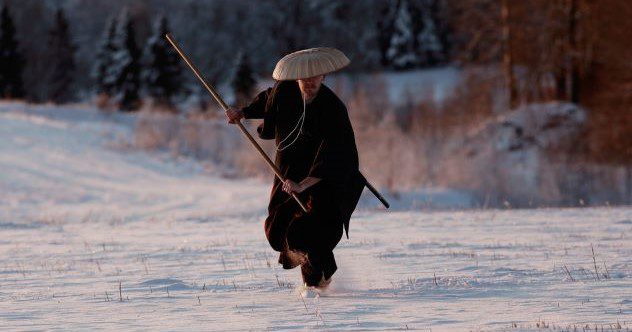

Religion and warfare may seem like an odd pairing. One encourages contemplation, compassion, discipline, and transcendence; the other traditionally involves sharp objects, fortified walls, and people making extremely urgent decisions about where to stand. Yet history repeatedly produced communities in which spiritual devotion and military service existed side by side.
Some were genuine monks who trained with weapons. Others belonged to military-religious orders whose members lived under vows. Still others were ascetics, initiated religious warriors, or armed leagues defending temples, communities, pilgrimage routes, and political interests. Calling all of them “warrior monks” is convenient, but historically messy.
The following ten groups illustrate just how varied these spiritual soldiers could be. Their stories stretch from Chinese Buddhist monasteries and Japanese mountain temples to India, Korea, the Baltic, Punjab, and the Crusader states. They were not fantasy characters with glowing swords and infinite stamina. They were products of very real political, economic, and religious pressuresand some became formidable military forces.
1. Shaolin Fighting Monks of China
Where martial arts met Buddhist monastic life
No discussion of warrior monks can begin anywhere else without the Shaolin Temple kicking down the historical door.
Founded in the late fifth century near Mount Song in China’s Henan Province, Shaolin became associated with Chan Buddhism and, eventually, an extraordinary martial tradition. Popular culture sometimes implies that Shaolin monks invented every Chinese martial art before breakfast. The historical picture is more complicated.
Evidence shows that monks connected with Shaolin participated in armed activity as early as the Tang dynasty. One famous episode occurred in 621, when monks assisted Li Shimin, the future Tang emperor, during his struggle against rival Wang Shichong. Shaolin’s martial reputation became especially well documented during the Ming period, when contemporary writers praised its monks’ skill with weaponsparticularly the staff.
By the sixteenth and seventeenth centuries, martial practice was firmly associated with the monastery. Empty-hand fighting became increasingly important later, although the staff had enjoyed superstar status first.
Shaolin’s fighting tradition did not mean every resident monk spent his afternoons smashing bricks. Religious study, ritual, meditation, physical conditioning, institutional defense, and martial training overlapped in complex ways. What made Shaolin remarkable was precisely that a Buddhist monastery developed a military reputation strong enough to survive centuries of history and several truckloads of later mythology.
2. Japan’s Monastic Warriors, Commonly Called Sōhei
The mountain temples that could intimidate governments
Medieval Japan produced some of history’s most famous “warrior monks,” although historians caution that the familiar image of the sōhei is partly a later construction.
Major Buddhist institutions such as Enryaku-ji on Mount Hiei possessed land, wealth, political influence, dependents, and connections to armed men. When disputes over property, appointments, taxation, or religious authority became sufficiently heated, monastic institutions could mobilize force.
These forces were not necessarily armies composed entirely of shaved-headed ordained monks. They could include temple servants, lower-ranking religious personnel, professional warriors, retainers, and other people connected to the institution. Medieval organizational charts were apparently determined to make life difficult for future historians.
Japanese monastic forces participated in political protests and armed conflicts during the Heian and Kamakura periods and continued to matter during later centuries. The naginata, a bladed polearm now strongly associated in popular imagination with warrior monks, was indeed used by various Japanese fighting classes.
The important point is that powerful temples were not isolated meditation centers floating above secular politics. They were major institutions embedded in landholding, patronage networks, political disputes, and the increasingly militarized society around them.
3. The Ikkō-Ikki Religious Leagues
Faith, community, and mass resistance in Sengoku Japan
The Ikkō-ikki were different from the stereotypical lone warrior monk. They were religiously influenced leagues associated largely with followers of the Hongan-ji branch of Jōdo Shinshū Buddhism during the fifteenth and sixteenth centuries.
Their membership could include farmers, merchants, local warriors, priests, and other believers. In other words, imagine a religious community organization, neighborhood defense league, political movement, and military coalition all deciding to share the same calendar.
These leagues became especially powerful during Japan’s turbulent Sengoku era. In Kaga Province, Hongan-ji followers helped overthrow established provincial authority during the late fifteenth century, contributing to a remarkable period of local self-government.
Later Ikkō forces resisted some of Japan’s strongest warlords. Oda Nobunaga spent years fighting the Hongan-ji stronghold at Ishiyama in a struggle that lasted until 1580.
The Ikkō-ikki therefore demonstrate why “warrior monk” can be misleading. Their power did not come from an exclusive brotherhood of elite religious fighters. It came from networks capable of turning shared religious identity into social organization, political resistance, and military manpower.
4. Korean Buddhist Monk-Soldiers of the Imjin War
Monks who answered an invasion
When Japanese forces under Toyotomi Hideyoshi invaded Korea in 1592, the Joseon kingdom faced a national catastrophe. Government armies suffered severe early defeats, major cities fell, and communities across the peninsula organized resistance.
Buddhist monks became an important part of that defense.
This was particularly striking because Buddhism had lost much of its earlier political status under the Confucian Joseon state. Yet the elderly Buddhist master Hyujeong, better known as Seosan Daesa, helped rally monks to the defense of the country.
Thousands reportedly responded. Monk-soldiers served in campaigns, defended strategically important locations, supported fortifications, and participated in resistance against Japanese occupation forces. They became associated with significant operations including fighting connected with the recovery of Pyongyang.
The Korean example shows that religious communities could become military resources during emergencies even when their normal social role was not primarily martial.
It also created an obvious Buddhist ethical tension. Monastic life traditionally emphasized nonviolence, yet invasion forced religious leaders to confront questions about protecting communities, temples, and the nation. History, as usual, refused to provide an easy multiple-choice answer.
5. Naga Sadhus and India’s Warrior Ascetics
Renunciation with a surprisingly martial résumé
India’s Naga sadhus are among the clearest examples of genuine warrior ascetics.
Today, Naga ascetics are widely recognized for their dramatic appearance at major Hindu gatherings such as the Kumbh Mela, where some traditionally cover their bodies in ash and wear little or no clothing. Historically, however, certain ascetic orders also developed strong martial functions.
During periods of political instability, temples, monasteries, pilgrimage routes, and religious communities needed protection. Armed ascetics could provide it. By the seventeenth and eighteenth centuries, groups of warrior ascetics were serving in infantry and cavalry forces, guarding religious interests, competing for control of pilgrimage networks, and sometimes working for regional rulers.
Some became mercenary soldiers. Others accumulated economic power through trade, landholding, moneylending, and control of transportation or pilgrimage routes.
Naga groups were associated with akharas, institutions that could function both as religious organizations and centers of physical or martial training.
The image is fascinating: men who renounced ordinary household life yet sometimes became deeply involved in the military and economic struggles of early modern India. Apparently renouncing worldly possessions did not always mean renouncing geopolitical complications.
6. Nihang and Akali Sikh Warriors
Spiritual discipline combined with military readiness
Nihang Sikhs are not monks, so placing them on a list of warrior monks requires an important qualification. They fit better under the broader description “spiritual soldiers.”
The development of the Sikh martial tradition was shaped by periods of intense political and military pressure. In 1699, Guru Gobind Singh formally established the Khalsa, an initiated Sikh community committed to a strict ethical and religious discipline.
Within the wider Sikh martial tradition, Akali and Nihang warriors became renowned for their distinctive military appearance and religious devotion. Historical Sikh equipment included swords, spears, firearms, and the chakar or chakram, a steel throwing ring.
Surviving eighteenth- and nineteenth-century examples demonstrate how closely religious symbolism and martial identity could be connected. Some chakars bear sacred inscriptions, while traditional Nihang dress could incorporate multiple steel rings worn around the turban, neck, or arms.
The martial element was never simply about battlefield enthusiasm. Sikh warrior ideals emphasized courage, discipline, service, defense against oppression, and accountability to religious principles.
That distinction matters. The concept was not “fight because fighting is fun.” It was the harder proposition that spiritual commitment could include an obligation to defend others when peaceful alternatives failed.
7. The Knights Templar
The medieval warriors who became legends before Hollywood arrived
The Knights Templar may be the most famous Christian military-religious order in history, helped considerably by centuries of conspiracy theories, treasure stories, Holy Grail rumors, novels, movies, and people on the Internet who seem suspiciously confident about secret medieval banking records.
The real Templars were interesting enough.
The order emerged in Jerusalem around 1119 following the First Crusade. Its original mission centered on protecting Christian pilgrims traveling through dangerous territory.
Templar knights lived according to religious vows that included poverty, chastity, and obedience. They eventually became an elite military force involved in the defense of the Crusader states.
The organization also developed extensive estates and financial operations across Europe and the eastern Mediterranean. Its administrative network enabled the Templars to move resources across enormous distances and provide financial services to rulers and pilgrims.
After the Crusader position in the Holy Land collapsed, the order’s wealth and independence became politically dangerous. King Philip IV of France launched arrests against the Templars in 1307. Members were interrogated and tortured, sensational accusations spread, and Pope Clement V dissolved the order in 1312.
No, reliable historical evidence does not demonstrate that the Templars secretly escaped with the Holy Grail and opened a branch office beneath Paris.
8. The Knights Hospitaller
Hospital staff with castles, armor, and warships
The Knights Hospitaller began with a mission that sounds much less threatening than their later military reputation: caring for sick and poor pilgrims in Jerusalem.
The religious community associated with the Hospital of St. John received formal papal recognition in 1113. During the twelfth century, however, the order became increasingly militarized as the Crusader states required organized defense.
Hospitallers combined charitable obligations with military service. They built and operated hospitals but also garrisoned fortresses and fought in major conflicts.
After losing their positions in the Holy Land, they relocated first to Cyprus and then Rhodes, where the order developed substantial naval power. Forced from Rhodes by the Ottoman Empire in 1522, they eventually received Malta.
There, in 1565, they helped withstand the famous Great Siege of Malta against a much larger Ottoman invasion force. The successful defense transformed the Hospitallers into European military celebrities.
Their history is a reminder that medieval religious military orders could possess several identities simultaneously: monks under vows, administrators, caregivers, landlords, sailors, castle defenders, and professional warriors. Specialization was apparently optional.
9. The Teutonic Knights
A religious order that built its own territorial state
The Teutonic Order developed during the Third Crusade from a German hospital established during the siege of Acre around 1190. By 1198, it had become a military-religious order.
Like other crusading orders, its members combined religious discipline with armed service. What makes the Teutonic Knights especially important is what happened after their attention shifted toward northeastern Europe.
During the thirteenth century, the order became heavily involved in the Baltic Crusades. It conquered territory populated by non-Christian Prussian peoples and established fortified settlements, castles, towns, and administrative structures.
Over time, the Teutonic Order effectively became a territorial power. Its campaigns brought it into conflict with Poland and Lithuania as well as other neighboring states.
The order reached extraordinary political influence but suffered a devastating defeat against Polish-Lithuanian forces at the Battle of Grunwald, also called Tannenberg, in 1410. Its territorial power subsequently declined.
The Teutonic Knights demonstrate how an organization founded around hospital service and crusading could evolve into something resembling a monastic state with a foreign ministry, tax base, fortresses, and an extremely serious armor budget.
10. The Livonian Brothers of the Sword
The Baltic military monks who lived up to their name
If your organization puts the word “Sword” in its official nickname, subtlety has probably left the meeting.
The Livonian Brothers of the Sword were established around 1202 in the region of modern Latvia and Estonia. Approved by Pope Innocent III, the order participated in the Northern Crusades and sought to expand Christian rule throughout the eastern Baltic.
The brothers followed a religious-military structure influenced by the Templars. Their clothing featured a red cross and sword, creating branding that nobody was likely to mistake for a gardening society.
The order fought Livs, Estonians, Lithuanians, and other Baltic peoples while establishing territorial control around fortified centers.
Their independence did not last long. In 1236, they suffered a disastrous defeat at the Battle of Saule against Lithuanian and Semigallian forces. The surviving organization was incorporated into the Teutonic Order the following year, although a Livonian branch continued operating with considerable regional autonomy.
The Sword Brothers represent the expansionist side of medieval military monasticism: religious vows combined with territorial conquest, colonization, fortress building, and conversion campaigns.
Why Did Warrior Monks and Spiritual Soldiers Appear?
Religion was only part of the equation
These groups emerged from different religions and civilizations, so there is no single explanation. However, several patterns repeat.
- Religious institutions owned valuable property. Temples, monasteries, hospitals, and pilgrimage centers required protection.
- States were often weak or distant. Communities sometimes organized their own defense.
- Pilgrimage routes attracted danger. Travelers carrying money and supplies could become targets.
- Political power and religion overlapped. Religious institutions could act like major landowners or governments.
- Periods of invasion encouraged mobilization. Korean monk-soldiers are a clear example.
- Martial service could become institutionalized. What began as occasional protection might eventually produce a permanent warrior tradition.
The result was not a universal tradition of religious warfare. Instead, specific historical environments created situations in which spiritual communities developed military capabilities.
Experience: What Life Among Warrior Monks and Spiritual Soldiers May Have Felt Like
Discipline probably mattered more than cinematic heroics
Modern entertainment tends to imagine warrior monks as permanently engaged in dramatic training montages. A bell rings. Someone carries water up a mountain. A mysterious master says something philosophical. Three minutes later, our hero can defeat twelve armored opponents while standing on a bamboo pole.
Historical life would have been far less convenient.
For genuine monastic communities, the day could revolve around prayer, ritual, communal meals, study, meditation, work, maintenance, and obedience to institutional rules. Martial training, where practiced, existed alongside these responsibilities rather than replacing them.
At Shaolin, physical discipline developed within a functioning Buddhist monastery. A fighter still lived within a religious community. The monastery needed food, repairs, administration, religious ceremonies, land management, and relations with political authorities. Being excellent with a staff did not excuse anyone from living in an institution with rules.
Religious vows changed the psychological environment
Members of Christian military orders such as the Templars, Hospitallers, and Teutonic Knights lived according to religious regulations. Their lives were governed by expectations concerning obedience, communal conduct, worship, possessions, diet, and sexuality.
This could create a very different mentality from that of an ordinary mercenary. The individual warrior formally belonged to a religious corporation with a spiritual mission larger than himself.
That did not magically make soldiers fearless or morally consistent. Medieval chroniclers frequently recorded disputes, defeats, indiscipline, political rivalry, and very human self-interest. A vow did not turn a person into a robot. It created a framework through which service and sacrifice were interpreted.
Physical hardship would have been constant
Historical warfare was exhausting even before anyone started fighting.
Campaigning meant marching long distances, enduring bad weather, carrying equipment, sleeping in uncomfortable conditions, managing animals, guarding roads, moving supplies, digging defenses, and facing disease.
For Indian warrior ascetics, long-distance movement and austerity were already familiar elements of religious life. That physical conditioning could make ascetics useful as soldiers. Their ability to tolerate hardship mattered at least as much as dramatic displays of combat skill.
Likewise, medieval military orders depended on logistics. Castles needed food. Horses needed fodder. Ships needed crews. Armies needed money. The romantic warrior with the shining sword existed only because somebody else had remembered to organize sacks of grain.
Weapons carried symbolic as well as practical meaning
A weapon could be more than battlefield equipment.
Among Sikh warriors, steel possessed powerful religious associations, while weapons could be decorated with sacred inscriptions. The chakar worn by Akali or Nihang warriors became part of an unmistakable visual identity.
Christian military orders similarly used crosses, distinctive mantles, banners, and seals to link military service with religious belonging.
Japanese temple forces could march under religious symbols associated with their institutions. Such objects communicated identity to allies and opponents while reinforcing solidarity inside the group.
That emotional effect is easy to underestimate. Soldiers were not only carrying weapons; they were carrying visible reminders of who they believed themselves to be.
The greatest challenge may have been moral contradiction
Perhaps the most interesting experience was psychological rather than physical.
Many religious traditions represented here contain strong teachings about restraint, compassion, moral discipline, or detachment. Yet their followers sometimes entered violent political environments.
That tension was not necessarily resolved neatly. People justified warfare through defense of pilgrims, protection of religious communities, resistance to invasion, service to rulers, defense against persecution, or preservation of sacred institutions.
From a modern perspective, those explanations deserve analysis rather than automatic acceptance. Religious language could inspire genuine courage and sacrifice, but it could also legitimize conquest, political domination, or brutality.
The real experience of spiritual soldiers therefore involved more than learning to fight. It meant reconcilingor sometimes failing to reconcilereligious ideals with the demands of a violent world.
Conclusion
The history of warrior monks is much stranger and more complicated than the popular image of a silent monk suddenly revealing supernatural combat skills.
Shaolin monks developed a documented martial tradition without turning Buddhism into nothing more than kung fu. Japanese monastic armies grew from powerful religious institutions deeply embedded in medieval politics. Ikkō-ikki leagues transformed shared belief into mass resistance. Korean monks mobilized during a national invasion. Naga ascetics became soldiers, guards, and sometimes mercenaries. Sikh warrior traditions fused devotion, discipline, and defense. Christian military orders built castles, hospitals, fleets, and even territorial states.
What connects these groups is not a single theology of warfare. It is the recurring historical problem of religious communities existing inside unstable political worlds.
Sometimes they withdrew from conflict. Sometimes they negotiated. Sometimes they hired protection. And sometimes the people saying the prayers were also the people standing on the walls.
Note: “Warrior monk” is used here as an accessible umbrella term. Historically, the groups above had very different organizational structures. Some consisted of ordained monastics, while others were lay believers, ascetics, military-religious knights, temple-affiliated warriors, or initiated religious soldiers. The article describes their historical roles and does not imply that violence represents the central teachings of the religions with which they were associated.