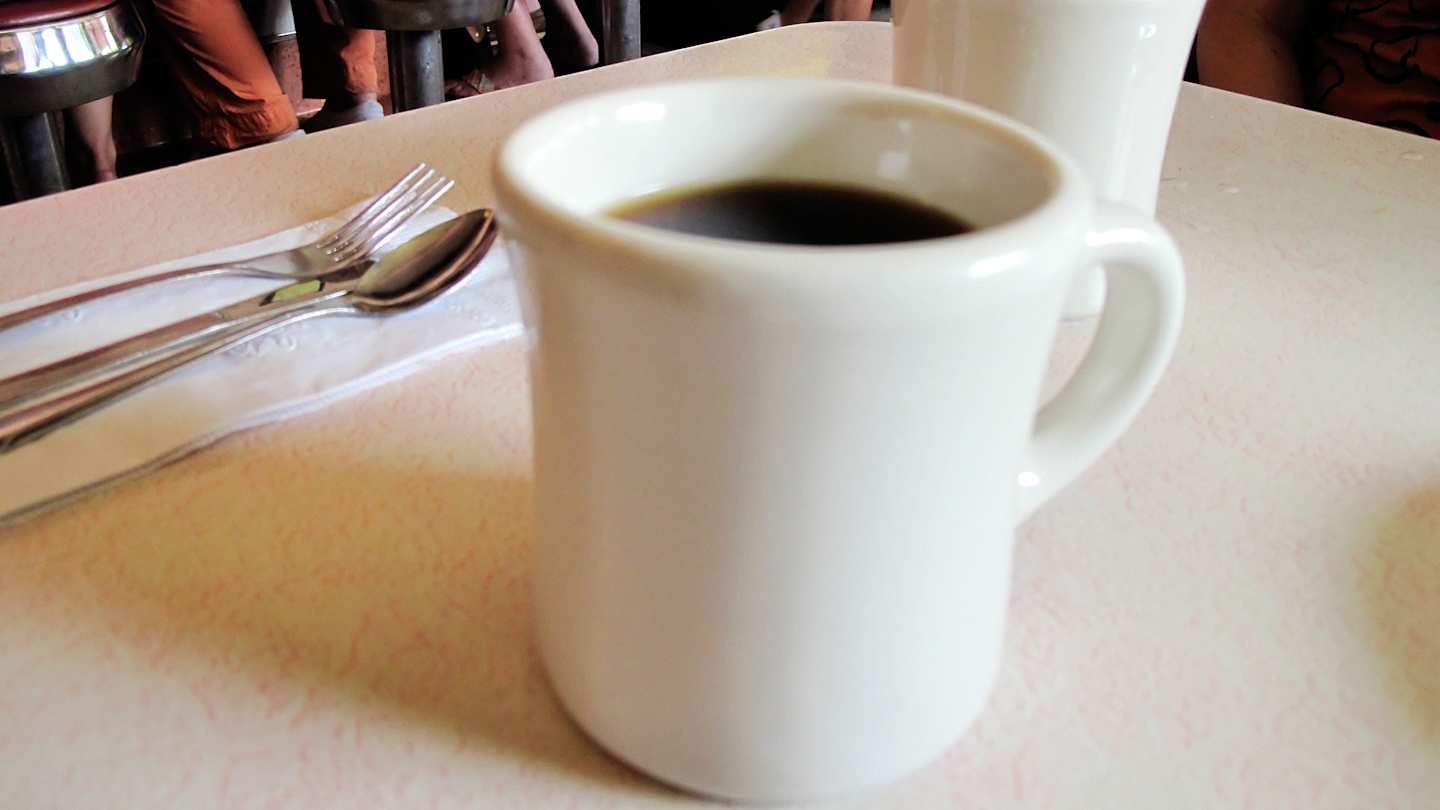

Walk into a roadside diner in Pennsylvania, a 24-hour breakfast counter in New Jersey, a chrome-trimmed café in Iowa, or a family-owned spot in California, and there is a good chance your coffee will arrive in a thick, white, no-nonsense mug. It may not be identical every time, but it feels identical: heavy in the hand, bright on the table, nearly impossible to tip over, and emotionally attached to bottomless coffee refills.
So why do diners across America all use the same mugs? The answer is not simply “because they look cute,” although they absolutely do. The classic diner coffee mug became common because it solved a bunch of unglamorous restaurant problems at once: breakage, heat retention, cleaning, storage, cost, replacement, and customer expectations. In other words, the diner mug did not become iconic because someone held a branding meeting. It became iconic because it worked.
The Short Answer: Diners Use These Mugs Because They Are Built Like Tiny Ceramic Tanks
The classic American diner mug is usually made from thick porcelain, vitrified china, or commercial-grade ceramic. It has a wide base, rounded walls, a sturdy handle, and a modest capacity that encourages refills without letting coffee go cold too quickly. Its weight makes it stable. Its thickness helps retain heat. Its plain color makes it easy to match with replacements. Its shape survives commercial dishwashers, crowded counters, sleepy servers, and customers who talk with their hands.
That is the magic. The mug is not fancy; it is optimized. It is the blue jeans of drinkware: practical first, beloved later.
The Wartime Origin Behind the Diner Mug
One of the most fascinating chapters in diner mug history begins not in a diner, but with the U.S. Navy during World War II. Ships needed drinkware that could handle rough conditions. Ordinary cups could slide, spill, break, or lose handles. A coffee cup on a rolling ship is not just annoying; it is a small ceramic missile with caffeine in it.
Victor Insulators, a company based in Victor, New York, was known for making tough porcelain electrical insulators. That expertise translated surprisingly well to drinkware. The company developed a thick, durable mug for military use, originally designed to be stable and hard to break. Over time, versions with handles became part of the story, and the same qualities that made the mug useful on ships made it perfect for diners after the war.
Restaurants discovered that these heavy mugs could survive abuse that would send delicate cups into retirement. They held heat, resisted tipping, felt solid, and could be washed again and again. If you ran a busy diner where coffee was poured from dawn until the last slice of pie disappeared, that kind of reliability was not a luxury. It was survival.
Why the Shape Works So Well
1. The Heavy Base Helps Prevent Spills
Diners are busy places. Plates move fast. Elbows appear from nowhere. Servers carry too much because somehow “one more thing” always fits. A mug with a heavier base is less likely to tip when bumped. That matters when the table already contains syrup, ketchup, a metal napkin dispenser, a toast plate, and someone’s phone balanced too close to the edge.
2. Thick Walls Keep Coffee Warm Longer
Thin cups look elegant, but diners are not trying to host a royal tea ceremony. They are trying to keep coffee hot while someone argues over hash browns. Thick ceramic walls slow heat loss, giving customers more time to enjoy their coffee before it turns into brown sadness.
3. Rounded Edges Resist Chipping
Commercial dinnerware is designed to take hits. Rounded rims and sturdy walls reduce the chances of chips and cracks. In a restaurant, a mug may be stacked, scraped, dropped into a bus tub, blasted in a dishwasher, and returned to service before most of us have answered one email. Delicate edges would not last long in that environment.
4. The Handle Is Wide and Practical
The diner mug handle is not trying to be dainty. It is there for real human fingers, including cold fingers, rushed fingers, and fingers that have just handled a fork, menu, or newspaper. The wide handle is easy to grab, which makes it ideal for fast service.
Why So Many Diner Mugs Are White
White is not an accident. White mugs look clean, brighten the table, match almost any plate, and are easy to replace. A diner can buy white mugs from one supplier this year and another supplier next year without creating a table setting that looks like a garage sale got ambitious.
White also signals cleanliness. In food service, that matters. Stains, chips, and wear are easier to spot on white ceramic, which helps restaurants remove damaged pieces from circulation. Plus, black coffee in a white mug has visual drama. It is a tiny stage for caffeine.
The Restaurant-Ware Industry Made Uniformity Easy
The American diner mug did not spread through the country by magic. It spread because commercial dinnerware manufacturers made similar products for the same kind of buyers. Companies such as Buffalo China, Syracuse China, Shenango China, Homer Laughlin, Hall China, Tepco, and others supplied hotels, railroads, lunch counters, cafeterias, institutions, and diners with durable restaurant ware.
These businesses understood that restaurants did not need precious objects. They needed repeatable objects. A restaurant owner wanted mugs that could be ordered by the case, replaced when broken, stacked neatly, cleaned safely, and used thousands of times. The result was a shared visual language: thick white cups, green-striped plates, rounded bowls, and heavy saucers that looked familiar from one town to the next.
In many cases, the mugs were not truly the same brand or model. They only seemed the same because they were shaped by the same pressures. Diners across America had similar needs, and manufacturers answered with similar solutions.
Why Diners Prefer Practical Design Over Trendy Design
Diners are democratic spaces. They serve truck drivers, nurses, students, retirees, night-shift workers, families, road-trippers, and people who believe pancakes are appropriate at 10 p.m., which is correct. Their tableware must feel welcoming but not fragile. A diner mug says, “Relax. Stay a while. Your coffee is safe here.”
Trendy mugs can be beautiful, but they often fail the diner test. Odd shapes are harder to stack. Matte finishes may show wear. Unusual colors may be difficult to replace. Thin handles may break. Oversized mugs may cool coffee too fast or throw off portion control. A diner is not choosing mugs for a photoshoot. It is choosing mugs for Tuesday morning.
The Economics of Endless Coffee
The classic mug also supports the ritual of diner coffee service. Many diner mugs hold around 7 to 10 ounces, depending on the model. That is enough coffee to satisfy a customer, but not so much that it sits untouched for half an hour. Smaller mugs make refills part of the experience. A server appears with a glass coffee pot, tips the wrist, and suddenly life improves by 14 percent.
Refills are more than a beverage system. They are hospitality choreography. The mug’s size, weight, and shape help make that choreography possible. It sits firmly. It accepts a refill without ceremony. It does not demand attention, which is why it earns affection.
Why the Mug Became a Symbol of Americana
At some point, the diner mug crossed the line from equipment to icon. It became part of the visual vocabulary of American diners: neon signs, vinyl booths, stainless steel counters, paper placemats, pie cases, jukebox nostalgia, and the comforting clink of a spoon against ceramic.
The mug represents more than coffee. It represents a specific mood: affordable food, open doors, familiar service, and a place where nobody is judged for ordering breakfast at dinner. The mug is sturdy, plain, and generous. That feels very diner.
Its cultural power also comes from repetition. People remember drinking coffee from these mugs on road trips, after late shifts, before early exams, during long conversations, or while waiting for eggs over easy. The mug becomes attached to memory. A fragile espresso cup says, “Please admire me.” A diner mug says, “You look tired. Sit down.”
Are All Diner Mugs Actually the Same?
No, and that is part of the charm. Some are vintage Victor mugs. Some come from classic American restaurant-ware companies. Others are modern diner-style mugs made by contemporary food-service brands. Some have straight sides; others curve inward. Some are bright white; others are ivory, tan, or decorated with stripes. Some feel like they could survive a small earthquake; others are lighter modern interpretations.
But to the average customer, they belong to the same family. They share the same design DNA: durable, thick, stable, simple, and built for coffee that keeps coming.
Modern Restaurants Still Use Them for the Same Old Reasons
Modern food-service mugs often advertise the same qualities that made vintage diner mugs popular: dishwasher safety, microwave safety, oven-safe durability, stackability, and chip resistance. The restaurant world may have changed, but the job of the mug has not. It still needs to survive heat, impact, cleaning cycles, and constant handling.
Even trendy cafés sometimes borrow from diner design. A thick mug makes a latte feel cozy. A rounded rim feels friendly. A short, weighty cup looks good on a table without seeming too precious. What began as practical commercial ware now carries emotional value.
The Psychology of Holding a Heavy Mug
There is also something deeply satisfying about the weight of a diner mug. A heavy mug feels dependable. It makes the coffee feel more substantial. It turns a basic drink into a small ritual. When you wrap your hand around thick ceramic, the experience is slower, warmer, and more grounded.
This is why many people buy diner-style mugs for home. They want the feeling of the neighborhood breakfast spot without needing to install a griddle or call everyone “hon.” A diner mug brings a little restaurant comfort into the kitchen.
Why the Diner Mug Refuses to Disappear
The diner mug survives because it solves problems while telling a story. It is useful, affordable, easy to recognize, and loaded with nostalgia. Designers spend years trying to create objects that feel timeless. The diner mug did it by being too practical to replace.
It is also wonderfully unpretentious. Nobody needs tasting notes to understand coffee in a diner mug. Nobody swirls it, sniffs it, and says it has hints of toasted walnut and existential confidence. You drink it. You warm your hands. You ask for another refill. The mug does its job.
Experiences That Explain the Magic of the Classic Diner Mug
The best way to understand why diners across America use the same mugs is to think about the experience they create. Imagine sliding into a vinyl booth on a cold morning. The table is slightly glossy. The menu is laminated and enormous. Somewhere nearby, bacon is making decisions for everyone. A server arrives with coffee before you have fully opened your eyes. The mug lands with a soft ceramic thud. Not a delicate clink. A thud. That sound is the opening note of the diner symphony.
The mug feels warm before you even drink from it. It has weight, which makes the coffee seem more serious. You can hold it with both hands if the weather outside is rude. You can set it down confidently while reaching for toast. You can push it slightly aside to make room for pancakes, and it will not wobble like a porcelain diva.
That weight changes the mood of the meal. A thin cup can make you feel like you are borrowing something breakable from a person with white furniture. A diner mug gives permission to relax. It belongs on a table with syrup drips, hash browns, and conversations that wander from weather to work to whether pie counts as breakfast. For the record, in a diner, pie can absolutely count as breakfast. The mug will not judge.
There is also a social experience built into the mug. Because it is not too large, the server returns. That refill moment matters. It is a tiny act of care: a pause, a pour, a nod, maybe a “You doing okay over here?” In many restaurants, service is measured in speed. In diners, it is often measured in refills. The mug makes that rhythm possible.
For travelers, the mug can become a landmark. You may forget the exit number, the town name, or the exact wallpaper pattern near the restroom, but you remember the coffee in the heavy white mug. It says you found a place that understands the basics. Hot coffee. Real plates. A booth where you can sit for a few minutes longer than planned.
Collectors feel this too. Vintage restaurant mugs are popular because they carry invisible stories. A worn mug might have sat in a railway dining room, a factory-town lunch counter, a hotel café, or a family diner that served three generations of regulars. Tiny scratches and softened glaze are not flaws; they are proof of service. The mug has worked. It has been lifted, washed, stacked, refilled, and trusted.
Even at home, a diner mug can change a morning. It makes ordinary coffee feel like counter coffee. It turns a kitchen table into a small breakfast booth. It does not require matching décor, artisanal beans, or a complicated brewing ritual. It only asks to be filled. That is why the diner mug remains loved: it is humble, durable, familiar, and quietly generous.
Conclusion: The Same Mug Is Really the Same Smart Idea
Diners across America use similar mugs because the design is almost perfectly suited to diner life. The classic thick white coffee mug is stable, durable, heat-retaining, easy to clean, easy to replace, and instantly recognizable. Its history connects military practicality, American restaurant ware, postwar diner culture, and modern nostalgia in one humble object.
So the next time a server sets down that heavy white mug, do not dismiss it as ordinary. It is a small masterpiece of practical design. It has survived warships, lunch counters, dishwashers, road trips, bottomless refills, and decades of changing food trends. Not bad for something that spends most of its life holding coffee and listening to people order eggs.