
Red ink does not quietly enter a tattoo design. It kicks open the door, steals the spotlight, and somehow looks elegant while doing it. From tiny scarlet hearts to sprawling dragons and abstract brushstrokes, a red ink tattoo can feel romantic, rebellious, mysterious, or delightfully dramatic.
Yet choosing red tattoo ink involves more than pointing at the brightest bottle on an artist’s shelf. You should consider the shade, design style, placement, skin tone, healing process, long-term fading, artist experience, and the possibility of a color-specific skin reaction.
This guide covers those practical details and presents 104 red tattoo ideas, ranging from minimalist symbols to large statement pieces. Whether you want a whisper-thin cherry blossom or a dragon that looks ready to collect rent, there is plenty of inspiration ahead.
Why Are Red Ink Tattoos So Popular?
Red has unusually broad symbolic range. It can represent love, courage, danger, luck, anger, sacrifice, vitality, passion, or protection. The meaning changes depending on the image surrounding it. A red rose may suggest romance, while a red dagger can imply conflict, survival, or betrayal. A red thread may symbolize an invisible connection between two people.
Visually, red ink can produce a strong result without requiring a complicated design. A simple line drawing rendered in scarlet immediately feels more distinctive than the same image in black. Red also pairs beautifully with black, gray, negative space, and selected touches of white.
The color works across numerous tattoo styles, including American traditional, Japanese-inspired artwork, fine-line tattoos, ornamental designs, abstract tattoos, cyber-sigilism, watercolor, engraving, and modern illustrative work.
What to Know Before Getting a Red Ink Tattoo
Red Ink Is a Category, Not One Universal Color
“Red” may describe burgundy, crimson, vermilion, cherry, coral, brick, wine, blood red, or an orange-leaning scarlet. These shades do not create identical results. A bright red may deliver energetic contrast, while a darker wine tone can feel more sophisticated or gothic.
Ask your artist which pigment and shade will suit the design, placement, and natural undertones of your skin. More importantly, request photographs of that artist’s healed red tattoos. Fresh tattoos are glossy, swollen, and extra saturated. They are basically wearing their best lighting and lying to everyone.
Red Tattoos Can Look Different on Different Skin Tones
Red ink can work on a wide range of complexions, but its healed appearance will vary. Bright scarlet may look vivid on lighter skin, while richer crimson, warm red, burgundy, and heavily saturated tones may remain more legible on deeper skin tones.
An experienced color artist should evaluate contrast rather than promising that one shade looks identical on every person. A good consultation may include discussion of line thickness, negative space, pigment saturation, and whether a black outline would improve long-term readability.
Red Ink May Fade or Soften
All tattoo colors change as the skin heals and ages. Sun exposure, pigment formulation, placement, application technique, friction, aftercare, and individual skin characteristics can affect long-term appearance.
Areas that frequently rub against shoes, waistbands, watch straps, or work equipment may age differently from protected areas. Once the tattoo has completely healed, broad-spectrum, water-resistant sunscreen with an SPF of at least 30 can help protect tattooed skin from ultraviolet exposure.
Red Pigment Is Frequently Associated With Tattoo Reactions
Any tattoo pigment can cause a reaction, but dermatology guidance consistently identifies red as a common culprit in color-specific tattoo allergies and inflammatory reactions. Symptoms may remain limited to the red portions of a multicolored tattoo.
A reaction can appear shortly after tattooing or much later. Possible signs include persistent itching, raised or scaly areas, bumps, swelling, thickened skin, or recurring irritation confined to the red pigment. These symptoms are not automatically proof of an allergy; infection, overworking, an aftercare-product reaction, and other skin conditions can sometimes look similar.
People with a history of severe allergies, chronic inflammatory skin conditions, keloids, immune-system problems, or previous tattoo reactions should discuss their plans with a qualified healthcare professional. A tiny test tattoo may provide limited information, but it cannot guarantee that a delayed reaction will never occur.
Infection and Allergy Are Not the Same Problem
A tattoo temporarily disrupts the skin barrier, so cleanliness matters. Infection can result from contaminated ink, nonsterile dilution water, reused equipment, poor hand hygiene, or inadequate aftercare. Even sealed tattoo inks have occasionally been found to contain microorganisms.
Seek medical advice for redness that keeps spreading, worsening pain, increasing warmth, pus, foul-smelling drainage, fever, chills, open sores, or symptoms that intensify instead of improving. Hives, facial swelling, dizziness, or trouble breathing may indicate a serious allergic reaction requiring urgent care.
Choose the Studio as Carefully as the Design
Tattoo regulation differs by state and locality, so check the rules where you live. A professional studio should be appropriately licensed or permitted when required and should use single-use needles, fresh gloves, clean work surfaces, sterile supplies, approved sharps containers, and safe ink-handling procedures.
Your artist should open disposable equipment in front of you, pour ink into single-use caps, avoid touching contaminated objects with dirty gloves, and provide written aftercare instructions. If the studio looks as though it also repairs motorcycles, stores sandwiches, and hosts a raccoon family, continue your search.
104 Red Tattoo Ideas
Red Floral and Botanical Tattoos
- Fine-Line Red Rose: A single rose drawn with delicate scarlet outlines creates a romantic, uncluttered tattoo.
- Crimson Peony: Layered petals give red ink enough space to show depth, movement, and rich saturation.
- Red Spider Lily: Its narrow curling petals create an elegant design with dramatic cultural and emotional associations.
- Cherry Blossom Branch: Use scattered red blossoms with a thin black branch for contrast and graceful movement.
- Single Poppy: A red poppy can represent remembrance, resilience, peaceful sleep, or a love of bold botanical art.
- Red Tulip Pair: Two simple tulips make a balanced tattoo for partners, siblings, or lifelong friends.
- Strawberry Plant: Combine red fruit, green leaves, and tiny flowers for a playful cottage-garden composition.
- Botanical Wrist Vine: A narrow red vine can curve around the wrist like a lightweight natural bracelet.
Red Heart and Romantic Tattoo Ideas
- Tiny Red Heart: Simple, recognizable, and easy to place on the wrist, ankle, finger, or collarbone.
- Anatomical Heart: Detailed red linework gives this scientific motif intensity without requiring a large color field.
- Flaming Heart: Add red flames around a heart to symbolize relentless love, ambition, or emotional combustion.
- Broken Heart With Thread: Red stitches or thread can turn heartbreak into an image of repair and survival.
- Sacred Heart: Combine flames, thorns, rays, and ornamental details for a powerful traditional composition.
- Matching Half Hearts: Each person receives one red half, creating a complete image when placed together.
- Heart-Shaped Cherries: Two cherries with curved stems make a flirtatious design with vintage personality.
- Fingerprint Heart: Shape two fingerprint patterns into a red heart for a customized memorial or relationship tattoo.
Red Animal and Creature Tattoos
- Red Snake: A winding scarlet snake can represent transformation, danger, healing, temptation, or personal reinvention.
- Red Fox: Use warm red-orange shading to emphasize intelligence, adaptability, curiosity, and woodland charm.
- Crimson Butterfly: Red wings create a vibrant symbol of transformation that works in realistic or minimalist styles.
- Red Koi Fish: Flowing fins and curved movement make this an excellent choice for the arm, thigh, or back.
- Red Scorpion: Sharp claws and a raised tail produce a compact tattoo with serious visual attitude.
- Red Cardinal: This bright bird is often selected for remembrance, hope, loyalty, or spiritual connection.
- Ladybug Tattoo: A tiny red ladybug offers cheerful color and is often associated with good luck.
- Red Octopus: Curling tentacles allow the design to wrap naturally around limbs or fill an irregular space.
Mythical and Asian-Inspired Red Tattoos
- Red Dragon: Choose a long serpentine dragon for movement or a winged version for a heavier fantasy style.
- Hannya Mask: Red accents can emphasize rage, jealousy, sorrow, and emotional complexity in this dramatic motif.
- Red Phoenix: Flames and sweeping feathers create a strong symbol of rebirth after hardship.
- Daruma Doll: A red Daruma-inspired tattoo may represent perseverance, goals, determination, and getting back up again.
- Red Oni Mask: Bold teeth, horns, and concentrated shading produce a fierce protective or rebellious image.
- Kitsune Mask: Red markings can enliven a fox mask associated with intelligence, mystery, and transformation.
- Chinese Guardian Lion: Red detailing makes the mane, eyes, and ornamental curls feel energetic and protective.
- Red Crane: Long wings and elegant legs provide graceful lines for a sleeve, rib, or back composition.
Minimalist Red Ink Tattoo Ideas
- Single Red Line: One continuous line can form a face, flower, body, or abstract personal symbol.
- Red Paper Airplane: A tiny airplane suggests travel, freedom, distance, or a message sent toward someone special.
- Minimal Lightning Bolt: A small scarlet bolt adds energy without demanding much space or visual complexity.
- Red Wave: A curved wave can represent change, emotional movement, travel, or respect for the ocean.
- Tiny Matchstick: Add a glowing red tip to symbolize ideas, attraction, risk, or the beginning of change.
- Red Safety Pin: This compact punk-inspired symbol can suggest solidarity, repair, resistance, or alternative style.
- Small Red Bow: A delicate bow works well behind the arm, near the ankle, or below the collarbone.
- Red Crescent: A thin crescent moon in red offers a slightly unusual alternative to black celestial tattoos.
Geometric and Abstract Red Tattoos
- Red Circle: A clean circle can represent unity, cycles, the sun, perfection, or personal completeness.
- Overlapping Red Squares: Layered shapes create depth and can symbolize structure, conflict, or changing perspectives.
- Abstract Brushstroke: A rough red stroke provides movement and looks especially striking beside precise black linework.
- Red Spiral: Spirals may suggest growth, repetition, inward reflection, or the wonderfully chaotic nature of life.
- Geometric Fox: Build a fox head from angular red planes for a contemporary graphic appearance.
- Broken Red Grid: An interrupted grid can represent escaping routines, systems, expectations, or rigid thinking.
- Red Optical Illusion: Repeated lines and carefully arranged shapes create movement without depicting a literal object.
- Watercolor Splash: Loose red pigment effects can sit behind black outlines, lettering, animals, or botanical forms.
Gothic and Dark Red Tattoo Designs
- Blood-Red Dagger: A red blade or dripping accents can symbolize betrayal, courage, sacrifice, or survival.
- Red Skull: Use solid crimson, fine-line contours, or red highlights inside a black-and-gray skull.
- Crimson Bat: Spread wings create a strong silhouette for the chest, upper back, knee, or elbow area.
- Red Barbed Wire: Wrap it around an arm or leg to suggest boundaries, hardship, rebellion, or protection.
- Melting Candle: Red wax adds a gothic romantic mood and can symbolize time, mourning, memory, or devotion.
- Vampire Bite: Two tiny marks with restrained red shading create a subtle horror-inspired tattoo.
- Red Raven: A crimson raven feels surreal and may represent intelligence, transformation, prophecy, or mystery.
- Thorned Red Cross: Thorns can turn a simple cross into a textured design about sacrifice and endurance.
Celestial and Nature-Inspired Red Tattoos
- Red Sun: A solid disk, radiant sunburst, or textured sunrise can represent energy and renewal.
- Solar Eclipse: Pair a black circle with a narrow red ring for clean, high-impact contrast.
- Red Mountain Outline: A minimalist mountain range can preserve the memory of a meaningful place or journey.
- Crimson Lightning Storm: Red clouds and branching bolts create an energetic upper-arm or back design.
- Red Maple Leaf: Choose realistic autumn shading or a simple outline for a smaller tattoo.
- Volcano Tattoo: Red lava adds an obvious focal point to a black mountain and smoke composition.
- Red Coral Branch: Branching coral creates organic linework for wrists, ankles, ribs, and shoulder blades.
- Desert Sunset: Use a red sun behind black cactus silhouettes for a compact landscape tattoo.
Playful, Food, and Pop-Inspired Red Tattoos
- Red Chili Pepper: A cheerful pepper suits cooks, spice lovers, gardeners, and people with fiery personalities.
- Strawberry Tattoo: Choose realistic seeds, cartoon styling, or a fine-line berry with a red fill.
- Cherry Pair: This retro favorite can feel sweet, suggestive, nostalgic, or simply delicious.
- Red Candy Heart: Add a custom word or tiny phrase for a humorous Valentine-inspired design.
- Ketchup Packet: An unexpectedly funny tattoo for condiment loyalists who have chosen their side.
- Red Mushroom Cap: Combine a bright cap with black botanical lines for a magical woodland design.
- Dice With Red Pips: Small red details bring energy to gambling, luck, chance, or risk-related imagery.
- Retro Rocket Flame: Keep the rocket black and let a vivid red exhaust trail provide the movement.
Red Lettering and Symbol Tattoos
- Single Red Word: Choose a meaningful word in handwriting, serif lettering, typewriter text, or bold script.
- Red Initial: A small initial offers a discreet tribute without requiring an entire name.
- Coordinates in Red: Mark the location of a hometown, meeting place, milestone, or unforgettable trip.
- Roman Numerals: Red numerals can commemorate a birthday, wedding, recovery date, or personal turning point.
- Red Ampersand: The symbol can represent partnership, continuation, connection, or the idea that more remains ahead.
- Exclamation Mark: A tiny red mark provides humorous urgency, emphasis, or chaotic punctuation energy.
- Red Morse Code: Translate a name or phrase into dots and dashes for a subtle personalized design.
- Infinity Thread: Draw an infinity symbol like a red strand, optionally connecting names or initials.
Ornamental and Placement-Focused Designs
- Red Wrist Cuff: Fine ornamental lines can circle the wrist like jewelry without becoming visually heavy.
- Sternum Ornament: A symmetrical crimson design can follow the body’s centerline and natural curves.
- Shoulder Mandala: Red petals radiating from the shoulder create an elegant design with strong movement.
- Spinal Red Vine: A narrow botanical form can follow the spine while remaining light and balanced.
- Red Ankle Chain: Combine tiny charms, dots, flowers, moons, or hearts in a jewelry-inspired composition.
- Finger Ornament: Small red lines or symbols can decorate a finger, although high-friction placement may need maintenance.
- Under-Bust Garland: Red flowers, leaves, and ornamental drops can follow the body’s natural curve.
- Ear-Framing Red Leaves: A small botanical design can sit behind or beneath the ear like permanent jewelry.
Black-and-Red Tattoo Ideas
- Black Snake With Red Eyes: Two tiny red details transform an otherwise monochrome tattoo into a focal piece.
- Red Rose With Black Leaves: The limited palette keeps a familiar floral motif dramatic and readable.
- Black Panther With Red Claws: Red highlights add motion and aggression to a traditional animal design.
- Red Moon Behind Black Trees: Strong silhouettes make this landscape effective at small or medium sizes.
- Black Portrait With Red Tears: Controlled red accents can create an emotional, surreal, or unsettling effect.
- Red Thread Around Black Hands: Two illustrated hands connected by thread can represent destiny or separation.
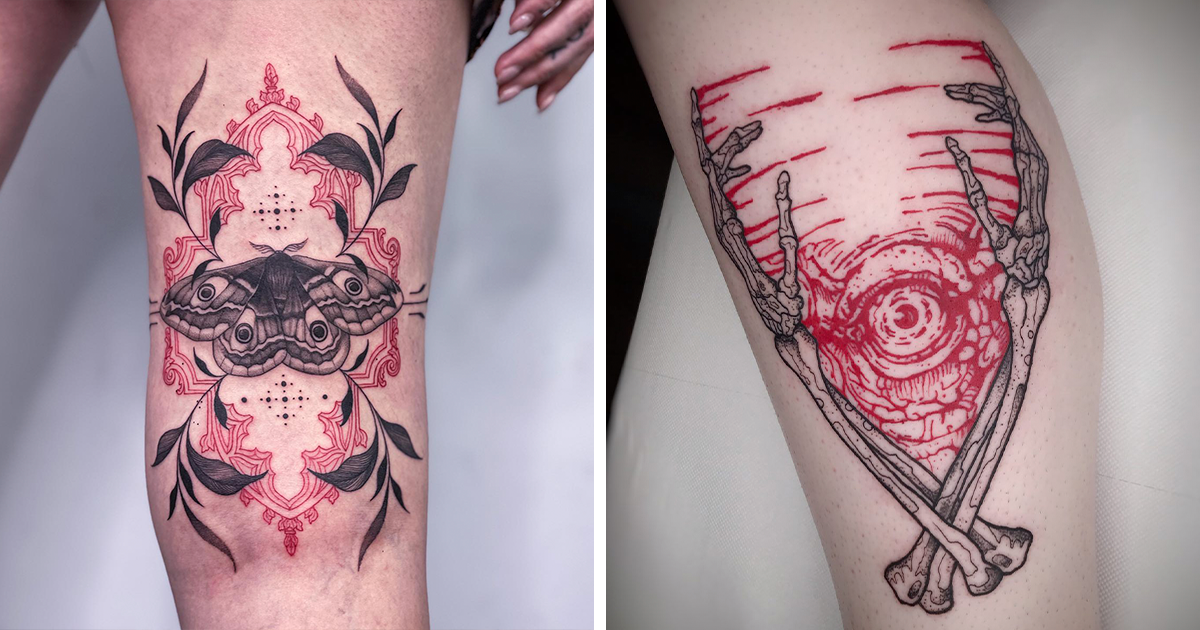
- Black Moth With Red Markings: Selective color emphasizes wing patterns without overwhelming fine details.
- Black Dagger Through Red Fruit: A pomegranate, apple, or cherry creates a dramatic still-life composition.
Bold and Experimental Red Tattoos
- Full Red Silhouette: Fill a human figure, animal, or object with uninterrupted red for graphic impact.
- Red Scribble Portrait: Loose lines can suggest a face without relying on traditional realistic shading.
- Glitch-Effect Tattoo: Offset red lines from black imagery to imitate digital distortion or misaligned printing.
- Red Stamp Tattoo: Create a design resembling a postal mark, approval seal, date stamp, or carved signature.
- Crimson Negative-Space Flower: Let untouched skin form the petals while red fills the surrounding shape.
- Red Ink Blackout Accent: Use one red image beside or within a large black area for intense contrast.
- Embroidery-Style Tattoo: Short red strokes can imitate stitched thread, especially in flowers and decorative patches.
- Custom Red Memory Collage: Combine dates, handwriting, flowers, symbols, and objects connected to one personal story.
How to Choose the Right Red Tattoo Idea
Start With Meaning, Not Trends Alone
A fashionable tattoo can still be meaningful, but trends should function as inspiration rather than instructions. Ask what you want the design to represent and whether you would still enjoy it without seeing it repeatedly on social media.
Match the Detail to the Size
Tiny tattoos have limited room for delicate interior detail. A small dragon with 400 scales, six clouds, four temples, and the emotional complexity of a prestige television series may not age as clearly as you hope. Simplifying the design can improve readability.
Consider Placement and Movement
Round images work well on shoulders and knees, while long snakes, branches, flames, and ornamental lines can follow arms, legs, ribs, or the spine. Ask your artist to place a stencil and let you view it while standing, sitting, and moving naturally.
Decide Between Red-Only and Black-and-Red
A red-only tattoo can look delicate, unusual, and contemporary. Black outlines can add contrast and structure, particularly in larger pieces or on skin where a lighter red might appear subtle after healing. Neither approach is automatically better; the choice depends on the artist, image, pigment, and desired effect.
Red Tattoo Aftercare Basics
Follow the written instructions provided by your tattoo artist because bandage type and aftercare methods can vary. In general, keep the tattoo clean, wash it gently with clean hands and mild fragrance-free cleanser, pat it dry, and apply only the recommended amount of moisturizer.
- Do not scratch, pick, or peel flaking skin.
- Avoid swimming, hot tubs, and soaking while the tattoo heals.
- Keep dirty clothing, pet hair, gym equipment, and shared surfaces away from the fresh tattoo.
- Avoid unnecessary friction and tight garments over the area.
- Do not apply perfume, harsh exfoliants, or random internet remedies.
- Protect the healed tattoo from excessive sun exposure.
Mild redness and tenderness can occur during early healing. However, symptoms should generally improve rather than spread or become more painful. Contact a healthcare professional when you are uncertain, particularly if symptoms are severe, persistent, or limited to the red pigment long after the surrounding tattoo has healed.
Can a Red Tattoo Be Removed?
Laser tattoo removal may lighten or remove some red tattoos, but results vary according to pigment composition, tattoo depth, ink density, skin tone, location, scarring, and the laser technology used. Complete removal is not guaranteed, and professional treatment generally requires multiple sessions separated by healing periods.
Do not choose a red tattoo based on the assumption that it will be easy to erase later. Tattoo removal is closer to a long, expensive breakup than an undo button. Consult a board-certified dermatologist or properly qualified laser specialist before pursuing treatment, especially when the tattoo is raised, itchy, inflamed, or otherwise reacting.
Conclusion
Red tattoo ink can transform even a simple design into something expressive and memorable. It suits romantic roses, traditional hearts, minimalist lines, mythological creatures, gothic imagery, geometric symbols, and experimental artwork. The strongest design is not necessarily the biggest or brightest; it is the one created for your body, story, and long-term preferences.
Review healed work, choose a professional studio, discuss pigment choices openly, and take reactions seriously. With careful planning and an experienced artist, your red ink tattoo can remain a confident piece of body art rather than an expensive lesson wearing a bandage.
Experience-Based Lessons From a Red Ink Tattoo Journey
The following experience-based observations reflect situations commonly described by tattoo clients rather than one universal healing timeline. Every person, pigment, placement, and tattooing session can behave differently.
The Consultation Often Changes the Original Idea
Many people arrive at a consultation with a saved image and a simple request: “Exactly this, but red.” A skilled artist may suggest thicker lines, more negative space, a darker shade, or a different placement. That can initially feel disappointing, especially when the reference image looked perfect on a phone screen. However, the artist is designing for curved, moving, living skin rather than a flat digital canvas.
Clients frequently discover that showing several references works better than demanding a direct copy. One image may communicate line weight, another may show color, and a third may capture the desired mood. The resulting custom design tends to feel more personal and may fit the body more naturally.
The Fresh Tattoo Looks Much Brighter Than the Healed Tattoo
Immediately after the appointment, red ink may appear extremely vivid. The surrounding skin can also look pink or red, temporarily reducing the contrast between the pigment and the body. Swelling, ointment, lighting, and the camera can make the tattoo appear bolder than its final healed state.
During the next several days, the tattoo may feel warm or tender and may release a small amount of clear fluid or excess pigment. As peeling begins, the surface can look cloudy, dry, or strangely dull. First-time clients sometimes assume that the color has disappeared. In many cases, the tattoo becomes clearer once the outer skin finishes healing.
Red Areas May Heal Differently From Black Lines
In a black-and-red tattoo, heavily saturated red sections may feel more irritated than thin black outlines simply because the artist made more passes over those areas. That does not automatically indicate an allergy. Technique, placement, swelling, bandage adhesive, moisturizer, and friction can all influence how one section feels.
The important question is whether the symptoms are steadily improving. Red pigment that remains raised, intensely itchy, scaly, swollen, or uncomfortable after the rest of the tattoo settles deserves professional evaluation. Taking clear photographs in consistent lighting can help document changes for the artist or clinician.
Aftercare Is Usually Less Exciting Than Social Media Suggests
The most successful healing routines tend to be boring: clean hands, gentle washing, light moisturizing, loose clothing, patience, and no picking. Clients who constantly inspect, touch, rotate, photograph, and “fix” the tattoo may irritate it more than those who calmly follow professional instructions.
It is also wise to schedule the appointment around real life. A fresh thigh tattoo before a beach vacation, a foot tattoo before a hiking trip, or a forearm tattoo before several days of dirty construction work creates avoidable complications. Calendar planning is not glamorous, but neither is explaining why your new rose spent its first week rubbing against a work boot.
Healed Photographs Become the Best Reference
After several weeks, clients can better judge line clarity, color distribution, and whether a touch-up discussion is appropriate. Some artists prefer to wait until the skin has fully settled before making changes. Minor unevenness may be correctable, while substantial irritation should be evaluated before more pigment is added.
The most valuable lesson is to treat a red tattoo as both artwork and a skin procedure. Design enthusiasm matters, but so do studio hygiene, realistic expectations, careful aftercare, and the willingness to seek medical help when healing moves in the wrong direction. That combination gives the tattoo its best opportunity to age beautifully.