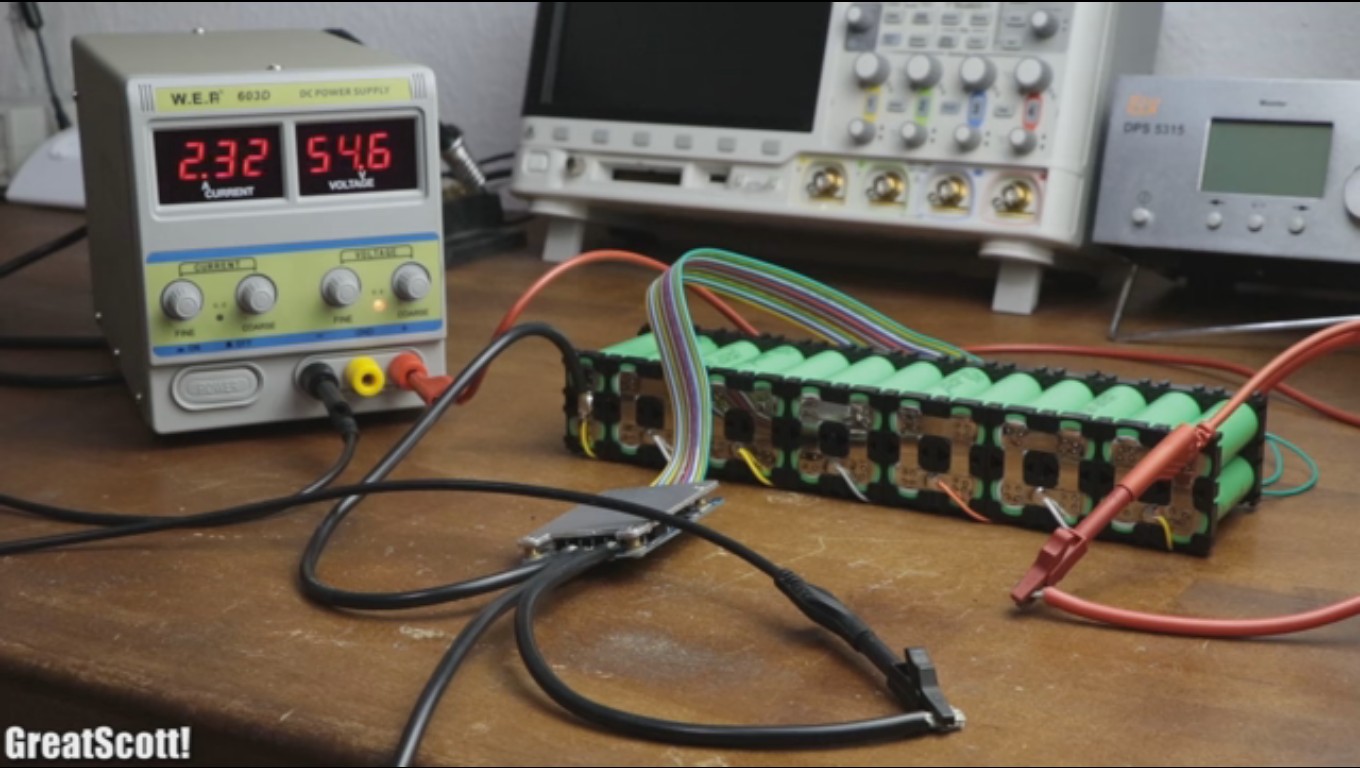

There is a certain kind of person who looks at a lithium ion battery pack and thinks, “I could build that.” Then there is another kind of person who looks at the same pack and thinks, “I could buy that, keep all my eyebrows, and move on with my day.” Both instincts are understandable.
On paper, making a lithium ion battery pack sounds brilliant. You get custom size, custom voltage, custom capacity, and the glorious satisfaction of saying, “Yes, I made the power source too.” Buying a battery pack, meanwhile, can sound a little less exciting. You click a button, wait for shipping, and receive a box that promises convenience instead of adventure. But when you compare making to buying a lithium ion battery pack in the real world, the answer is not just about price. It is about safety, testing, reliability, compatibility, time, and how much risk you want sitting on your workbench.
This guide breaks down the real tradeoffs. It explains where DIY battery packs make sense, where store-bought packs clearly win, and why the “cheaper” option is often not the one your spreadsheet picks on day one. If you are comparing making to buying a lithium ion battery pack for an e-bike, a robotics project, backup power, or a one-off custom device, this article will help you think like an engineer, not just a bargain hunter.
Why This Comparison Matters
Lithium ion batteries are popular for good reasons. They pack a lot of energy into a relatively small and lightweight package, they recharge well, and they power everything from laptops to electric bikes. That same energy density, however, is exactly why mistakes become expensive so quickly. A badly designed or mismatched pack is not just inconvenient. It can overheat, age unevenly, fail early, or in the worst case, create a fire hazard.
That is why the question is not simply, “Can I build one?” The smarter question is, “Should I build one for this particular use case?” Those two questions are cousins, not twins.
Making a Lithium Ion Battery Pack: The Appeal
1. Custom size and shape
The strongest argument for making a pack is customization. Off-the-shelf battery packs are built for common products and common dimensions. Your project may not be common. Maybe you need a pack shaped to fit a narrow enclosure, a weird drone compartment, a robotics chassis, or a prototype where every millimeter matters. Buying a standard pack can feel like trying to park a pickup truck in a compact-car spot.
A custom pack lets you design around your device instead of forcing your device to work around the battery. That can be a major advantage in product development, research, and specialty equipment.
2. Exact electrical specs
When you make your own pack, you can target a specific series and parallel configuration, discharge capability, runtime, and weight. That matters if your application has unusual current demands or if off-the-shelf packs either underdeliver or overshoot the mark. In a custom build, you are not paying for extra capacity you do not need, and you are not settling for a pack that sags under load like a folding lawn chair.
3. Better fit for advanced prototyping
For engineering teams, product designers, and experienced battery professionals, building a pack can be part of the development process. You may need to validate thermal layout, electrical behavior, enclosure design, or system integration before a final production battery is sourced. In that context, a custom pack is not a hobby flex. It is an R&D tool.
4. Educational value
There is also genuine learning value in understanding pack architecture, protection circuits, cell balancing, charge limits, and battery management systems. Comparing making to buying a lithium ion battery pack often teaches people that the battery is not the “simple part” of a project. It is the part quietly doing math, chemistry, risk management, and occasional drama.
The Hidden Costs of Making a Lithium Ion Battery Pack
This is where many DIY plans begin to wobble.
1. The cells are only the beginning
People often compare the price of loose cells to the price of a finished pack and assume DIY wins instantly. That comparison is incomplete. A usable battery pack also needs pack design work, interconnects, insulation, protection, a battery management system, enclosure planning, charging compatibility, quality checks, and time. Plenty of time.
If your pack is for a serious application, you also need to think about how the cells are matched, how the pack handles heat, how it behaves if one cell drifts, and how it is protected from overcharge, over-discharge, overcurrent, and temperature issues. Suddenly the “cheap” path starts wearing a more expensive jacket.
2. Tooling and test equipment add up
A proper comparison should include the tools and verification process, not just the battery parts. Even if your goal is modest, the real cost includes assembly equipment, protective materials, measuring tools, and the time required to inspect and validate the pack. If you are only building one pack, those overhead costs are spread across exactly one unit, which is a cruel and mathematically rude arrangement.
3. Cell quality is not always obvious
One reason people buy finished packs is that sourcing quality cells can be harder than it looks. Rewrapped cells, aged stock, inconsistent batches, and overstated performance claims can turn a promising DIY project into a low-budget trust exercise. A finished pack from a reputable manufacturer is not automatically perfect, but it often gives you a better shot at traceability, support, and consistent component selection.
4. The weakest cell writes the story
Multi-cell battery packs do not behave like a team where everyone gets equal screen time. The weakest or most imbalanced cell can limit performance, runtime, and lifespan for the whole pack. That means a battery pack is not just a bundle of cells. It is a system whose reliability depends on how evenly those cells age, charge, and discharge over time.
Buying a Lithium Ion Battery Pack: The Big Advantages
1. Safety systems are usually more mature
The biggest advantage of buying a lithium ion battery pack is that reputable commercial packs are designed as systems, not just as collections of cells. A good pack typically includes a battery management system, protection features, charger compatibility planning, and some level of validation or certification work. That matters because lithium ion batteries do not forgive sloppy assumptions.
Commercial packs are also more likely to be designed to stay within safe operating limits for voltage, current, and temperature. In plain English, they are better at preventing your battery from trying out new and terrible ideas.
2. Certification and compliance matter
If you are comparing making to buying a lithium ion battery pack for anything that will be sold, installed, carried regularly, or used in public settings, certification becomes a serious factor. Buyers often look for recognized standards and third-party testing because they signal that the battery is more than a hopeful pile of chemistry.
That does not mean every bought pack is excellent. It means a reputable bought pack may come with a documented safety story. A homemade pack usually comes with your notes, your honesty, and a lot of optimistic shrugging.
3. Charger compatibility is easier
One of the underrated benefits of buying a finished pack is charger compatibility. A battery pack is not just about stored energy. It is about how that energy is charged, discharged, monitored, and protected throughout its life. Using the wrong charger or a mismatched charging profile can shorten life or create risk. Commercial systems are more likely to be designed as paired ecosystems, which is less exciting than DIY freedom but much better for sleeping at night.
4. Faster path to a working product
Buying wins on speed. If your goal is to finish a device, test a concept, or ship a product faster, buying an established pack often saves weeks of design and troubleshooting. That matters in business, and it matters in life. Sometimes the best battery decision is the one that lets you work on the actual thing you care about instead of becoming an accidental battery specialist.
When Making a Pack Can Make Sense
There are situations where making a lithium ion battery pack is reasonable, but they are narrower than many people expect.
Custom engineering projects
If you need a nonstandard form factor, unusual capacity target, or tight integration into a prototype, a custom pack can solve a real problem that the retail market does not address.
Professional development environments
In laboratories, R&D teams, and professional product development, custom battery packs can be part of normal engineering work. The key difference is that these environments usually have design controls, testing procedures, component discipline, and people who know that batteries are not arts-and-crafts supplies.
Low-volume, high-specificity applications
Sometimes buying is impossible because the exact pack simply does not exist. In those cases, a custom solution may be the only practical route. Even then, the safest version of “making” may be to work with an experienced battery pack assembler or specialist rather than building it casually from scratch.
When Buying a Pack Is Usually the Better Choice
For most consumers and most common projects, buying a lithium ion battery pack is the better choice.
E-bikes and micromobility
This category strongly favors buying. E-bikes, scooters, and similar products place heavy demands on battery packs, chargers, connectors, and thermal behavior. These are exactly the situations where certification, tamper resistance, charger compatibility, and robust protection features matter most. Saving money on the battery while increasing fire risk is not a clever optimization. It is a plot twist.
Products used indoors or unattended
If the pack will be charged in a home, office, classroom, garage, or apartment, risk tolerance should be much lower. A reputable purchased pack is usually the smarter call because the consequences of failure do not stay politely confined to the project itself.
Travel and transport
Buying also helps when the battery needs to be moved, shipped, or carried on trips. Lithium battery transport rules are not casual suggestions. A commercially documented pack is generally easier to identify, support, and handle than a one-off homemade build with a label that says something like “Probably 48V-ish.”
Anyone who mainly wants a battery, not a battery hobby
This may be the simplest test of all. If your real goal is to power a product reliably, buy the pack. If your real goal is advanced battery engineering and you fully understand the safety implications, then custom work may belong in the conversation. Most people are in the first group, even if their browser history briefly suggests otherwise.
Cost Comparison: DIY vs Store-Bought
So which is cheaper? The frustratingly honest answer is: it depends on what you count.
A DIY battery pack can look cheaper if you compare raw cell cost to retail pack price. But once you count the full system, the economics change. Bought packs include design integration, protection, manufacturing consistency, packaging, support, and often some level of testing or compliance. DIY builds can be cheaper in narrow cases, especially when the builder already has tools, experience, and a very specific application. For one-off projects, though, the savings are often smaller than expected and sometimes disappear entirely.
There is also the hidden cost of failure. If a store-bought pack underperforms, you may have warranty options. If a DIY pack underperforms, congratulations: you are customer service, engineering, and quality assurance all at once.
Reliability and Lifespan
Reliability is where bought packs usually build a strong lead. A well-designed commercial pack is more likely to manage cell balancing, charging behavior, protection thresholds, and long-term consistency in a predictable way. That does not guarantee perfection, but it improves the odds.
A custom pack can absolutely be reliable if it is designed and validated correctly. The issue is that correctness is doing an enormous amount of work in that sentence. Reliable battery packs do not happen because someone watched three videos, felt inspired, and said, “How hard could it be?” History suggests that phrase has launched many regrettable experiments.
The Smart Decision Framework
If you are still comparing making to buying a lithium ion battery pack, ask these questions:
Do I need a custom form factor or unusual specs?
If no, buying probably wins.
Is this for a high-risk application like transportation, indoor charging, or public use?
If yes, buying from a reputable source is usually the wiser path.
Do I have the technical knowledge to evaluate protection, balancing, charging, and failure modes?
If no, buying is not surrender. It is good judgment.
Am I counting my time, tools, and testing in the cost?
If no, your cost comparison is incomplete.
Is the goal customization, or is the goal just to get dependable power?
That answer usually decides the whole debate.
Final Verdict: Should You Make or Buy?
For most people, buying a lithium ion battery pack is the better decision. It is safer, faster, easier to support, and more likely to provide dependable performance over time. That is especially true for e-bikes, portable electronics, backup systems, and anything charged indoors or used regularly.
Making a lithium ion battery pack makes the most sense in specialized, professional, or tightly constrained custom applications where off-the-shelf options truly do not fit. Even then, the smartest route is often not casual DIY assembly but working with qualified battery professionals, proven components, and a design process that treats the pack like the critical system it is.
In other words, if you need a battery, buy one wisely. If you need a custom battery system, treat it like engineering, not weekend entertainment. Lithium ion chemistry is amazing, but it is not impressed by confidence alone.
Real-World Experiences: What People Learn After Comparing Both Paths
Talk to enough makers, product developers, and power-hungry gadget fans, and a pattern appears almost immediately. People who start by comparing making to buying a lithium ion battery pack usually begin with cost. They think in simple terms: cells are this much, finished pack is that much, therefore the winner is obvious. Then reality arrives carrying a clipboard.
One common experience goes like this: a person wants a battery for a custom project and cannot find the exact shape they need. At first, building a pack feels empowering. They discover cell layouts, pack voltage, discharge ratings, and battery management systems. The project gets more interesting by the hour. But as they keep researching, the battery slowly transforms from “one component” into “a full subproject with consequences.” Suddenly they are thinking about thermal space, connector strain relief, enclosure pressure, safe charging location, and whether replacing one weak cell later would create imbalance problems. That moment is often when the comparison becomes real. DIY stops looking like a shortcut and starts looking like a responsibility.
On the other side, buyers often report a different lesson: convenience has real value. A finished pack with a matching charger and known specifications removes a huge amount of uncertainty. That matters even more when the battery powers something essential, expensive, or mobile. People tend to appreciate purchased packs most after dealing with one frustrating custom power problem. Nothing increases respect for a reliable commercial battery quite like spending three evenings chasing a mysterious voltage sag that turns out to be a pack issue you accidentally invented yourself.
There is also a psychological angle that does not get enough attention. Building a battery pack can create a sense of ownership that is deeply satisfying. Buying one can feel less glamorous. But when the device needs to work every day, glamour loses quickly to trust. Many experienced builders admit that the older they get, the more selective they become. They still love custom solutions, but they save them for cases where customization truly matters. For everything else, they buy the pack, label the charger, and enjoy their weekend.
Another frequent experience is discovering that the battery pack affects the whole product more than expected. It influences enclosure size, weight balance, charging habits, replacement plans, shipping options, serviceability, and customer confidence. People comparing making to buying a lithium ion battery pack often start with electrical specs, but they finish by thinking about the entire ownership experience. That is a sign of smarter decision-making.
The best lesson from real-world comparisons is simple: neither path is “better” in every situation. What matters is fit. A custom battery can be the perfect answer when the project has unusual requirements and the work is handled with the seriousness it deserves. A purchased battery can be the perfect answer when reliability, speed, safety, and support matter more than customization. Experienced people learn to choose the option that removes the most risk while still solving the real problem. That is usually the most practical, most professional, and frankly least eyebrow-endangering choice on the table.
Note: This article is informational only. It compares the tradeoffs of custom versus commercial lithium ion battery packs and does not provide build instructions for assembling a battery pack.