
We have all been there: it is 5:47 p.m., dinner is supposed to happen soon, and the chicken breasts are sitting in the freezer like four tiny edible icebergs. Your stomach says, “Cook now.” Food safety says, “Please do not leave that on the counter and hope for the best.” Luckily, learning how to defrost quickly does not require magic, panic, or pretending cereal counts as a complete dinner again.
The safest fast defrosting methods are simple: use cold water, use the microwave, thaw in the refrigerator when you have a little time, or cook directly from frozen. The trick is knowing which method fits your food, your schedule, and your level of dinner-related drama.
This guide explains four practical ways to defrost food quickly while keeping flavor, texture, and safety in mind. Whether you are thawing meat, poultry, seafood, soup, leftovers, bread, or vegetables, these methods can help you move from frozen-solid to ready-to-cook without turning your kitchen into a science experiment.
Why Safe Defrosting Matters
Frozen food is safe while it stays frozen, but trouble can start when the outside warms faster than the inside. Perishable foods such as meat, poultry, seafood, eggs, cooked leftovers, and casseroles should not sit for long at room temperature. The main concern is the “danger zone,” the temperature range where bacteria can multiply quickly.
That is why fast defrosting is not just about speed. It is about control. You want the food to thaw without letting the outer layer hang around in unsafe temperatures while the center remains as hard as a hockey puck. In other words, the goal is not “warm food.” The goal is “safely thawed food ready for cooking.”
1. Defrost Quickly in Cold Water
Cold-water thawing is one of the best ways to defrost quickly when you do not want to use a microwave. It is faster than refrigerator thawing and usually better for texture than microwave defrosting, especially for meat, poultry, fish, shrimp, and vacuum-sealed items.
How to Use the Cold-Water Method
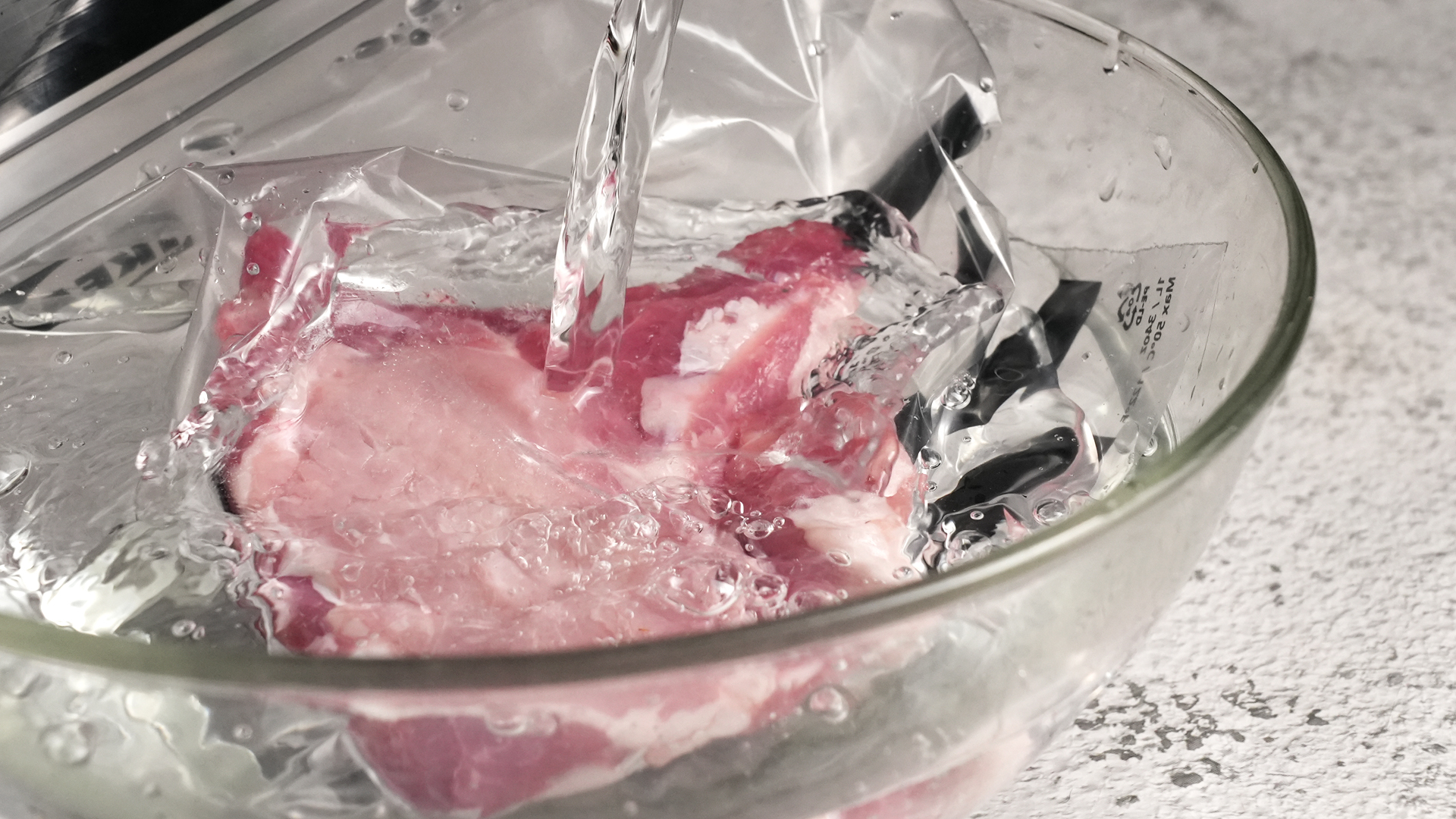
Place the frozen food in a leak-proof plastic bag. This matters because water touching the food can make the texture mushy and may spread bacteria around your sink. Submerge the bag in cold tap water. Change the water every 30 minutes so it stays cold and continues pulling heat into the frozen food evenly.
Small packages, such as a pound of ground beef, thin chicken cutlets, fish fillets, or shrimp, may thaw in about an hour or less. Larger packages take longer, so this method works best when the food is not frozen in a giant block. A flat freezer bag beats a bulky supermarket tray almost every time.
Best Foods for Cold-Water Defrosting
This method is excellent for chicken breasts, pork chops, steaks, ground beef, salmon fillets, frozen shrimp, sausages, and tightly sealed leftovers. It also works well for soups or sauces frozen flat in freezer bags. If the food is thin and sealed properly, cold water can feel like a dinner-saving superhero wearing an apron.
Important Safety Tip
Food thawed in cold water should be cooked right away. Do not thaw it in the sink, put it back in the refrigerator for tomorrow, and call it meal prep. That is not meal prep; that is food-safety roulette.
2. Defrost Quickly in the Microwave
The microwave is the speed champion of defrosting. It is also the method most likely to partially cook the edges of your food while the center remains frozen. Useful? Absolutely. Perfect? Not always. Think of it as the friend who arrives fast but parks diagonally.
How to Microwave Defrost Properly
Remove food from foam trays, plastic wrap, or packaging that is not microwave-safe. Place it in a microwave-safe dish and use the defrost setting or lower power level. Pause often to separate pieces, flip the food, or rotate the dish. This helps prevent hot spots and uneven thawing.
For ground meat, scrape away softened portions as they thaw and continue defrosting the frozen center. For chicken pieces, separate them as soon as possible. For soups, sauces, or stews, stir frequently so the edges do not become lava while the middle remains an ice cube.
Best Foods for Microwave Defrosting
The microwave works well for individual portions, cooked leftovers, soups, sauces, bread slices, frozen vegetables, and small pieces of meat or poultry that will be cooked immediately. It is less ideal for thick steaks or large roasts because uneven thawing can affect texture.
Cook Immediately After Microwave Thawing
This is the golden rule: if you defrost food in the microwave, cook it immediately. Some parts may become warm enough to start cooking during defrosting, which means bacteria can grow faster if the food sits around. Once the microwave has done its job, move straight to the stove, oven, grill, or air fryer.
3. Defrost in the Refrigerator When You Can Plan Ahead
Refrigerator thawing is not the fastest method, but it is the safest, easiest, and most forgiving. If you need food defrosted by tomorrow, the refrigerator is your best friend. It keeps food cold while it thaws gradually, which protects quality and reduces food-safety risk.
How Refrigerator Thawing Works
Place frozen food on a plate, tray, or shallow pan to catch drips. Keep raw meat, poultry, and seafood on the bottom shelf so juices cannot drip onto ready-to-eat foods. Set your refrigerator at 40°F or below for safe storage.
Small packages may thaw overnight. Larger items, such as whole chickens, roasts, or turkeys, need more time. If you are defrosting something big, plan in days rather than hours. Your future self will thank you, possibly with gravy.
Best Foods for Refrigerator Defrosting
This method is best for large cuts of meat, whole poultry, casseroles, cooked leftovers, delicate seafood, and anything you may not cook immediately. Refrigerator-thawed foods can often be kept safely for a short period before cooking, depending on the item, and may be refrozen if they have stayed cold. Quality may suffer a little, but safety is the priority.
How to Make Refrigerator Thawing Faster
You cannot turn your refrigerator into a race car, but you can make thawing more efficient. Freeze food in thin, flat portions instead of thick blocks. Divide large packages before freezing. Label bags with dates and portion sizes. Place tomorrow’s dinner in the fridge before bed. Congratulations: you are now the kind of person who plans dinner ahead, at least occasionally.
4. Cook Food Directly From Frozen
Sometimes the best way to defrost quickly is to skip defrosting entirely. Many foods can be cooked straight from frozen, including burger patties, fish fillets, vegetables, dumplings, meatballs, chicken nuggets, fries, soups, and some thin cuts of meat. This method is safe when you cook the food thoroughly to the proper internal temperature.
How to Cook From Frozen
Expect cooking to take longer than it would for thawed food. As a general rule, frozen foods may need about 50 percent more cooking time. Use a food thermometer for meat, poultry, seafood, and leftovers. Do not rely on color alone, because browned outside does not always mean safely cooked inside.
For frozen vegetables, add them directly to a skillet, steamer, soup, or stir-fry. For frozen burger patties, cook over moderate heat so the outside does not burn before the center is done. For fish fillets, bake or pan-cook gently and check for doneness. For soups and sauces, heat slowly and stir often.
Best Foods to Cook From Frozen
This method shines with foods that are already portioned, thin, or designed for frozen cooking. Frozen shrimp, vegetables, meatballs, pasta sauces, dumplings, and breaded items are good candidates. Large roasts or whole birds are more challenging because the outside may overcook before the center reaches a safe temperature.
Why This Method Saves Dinner
Cooking from frozen is perfect for nights when your meal plan got ambushed by real life. It eliminates the waiting step and keeps the food out of unsafe room-temperature conditions. Just slow down enough to cook it thoroughly. Fast dinner is great. Fast dinner that is also safe is better.
Defrosting Mistakes to Avoid
Do Not Thaw Food on the Counter
Counter thawing may seem harmless, but it allows the outside of the food to warm while the center stays frozen. That creates a food-safety problem, especially with raw meat, poultry, seafood, and cooked leftovers.
Do Not Use Hot Water
Hot water may thaw the outside quickly, but that is exactly the problem. It can push the surface of the food into unsafe temperatures while the inside is still frozen. Cold water is safer and more controlled.
Do Not Use a Slow Cooker to Thaw Frozen Meat
A slow cooker is wonderful for cooking, but it is not a safe defrosting tool for frozen raw meat or poultry. The food may spend too long warming up before it reaches a safe cooking temperature.
Do Not Refreeze Food Thawed by Fast Methods Unless You Cook It First
If food was thawed in cold water or the microwave, cook it immediately before refreezing. Food thawed safely in the refrigerator gives you more flexibility, but food quality can still decline after refreezing.
Quick Comparison: Which Defrosting Method Should You Use?
| Method | Best For | Speed | Main Rule |
|---|---|---|---|
| Cold Water | Meat, poultry, seafood, flat frozen bags | Fast | Change water every 30 minutes and cook right away |
| Microwave | Small portions, leftovers, soups, quick meals | Fastest | Cook immediately after defrosting |
| Refrigerator | Large cuts, poultry, meal prep, delicate foods | Slow but safest | Keep food at 40°F or below |
| Cook From Frozen | Vegetables, burgers, seafood, meatballs, convenience foods | Convenient | Allow extra cooking time and check internal temperature |
Real-Kitchen Experiences: What Actually Works When You Are in a Hurry
The biggest lesson from real-life defrosting is that how you freeze food matters just as much as how you thaw it. A one-pound brick of ground beef can turn dinner into a waiting game. The same pound flattened in a freezer bag can thaw dramatically faster in cold water. If you want quick defrosting later, freeze food in thin layers now. Future-you will feel like past-you deserves a trophy.
Cold water is the method I would trust for the average “oops, I forgot dinner” situation. It is reliable, gentle, and does not usually damage texture. For example, frozen chicken cutlets sealed in a bag can thaw much faster than expected when fully submerged. A bowl, a zip-top bag, and a timer are all you need. The timer is important because changing the water every 30 minutes keeps the process safe and steady. Without the timer, you may suddenly remember the chicken two hours later and stare into the bowl like it personally betrayed you.
The microwave is better when speed matters more than perfect texture. It is especially useful for soup, cooked rice, pasta sauce, sliced bread, and leftovers. For raw meat, it can work, but you need patience. Stop the microwave often. Flip the food. Separate pieces as soon as they loosen. Use low power instead of blasting it into rubber. The microwave is not a villain; it just needs supervision.
Refrigerator thawing is the method that makes life easiest when you remember to do it. Moving tomorrow’s protein from freezer to fridge before bed takes about ten seconds. That tiny habit can save you from the 6 p.m. frozen-dinner panic. It also gives you better texture, especially with steak, seafood, and poultry. The food thaws slowly, stays cold, and is ready when you are.
Cooking from frozen is the secret weapon for weeknights. Frozen vegetables can go straight into a skillet. Frozen shrimp can be cooked quickly if they are separated and not trapped in a giant ice block. Frozen burger patties, meatballs, dumplings, and fish fillets can become dinner without a separate thawing step. The key is using moderate heat and checking doneness. Too much heat too soon gives you food that is scorched outside and chilly inside, which is not “crispy”; it is a cry for help.
One practical habit is keeping the freezer organized by cooking style. Put quick-cooking frozen foods in one area: shrimp, vegetables, patties, meatballs, bread, and sauces. Put large roasts and whole poultry somewhere else so you remember they need planning. Label everything with dates and portion sizes. Mystery freezer packages are exciting only if your hobby is culinary gambling.
Another helpful trick is freezing sauces, soups, and broths in smaller containers or flat bags. A huge frozen container of chili takes forever to thaw. A flat bag of chili can thaw faster in cold water or reheat gently from frozen in a pot. The same applies to marinades, cooked beans, shredded chicken, and pasta sauce.
In short, the best defrosting experience comes from matching the method to the moment. Use the refrigerator when you can plan. Use cold water when dinner is coming soon. Use the microwave when time is short and texture is flexible. Cook from frozen when the food can handle it. Avoid the counter, skip the hot water, and let safety be the quiet kitchen assistant that keeps dinner delicious instead of dramatic.
Conclusion
Defrosting quickly is not about taking wild shortcuts. It is about choosing the safest fast method for the food in front of you. Cold-water thawing is the best all-around option for many raw foods. Microwave thawing is the fastest, especially for small portions and leftovers, but the food should be cooked immediately. Refrigerator thawing is slower, yet it is the safest and best for planning ahead. Cooking from frozen can save the day when thawing is not practical.
The next time you discover frozen-solid dinner at the worst possible moment, do not panic and do not leave it on the counter. Pick the right method, keep the food out of unsafe temperatures, and cook it thoroughly. Your dinner will survive. Your schedule will recover. And your freezer will no longer feel like a cold, judgmental vault of forgotten intentions.