
Note: This article is written for web publication in standard American English and synthesizes current, real-world information about modern TV display technologies, including OLED, QD-OLED, Mini-LED, HDR, local dimming, brightness, black levels, gaming performance, and home viewing experience.
Introduction: The Return of the “Wow, My TV Looks Alive” Moment
There are two kinds of TV upgrades. The first kind is polite. You unbox the new screen, admire the thinner bezel, open a streaming app, and say, “Nice.” The second kind makes you pause the movie, call someone into the room, and point at the screen like you just discovered fire. A TV with truly exceptional contrast belongs to the second category.
For years, many TVs got bigger, smarter, and cheaper, but not always dramatically better where it mattered most: the image itself. Sure, resolution improved. Smart TV menus learned how to recommend twelve things you did not ask for. Remote controls lost buttons like they were on a diet. But contrastthe difference between the darkest blacks and brightest highlightsremained the secret ingredient that separated an ordinary screen from a cinematic one.
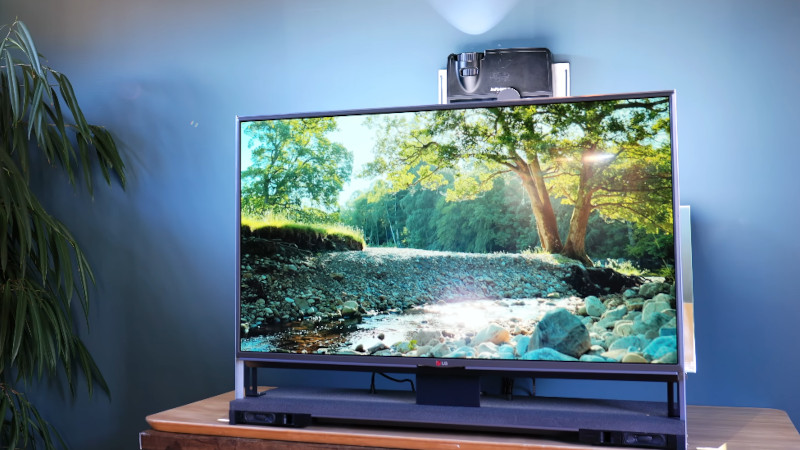
Today, that feeling is back. Modern OLED, QD-OLED, and advanced Mini-LED TVs are delivering contrast that can make older LCD screens look like they have been viewing life through a dusty window. Deep blacks, brilliant highlights, sharper shadow detail, and richer HDR performance are no longer reserved for luxury home theaters with velvet chairs and popcorn machines that cost more than your first car.
A TV with contrast you haven’t seen for years is not just about brighter explosions or darker space scenes. It is about depth. It is about seeing texture in a black leather jacket, stars against a midnight sky, candlelight glowing against a shadowy wall, and a football field that looks green instead of “electronic salad.” Contrast makes the image feel dimensional, believable, and emotionally punchy. In other words, it makes your TV stop looking like a screen and start looking like a window.
What Does TV Contrast Actually Mean?
TV contrast is the relationship between the brightest white a display can produce and the deepest black it can show. A high-contrast TV can display bright highlights and dark shadows in the same scene without turning black areas gray or washing out details. That sounds simple, but it is one of the hardest things for a television to do well.
Think of contrast like seasoning in food. Resolution is the recipe, brightness is the heat, color is the spice rack, and contrast is the salt. Without enough of it, everything technically exists, but it tastes flat. A 4K image with weak contrast may show millions of pixels, but those pixels can look dull. A high-contrast image, even at the same resolution, feels sharper because your eyes can separate objects, edges, shadows, and highlights more easily.
This is why a great 4K OLED or Mini-LED TV can look dramatically better than an older 4K LED TV. The number of pixels may be similar, but the control over light is not. Better contrast gives faces more shape, landscapes more depth, and dark scenes more atmosphere. It is the difference between “I can see what is happening” and “I feel like I am there.”
Why Older TVs Often Look Flat by Comparison
Many older LCD and LED TVs rely on a backlight that shines through a liquid crystal panel. The challenge is that the backlight is always working behind the image. When a dark scene appears, the TV has to block light rather than simply turn it off. That often leads to raised blacks, cloudy patches, blooming around bright objects, and shadow detail that gets crushed into a murky blob.
If you have ever watched a space movie on an older TV and noticed that the “black” of space looked more like charcoal soup, you have seen the problem. If subtitles caused a pale glow around the words, that was blooming. If a night scene made you wonder whether the director forgot to pay the electric bill, weak contrast was probably part of the issue.
Newer premium TVs attack these problems in different ways. OLED and QD-OLED panels can turn individual pixels off completely, creating true black. Mini-LED TVs use thousands of tiny backlight zones to control brightness far more precisely than traditional LED models. Both approaches can produce a richer, more dramatic picture, although each has strengths and trade-offs.
OLED: The King of Perfect Black
OLED has become famous for one reason above all: each pixel emits its own light. When a pixel needs to be black, it simply turns off. No backlight leakage. No gray haze. No awkward flashlight effect in the corners. Just black.
This pixel-level control gives OLED TVs extraordinary contrast. In a dark room, an OLED can make a star field look genuinely black between the stars. A candlelit scene can show tiny highlights without lifting the shadows around them. A black suit can reveal folds and texture instead of becoming one large formalwear-shaped hole.
For movie lovers, OLED is especially appealing because many films are mastered with deep shadow detail and controlled highlights. A good OLED TV can make nighttime scenes feel intimate rather than muddy. It can also preserve the dramatic lighting choices that filmmakers use to create mood. The villain stepping out of the shadows finally looks mysterious, not like he is hiding inside a compression artifact.
OLED also tends to offer wide viewing angles, which is helpful if your living room seating arrangement was designed by people who enjoy sitting at odd diagonals. Colors and contrast remain strong even when viewed from the side, unlike many traditional LCD TVs that lose punch off-axis.
QD-OLED: OLED Contrast With Extra Color Muscle
QD-OLED builds on the strengths of OLED by combining self-emissive pixels with quantum dot technology. The result is a display that can deliver perfect black levels while also producing vivid, bright colors. In many high-end models, QD-OLED TVs are especially impressive with HDR content because they can maintain strong color volume in bright scenes.
That matters because HDR is not only about brightness. It is about brightness, contrast, and color working together. A sunset should not just be bright; it should have orange, gold, red, and pink tones that remain rich instead of fading into pale yellow. A neon sign in a dark alley should glow with intensity while the surrounding shadows stay deep.
QD-OLED can make these moments look spectacular. It is the kind of technology that makes animated films pop, science fiction worlds feel electric, and nature documentaries look suspiciously like the animals signed a modeling contract.
Mini-LED: Big Brightness Meets Better Black Control
Mini-LED TVs take a different path. Instead of lighting each pixel individually, they use a dense array of tiny LEDs behind the LCD panel. These LEDs are grouped into dimming zones that can brighten or darken depending on the image. The more precise the local dimming system, the better the TV can maintain deep blacks while still delivering powerful highlights.
Mini-LED is especially attractive for bright rooms. If your living room has large windows, sunny afternoons, or a lamp that behaves like a small indoor sun, a high-quality Mini-LED TV can fight glare better than many OLED models. These TVs can often reach very high brightness levels, making sports, daytime TV, and HDR highlights look bold even in challenging lighting.
The trade-off is that Mini-LED TVs can still show blooming in difficult scenes. A white logo on a black background, subtitles over a dark movie, or stars against space can reveal halos if the local dimming system is not precise enough. The best Mini-LED TVs control this impressively well, but they are still managing zones rather than individual pixels.
For many households, though, Mini-LED offers a compelling balance: excellent brightness, strong contrast, less concern about static-image retention, and often better value at very large screen sizes.
HDR Is Where Great Contrast Gets to Show Off
High Dynamic Range, better known as HDR, is one of the main reasons modern TVs can look so much more lifelike than older models. HDR content includes a wider range of brightness and color information than standard dynamic range video. When displayed well, HDR allows highlights to sparkle, shadows to remain detailed, and colors to feel more realistic.
But HDR is only as good as the TV showing it. A budget TV may accept an HDR signal and display the little HDR badge, but that does not guarantee a breathtaking picture. To make HDR shine, a TV needs strong contrast, enough brightness, accurate tone mapping, and a wide color gamut.
Dolby Vision, HDR10, HDR10+, and HLG are common HDR formats. Dolby Vision and HDR10+ use dynamic metadata, which can help the TV adjust brightness and contrast scene by scene. HDR10 is more universal and widely supported. The visible difference between formats depends heavily on the TV’s capabilities, but the principle remains the same: great HDR requires great contrast.
When contrast is weak, HDR can look washed out. When contrast is strong, HDR can feel like someone cleaned your eyes with a microfiber cloth. Reflections on water sparkle. Metal surfaces gleam. A flashlight beam in a dark hallway looks intense without destroying the darkness around it. This is where modern premium TVs earn their applause.
Why Black Levels Matter More Than Most Shoppers Realize
TV marketing often focuses on brightness because big numbers are easy to advertise. Peak brightness sounds exciting. It feels measurable. It gives salespeople something to point at. But black level is just as important, and sometimes more important, because deep black creates the foundation for the entire image.
If black levels are poor, colors look weaker. Highlights lose drama. Dark scenes become foggy. Even bright images can appear less convincing because the TV cannot create enough separation between light and dark areas.
Imagine watching a fireworks show. The fireworks are impressive because they explode against a dark sky. Now imagine the same fireworks against a gray sky. Still colorful, yes, but far less magical. That is what weak black levels do to your movies, games, and shows. They remove the stage on which brightness performs.
Real-World Examples: Where Better Contrast Changes Everything
Movies and Streaming Shows
Modern prestige dramas love darkness. Directors apparently gather in secret meetings and agree that viewers should work a little for their entertainment. On a poor-contrast TV, moody scenes can become frustrating. On a high-contrast TV, they become atmospheric.
Crime thrillers, fantasy series, horror films, and science fiction benefit enormously from better contrast. You can see details in shadows, read expressions in dimly lit rooms, and enjoy the intended mood without constantly reaching for the brightness setting.
Sports
Sports may seem more about motion and brightness than contrast, but contrast still matters. A football field looks more dimensional when the TV can show bright uniforms, darker turf texture, stadium shadows, and sunlight all at once. Basketball courts gain polish and depth. Night games look cleaner. Even golf becomes more visually interesting, which is helpful because golf occasionally needs all the drama it can get.
Gaming
Gamers benefit from contrast in several ways. Dark scenes become easier to navigate, bright effects look more dramatic, and HDR games feel more immersive. A good TV for gaming should also include low input lag, HDMI 2.1 support, variable refresh rate, and high refresh rates such as 120Hz or 144Hz. But once the technical checklist is satisfied, contrast becomes one of the biggest contributors to visual impact.
In games with nighttime environments, caves, neon cities, or cinematic cutscenes, a high-contrast TV can make the world feel richer and more responsive. It is not just eye candy. Better visibility in dark areas can actually improve playability, especially when enemies insist on hiding in places your old TV interpreted as “miscellaneous black rectangle.”
How to Choose a TV With Excellent Contrast
1. Decide Between OLED, QD-OLED, and Mini-LED
If you mainly watch movies in a dim or dark room, OLED or QD-OLED should be high on your list. The perfect black levels and pixel-level contrast are hard to beat. If you watch in a bright room or want a very large screen with intense brightness, a premium Mini-LED TV may be the smarter choice.
2. Look Beyond the Word “HDR”
Do not buy a TV just because the box says HDR. Nearly every modern TV claims HDR support, but performance varies wildly. Look for reviews that measure peak brightness, local dimming quality, color accuracy, tone mapping, and black uniformity. In other words, do not trust the sticker alone. Stickers are charming little salespeople with no accountability.
3. Consider Your Room Lighting
Room lighting changes everything. OLED looks stunning in controlled lighting, but glare can reduce perceived contrast if sunlight hits the screen. Mini-LED TVs often perform better in bright rooms because they can push higher full-screen brightness. Anti-reflective coatings also matter, especially if your TV faces windows or lamps.
4. Check Viewing Angles
If everyone sits directly in front of the TV, viewing angle may not be a major concern. But if your sofa layout spreads people across the room, OLED and QD-OLED usually hold contrast and color better from the side. Some premium LCD and Mini-LED TVs have improved viewing-angle technology, but performance still varies by model.
5. Pay Attention to Processing
Great hardware still needs great processing. A TV’s processor affects upscaling, motion handling, noise reduction, tone mapping, and shadow detail. This is especially important if you watch cable, older movies, YouTube, or lower-resolution content. A great processor can make imperfect content look cleaner without making actors’ faces look like plastic action figures.
Common Mistakes When Shopping for a High-Contrast TV
Mistake 1: Buying Only by Brightness
Brightness is important, but brightness without black control can look harsh and washed out. A lighthouse is impressive, but you do not want one pointed directly into your eyeballs during a quiet movie scene.
Mistake 2: Ignoring Screen Finish
Glossy screens can look stunning in dark rooms but may reflect windows and lamps. Matte or glare-reducing screens can help in bright spaces, although they may slightly affect perceived black depth depending on the implementation. The right choice depends on your room.
Mistake 3: Leaving the TV in Vivid Mode Forever
Vivid mode is designed to win showroom battles under fluorescent lights. At home, it can oversaturate colors, crush detail, and make everyone look like they vacationed inside a tanning bed. Try Filmmaker Mode, Cinema Mode, Movie Mode, or a calibrated picture preset for a more natural image.
Mistake 4: Forgetting About Content Quality
A premium TV cannot magically turn a heavily compressed stream into reference-quality cinema. Better contrast helps, but source quality still matters. 4K Blu-ray, high-bitrate streaming, and well-mastered HDR content will show off your TV far better than a low-resolution video uploaded during the early dinosaur era of the internet.
OLED vs Mini-LED: Which One Feels More Impressive?
The answer depends on how and where you watch. In a dark room, OLED often feels more cinematic because its blacks are truly black. The image has a clean, precise quality that makes shadows and highlights feel naturally separated. For film fans, this can be addictive.
In a bright room, Mini-LED can feel more impressive because it has the brightness muscle to overcome ambient light. A top-tier Mini-LED TV can make HDR highlights blaze and sports look vibrant even when the room is not perfectly controlled.
QD-OLED sits somewhere exciting in the middle, offering OLED’s pixel-level contrast with enhanced color brightness. It can look spectacular with HDR movies, games, and animation, though room reflections and model-specific brightness still matter.
There is no universal winner. The best TV is the one that matches your room, viewing habits, screen size, budget, and tolerance for fiddling with settings. Some people want reference-level movie nights. Others want a screen that can battle noon sunlight while the kids watch cartoons and someone makes nachos in the kitchen. Both are valid lifestyles.
Best Picture Settings for Stronger Contrast
Once you bring home a high-contrast TV, settings matter. Start with a more accurate preset such as Movie, Cinema, or Filmmaker Mode. Turn off aggressive motion smoothing unless you enjoy making expensive movies look like budget soap operas. Use local dimming on medium or high for Mini-LED TVs, but test both settings because some models handle blooming differently.
For OLED TVs, avoid pushing brightness and contrast settings to extremes. OLED already has excellent black levels, and overly aggressive settings can crush shadow detail. For HDR content, let the TV switch into its HDR mode automatically, then adjust tone mapping options based on your preference.
Also consider bias lighting. A soft light behind the TV can reduce eye strain and improve perceived contrast in dark rooms. It is a small upgrade that can make movie nights feel more comfortable. Just avoid colored party lights unless your goal is “cinema, but make it nightclub.”
Is It Worth Upgrading Just for Contrast?
If your current TV is five to ten years old, the answer may be yes. The improvement from an older LED TV to a modern OLED, QD-OLED, or premium Mini-LED can be dramatic. You may notice better blacks, brighter HDR highlights, richer colors, smoother gaming features, faster smart platforms, and improved upscaling.
If your current TV is only two or three years old and already a good OLED or high-end Mini-LED, the upgrade may be less urgent. Improvements are still happening, especially in brightness, anti-glare technology, gaming features, and processing, but the jump may not be as shocking.
The biggest upgrade happens when you move from average contrast to excellent contrast. That is the leap that makes people rediscover movies they already own. It is also the leap that makes you say things like, “Wait, that scene had wallpaper?” Congratulations. You are now emotionally invested in shadow detail.
Experience Section: Living With a TV That Finally Gets Contrast Right
The first thing you notice about a truly high-contrast TV is not always the brightness. It is the quietness of the black. That sounds dramatic, but it is true. On an older TV, dark areas often glow faintly, as if the screen is whispering, “I tried.” On a better TV, darkness becomes calm and controlled. The image stops fighting itself.
During the first movie night, the difference can feel almost strange. A scene set in a dim restaurant suddenly has layers: a warm lamp on the table, reflections on a wine glass, the outline of a jacket, the soft blur of background faces. Nothing screams for attention, but everything feels more believable. It is like the TV finally learned manners.
Watching a space scene is even more revealing. On an old LCD, outer space may look like a dark gray blanket with white dots. On an OLED or a great Mini-LED, the stars have separation. The black behind them has weight. Spaceships look less pasted-on and more dimensional. You may not become an astrophysicist, but you will become the kind of person who says, “Look at those black levels,” which is nearly as socially risky.
Sports also become more enjoyable in subtle ways. The field looks brighter, but not cartoonish. Uniforms stand out. Stadium lights have sparkle. Shadows do not flatten the image. If the TV has good motion handling, the entire experience feels cleaner and more immediate. You may still disagree with the referee, but at least you will do it in high dynamic range.
Gaming is where the upgrade becomes loud. HDR games with neon lights, fire effects, dark corridors, and weather systems can look completely transformed. A night city glows. Rain reflects streetlights. Explosions have intensity without turning the whole screen into orange pudding. In darker games, better contrast can make enemies, pathways, and environmental details easier to see. That does not guarantee you will win, but it removes one excuse from your carefully curated collection.
The day-to-day experience improves too. Streaming apps look better. Nature documentaries become dangerously distracting. Food shows make dinner plans unstable. Even news broadcasts and sitcoms can benefit from cleaner contrast and better processing, although no TV can make every studio set look tasteful. Technology has limits.
One surprising benefit is that you may watch with lower brightness than before. Because contrast is stronger, the image can feel punchy without blasting your eyes. In a dark room, this makes long viewing sessions more comfortable. In a bright room, a Mini-LED TV with strong contrast and high brightness can keep the image lively without requiring blackout curtains and a commitment to cave living.
Of course, a premium contrast TV also makes you pickier. Suddenly you notice bad streaming compression. You notice when a show is poorly mastered. You notice when someone left motion smoothing on at a friend’s house, and you must decide whether to be polite or become That Person. Choose wisely.
But overall, living with a TV that gets contrast right feels like rediscovering the point of a television. It is not just a large rectangle that plays content. It is a mood machine. It can make a quiet drama more intimate, a superhero movie more explosive, a game more immersive, and a nature documentary more convincing than your last vacation photos.
The best compliment for a high-contrast TV is simple: you stop thinking about the TV. You stop adjusting settings. You stop wondering why the picture looks flat. You just watch. And every now and then, when a perfect black background meets a brilliant highlight, you remember that contrast is not a spec-sheet luxury. It is the thing that makes the picture feel alive.
Conclusion: Contrast Is the Upgrade Your Eyes Remember
A TV with contrast you haven’t seen for years is more than a shiny new gadget. It is a reminder that picture quality is not just about screen size, 4K resolution, or how many apps the home screen can throw at you before breakfast. The real magic happens when a display controls light with precision.
OLED delivers perfect black and cinematic depth. QD-OLED adds bold color energy to that pixel-level control. Mini-LED brings serious brightness and increasingly impressive black performance to rooms that are not built like private theaters. HDR gives all of these technologies a stage, but contrast determines whether the performance feels ordinary or unforgettable.
If you are shopping for a new TV, do not chase marketing terms blindly. Think about your room, your favorite content, your gaming needs, and how much brightness you really need. Read performance-focused reviews, compare real measurements, and choose a TV that balances black level, brightness, color, processing, and usability.
Because when contrast is done right, everything looks better: movies, games, sports, documentaries, and even that one comfort show you claim to watch “ironically.” A great high-contrast TV does not just show you more. It makes you feel more. And after years of flat, washed-out screens, that kind of visual punch is exactly what home entertainment needed.