
Note: This article is an opinion-driven analysis based on public box-office data, industry reporting, official film details, and major critical reception surrounding Indiana Jones and the Dial of Destiny.
Introduction: When Nostalgia Grabs the Whip and Trips Over It
There are movie ideas that arrive with a roar, and then there are movie ideas that arrive wearing a fedora, breathing heavily, and asking if the museum has an elevator. Indiana Jones and the Dial of Destiny, often called Indiana Jones 5, was supposed to be a grand farewell to one of cinema’s most beloved heroes. Instead, it became a fascinating case study in how difficult it is to revive a legendary franchise without making the audience feel like they are watching a billion-dollar midlife crisis in IMAX.
On paper, the movie had treasure-map ingredients: Harrison Ford returning as Indiana Jones, James Mangold directing after his success with emotionally grounded franchise fare, Phoebe Waller-Bridge joining the cast, Mads Mikkelsen playing a villain, John Williams providing the music, and Lucasfilm attempting to give Indy one last adventure. That sounds exciting. That sounds classy. That sounds like something you would absolutely buy a popcorn bucket for.
But the final result was surrounded by mixed reviews, concerns over digital de-aging, a giant budget, disappointing box-office numbers, and the nagging sense that Hollywood cannot always tell the difference between honoring the past and digging it up with a bulldozer. In other words, Indiana Jones 5 did not merely sound like a trainwreck to skeptics. For many viewers, it felt like the train had already left the station, crashed through a wall of nostalgia, and landed directly in the gift shop.
What Is Indiana Jones 5 Actually About?
Indiana Jones and the Dial of Destiny is set mostly in 1969, with an older Indiana Jones nearing retirement. Instead of battling for religious artifacts in the 1930s, Indy is now a man out of time, surrounded by a world that has moved on. The Space Race is underway, America is celebrating astronauts, and former enemies have been absorbed into new political realities. That setup is actually interesting. It gives the film a strong emotional doorway: what happens when the world no longer needs its old-fashioned adventurer?
The plot pulls Indy into a chase for the Antikythera, a mysterious dial connected to Archimedes. His goddaughter Helena Shaw, played by Phoebe Waller-Bridge, enters the story with charm, schemes, and a talent for making chaos look like a career path. Mads Mikkelsen plays Jürgen Voller, a former Nazi scientist with dangerous plans involving time, power, and the sort of villain logic that makes you wonder if evil people ever try gardening instead.
The ingredients are not inherently bad. Ancient artifacts? Good. Nazis? Classic Indy territory. A grumpy Harrison Ford? Always welcome. A final emotional sendoff? Potentially powerful. The problem is not the premise. The problem is that the movie often feels overloaded, overexplained, overproduced, and strangely undercharged. For a film about destiny, it spends a lot of time looking unsure of its own.
Why Fans Were Worried Before the Movie Even Arrived
The phrase “Indiana Jones 5 sounds like a total trainwreck” did not appear out of nowhere. It grew from years of franchise anxiety. The original trilogy is sacred ground for adventure fans. Raiders of the Lost Ark is practically a masterclass in cinematic momentum. Temple of Doom is chaotic, dark, and unforgettable. The Last Crusade gave audiences Sean Connery, religious mystery, and one of the best father-son dynamics in blockbuster history.
Then came Indiana Jones and the Kingdom of the Crystal Skull in 2008, a movie that remains controversial enough to make internet comment sections look like archaeological war zones. Some fans enjoyed its pulpy alien weirdness. Others still whisper “nuke the fridge” like it is a curse passed down through generations. By the time a fifth film was announced, audiences had reason to be cautious. The franchise had already shown how fragile the magic could be.
Another concern was Steven Spielberg stepping away from the director’s chair. James Mangold is a talented filmmaker, and his work on Logan proved he could give an aging icon a meaningful farewell. But Indiana Jones is deeply tied to Spielberg’s visual rhythm, comic timing, and old-school adventure instincts. Replacing him was always going to feel like hiring someone else to paint the smile on the Mona Lisa. Maybe they can do it. Maybe it will look fine. But everyone is going to stare at the brushstrokes.
The De-Aging Problem: Impressive, Distracting, or Both?
One of the biggest talking points around Indiana Jones 5 was its opening sequence, which digitally de-ages Harrison Ford to create a younger version of Indy during a World War II-era adventure. Technically, the sequence is ambitious. It uses modern visual effects to let audiences see Ford’s Indiana Jones in a period closer to the original films. Conceptually, that is catnip for fans. Who would not want one more ride with classic Indy?
Yet de-aging technology creates a strange bargain. When it works, viewers admire it. When it almost works, viewers cannot stop thinking about it. That “almost” is the problem. A face can look younger, but movement, voice, lighting, and emotional texture are harder to fake. The result can feel like watching a beloved character through a very expensive haunted mirror.
The opening of Dial of Destiny has energy, trains, Nazis, explosions, and the kind of pulp momentum fans expect. But it also places technology between the audience and the character. Instead of simply thinking, “Indy is back,” some viewers think, “That is a very sophisticated digital Harrison Ford.” That tiny gap matters. Indiana Jones is not a superhero. He works because he feels physical, bruised, sweaty, sarcastic, and human. The more artificial the image feels, the more the franchise loses its most important artifact: believability.
A Huge Budget Makes Every Flaw Louder
The financial story around Indiana Jones and the Dial of Destiny did the movie no favors. The film was widely reported as one of the most expensive productions in the franchise, with budget estimates commonly landing around the $300 million range and later reporting suggesting gross production costs climbed far higher before reimbursements. Its worldwide box office ended around $384 million, including roughly $174 million domestically and about $209 million internationally.
Those numbers are not tiny in ordinary human terms. If someone handed you $384 million, you would not say, “Well, that is disappointing.” You would probably buy a small island and begin wearing linen year-round. But in blockbuster accounting, a movie with a massive production cost, global marketing expenses, and franchise expectations needs to perform at a much higher level. For a brand as famous as Indiana Jones, merely doing “okay” is not enough. This was not an indie drama about a sad sandwich. This was Disney, Lucasfilm, Harrison Ford, and one of the most recognizable characters in cinema history.
That is why the word “trainwreck” stuck. The movie did not just face criticism as a story. It faced criticism as a business decision. Why spend so much money on a legacy sequel that seemed unlikely to attract younger audiences in massive numbers? Why release a movie built on nostalgia when nostalgia itself has become more fragile? Why ask audiences to say goodbye again after the franchise already had multiple endings?
The Reviews Were Mixed, Not Apocalyptic
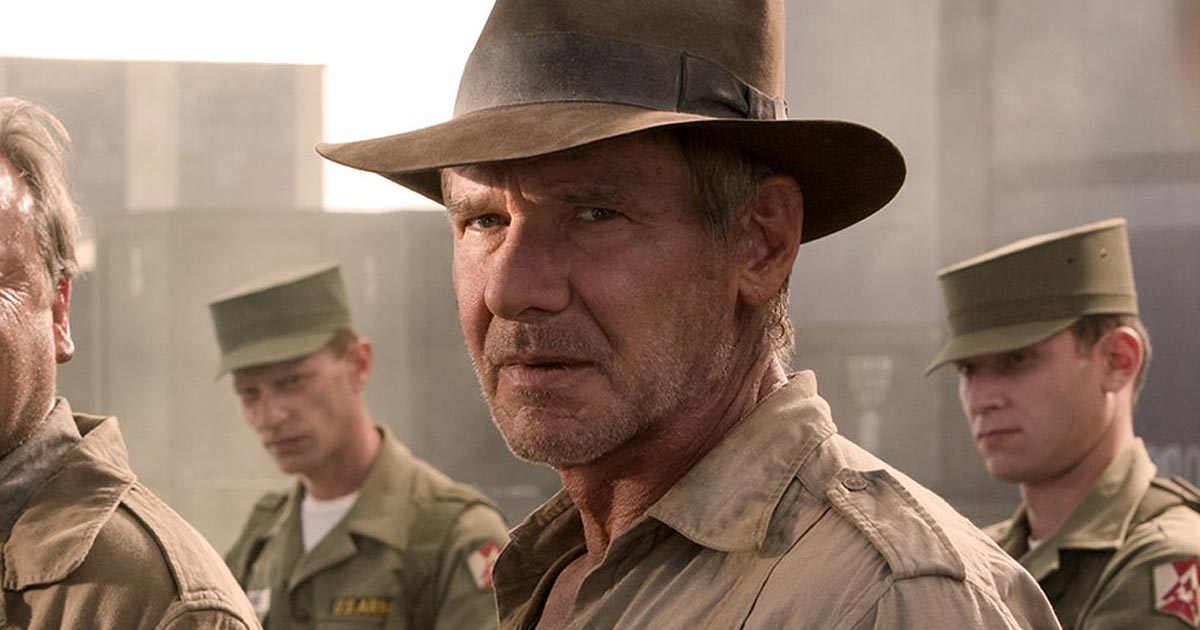
To be fair, Indiana Jones 5 was not universally hated. Some critics praised Harrison Ford’s performance, the emotional themes of aging, and the attempt to give Indy a more human final chapter. Ford remains the movie’s strongest asset. Even when the film around him wobbles, he brings weariness, humor, irritation, and sadness to the role. He does not treat Indiana Jones like a Halloween costume. He treats him like a man who has survived history and is not entirely sure survival was the clean victory everyone imagined.
Still, the critical response was undeniably mixed. Major reviews described the film as competent but underwhelming, energetic but joyless, or affectionate but bloated. That is a brutal category for a blockbuster: not bad enough to become legendary, not good enough to become beloved. It occupies the cinematic middle seat, stuck between a crying baby and a man eating tuna on a plane.
The Cannes Film Festival premiere also created a strange contrast. Harrison Ford received emotional recognition, including an honorary Palme d’Or, and the moment celebrated his career beautifully. But the film itself drew divided reactions. The applause for Ford was warmer than the enthusiasm for the movie. That distinction matters. Audiences love Harrison Ford. They love Indiana Jones. But loving a character does not automatically mean loving every new chapter written for him.
Helena Shaw and the Sidekick Debate
Phoebe Waller-Bridge’s Helena Shaw became one of the most discussed parts of the movie. She is clever, slippery, and morally flexible, which gives the story a jolt of modern energy. In theory, she is exactly the kind of companion Indy needs: someone who challenges him, annoys him, and forces him out of retirement mode.
However, reactions to Helena were divided. Some viewers enjoyed her wit and confidence. Others felt the character was written with too much self-satisfaction and not enough vulnerability. A great Indiana Jones sidekick needs friction, but friction alone is not enough. Marion Ravenwood worked because she could spar with Indy while still feeling like a complete person with history, anger, humor, and heart. Henry Jones Sr. worked because the conflict with Indy revealed decades of emotional baggage. Short Round worked because he brought warmth and loyalty to the chaos.
Helena sometimes feels more like a narrative device than a fully settled character. She pushes the plot, cracks jokes, causes trouble, and occasionally softens, but the film does not always give the audience enough reason to invest in her beyond her function. That is not Waller-Bridge’s fault. She brings charisma. The issue is that the script occasionally treats charm like a substitute for depth. Charm is wonderful. But in a movie already fighting accusations of artificiality, it needed more emotional excavation.
James Mangold Had an Almost Impossible Job
James Mangold deserves some sympathy. Directing Indiana Jones 5 was not a normal filmmaking assignment. It was more like being handed a priceless ancient vase, told it had already been cracked once, and then asked to juggle it while Disney executives watched from a balcony.
Mangold had to honor Spielberg, satisfy longtime fans, introduce new characters, justify Indy’s age, manage a giant budget, use digital effects, deliver action, create closure, and avoid making the whole enterprise feel like a museum exhibit with explosions. That is a lot. Few directors could make all of that feel effortless.
The movie’s best ideas come when it leans into melancholy. Indy is older. His marriage has suffered. He carries grief. His world has changed. These are rich emotional themes. The film understands that time is the real villain, even more than Voller. But instead of trusting that idea fully, it keeps racing into chases, underwater sequences, auctions, tuk-tuk action, airplane danger, and time-bending spectacle. The result is a movie that wants to be about aging but is terrified of slowing down long enough to feel old.
The Third Act Goes BigMaybe Too Big
Indiana Jones movies have always embraced the supernatural or impossible. The Ark melts faces. The Sankara Stones glow. The Holy Grail heals. Crystal Skull goes full alien-adjacent science fiction. So the time-travel-adjacent climax of Dial of Destiny is not automatically a betrayal. Indy has never lived in strict realism. He lives in the land of snakes, secret temples, and academic tenure somehow funding international chaos.
Still, the final act is divisive because it swings so hard. The movie moves from historical adventure into a spectacle that asks the audience to accept an enormous tonal leap. Some viewers found it bold and emotional. Others found it absurd, even by Indiana Jones standards. The issue is not simply that the plot becomes unbelievable. The issue is that the emotional logic gets crowded by the sheer size of the concept.
Indy’s desire to remain in the past is one of the film’s most poignant ideas. He is tired, wounded, and tempted to disappear into history because the present has become painful. That is strong drama. But the surrounding mechanics are so loud that the character moment has to fight for air. A smaller, cleaner ending might have landed harder. Sometimes a whisper does more damage than a collapsing airplane.
Why “Trainwreck” Is Harshbut Understandable
Calling Indiana Jones 5 a total trainwreck may be exaggerated, but the frustration behind the phrase is understandable. Fans were not merely reacting to one film. They were reacting to a pattern in modern Hollywood: beloved franchises stretched beyond their natural endings, legacy characters brought back for one last ride, digital tools used to recreate youth, and massive budgets spent chasing the emotional high of movies that felt more handmade, dangerous, and alive.
Dial of Destiny is not without merit. Harrison Ford is committed. John Williams’ music still carries mythic power. Mangold finds moments of sadness and grace. Some action beats have old-fashioned fun. The film at least tries to say something about aging, regret, and the cost of adventure.
But good intentions do not automatically make a great movie. The film often feels like it is checking boxes: classic villain, ancient artifact, young companion, chase scene, callback, emotional wound, final farewell. It understands what an Indiana Jones movie contains, but not always what made those ingredients crackle. The original films had speed, danger, romance, practical texture, and a mischievous sense that the whole thing might fly off the rails. Dial of Destiny has plenty of rails. It just does not always feel like it is flying.
What Indiana Jones 5 Teaches Hollywood
The lesson of Indiana Jones and the Dial of Destiny is not “never revisit old franchises.” That would be too simple. The real lesson is that nostalgia must have a purpose beyond recognition. Bringing back a character should reveal something new, not simply remind viewers that they once felt something powerful.
Legacy sequels work when they justify their existence emotionally and cinematically. Top Gun: Maverick succeeded because it transformed nostalgia into momentum. Creed worked because it shifted the perspective while honoring the past. Logan worked because it let an iconic character age, suffer, and end inside a story that felt necessary. Dial of Destiny tries to do some of that, but it also feels trapped by the enormous machinery required to produce a modern franchise blockbuster.
Indiana Jones was never just a brand. He was a silhouette, a punchline, a scar, a fear of snakes, a classroom fantasy, and a reminder that history could be thrilling without losing its mystery. To revive him successfully, a movie needs more than references. It needs danger. It needs momentum. It needs romance. It needs dirt under its fingernails. Too often, Indiana Jones 5 feels polished when it should feel dusty.
Experience Section: Watching Indiana Jones 5 as a Fan of Old-School Adventure
Watching Indiana Jones 5 is a strangely personal experience if you grew up with the earlier films or discovered them through family movie nights, cable reruns, DVD box sets, or that one uncle who insists Raiders of the Lost Ark is the closest modern civilization has come to perfection. Indiana Jones is not just another action hero. He belongs to that rare group of movie characters who feel like they were always there, waiting in the background of pop culture with a whip, a hat, and a deeply questionable travel insurance policy.
That is why Dial of Destiny can feel both touching and frustrating at the same time. There is real emotion in seeing Harrison Ford return. His face carries the history of the franchise better than any exposition scene could. When Indy looks tired, you believe it. When he grumbles, you smile. When he shows flashes of the old spark, the movie briefly remembers how powerful this character can be. For fans, those moments are not small. They are the reason many people bought a ticket in the first place.
But the experience also comes with a weird sadness. You may find yourself watching the film and realizing you are not only judging the story in front of you. You are comparing it to the feeling of watching Raiders for the first time, or laughing at Sean Connery in The Last Crusade, or hearing John Williams’ theme blast through the speakers and feeling like adventure itself just kicked open the door. That is an unfair comparison, perhaps, but legacy sequels invite it. They ask audiences to bring their memories into the theater, then act surprised when those memories have opinions.
The biggest experiential problem is that Indiana Jones 5 often feels heavy. Not emotionally heavy in the best sense, but mechanically heavy. You can feel the cost, the effects, the franchise responsibility, the careful brand management, and the attempt to please several generations at once. The older films moved like they had stolen something and needed to escape quickly. This one sometimes moves like it has a committee meeting after lunch.
Still, there is a bittersweet pleasure in the farewell. The movie may not be the triumphant final chapter fans wanted, but it does remind viewers why Indiana Jones mattered. He was never invincible. He got punched, dragged, tricked, and terrified. He survived by improvising. That human quality remains the franchise’s greatest treasure. Even in a flawed movie, Ford’s Indy still has it. He is still the guy who looks at impossible danger and reacts with the facial expression of a professor who just realized the department copier is broken again.
For many viewers, the best way to experience Dial of Destiny is not as the grand equal of the original trilogy, because that expectation is a boulder rolling downhill with no escape route. Instead, it works better as a messy epilogue: sometimes exciting, sometimes awkward, occasionally moving, and frequently overstuffed. It is a movie about time made by an industry terrified of time passing. That tension makes it fascinating, even when it stumbles. And maybe that is the most Indiana Jones thing about it: battered, imperfect, running late, chased by history, and somehow still wearing the hat.
Conclusion: A Messy Farewell to a Movie Legend
‘Indiana Jones 5’ Sounds Like A Total Trainwreck is a harsh title, but it captures the anxiety that surrounded the film and the disappointment many felt after seeing it. Indiana Jones and the Dial of Destiny is not an empty disaster. It has craft, emotion, and a sincere Harrison Ford performance. But it is also a bloated, expensive, uneven legacy sequel that struggles under the weight of its own mythology.
The movie wants to be a goodbye, an adventure, a nostalgia trip, a character study, and a modern blockbuster all at once. Sometimes it succeeds for a few minutes. Sometimes it gets buried under the machinery. In the end, the film’s greatest irony is that it tells a story about not being able to change the past, while existing mainly because Hollywood keeps trying to do exactly that.