Mom Of Three From Japan Comes Up With Incredibly Creative Meals For Her Kids (30 Pics)

Some parents pack lunch. Some parents arrange lunch. And then there is Etoni Mama, a mom of three from Japan who appears to look at rice, seaweed, eggs, vegetables, and sausages and think, “Yes, but what if this became a tiny edible cartoon masterpiece?” Her creative meals for kids have captured the internet’s attention because they are not just cute; they are patient, thoughtful, colorful, and wildly detailed in the way only a loving parent with a very steady hand can manage.
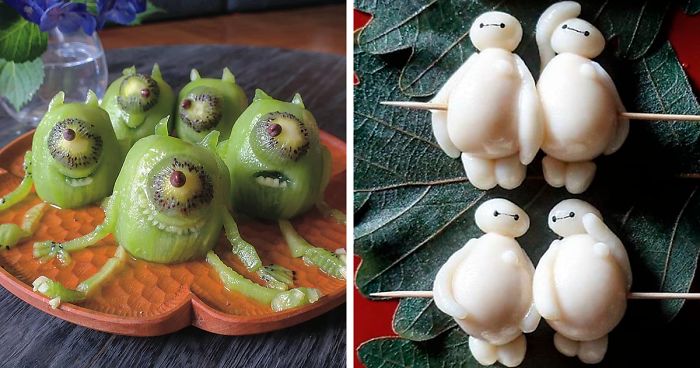
The viral collection known as “Mom Of Three From Japan Comes Up With Incredibly Creative Meals For Her Kids (30 Pics)” celebrates a type of Japanese food art often connected to kyaraben, or character bento. These meals turn everyday ingredients into animals, pop-culture characters, smiling faces, and miniature scenes. Think lunchbox meets art class, except the paint is made of rice, the shadows come from nori, and the final gallery is probably eaten before recess.
What makes Etoni Mama’s work so charming is not simply the “wow” factor. It is the purpose behind it. Her creative food journey began as a way to make meals more appealing for her children, especially a picky eater in the family. That detail matters. These dishes are not just internet trophies; they are small acts of problem-solving, care, and mealtime imagination.
Who Is Etoni Mama?
Etoni Mama is a Japanese mother from Tokyo who became known online for transforming simple meals into playful works of food art. At the time her creations gained major attention, she was raising three elementary-school-aged children and sharing her colorful plates with a growing audience on social media. She has also explained that she did not begin as a formally trained food artist. Instead, she developed her style through practice, observation, and the very relatable parental mission of getting children interested in eating.
That is part of the appeal. Her meals do not feel like something created in a cold professional studio with tweezers, studio lights, and a dramatic soundtrack. They feel like they came from a real kitchen, where someone is probably also checking homework, answering a child’s question about socks, and wondering why the spoon drawer has become a museum of missing lids.
Her food art often includes familiar characters and animals, but the real magic is in the details: carefully placed seaweed eyes, egg sheets cut into soft shapes, rice molded into round faces, and vegetables used like edible confetti. Each plate tells children, “This meal was made for you.” That message is stronger than any lunchbox note, though a lunchbox note shaped like a tiny panda would also be excellent.
What Is Kyaraben?
Kyaraben is short for “character bento,” a Japanese lunchbox style where food is arranged to resemble characters, animals, flowers, or playful scenes. It grew from Japan’s long bento tradition, where meals are often balanced, compact, visually pleasing, and easy to eat away from home. A classic bento usually includes rice, protein, and vegetables, but kyaraben adds another layer: storytelling.
In a character bento, rice can become a bear. Nori can become hair, eyes, eyebrows, whiskers, or a suspiciously expressive frown. Egg can turn into a blanket, a moon, or a yellow cartoon face. Ham, cheese, carrots, cucumbers, and tomatoes become building blocks for edible design. The lunchbox is no longer just a container. It is a tiny stage, and the broccoli is suddenly part of the set design.
Kyaraben also reflects something deeply connected to Japanese food culture: presentation matters. The look of food can shape the eating experience before the first bite. Color, seasonality, balance, and arrangement are important in many Japanese meals, from everyday bento to more formal dining. Etoni Mama’s meals fit into this wider appreciation for food as both nourishment and visual communication.
Why These Creative Meals Went Viral
The internet loves food that does something unexpected. A pancake shaped like a cat? People click. A sandwich with a face? People send it to their friend with the caption, “Why can’t my lunch emotionally support me like this?” Etoni Mama’s meals went viral because they combine several irresistible ingredients: cuteness, skill, parenting, cultural curiosity, and the universal struggle of feeding children.
Parents everywhere understand the challenge of making food appealing to kids. One child rejects anything green. Another refuses food if two items touch. A third suddenly announces that yesterday’s favorite food is now “too crunchy in the wrong direction.” Creative meals do not magically solve every picky eating problem, but they can make the table feel less like a negotiation room and more like an invitation.
Etoni Mama’s dishes also have a “how did she do that?” quality. Many people look at a slice of cheese and see a slice of cheese. She sees a cartoon character’s face, a bear’s belly, or the perfect accent for a tiny edible scene. Her work reminds us that creativity often begins with ordinary materials. You do not need rare ingredients to make memorable food; sometimes you need rice, patience, and the courage to give a sausage tiny eyes.
The Secret Ingredient: Making Food Fun Without Losing Balance
One reason bento-style meals work so well for kids is variety. Small portions of different foods can feel less intimidating than one giant mound of “please eat this because I said so.” A bento can include protein, grains, fruit, vegetables, and healthy fats in a way that feels colorful rather than bossy.
Nutrition guidance for kids often emphasizes variety, colorful fruits and vegetables, whole grains, healthy proteins, and water instead of sugary drinks. Bento fits naturally with that idea because the compartments encourage a mix of food groups. Even when a lunch is playful, it can still be practical. A rice bear can sit next to tomatoes, broccoli, egg, fruit, and chicken. That bear may be adorable, but he is also part of a balanced meal plan. Respect the bear.
The best creative meals for kids do not need to be overloaded with sugar, food coloring, or complicated decorations. Etoni Mama’s style shows how regular ingredients can create charm. Nori, rice, eggs, vegetables, cheese, and fruit can do a lot of visual heavy lifting. In other words, lunch does not need to become dessert wearing a costume.
How Etoni Mama Turns Simple Ingredients Into Food Art
1. Rice Becomes the Main Character
Rice is one of the most flexible ingredients in Japanese bento. It can be shaped into balls, faces, animals, or character bodies. With a little pressure and the right mold, rice becomes a blank canvas. Add nori eyes and suddenly you have a panda, a penguin, or a character who looks mildly concerned about being eaten.
2. Nori Adds Expression
Nori, or dried seaweed, is one of the most important tools in character bento. Cut into tiny pieces, it becomes eyes, mouths, lashes, eyebrows, hairlines, buttons, and outlines. A tiny nori smile can change the mood of an entire plate. This is food design at the millimeter level, which is also where most parents begin saying, “Maybe a smiley face with ketchup is enough today.”
3. Eggs Bring Warm Color
Egg sheets, omelets, and tamagoyaki can add bright yellow tones and soft textures. They work well for blankets, faces, clothing details, stars, or backgrounds. In many creative Japanese meals, egg is not only a protein source but also a design tool.
4. Vegetables Add Texture and Life
Carrots, cucumbers, tomatoes, broccoli, peas, and lettuce bring color and crunch. They can become cheeks, flowers, buttons, trees, hats, or scenery. This is especially useful for parents trying to make vegetables less intimidating. A carrot flower still tastes like carrot, but it arrives with better public relations.
5. Familiar Characters Create Instant Interest
Children often respond to familiar faces. When a meal resembles a beloved animal or cartoon figure, it creates curiosity. The child may still inspect it like a tiny food critic, but at least the conversation begins with interest rather than suspicion.
Creative Meals For Kids: Inspiration Without Pressure
It is easy to admire Etoni Mama’s work and immediately feel underqualified to pack a sandwich. But the real lesson is not that every parent must produce museum-quality lunch before sunrise. The lesson is that food can be playful, personal, and inviting.
In fact, many family food experts remind parents that bento lunches do not need to be social-media perfect. A simple compartment box with a few favorite foods can already feel exciting to a child. Cookie cutters, fruit picks, colorful cups, and small shapes can add charm without turning breakfast prep into a competitive sport.
That distinction matters. Etoni Mama’s meals are extraordinary because they are personal art. They should inspire, not intimidate. A parent can borrow the spirit without copying the complexity. Maybe today’s lunch is a full character bento. Maybe it is a sandwich cut into stars. Maybe it is apple slices arranged into a fan because that is what the morning allowed. All three count.
30 Pic-Worthy Ideas Inspired by Japanese Creative Meals
While the viral feature highlights 30 images of Etoni Mama’s incredible food art, the broader inspiration can be adapted in many ways. Here are creative meal ideas that capture the same playful spirit:
- Rice balls shaped like sleeping bears with nori faces.
- Omelet strips folded into tiny blankets over rice animals.
- Cherry tomatoes used as bright cheeks or balloons.
- Broccoli florets arranged as trees in a mini food landscape.
- Carrot flowers cut with small vegetable cutters.
- Cucumber slices turned into wheels, eyes, or borders.
- Cheese stars placed over dark nori “night skies.”
- Mini sandwiches cut into cats, hearts, or clouds.
- Fruit skewers arranged by color like a rainbow.
- Boiled eggs decorated with simple nori expressions.
- Sausages cut into octopus shapes, a classic playful bento touch.
- Onigiri shaped into pandas using nori ears and eyes.
- Rice penguins with seaweed bodies and carrot beaks.
- Pasta nests with vegetable “birds.”
- Mashed potatoes shaped into snowmen.
- Chicken pieces arranged around a character face.
- Edamame used as tiny green buttons.
- Lettuce leaves used as edible grass.
- Fruit slices turned into wings, ears, or smiles.
- Small cheese circles used for eyes or decorations.
- Seaweed cutouts for eyebrows that deliver serious personality.
- Rice cats with whiskers made from thin nori strips.
- Mini burgers with cute faces for special lunch days.
- Vegetable ribbons rolled into flowers.
- Curry served with rice shaped into a bear taking a bath.
- Pancakes decorated with fruit faces for breakfast.
- Toast cut into character shapes with egg and vegetables.
- Noodle bowls topped with an egg character.
- Seasonal bentos using pumpkins, leaves, snowflakes, or blossoms.
- A surprise lunchbox note paired with a tiny edible smile.
Why Kids Respond to Visual Food
Children explore food with all their senses. Before they taste something, they notice color, smell, shape, texture, and even whether it looks “weird.” A creative meal can lower the emotional barrier by making unfamiliar foods seem friendly. A cucumber slice may be rejected as a cucumber slice, but when it becomes a frog’s eye or a flower petal, it gets a second interview.
This does not mean children should be tricked into eating. The best approach is transparent and positive. A parent might say, “These are carrots shaped like stars,” not “Surprise, I hid vegetables in your happiness.” The goal is to build curiosity and comfort, not suspicion. Kids are small, but many of them have the investigative instincts of airport security.
Creative meals can also help children feel seen. When a parent makes a lunch based on a child’s favorite animal, season, color, or character, the meal becomes personal. It says, “I know what you like.” That emotional connection may be just as important as the visual design.
Practical Tips for Parents Who Want to Try
Start With One Cute Detail
You do not need to build an edible movie scene. Start with one detail: nori eyes on a rice ball, a carrot flower, a star-shaped sandwich, or fruit arranged by color. Tiny changes can create a big reaction.
Use Leftovers Wisely
Bento planning becomes much easier when dinner leftovers are part of the strategy. Extra chicken, rice, vegetables, pasta, or eggs can become tomorrow’s lunch. This saves time and reduces the chance that you are sculpting a rice rabbit while also asking where everyone’s shoes went.
Keep Food Safety in Mind
Because bento lunches are often eaten hours after packing, food safety matters. Meals should be cooled properly before closing the box, wet ingredients should be managed carefully, and perishable foods should be kept at safe temperatures. Cute food still has to behave like food.
Choose a Color Formula
A simple color rule can make any lunch look better: include something green, something red or orange, something yellow, and something neutral. For example, broccoli, tomatoes, egg, and rice create instant visual balance without requiring an art degree.
Respect Your Morning Energy
Some mornings are panda-rice-ball mornings. Some mornings are “here is a banana and a sandwich, please accept my love in rectangular form” mornings. Both are valid. Creativity should support family life, not turn it into a lunchbox Olympics.
What Etoni Mama Teaches Us About Parenting and Creativity
Etoni Mama’s creative meals are impressive because they combine artistry with everyday care. They remind us that parenting creativity does not always look like grand gestures. Sometimes it looks like cutting seaweed into tiny eyes after everyone else has gone to bed. Sometimes it looks like learning a new skill because one child has a complicated relationship with vegetables. Sometimes it looks like turning lunch into a small surprise.
Her work also challenges the idea that food has to be either healthy or fun. It can be both. A meal can include vegetables and still have personality. It can be balanced and still look like a bear. It can support good eating habits while also making a child laugh. That is a pretty strong achievement for rice and carrots.
At the same time, her popularity opens a useful conversation about pressure. Beautiful bento culture is inspiring, but parents should not feel required to produce elaborate lunches to prove love. Love is not measured by how symmetrical the nori eyes are. Etoni Mama’s meals are one expression of care, not the only acceptable standard.
Experiences Related to Creative Japanese Meals for Kids
Anyone who has tried to make a creative meal for a child learns quickly that food art is part cooking, part crafting, and part comedy. The first attempt rarely looks like the photo. The rice ball may collapse. The seaweed eyes may stick to your finger instead of the rice. The carrot flower may look less like a flower and more like a traffic accident with vitamins. This is normal. The kitchen is a place of learning, and sometimes learning has rice on the floor.
One of the most useful experiences parents share is that children often care less about perfection than adults do. A parent may see uneven eyes and a crooked smile. A child may see a funny bear who came to lunch. That is the beauty of making meals for kids: their imagination can finish the picture. You do not need professional-level presentation to create joy. You need intention, a little patience, and maybe a backup snack.
Another common experience is discovering which foods are easiest to shape. Rice, eggs, cheese, seaweed, pancakes, toast, and firm fruits are beginner-friendly. Soft, wet, or slippery foods can be harder to control. Trying to make a detailed character out of soup is not impossible, but it is also how a person begins questioning every decision that led to that moment.
Parents also learn that preparation matters. Cutting nori shapes the night before, washing fruit ahead of time, cooking extra rice, or keeping small cutters in one drawer can make creative meals less stressful. The goal is to remove friction. If the tools are ready, a cute lunch takes minutes instead of becoming a full morning production with dramatic lighting and emotional music.
Children can also join the process. Letting kids choose a theme, pick fruit colors, or place vegetable decorations gives them ownership. A child who helps build a cucumber caterpillar may be more willing to taste it. Not always, of course. Children are mysterious creatures. But participation can turn food from something being served to them into something they helped create.
The best experience of all is the reaction. Maybe it is a laugh, a gasp, a proud “Look at my lunch,” or simply an empty container at the end of the day. Creative meals are not only about making food look cute. They are about creating a small moment of connection in the middle of an ordinary routine. That is why Etoni Mama’s work resonates so widely. Behind every tiny rice animal is a familiar feeling: someone cared enough to make the day a little brighter.
Conclusion
The story of the mom of three from Japan who creates incredibly creative meals for her kids is more than a viral food gallery. It is a celebration of imagination, patience, and the everyday art of feeding a family. Etoni Mama’s dishes show how rice, nori, eggs, vegetables, and fruit can become playful characters that make children curious about food. Her work belongs to the joyful world of kyaraben, but its message travels far beyond Japan: meals can nourish the body, spark the imagination, and carry love in the smallest details.
For parents, the takeaway is simple. You do not need to copy every intricate design to bring creativity to your child’s plate. Start small. Add color. Make one funny face. Cut one star. Pack a lunch that feels personal. Whether your meal looks like a polished character bento or a sandwich with heroic intentions, the heart of the idea remains the same: food can be fun, and love can be served in a lunchbox.