
Pretty in Pink is one of those 1980s teen movies that refuses to sit quietly in the nostalgia drawer. It does not simply ask, “Will the girl go to prom?” It asks much messier questions: Who gets to belong? Can style become armor? Is a crush still romantic when it comes with social pressure, emotional confusion, and one guy named Blane? Yes, Blane. The name still sounds like a sweater tied around a country-club neck.
Released in 1986, directed by Howard Deutch, written by John Hughes, and starring Molly Ringwald, Jon Cryer, Andrew McCarthy, Annie Potts, Harry Dean Stanton, and James Spader, Pretty in Pink became a defining Brat Pack-era teen romance. It is romantic, awkward, stylish, frustrating, funny, and occasionally so emotionally teenage that it should come with a locker combination. That is exactly why people still rank it, debate it, defend it, and side-eye it decades later.
This article ranks the film’s biggest strengths, most debated choices, and lasting cultural moments. It also offers honest opinions on where Pretty in Pink succeeds, where it wobbles in its thrift-store heels, and why its soundtrack may be the real prom king.
What Makes Pretty in Pink So Rankable?
Some movies are easy to review once and leave alone. Pretty in Pink is not one of them. It keeps generating opinions because every major piece of the film invites disagreement. Andie’s fashion? Iconic or chaotic? Duckie’s devotion? Sweet or exhausting? Blane? Romantic lead or human beige cardigan? The ending? Crowd-pleasing or emotionally suspicious?
The movie sits at the intersection of romance, class conflict, teen identity, new wave music, and 1980s fashion. It is not just a love triangle. It is a cultural triangle: poor girl versus rich boy, outsider style versus preppy conformity, emotional loyalty versus romantic desire. That gives viewers plenty to rank beyond simple “good movie” or “bad movie” labels.
Pretty in Pink Rankings: Best Elements of the Movie
1. Molly Ringwald as Andie Walsh
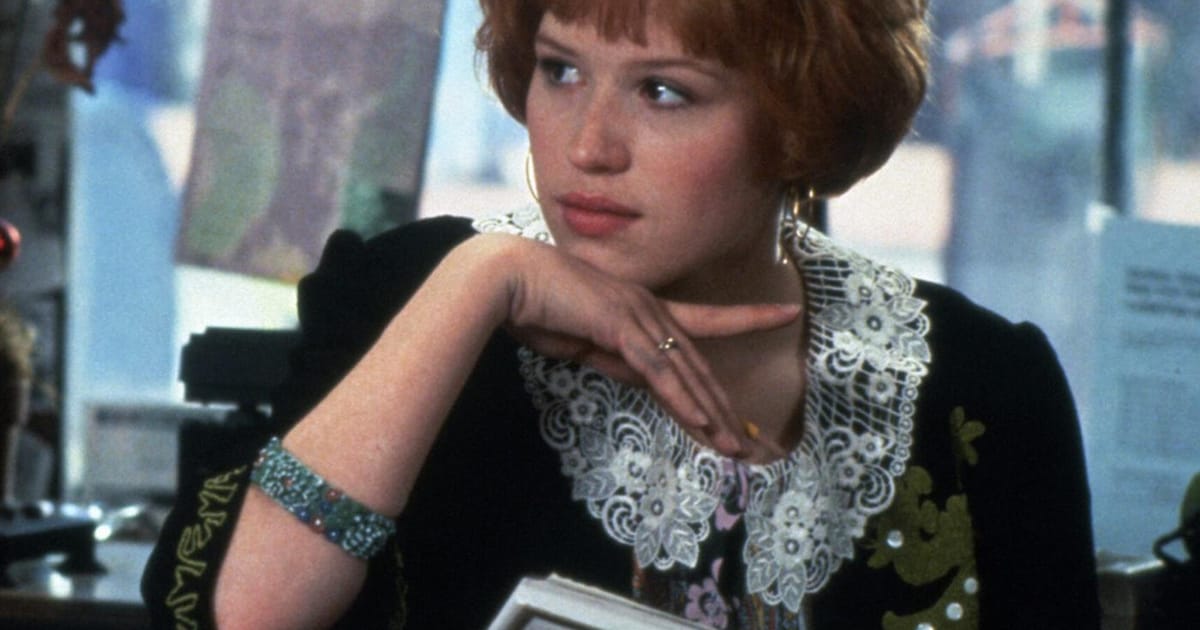
At the top of any serious Pretty in Pink ranking is Molly Ringwald’s performance as Andie Walsh. Andie is not written as a fantasy version of a poor girl waiting to be rescued. She is observant, defensive, creative, embarrassed, proud, and wounded in ways she does not always say out loud. Ringwald makes her feel specific. You understand why Andie wants more, why she distrusts rich kids, and why she still cannot stop liking Blane.
Andie’s strength is not that she never feels insecure. It is that she keeps showing up anyway. She walks through a school that treats wealth like a personality trait. She works at a record store. She cares for her father emotionally more than a teenager should have to. She builds an identity from vintage clothes, pink rooms, and stubborn dignity. That makes her the heart of the movie.
Opinion: Andie remains one of the best John Hughes heroines because she is not simply “quirky.” She has taste, pride, and pain. Her fashion may look like a sewing machine got into a fight with a curtain, but emotionally, she is stitched together beautifully.
2. The Soundtrack
The Pretty in Pink soundtrack is not background music. It is the film’s emotional bloodstream. With songs from Orchestral Manoeuvres in the Dark, The Psychedelic Furs, New Order, INXS, Suzanne Vega, Echo & the Bunnymen, and The Smiths, the album captures the moody, left-of-center feeling of teenage longing better than most dialogue could.
“If You Leave” by OMD became inseparable from the movie’s final prom sequence, while “Please Please Please Let Me Get What I Want” practically sounds like the official national anthem of dramatic hallway sadness. The soundtrack gives the film coolness, texture, and replay value. Even viewers who argue about the ending usually agree that the music slaps. Politely, emotionally, and with excellent synths.
Opinion: The soundtrack ranks above the romance. Yes, that is a bold statement. But remove the music and the film loses half its atmosphere. Remove Blane and, well, Andie might make better decisions.
3. Duckie’s Record Store Dance
Jon Cryer’s Duckie Dale is one of the most memorable characters in the film, and his lip-sync performance to Otis Redding’s “Try a Little Tenderness” is the moment that launched a thousand living-room re-creations. It is ridiculous, theatrical, brave, and deeply Duckie. He turns a record store into a stage and makes awkward confidence look like a superpower.
The dance works because it shows Duckie at full volume. He is not cool in the traditional rich-kid sense. He is cool because he has committed so completely to being himself that embarrassment cannot catch him. The man dresses like a jazz magician and still somehow owns the room.
Opinion: As a scene, it is top-tier. As flirting, it is debatable. As evidence that Duckie needed a creative outlet, absolutely. Someone get this boy theater club membership and a healthier emotional boundary plan.
4. Annie Potts as Iona
Iona, played by Annie Potts, is the adult friend every teen movie wishes it had. She is funny, stylish, bruised by her own history, and wise without becoming a walking advice poster. As Andie’s boss and confidante, she offers a glimpse of what happens when youthful weirdness grows up but does not sell out.
Iona’s fashion transformations are also a quiet ranking category of their own. She moves through looks like a one-woman museum of subculture survival. But beneath the comedy is genuine tenderness. She understands Andie because she remembers being Andie-adjacent: the girl who wanted love, identity, and a way out.
Opinion: Iona is underrated. She may not drive the central plot, but she gives the film emotional depth and style insurance. Whenever the romance gets shaky, Iona walks in and reminds the movie to have a personality.
5. The Class Conflict
The strongest theme in Pretty in Pink is not romance; it is class anxiety. Andie is constantly reminded that money decides who gets respect. The rich kids do not just have better cars and bigger houses. They have social protection. They can be cruel and still be treated as desirable. Andie, meanwhile, has to defend every outfit, every feeling, and every inch of space she occupies.
This is where the film still feels sharp. Teen social life often turns money into invisible architecture. Who gets invited? Who gets mocked? Who can afford to look effortless? Who has to make “creative” choices because the mall is not financially friendly? Pretty in Pink understands that style can be self-expression, but it can also be survival.
Opinion: The class commentary is more compelling than the love triangle. The movie becomes most interesting when Andie is not asking, “Which boy should I choose?” but “Why does choosing anyone require me to prove my worth?”
6. James Spader as Steff
James Spader’s Steff is one of the great rich-boy villains of 1980s cinema. He slouches through scenes with the confidence of someone who has never heard the word “consequence” spoken directly to him. Steff is not just mean; he is entitled. He wants Andie, resents being rejected, and punishes her socially for having standards.
What makes Steff effective is that he represents the ugliest side of privilege. He does not need to be physically threatening all the time because the social system already works for him. A smirk from Steff can do the emotional damage of a small weather event.
Opinion: Steff is awful in exactly the right way. He is the human version of expensive cologne sprayed in an elevator. You cannot escape him fast enough.
7. Harry Dean Stanton as Jack Walsh
Andie’s father, Jack, brings sadness and tenderness to the movie. Played by Harry Dean Stanton, he is unemployed, emotionally stuck, and still grieving the wife who left. His relationship with Andie is complicated because she loves him, but she also has to parent him. That gives the movie a grounded ache beneath its prom-night glitter.
Jack’s scenes remind us that Andie’s class position is not decorative. Her home life shapes her choices. She cannot float through romance the way Blane can because she carries responsibilities that her classmates barely understand.
Opinion: Jack is not always easy to watch, but he is essential. Without him, Andie’s story would feel like fashion rebellion. With him, it becomes a portrait of a teenager trying to build beauty inside instability.
8. Blane as the Romantic Lead
Blane is one of the most debated parts of Pretty in Pink. Andrew McCarthy gives him softness and uncertainty, which helps explain why Andie is drawn to him. He is not Steff. He seems genuinely interested in her. He looks at her as if she is a person, not a social experiment.
However, Blane also folds under pressure. When his friends disapprove, he becomes slippery. He avoids honesty. He lets Andie absorb the emotional cost of his cowardice. That makes him realistic, but not always satisfying. The movie wants him to be the dream boy, yet his behavior often screams “needs more spine.”
Opinion: Blane is not a monster, but he is not the grand prize either. He is a teenage boy learning that liking someone from a different class requires courage, not just good hair and moody eye contact.
9. The Prom Dress
Ah, the prom dress. The pink, handmade, aggressively discussed prom dress. Andie creates it by combining old dresses into one new look, making it a symbol of reinvention. In theory, it is perfect: she refuses to buy status and instead makes her own entrance.
In practice, viewers have argued for decades about whether the dress is genius, tragic, or evidence that even talented people have off days. The shape is unusual, the neckline is memorable, and the whole thing has the energy of a fashion risk taken under emotional pressure.
Opinion: The dress is conceptually brilliant and visually controversial. It may not be beautiful in a traditional sense, but it is unforgettable. In a movie about being judged, that matters. Also, boring dresses do not start debates 40 years later.
10. The Ending
The ending remains the film’s most famous controversy. The original version reportedly paired Andie with Duckie, but test audiences did not respond well, leading to a reshot ending where Andie and Blane reunite at prom. That change transformed the movie’s legacy. Instead of rewarding loyal friendship, the final cut chooses romantic aspiration across class lines.
The Blane ending works if you see the movie as a fantasy about connection overcoming social barriers. It works less well if you think Blane has not done enough to earn Andie’s forgiveness. Duckie, meanwhile, gets a small gesture of release rather than the romance he wanted. Depending on your view, that is either mature or a consolation prize wrapped in a bow tie.
Opinion: The ending is emotionally effective but morally messy. And honestly, that may be why it still works as a conversation starter. Perfect endings get applause. Imperfect endings get think pieces.
Where Pretty in Pink Ranks Among 1980s Teen Movies
In the larger world of 1980s teen films, Pretty in Pink sits near the top, but not necessarily at number one. The Breakfast Club is often treated as the heavier cultural statement. Ferris Bueller’s Day Off is slicker and more purely entertaining. Sixteen Candles has iconic moments but has aged more unevenly in several areas. Pretty in Pink lands in a fascinating middle position: less conceptually bold than The Breakfast Club, less comic than Ferris Bueller, but more emotionally stylish than almost anything around it.
Its greatest strength is mood. The film understands longing: wanting the dress, the date, the respect, the kiss, the escape, the version of yourself that other people cannot laugh out of existence. That is why it remains a favorite for viewers who care less about plot mechanics and more about emotional weather.
My overall ranking: Pretty in Pink is not the cleanest John Hughes-related film, but it may be one of the most rewatchable. It has flaws you can argue with and scenes you can live inside. That combination is powerful.
Modern Opinions: What Still Works and What Has Aged
What Still Works
The emotional honesty still works. Andie’s insecurity, Duckie’s unreturned affection, Jack’s sadness, Iona’s nostalgia, and Blane’s weakness all feel recognizable. The film does not treat teenagers as shallow simply because they care about dances, clothes, crushes, and cafeteria politics. It understands that small moments feel enormous when you are 17.
The soundtrack also remains nearly bulletproof. It gives the film a cool, melancholy identity that modern teen dramas still chase. The record store setting, the new wave energy, and the dreamy synth-pop finale all keep the movie from feeling like a generic prom romance.
What Has Aged Awkwardly
Duckie’s behavior is more complicated now. Many viewers still love him, but modern audiences may be less inclined to romanticize a best friend who believes devotion should eventually be rewarded with romance. His pain is real, but Andie does not owe him her heart simply because he has been waiting in the emotional lobby.
Blane’s redemption also feels thin. He apologizes, but the film rushes toward romantic closure. A modern version might make him work harder, speak more clearly, and maybe spend one full scene confronting his rich friends without looking like he misplaced his courage in a BMW.
Pretty in Pink Experiences: Watching, Rewatching, and Arguing About the Movie
One of the best experiences related to Pretty in Pink Rankings And Opinions is watching the movie with people who have completely different loyalties. Put three viewers in a room and you may get five opinions. One person will defend Duckie with the passion of a courtroom attorney. Another will say Andie should have gone to prom alone, looked fabulous, and left every boy emotionally underqualified. A third will quietly hum “If You Leave” and refuse to participate because they are busy having a synth-pop awakening.
Rewatching Pretty in Pink as an adult is especially interesting because your sympathies shift. As a teenager, you may focus on the romance: Will Blane show up? Will Duckie confess? Will Andie get the magical prom moment? As an adult, you may find yourself worrying about Jack’s depression, Iona’s loneliness, Andie’s emotional labor, and whether anyone in this school has access to a guidance counselor who does more than decorate an office.
The fashion also becomes more fun with time. Andie’s outfits are not just “cute vintage looks.” They are declarations. She dresses like someone building a private world in public. Every brooch, collar, hat, and pink detail says, “You may judge me, but you will not style me.” That is a powerful message for anyone who has ever used clothing to survive a room full of people who did not get them.
Then there is the soundtrack experience. Listening to the album after watching the film can feel like opening a time capsule filled with eyeliner, heartbreak, and excellent basslines. The music does not merely remind people of the 1980s; it reminds them of the feeling of wanting something just out of reach. That feeling is not dated. It is painfully renewable.
Another common experience is the Great Prom Dress Debate. Some viewers see the dress as a masterpiece of DIY identity. Others see it as a crime against fabric with mitigating emotional circumstances. Both sides have evidence. The dress is awkward, but so is adolescence. It is not a department-store fantasy. It is a handmade announcement that Andie will enter the room on her own terms. Whether the result is gorgeous or gloriously strange almost does not matter. The dress wins because people still talk about it.
The most rewarding way to experience Pretty in Pink today is not to demand that it be perfect. It is better to treat it as a stylish emotional artifact: part teen romance, part class fable, part music video, part argument starter. The movie’s flaws are not separate from its charm. They are baked into it like glitter in pink frosting. You may not love every bite, but you will remember the flavor.
Final Verdict: Is Pretty in Pink Still Worth Ranking?
Yes. Pretty in Pink is still worth ranking because it remains alive in the culture. People do not debate forgettable movies this intensely. The film’s performances, soundtrack, fashion, class tension, and controversial ending continue to invite fresh opinions. It may not be the most polished teen film of the 1980s, but it is one of the most emotionally sticky.
My final opinion: Pretty in Pink ranks as an essential 1980s teen movie, a top-tier soundtrack film, and a fascinatingly imperfect romance. Andie is the reason to watch. The soundtrack is the reason to replay. Duckie is the reason to argue. Blane is the reason to sigh deeply. The prom dress is the reason to keep fashion critics employed forever.
In the end, Pretty in Pink does what lasting teen movies do best: it makes temporary feelings feel permanent. It captures the ache of wanting to be chosen without losing yourself. That is why the movie still matters. Not because it gets every answer right, but because it remembers how huge the questions once felt.
SEO Tags
Note: This article is written for web publication in original wording, based on verified public information about the film, its reception, soundtrack, cast reflections, and long-running fan debates.