
Editorial note: This article is an original, publication-ready feature written in standard American English and based on publicly available information about Jimmy Craig’s long-running animal webcomic series, They Can Talk, along with credible animal behavior and pet communication references.
When Animals Finally Get the Mic, They Mostly Want Snacks
There are two types of pet owners in the world: people who talk to their animals, and people who pretend they do not talk to their animals when guests are around. Either way, most of us have wondered what our dogs, cats, birds, raccoons, frogs, sharks, or suspicious backyard squirrels might say if they could suddenly form complete sentences. Would they thank us for the organic treats? Would they expose our embarrassing habits? Would the cat finally explain why 3:17 a.m. is apparently the correct time to sprint across the hallway like a haunted bowling ball?
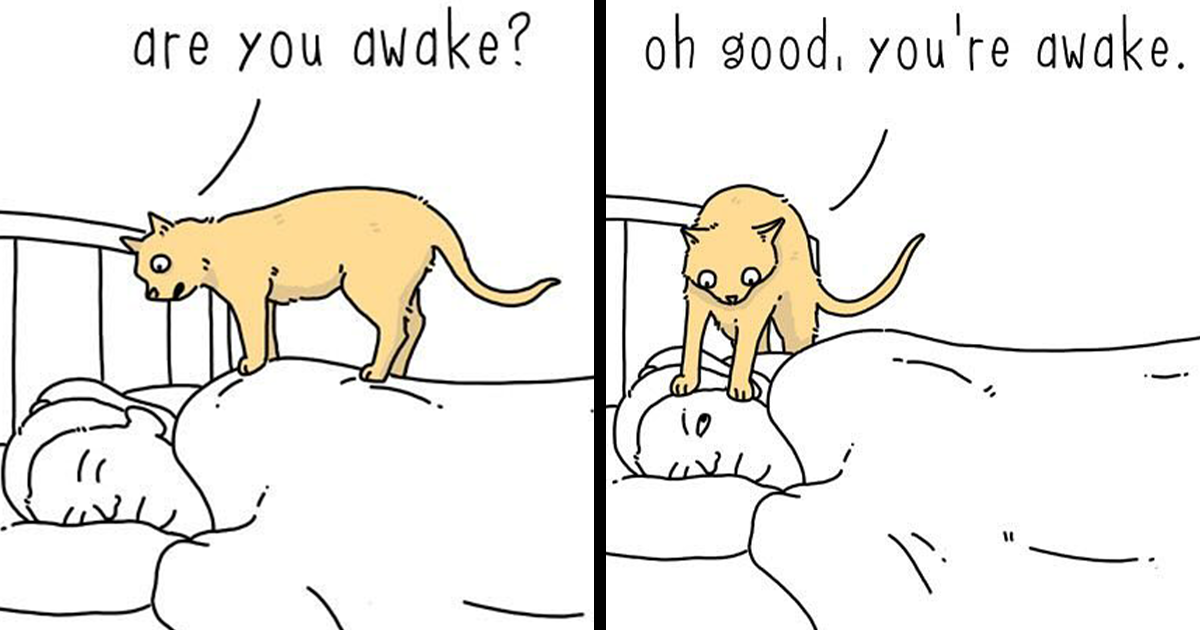
That wonderfully ridiculous question sits at the center of Jimmy Craig’s popular comic series, They Can Talk. The cartoonist has built a devoted online following by giving animals exactly what nature cruelly denied them: speech bubbles, timing, sarcasm, and the confidence of a house cat sitting on a laptop during tax season. His new batch of 30 animal comics continues the same simple but addictive idea: ordinary creatures, ordinary situations, unexpectedly perfect punchlines.
The result is not just “cute animal content,” though it certainly has enough paws, feathers, whiskers, and judgmental eyeballs to qualify. Craig’s comics work because they feel weirdly accurate. He does not turn animals into tiny humans in costumes. Instead, he imagines what their actual instincts might sound like if translated into plain English. A dog’s enthusiasm becomes an emergency broadcast. A cat’s food obsession becomes a tiny criminal enterprise. A bird’s viewpoint becomes both literal and philosophical. A raccoon may not speak for all raccoons, but if it did, it would probably have strong opinions about trash management.
Who Is Jimmy Craig, the Artist Behind They Can Talk?
Jimmy Craig is the humor writer and cartoonist behind They Can Talk, a webcomic series that began in 2015 and has grown into one of the internet’s most recognizable animal-comedy projects. His work has appeared across social platforms, on his official comic site, in book collections, and in calendar releases. A Boston-area artist with a dry, slightly sarcastic sense of humor, Craig has described his animal jokes as being rooted in observation rather than random silliness.
That matters. The best They Can Talk comics do not simply ask, “What if a dog said something funny?” They ask, “What would this specific behavior sound like if the animal were narrating it?” A cat begging for food becomes funnier when you understand that cats are not always the aloof aristocrats they advertise themselves to be. Dogs are funnier when their body language already says everything before the caption arrives. Birds, fish, insects, bears, and backyard animals become comic gold because their natural behavior is already strange from a human point of view.
Craig’s background in cartooning also shows. His style is clean and deceptively simple: expressive animals, uncluttered panels, and dialogue that lands quickly. There is no need for a complicated setup when a frog, a bear, or a cat can deliver a miniature existential crisis in one line. The humor often comes from contrast: serious-looking animals saying absurdly casual things, or goofy animals behaving as if they are running a highly important board meeting about crumbs.
Why These “Talking Animal” Comics Feel So Relatable
Animal comics have always had a special place in popular culture, from newspaper strips to animated films to viral webcomics. But They Can Talk taps into a very modern habit: we do not just own pets; we interpret them. We narrate their thoughts. We give them voices. We tell guests, “He’s mad because I moved his blanket,” as if the dog has filed an official complaint with management.
That impulse is called anthropomorphism, the act of giving human traits or emotions to nonhuman beings. In careless hands, it can lead people to misunderstand animal needs. But in comedy, used with awareness, it becomes a bridge. It lets us laugh at the gap between human logic and animal logic. A person may see a cardboard box as recycling. A cat sees it as premium real estate. A human may see the front door as an exit. A dog sees it as a magical portal to smells, destiny, and one particular bush that must be re-investigated daily.
Craig’s comics succeed because they usually start with behavior people already recognize. Dogs do communicate through barks, whines, posture, tail movement, facial expression, and attention-seeking routines. Cats communicate through ears, eyes, tails, rubbing, kneading, body posture, and vocalization. Even wild animals use signals, sounds, movement, and social cues. The comics exaggerate these realities into jokes, but the best punchlines feel like they are only one translation away from truth.
The Secret Ingredient: Observation Before Imagination
One reason They Can Talk has lasted so long is that Craig’s premise is almost endlessly renewable. Every animal has instincts. Every species has habits. Every pet owner has a story that begins with, “You will not believe what she did this morning.” That gives the cartoonist a deep well of material, but only if he keeps paying attention.
In interviews, Craig has discussed how observing his own cats changed the way he thought about food jokes. Many people assume food-obsessed behavior is mostly a dog thing: the begging eyes, the dramatic sigh, the sudden moral collapse when a sandwich is nearby. But cats, he noted, can be just as determined, including when cabinets are involved. Anyone who has heard suspicious kitchen thumping at midnight knows this is not fiction; it is a documentary with whiskers.
This observational approach keeps the comics grounded. The animal dialogue may be imaginary, but the behavior behind it often feels familiar. A dog staring out the window is not just staring; it is monitoring neighborhood security. A cat knocking something off a table is not just being chaotic; it is conducting gravity research. A bird landing near a feeder is not simply hungry; it is entering a competitive dining establishment with wings.
Why the 30 New Pics Work So Well
The latest collection of 30 new They Can Talk comics continues the series’ best tradition: small scenes with big personality. The animals are not overexplained. They do not need long backstories, heroic quests, or dramatic soundtrack music. A cat, a dog, a bird, or a woodland creature gets one moment, one thought, and one punchline. That tight format makes the comics easy to share and even easier to remember.
Part of the charm is that the jokes often feel universal. You do not need to own a Labrador to understand the emotional intensity of a dog who believes every passing pedestrian is a breaking-news event. You do not need a cat to understand the boldness of an animal that can ignore you for six hours and then demand immediate service because the food bowl has a visible bottom. These comics turn pet behavior into tiny social satire.
They also appeal to people who simply enjoy animals as characters. Craig’s universe includes more than cats and dogs. His comics have featured birds, fish, bears, sharks, insects, and many other creatures. That variety prevents the series from becoming predictable. One panel may feel like a joke about your living room. The next may feel like a nature documentary that got interrupted by a stand-up comedian.
Animal Communication Is RealJust Not Usually in English
Of course, animals do not speak in neat little captions. That is the joke. But they do communicate constantly, and humans are often worse at listening than we think. Dogs may use tail position, wagging speed, eye softness, posture, and vocal sounds to express excitement, uncertainty, fear, or interest. A wagging tail does not automatically mean happiness; it often means emotional arousal, and context matters. That little detail alone could ruin half of humanity’s confidence at the dog park.
Cats can be even more subtle. Ear position, pupil size, tail motion, whisker direction, rubbing, kneading, purring, and body posture all carry clues. A cat with “airplane ears” is not auditioning for aviation school; it may be irritated or frightened. A cat rubbing its face on your leg may be affectionate, but it is also marking territory. Congratulations, you are furniture with benefits.
Researchers continue to explore how animals understand humans, especially dogs. Studies on canine responses to words, gestures, tone, and context suggest that dogs are deeply tuned into human communication, even if they are not secretly writing poetry when we leave the room. Some trained animals have shown impressive abilities with symbols, commands, or sound associations, but human language remains uniquely complex. In other words, your dog may understand “outside,” but probably not “please stop barking at the delivery driver because he is not a medieval invader.”
The Comedy of Misunderstanding
What makes They Can Talk so funny is not that animals become human. It is that humans suddenly realize how odd we must look to animals. We bring home bags of food and hide them in cabinets. We install tiny beds and then act surprised when the cat prefers the laundry basket. We tell dogs not to lick things while living in a world absolutely packed with lickable information. We buy toys shaped like mice, then panic when a real mouse appears. From an animal’s perspective, humans are inconsistent roommates with thumbs.
Craig’s comics give animals the last word, and that reversal is satisfying. Usually, humans do the interpreting. We decide whether a pet is happy, guilty, needy, stubborn, dramatic, or “just being weird.” In They Can Talk, the animals get to interpret us back. The joke often lands because the animal’s view is simpler, sharper, and occasionally more honest than ours.
That is why these comics work across audiences. Pet owners recognize the behavior. Cartoon fans appreciate the timing. Casual readers enjoy the absurdity. The internet, naturally, enjoys anything involving a cat with an attitude problem and a dog with the emotional volume of a marching band.
Why Talking Animals Never Go Out of Style
Talking animals are ancient storytelling tools. Fables, folklore, children’s books, comic strips, animated films, and memes have used animals to reflect human behavior for generations. Animals let us talk about pride, fear, hunger, loyalty, laziness, curiosity, jealousy, and love without sounding too serious. A lecture about social anxiety can feel heavy. A nervous squirrel saying the same thing becomes instantly charming.
Craig’s work belongs to that tradition, but it is shaped for the modern web. His comics are quick enough for scrolling, smart enough for repeat reading, and familiar enough to trigger comments like, “That is exactly my cat,” or “My dog wrote this.” The format is simple, but the emotional reaction is powerful because people already have relationships with the animals being parodied.
The best animal humor also gives us permission to be ridiculous. It reminds us that humans are animals toojust animals with inboxes, mortgages, and strong opinions about coffee. When a comic imagines a dog panicking over a doorbell or a cat demanding food as if negotiating a hostage release, we laugh at them, but we are also laughing at ourselves. We are not always as dignified as we think. Ask any pet who has watched us search for a phone that was in our hand.
What Pet Owners Can Learn From These Comics
Even though They Can Talk is entertainment, it encourages a useful habit: paying attention. The more closely you observe animals, the funnier they becomebut also the easier they are to understand. A dog that suddenly avoids eye contact may not be “guilty”; it may be stressed or confused. A cat that swishes its tail sharply may not be “sassy”; it may be overstimulated. A bird that repeats a behavior may be seeking attention, food, safety, or stimulation.
Humor can make people more curious, and curiosity can make them better companions. When we stop assuming animals are mysterious little chaos machines and start noticing patterns, we become more responsive. We learn when to play, when to give space, when to change routines, and when to stop buying expensive pet beds that will be rejected in favor of a cardboard box labeled “printer paper.”
Experience Section: Living With Animals Who Already Act Like They Can Talk
Anyone who has lived with animals knows the strange feeling that they are always saying something, even without words. A dog standing by the leash is not making a polite suggestion; he is delivering a formal presentation titled Why We Must Go Outside Immediately. A cat sitting beside an empty bowl is not quietly waiting; she is issuing a performance review. A parrot repeating a household phrase at the worst possible moment is not merely mimicking; it is participating in family drama with excellent timing.
That is why a comic series like They Can Talk feels less like fantasy and more like translation. Most pet owners already translate animal behavior all day. The dog sighs heavily, and we say, “He’s bored.” The cat stares from across the room, and we say, “She’s judging me.” The rabbit thumps, the bird squawks, the guinea pig whistles, the horse pins its ears, and humans immediately become amateur diplomats negotiating with tiny foreign governments.
One common experience is the food conversation. Animals may not understand every word we say, but many of them understand food-related patterns with almost supernatural accuracy. Open a refrigerator, and the dog appears. Shake a treat bag, and the cat materializes from a dimension previously unknown to physics. Sit down with chicken, and every pet in the house suddenly becomes deeply interested in your personal growth. If these animals could talk, they would not begin with philosophy. They would begin with, “Are you finishing that?”
Another familiar experience is the dramatic misunderstanding. You buy a toy, and the cat loves the box. You call the dog lovingly, and he hears “bath” in the emotional weather. You tell a pet, “Be right back,” and they react as if you have joined a doomed expedition across the sea. Craig’s comics capture that mismatch beautifully because animal logic is not wrong; it is simply operating on a different operating system.
There is also comfort in imagining animal thoughts. Pets witness the most ordinary parts of our lives: sleepy mornings, bad moods, kitchen experiments, exercise attempts, late-night snacks, and the mysterious human ritual of staring at glowing rectangles. Giving them imaginary dialogue makes those moments feel shared. It turns daily routine into a two-character comedy, even if one character is mostly interested in crumbs.
For readers, the 30 new comics are a reminder to look more closely at the creatures around us. The squirrel on the fence, the dog at the window, the cat in the sink, the bird on the feedereach one is doing something that makes sense in its own world. The humor begins when we try to translate that world into ours. Sometimes the translation is silly. Sometimes it is surprisingly tender. And sometimes it is just a raccoon saying what we all feel after a long day: please leave the trash where I can reach it.
Conclusion: The Animals Have Spoken, and They Are Hilarious
Jimmy Craig’s They Can Talk continues to prove that a great comic idea does not need to be complicated. Give animals a voice, keep the observations sharp, add a little sarcasm, and suddenly the everyday world becomes much funnier. The 30 new pics are not just jokes about pets and wildlife; they are tiny reminders that animals are constantly communicating, even when we are too distracted to notice.
The beauty of the series is that it respects both sides of the joke. Animals remain animals, driven by instinct, appetite, curiosity, fear, comfort, and play. Humans remain humans, forever trying to decode them while being gently mocked by the universe. Somewhere between those two realities, Craig finds the perfect caption.
So the next time your cat stares at you from a dark hallway, your dog barks at absolutely nothing, or a bird outside your window appears to be holding a meeting, pause for a second. Maybe they are not being random. Maybe they have something to say. And if Jimmy Craig is translating, there is a very good chance it will be funny.