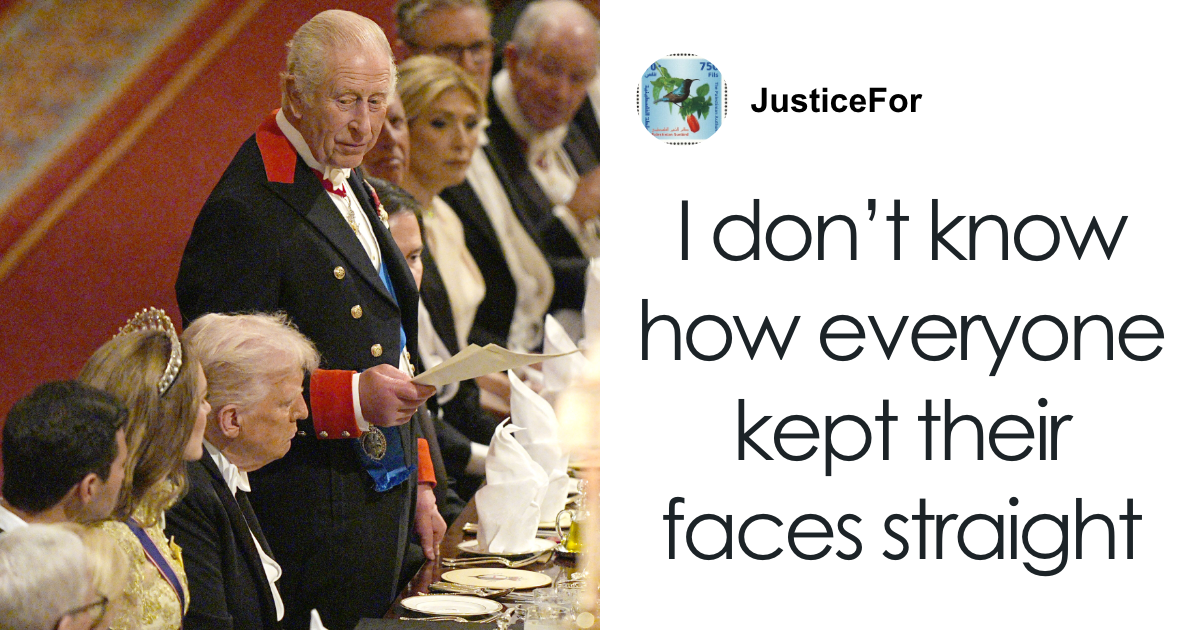

Royal meetings are supposed to look effortless: polished shoes, choreographed steps, flags behaving themselves, and smiles that could survive a thunderstorm. But when King Charles III and Donald Trump appear together, the internet does what the internet was born to do: zoom in, slow down the clip, and ask, “Wait, did he just do that?”
The latest fascination around King Charles’ body language toward Trump centers on a few high-profile moments from recent royal and diplomatic encounters: the 2025 state visit to the United Kingdom, where Trump was received at Windsor Castle, and the 2026 U.S. state visit by King Charles and Queen Camilla, hosted by President Trump and First Lady Melania Trump. Between handshakes, guided walks, formal speeches, and royal protocol, body language experts have found plenty to analyze.
So what did King Charles’ body language really say about Trump? According to expert commentary, the answer is more subtle than “he liked him” or “he was annoyed.” Charles appeared to balance warmth with control, courtesy with schedule management, and royal calm with the occasional flash of impatience. In other words, the King did what monarchs do best: he kept the show moving while making the performance look gracious.
Why Everyone Is Reading the Room
Body language becomes headline material when powerful people meet because the stakes are bigger than small talk. A handshake is not just a handshake. A touch on the back can become a diplomatic paragraph. A smile can look like friendship, strategy, or survival, depending on who is watching and what they already believe.
King Charles and Trump are especially interesting because they represent two very different public styles. Charles is formal, controlled, and trained by decades of royal duty. Trump is more improvisational, physical, and fond of dominating a room. Put them together, and the visual contrast is dramatic. It is Savile Row tailoring meeting reality-TV showmanship, and neither side can completely ignore the camera.
During Trump’s 2025 visit to Britain, images of the president and the King inspecting the Guard of Honour quickly became a subject of online debate. Some viewers focused on Trump’s tendency to walk ahead. Others noticed Charles using small guiding gestures. Body language expert Judi James reportedly interpreted one moment as “suppressed tetchiness,” suggesting that Charles may have been trying to prevent a delay while maintaining outward composure.
That phrase matters because it does not suggest a dramatic royal meltdown. No crown was thrown. No corgi fainted. Instead, the expert’s read was about restraint: a brief irritation managed through posture, pace, and a light guiding touch.
The Key Moment: Charles Appearing to Guide Trump Forward
One of the most-discussed scenes showed King Charles walking near Trump during a ceremonial inspection. As Trump appeared engaged with a guard, Charles moved closer and seemed to guide him along with a hand and a forward gesture. To casual viewers, it looked like a small nudge. To body language watchers, it looked like a royal traffic signal: “Lovely chat, Mr. President, but the schedule has a pulse.”
According to expert interpretation, the King’s movement suggested that he was aware of time, ceremony, and optics. Royal events are not casual strolls. They are timed like theater productions, except the actors include military personnel, world leaders, and a few thousand photographers trying to capture one eyebrow at exactly the wrong second.
Charles’ gesture can be read in several ways. It may have been a polite effort to keep the event flowing. It may have signaled mild impatience. It may also have been practical choreography from a host who knew where everyone needed to stand. What it likely was not: an open insult. The monarchy does not usually do open insults. It prefers flowers, speeches, and extremely controlled facial muscles.
What “Suppressed Tetchiness” Means in Royal Body Language
The word “tetchy” is wonderfully British. It means irritable, touchy, or slightly annoyed, but with better table manners. In royal body language, a tetchy moment does not look like a slammed door. It looks like tightened hands, a quicker pace, a guiding touch, or a smile that is doing more work than a palace footman.
That is why Charles’ reported signs of impatience attracted attention. The King’s role required him to be cordial, but the ceremony required momentum. If a guest lingers too long, the host must correct the flow without looking corrective. That is a difficult skill. Most of us can barely redirect a family member at a buffet without causing a potato-salad incident.
Charles has spent his entire public life learning how to communicate without over-communicating. His gestures tend to be economical. A small hand movement, a shift in stance, or a brief lean can carry meaning. When experts say his body language suggested impatience, they are not saying he disliked Trump. They are saying the King may have wanted the moment to move along.
Trump’s Body Language: The Handshake Factor
No analysis of Trump and body language is complete without discussing the handshake. Trump’s handshakes have long been a subject of fascination because they often include a firm grip, a pull-in motion, or a prolonged hold. In political settings, that can be read as an attempt to control space and establish dominance.
But during the King Charles interactions, body language expert Darren Stanton offered a more nuanced reading. He reportedly noted that Trump’s handshake with Charles included signs of assertiveness, but not the full force of the more aggressive “push-pull” style he has used with politicians. Stanton also pointed to an open-palm gesture and a tap as possible signs of rapport and respect.
That matters because Trump’s public persona often relies on physical confidence. Yet with the King, experts observed a different tone: still energetic, still unmistakably Trump, but somewhat moderated. The message seemed less like “I run this room” and more like “I know this room has rules, and I am at least pretending to notice them.” That is progress in the royal-protocol Olympics.
Did King Charles Look Uncomfortable?
In some moments, viewers asked whether Charles looked uncomfortable around Trump. The honest answer is: possibly, but not necessarily in the way social media wants. A monarch can look stiff because he is uncomfortable, because he is concentrating, because the event is formal, or because his entire job description is “look composed while history breathes down your collar.”
At the White House in 2026, another body-language discussion emerged after Trump and King Charles shared warmer-looking moments during the state visit. Darren Stanton, in coverage of the visit, reportedly described the relationship as strong and noted Charles’ humor and grace during informal exchanges. In one analysis, Trump placing a hand near the King was interpreted as a familiar gesture rather than an outright breach of comfort.
Again, the better reading is not black-and-white. Charles may have been managing the moment more than reacting emotionally to Trump personally. Good diplomacy often looks like friendliness, even when every movement is strategic. A smile can be sincere and tactical at the same time. Anyone who has attended a family wedding knows this deeply.
Protocol Makes Every Gesture Louder
Royal protocol magnifies everything. If an ordinary person touches someone’s shoulder at a party, almost no one writes 800 words about it. If a president touches a monarch’s back, suddenly the gesture is treated like a constitutional weather event.
That is because monarchy is built on symbols. Who walks first? Who initiates contact? Who stands where? Who speaks when? These details are not random; they are part of the theater of statecraft. When Trump appears to lead, touch, interrupt, or improvise, observers compare his behavior against the expected rhythm of royal ceremony.
Charles, meanwhile, must respond without seeming rattled. If he overreacts, the story becomes conflict. If he underreacts, the story becomes weakness. His best option is controlled redirection: guide, smile, move, continue. That is exactly why small body language cues from Charles become so interesting. They show the machinery of diplomacy working beneath the velvet.
What Charles’ Body Language Really Suggested
Based on expert commentary and the visible context of the events, King Charles’ body language suggested four main things about Trump.
1. Courtesy Was Non-Negotiable
Charles treated Trump with the formal respect owed to a sitting U.S. president. Whether at Windsor Castle or the White House, the King maintained the public tone of friendship between the United Kingdom and the United States. His smiles, greetings, and formal gestures supported the larger diplomatic message: the “special relationship” matters.
2. Control Was Quiet but Present
When Charles appeared to guide Trump during ceremonial movement, the gesture suggested that the King was not merely passive. He was hosting, managing, and steering the event. The control was subtle, but it was there. Charles did not need a dramatic interruption; he used a small movement to restore order.
3. Patience Had Limits
Expert readings of the Windsor moment suggest that Charles may have shown mild impatience when the pace of the ceremony slowed. This does not mean personal hostility. It means the King, like anyone responsible for a tightly timed public event, appeared aware that delay could disturb the rhythm.
4. The Relationship Was Managed, Not Casual
Warm moments between Charles and Trump should not be mistaken for ordinary friendship. Their relationship is diplomatic, symbolic, and heavily photographed. Charles’ body language seemed to communicate cordiality with boundaries. Trump’s body language, in turn, seemed more respectful toward the monarch than toward many elected politicians he has encountered.
The Bigger Political Picture
The timing of these royal encounters added another layer. Trump’s 2025 visit to Britain came with major pageantry, including Windsor Castle ceremonies and a state banquet. The visit also drew protests and intense media coverage, reminding everyone that royal diplomacy can soften optics but cannot erase politics.
Then, in 2026, King Charles and Queen Camilla visited the United States for a state visit tied to America’s 250th anniversary. The White House framed the event around shared heritage and the longstanding U.S.-U.K. relationship. Reuters reported that the visit was also part of a larger effort to preserve ties during a period of diplomatic strain. In that context, Charles’ body language was not just personal theater; it was part of a broader diplomatic performance.
At the White House state dinner, Charles spoke about renewing an “indispensable alliance.” That phrase captures the purpose of the visit. The smiles, handshakes, and ceremonial moments were not decorations around diplomacy. They were diplomacy.
Why Body Language Experts Disagree
Body language analysis is fascinating, but it is not mind reading. Experts can identify patterns: tension, relaxation, dominance, discomfort, mirroring, self-soothing, confidence, and impatience. But they cannot prove private feelings from one clip alone. Context matters. Camera angle matters. Health, age, lighting, timing, noise, fatigue, and instructions from aides all matter.
That is why one expert might see impatience while another sees strategy. One viewer might see Trump being disrespectful, while another sees informal warmth. One person might see Charles as annoyed, while another sees him doing the diplomatic equivalent of herding cats in a crown-friendly manner.
The safest conclusion is this: King Charles’ body language around Trump appeared composed, controlled, and occasionally corrective. He did not broadcast hostility. He did not appear overwhelmed. But he also did not surrender the rhythm of the event. The King remained the host, even when Trump’s larger-than-life style threatened to pull focus.
What Readers Should Take Away
The viral question asks what King Charles’ body language “really said” about Trump. The best answer is that it said less about personal dislike and more about royal discipline. Charles seemed to know exactly what kind of guest he was dealing with: charismatic, unpredictable, physically expressive, and comfortable bending formal space around himself.
Charles’ response was not to compete in the same style. He did not try to out-Trump Trump. Instead, he relied on the classic royal toolkit: posture, timing, gentle redirection, humor, and emotional restraint. If Trump’s body language often says, “Look at me,” Charles’ body language tends to say, “Look at the institution.”
That contrast is why the footage keeps getting attention. It is not just two famous men walking past guards or shaking hands. It is a visual clash between personal power and inherited symbolism, between improvisation and ceremony, between the handshake and the crown.
Experience Notes: What This Topic Teaches Us About Reading People
Watching the King Charles and Trump body-language debate is oddly useful for everyday life. Most of us will never inspect a Guard of Honour, attend a state banquet at Windsor Castle, or have our handshake dissected by experts before breakfast. Still, the same basic principles apply in offices, interviews, family gatherings, classrooms, and public events.
The first lesson is that composure is powerful. Charles’ greatest advantage in these moments is not physical dominance. It is steadiness. He rarely seems rushed by another person’s energy. In real life, that matters. When someone loud, intense, or unpredictable enters a room, many people either mirror the chaos or retreat. A better approach is to stay grounded, speak calmly, and use small cues to guide the interaction.
The second lesson is that boundaries do not always need to be dramatic. Charles did not need to stop the ceremony and announce, “Excuse me, we are behind schedule.” Instead, a small gesture could redirect the flow. In everyday situations, this might look like turning your body toward the exit when a meeting is over, placing your hand on your notebook before closing a conversation, or saying, “Let’s continue this after the next agenda item.” Clear does not have to mean rude.
The third lesson is that warmth and control can coexist. People often assume that being friendly means giving up authority. Charles demonstrates the opposite. He can smile, joke, and welcome a guest while still preserving the structure of the event. That is useful for managers, teachers, hosts, and anyone who has ever tried to keep Thanksgiving dinner from becoming a courtroom drama.
The fourth lesson is to avoid over-reading a single gesture. A crossed arm does not always mean defensiveness. A touch does not always mean dominance. A smile does not always mean delight. Body language is best understood in clusters: posture, movement, facial expression, timing, setting, and relationship. The more important the moment, the more carefully we should interpret it.
The fifth lesson is that public behavior has layers. Trump’s gestures may show confidence, rapport, habit, or performance. Charles’ gestures may show patience, irritation, diplomacy, or choreography. Often, they show several things at once. Human behavior is rarely a one-word caption, even if social media prefers it that way.
Finally, the whole discussion reminds us that leadership is not only what people say. It is how they enter, pause, listen, recover, and guide. King Charles’ body language around Trump became news because it revealed the quiet pressure behind polite ceremony. The King’s message was not shouted. It was managed. And sometimes, in the world of diplomacy, the smallest gesture is the loudest sentence in the room.
Conclusion
King Charles’ body language toward Trump did not deliver a simple verdict. It suggested a practiced mix of respect, patience, control, and careful diplomacy. Experts saw moments that looked like mild impatience, especially when ceremonial timing seemed at risk. They also saw warmth, humor, and rapport during later encounters. The real story is not that Charles secretly “exposed” his feelings with one gesture. The real story is that he used body language the way royals often do: as a quiet tool for keeping order, preserving dignity, and making diplomacy look smoother than it probably felt.
For readers fascinated by royal protocol, Trump’s handshake style, and the hidden language of power, this meeting offered a masterclass. Trump brought the energy. Charles brought the structure. The cameras caught the space between them.