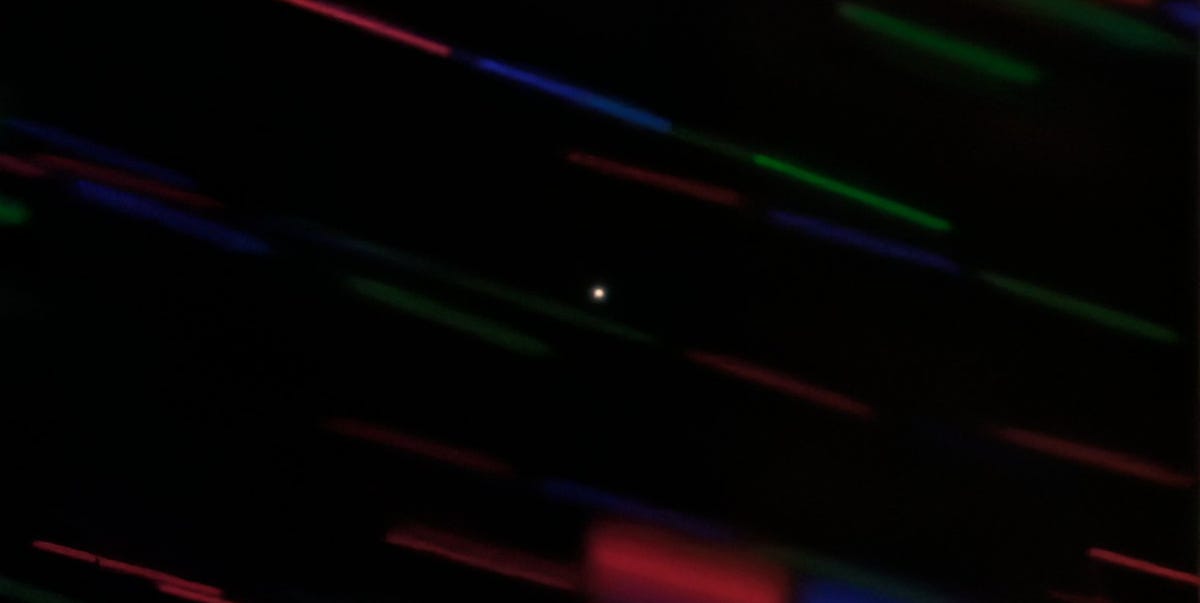

Every so often, space sends Earth a tiny visitor and the internet reacts as if the Moon just got a roommate, a spare key, and a name on the mailbox. The latest buzz around a “new Earth moon spotted” is exciting, but like most great space stories, the truth is more interesting than the headline. Earth has not gained a permanent second Moon. What astronomers have found are small asteroids that travel near Earth, sometimes getting temporarily caught in our planet’s neighborhood and sometimes simply sharing a similar path around the Sun.
The recent minimoon conversation includes two important objects: asteroid 2024 PT5, a small space rock that briefly looped around the Earth-Moon system in 2024, and 2025 PN7, a newly recognized quasi-moon that appears to accompany Earth while actually orbiting the Sun. In plain English: one was a short-term cosmic guest; the other is more like a neighbor jogging on the same route every morning. Neither replaces the Moon. Neither causes tides, werewolves, or calendar confusion. But both are scientifically fascinating.
So, what exactly is a minimoon? Why are astronomers so interested in something only tens of feet wide? And should anyone start printing “Earth Has Two Moons” T-shirts? Let’s separate the astronomy from the hype, with only a small amount of cosmic sarcasm for navigation.
What Is a Minimoon?
A minimoon is a small natural object, usually an asteroid, that becomes temporarily captured by Earth’s gravity. Unlike the real Moon, which has been with Earth for billions of years, a minimoon is a short-term visitor. It may stay for weeks, months, or occasionally longer before the gravity of the Sun pulls it away again.
Think of Earth as a busy airport and a minimoon as a tiny private plane that enters the holding pattern for a while. It circles, drifts, waits, and eventually flies off. It is not moving in permanently. It is not signing a lease. It is definitely not helping with rent.
Minimoon vs. Quasi-Moon: The Important Difference
The phrase “new Earth moon” often gets used loosely, but astronomers make careful distinctions. A true temporary minimoon is briefly gravitationally bound to Earth. A quasi-moon, also called a quasi-satellite, is not actually bound to Earth. Instead, it orbits the Sun in a path so similar to Earth’s orbit that, from our point of view, it appears to hover near us or loop around us.
That is the key point behind 2025 PN7. It is not a second Moon in the classic sense. It is a small near-Earth asteroid traveling in a 1:1 orbital rhythm with our planet. To the casual headline writer, that sounds like “Earth has another moon.” To an astronomer, that sounds like “please put down the confetti cannon and read the orbital mechanics.”
The Story of 2024 PT5: Earth’s Short-Term Mini-Moon
Asteroid 2024 PT5 became famous because it behaved like a temporary companion to Earth in late 2024. It was first observed in August 2024 by the ATLAS survey telescope in Sutherland, South Africa. NASA’s Jet Propulsion Laboratory estimated it to be roughly 33 feet, or about 10 meters, wide. That is about the size of a school bus, which sounds large until you compare it with the actual Moon, which is about 2,159 miles wide. In the Moon’s presence, 2024 PT5 is less “celestial body” and more “cosmic pebble with ambition.”
For a short time, 2024 PT5 lingered near the Earth-Moon system. Its path did not make it a dramatic new moon visible in the night sky. It was far too small and faint for casual observers. You could not step outside, squint heroically, and spot it next to the Moon. Professional telescopes and careful calculations were required.
What made 2024 PT5 especially interesting was its possible origin. Spectroscopic observations suggested that its composition may resemble lunar material more than typical asteroid material. That raises the possibility that 2024 PT5 could be a fragment blasted off the Moon by an ancient impact. If confirmed, that would make it a tiny chip from our own lunar companion returning for a brief family reunion. Space, apparently, enjoys complicated genealogy.
Meet 2025 PN7: The Newly Spotted Quasi-Moon
After 2024 PT5 left the spotlight, another object entered the conversation: 2025 PN7. This small asteroid was identified through observations associated with the Pan-STARRS telescope system in Hawaii and later studied as a quasi-satellite of Earth. Research published in the Research Notes of the American Astronomical Society classified 2025 PN7 as part of the Arjuna group, a population of near-Earth objects with orbits similar to Earth’s.
Unlike 2024 PT5, 2025 PN7 is not a classic temporary minimoon. It is a quasi-moon. That means it follows its own orbit around the Sun while staying in a pattern that makes it appear to accompany Earth. It is engaged in a 1:1 mean-motion resonance with our planet, which is a scientific way of saying it takes about the same time as Earth to orbit the Sun.
Researchers estimate that 2025 PN7 may have been in this quasi-satellite state for decades and could remain near Earth’s orbital neighborhood for several more decades. It is small, faint, and extremely hard to observe. Estimates place it around 62 feet, or roughly 19 meters, across, though size estimates for small asteroids depend on brightness and assumed reflectivity. Its faintness explains why it was not noticed earlier. This object did not exactly kick open the door and shout, “Surprise!” It whispered from the dark corner of the solar system.
Why Didn’t We See It Before?
The simple answer is that tiny asteroids are difficult to detect. They are dark, distant, fast-moving, and often visible only during narrow observing windows. Even with modern sky surveys, many small near-Earth objects remain hard to track unless they pass close enough and reflect enough sunlight toward our telescopes.
Modern observatories such as ATLAS, Pan-STARRS, and other planetary-defense surveys are changing that. They scan the sky repeatedly, compare images, and look for points of light that shift against the background stars. This is not glamorous work in the Hollywood sense. Nobody is dramatically staring through a brass telescope while orchestral music swells. It is more like advanced cosmic bookkeeping with extremely expensive cameras. But it works.
As telescope technology improves, astronomers expect to find more small objects in Earth-like orbits. Some will be temporary mini-moons. Some will be quasi-moons. Some may be fragments from the Moon. Others may be ordinary asteroids that wandered into Earth’s orbital neighborhood. Each discovery adds a small but valuable piece to the puzzle of how objects move through the inner solar system.
Is the New Minimoon Dangerous?
No. The objects discussed in this minimoon story are not known threats to Earth. 2024 PT5 was tiny and harmless. 2025 PN7 is also small and follows a solar orbit that keeps it in Earth’s neighborhood without making it a doomsday visitor. Planetary defense teams track near-Earth objects not because every asteroid is dangerous, but because knowing where they are is the first step in understanding risk.
It is worth keeping the scale in mind. A 10-meter asteroid can create a bright fireball if it enters Earth’s atmosphere, but many objects of that size break apart high above the ground. Larger asteroids require more attention. The scientific value of mini-moons and quasi-moons is that they help astronomers practice detection, tracking, orbit modeling, and physical characterization. In other words, small objects are useful training partners for the big planetary-defense questions.
Why Scientists Care About Tiny Space Rocks
At first glance, a 33-foot asteroid may not sound like a big deal. In astronomy, however, size is not everything. Small near-Earth objects can teach scientists about asteroid composition, orbital evolution, lunar impacts, and the history of the Earth-Moon system.
They May Reveal Pieces of the Moon
If an object like 2024 PT5 really is lunar ejecta, it could help scientists study Moon material without launching a new sample-return mission. Of course, researchers need stronger evidence, including better spectroscopy and radar observations. Still, the idea is exciting: a tiny asteroid near Earth might be a natural sample from our Moon, delivered by the solar system’s most chaotic courier service.
They Help Improve Planetary Defense
Tracking mini-moons sharpens the tools used to monitor near-Earth asteroids. These objects can have unusual paths influenced by Earth, the Moon, and the Sun. Modeling them helps scientists understand how gravity changes asteroid trajectories over time. That matters because accurate orbit prediction is the heart of planetary defense.
They Could Become Future Mission Targets
Small asteroids near Earth are tempting targets for future spacecraft. Their low relative speeds may make them easier to reach than many other objects. A mission to a minimoon or quasi-moon could test asteroid-sampling technology, study primitive solar system material, or investigate whether some near-Earth objects came from the Moon.
Can You See Earth’s New Minimoon?
For most people, no. Neither 2024 PT5 nor 2025 PN7 is a backyard telescope showpiece. These objects are extremely faint. 2025 PN7, for example, is far beyond the reach of amateur equipment. Even many experienced skywatchers with solid telescopes would not be able to see it directly.
That may feel disappointing, but it also highlights why the discovery is impressive. Astronomers are not finding these objects because they are bright and obvious. They are finding them because modern surveys can detect faint moving dots and calculate their orbits with remarkable precision. The drama is not in what the human eye sees. The drama is in the math.
Does Earth Have More Than One Moon?
In the strict sense, Earth has one permanent natural satellite: the Moon. In a broader dynamical sense, Earth also has temporary companions, including quasi-satellites, horseshoe-orbit objects, and occasional mini-moons. These objects do not behave like the Moon, do not stay forever, and do not dominate Earth’s tides or night sky.
So the best answer is this: Earth has one true Moon, but it sometimes has tiny temporary companions. That may be less sensational than “Earth gets second Moon,” but it is more accurate and, frankly, still pretty cool. The solar system is not a museum with everything glued in place. It is a moving, shifting, gravitational dance floor. Small asteroids wander in, loop around, and wander out again.
What the New Earth Moon Spotted Story Really Means
The minimoon story is a reminder that Earth’s neighborhood is active. We are not alone in our orbital lane. Small asteroids share similar paths, drift near our planet, and occasionally become temporary companions. Some may have come from the asteroid belt. Some may have been chipped off the Moon. Some may remain mysterious until better observations reveal their composition.
The phrase “new Earth moon spotted” grabs attention, but the deeper story is about discovery. Astronomers are now capable of noticing objects so small and faint that they would have been invisible to earlier generations. Every new detection improves our map of near-Earth space. Every orbit calculation helps refine our understanding of how gravity shapes the movement of small bodies.
Experience Section: What It Feels Like to Follow a Minimoon Discovery
Following a minimoon discovery is a strange and delightful experience because it turns the sky from something familiar into something suddenly full of hidden traffic. Most nights, the Moon looks calm and dependable, like the universe’s night-light. Then a headline appears saying a new Earth moon has been spotted, and suddenly the quiet sky feels more crowded, more alive, and just a little mischievous.
The first reaction is usually excitement. A second moon? Around Earth? That sounds like science fiction has finally stopped knocking and walked straight into the living room. But after the first wave of wonder comes the fine print: it is small, it is faint, it is temporary, and no, you cannot see it hanging beside the Moon like a bonus decoration. That is when the story becomes even better. The discovery is not impressive because the object is huge. It is impressive because it is tiny and we found it anyway.
Imagine standing outside on a clear night after reading about 2025 PN7 or 2024 PT5. You look up and see the familiar Moon, bright enough to wash out half the stars. Somewhere beyond your direct vision, a small asteroid is moving through a delicate gravitational pattern that took advanced surveys to detect and powerful computers to understand. You cannot point to it. You cannot photograph it with a phone. But knowing it is there changes the feeling of the sky.
That is the real charm of mini-moons and quasi-moons. They make astronomy feel close. Mars can feel distant. Black holes can feel impossible. Galaxies can feel too enormous to fit inside ordinary imagination. But a small asteroid sharing Earth’s neighborhood feels almost local. It is still space, but it is space with a neighborhood-watch vibe.
For students, skywatchers, and curious readers, these discoveries are a gateway into orbital mechanics without needing to start with equations. A minimoon teaches gravity. A quasi-moon teaches perspective. A horseshoe orbit teaches that the solar system has a sense of humor. The object may not be visually spectacular, but the concept is wonderfully mind-bending: something can appear to loop around Earth without truly orbiting Earth at all.
There is also a humbling side to the experience. These objects remind us that Earth is moving through a dynamic environment. Our planet is not isolated. It travels through a stream of dust, rocks, fragments, and ancient leftovers from solar system formation. Most are harmless. Many are scientifically valuable. Some may even be pieces of the Moon coming back around like lost souvenirs.
In a world where space news often focuses on giant rockets and billion-dollar missions, the minimoon story is refreshingly small. It proves that wonder does not need to be enormous. Sometimes it is 33 feet wide. Sometimes it is too faint to see. Sometimes it is an asteroid that quietly shared our orbit for decades before anyone noticed. And honestly, that is a pretty good reminder for life on Earth too: not every important thing announces itself loudly. Some discoveries are tiny, patient, and waiting for someone to look carefully enough.
Conclusion: A Tiny Visitor With a Big Scientific Message
The story behind “Minimoon – New Earth Moon Spotted” is not about Earth replacing its iconic Moon or gaining a dramatic second satellite. It is about the fascinating small objects that travel near our planet and the increasingly powerful tools astronomers use to find them. 2024 PT5 showed how a small asteroid can briefly linger near the Earth-Moon system. 2025 PN7 shows how a quasi-moon can share Earth’s solar orbit for decades while remaining almost invisible to ordinary observers.
These discoveries matter because they help scientists understand near-Earth asteroids, lunar fragments, orbital dynamics, and planetary defense. They also give the rest of us a reason to look up with fresh curiosity. The Moon is still our one true Moon, but Earth’s neighborhood is far busier than it looks. Somewhere in the dark, tiny companions are moving with us around the Sun, proving that even the smallest rocks can tell big stories.