Brazilian Atlantic Forests Host A Diverse And Exotic Array Of Birds, Here’s What I Got From There (34 Pics)

Note: This article is written in a narrative field-note style and based on real information about the Brazilian Atlantic Forest, its birds, habitats, and conservation challenges. It does not include original image files, but it is structured to accompany a 34-photo bird gallery.
“`
A Forest That Sounds Like It Has Its Own Orchestra
The Brazilian Atlantic Forest is the kind of place that makes a bird photographer question whether nature has been secretly using a color wheel, a jazz band, and a very dramatic lighting department. One moment, the forest is quiet enough to hear leaves dripping after rain. The next, a toucan croaks from the canopy, a tanager flashes by like a flying gemstone, and a hummingbird appears so suddenly it feels less like a bird and more like a tiny emerald with opinions.
Stretching along Brazil’s Atlantic coast and reaching into parts of Paraguay and Argentina, the Atlantic Forest, or Mata Atlântica, is one of the most biologically rich regions on Earth. It is also one of the most threatened. Much of its original cover has been cleared for cities, agriculture, roads, and industry, leaving behind a mosaic of forest fragments, parks, reserves, mountain slopes, coastal wetlands, and restored patches. Yet even in this reduced state, the forest remains astonishingly alive.
For bird lovers, it is a dream with feathers. Researchers have recorded hundreds of bird species in the biome, including many that occur nowhere else. That is what makes a 34-picture collection from this region feel less like a casual gallery and more like a passport stamp from another planet. Toucans, tanagers, manakins, antbirds, parrots, hummingbirds, woodcreepers, and cotingas all play their parts in a living story that is colorful, complicated, and deeply worth protecting.
Why the Brazilian Atlantic Forest Is a Birding Hotspot
The Atlantic Forest is not just “a forest.” That would be like calling a symphony “some noise with violins.” This biome includes lowland rainforest, cloud forest, montane forest, mangroves, restinga coastal vegetation, and high-elevation habitats. Each zone has its own temperature, moisture, flowers, fruits, insects, and nesting spaces. Birds respond to those differences with dazzling variety.
Small Area, Huge Biodiversity
One of the most remarkable things about the Atlantic Forest is how much life it packs into a relatively narrow band of land. The Amazon may get the celebrity treatment, and deservedly so, but the Atlantic Forest is biodiversity with a dramatic backstory. It supports a dense concentration of plants, insects, amphibians, mammals, and birds, many of them endemic. In plain English: some species found here are not simply rare; they are impossible to see anywhere else on Earth.
This is especially important for birdwatchers. Endemic birds are the crown jewels of any birding trip because they connect a sighting to a specific landscape. Seeing a common bird is fun. Seeing a bird whose entire natural history is tied to one threatened forest is different. It carries weight. It feels like meeting a local legend who also happens to be wearing neon feathers.
Mountains Create Micro-Worlds
The Serra do Mar and other mountain ranges help explain why the region is so rich in bird life. Elevation changes create cooler ridges, misty valleys, and isolated pockets of habitat. Over time, these conditions encourage species to specialize. A bird that thrives in humid highland forest may be absent from lowland coastal areas. Another species may prefer bamboo, dense understory, or fruiting trees at mid-elevation. The result is a birding map filled with surprises.
The Stars of the 34 Pics: Birds That Stop You Mid-Breath
A strong Atlantic Forest photo set usually has one magical quality: it refuses to be visually polite. The birds are bold. They do not whisper their colors. They arrive in turquoise, scarlet, saffron, lime, cobalt, chestnut, and gold. Below are some of the bird groups that commonly define the experience.
Toucans and Toucanets: The Forest’s Fruit-Powered Giants
Toucans are often the first birds people imagine when they think of tropical forests, and the Atlantic Forest does not disappoint. Species such as the red-breasted toucan and saffron toucanet bring oversized bills, confident postures, and a talent for making every branch look like a magazine cover. Their bills may look like nature got carried away with graphic design, but they are practical tools for reaching fruit, handling food, and regulating heat.
These birds are also important seed dispersers. When toucans eat fruit and move through the canopy, they help plants spread across the forest. In a fragmented biome, that job matters. A bird is not just a bird here; sometimes it is a gardener with wings and a very impressive nose.
Tanagers: Tiny Paintings With Attitude
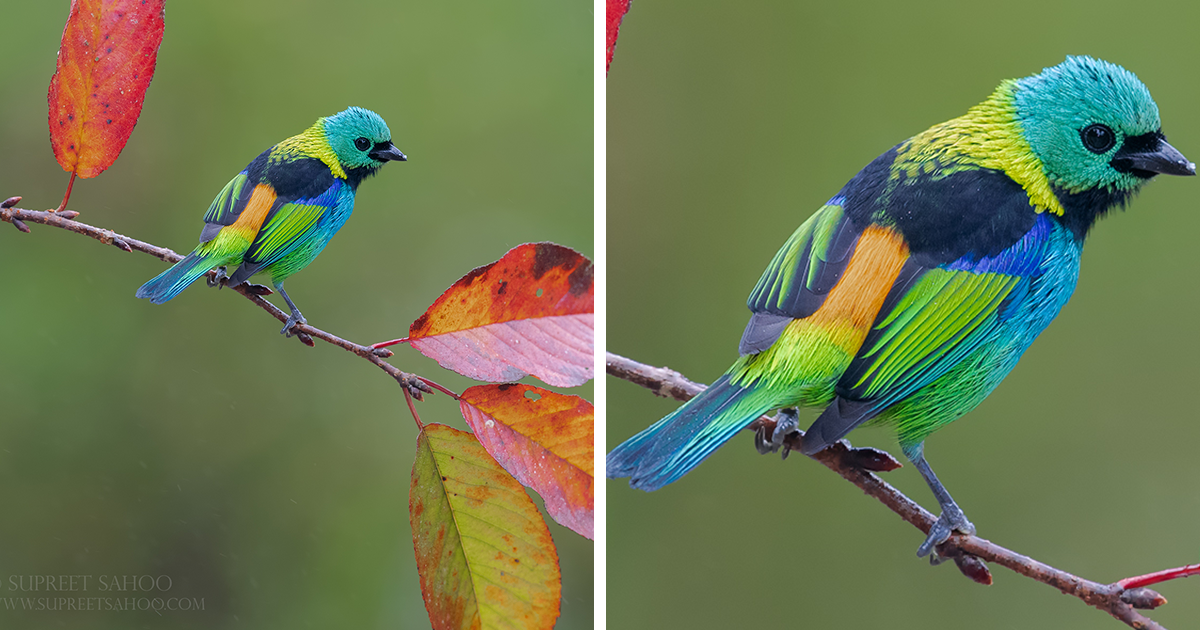
If toucans are the headline act, tanagers are the fireworks. Green-headed tanagers, red-necked tanagers, gilt-edged tanagers, and other species can look almost unreal in good light. Their colors are so intense that a photographer may spend several seconds checking the camera screen just to confirm the bird was not accidentally edited by a rainbow.
Tanagers often travel in mixed feeding flocks, moving quickly through fruiting trees and forest edges. This makes them thrilling and mildly stressful subjects. You may get one perfect second before the bird vanishes behind leaves. In bird photography, that is not failure. That is the forest reminding you who is in charge.
Hummingbirds: The Forest’s Tiny Lightning Bolts
Atlantic Forest hummingbirds are a lesson in humility. Just when you think your reflexes are decent, a hummingbird arrives, hovers, tilts, flashes iridescent color, and disappears before your camera has finished arguing with autofocus. Species such as the Brazilian ruby, violet-capped woodnymph, and frilled coquette show how specialized nectar-feeding birds can become.
They are more than pretty visitors to flowers. Hummingbirds pollinate plants as they feed, linking bird movement to forest reproduction. Watching one work a patch of blossoms is like watching a tiny courier deliver genetic mail across the understory.
Manakins, Antbirds, and Woodcreepers: The Character Actors
Not every Atlantic Forest bird wins attention with bright color. Some win with behavior. Manakins are famous for courtship displays, quick movements, and bold patterns. Antbirds and antwrens often stay low and hidden, making birders earn every sighting. Woodcreepers climb trunks like feathered detectives, probing bark for insects.
These species give the forest depth. A gallery of 34 pictures should not only celebrate the loud and colorful birds. It should also honor the quiet specialists that reveal how complex tropical forests really are. Beauty in the Atlantic Forest is not always obvious. Sometimes it is camouflaged, rust-colored, and five branches behind where your binoculars are pointed.
Parrots and Macaws: Charisma With Conservation Drama
Parrots bring noise, intelligence, and personality. The red-tailed Amazon, for example, is closely associated with Atlantic Forest habitats and has faced pressure from habitat loss and illegal wildlife trade. Macaws and parrots are often beloved because they are big, social, and spectacular. Unfortunately, those same qualities can make them targets.
Conservation work involving nest protection, habitat restoration, artificial nest boxes, monitoring, and reintroduction shows that recovery is possible when science, local communities, and long-term patience work together. In the Atlantic Forest, a returning parrot is not only a beautiful sight. It is proof that restoration can move from paperwork to wingbeats.
What the 34 Pictures Reveal About the Forest
A photo gallery of Atlantic Forest birds is more than a parade of pretty faces. Look closely, and each image reveals something about habitat, behavior, and survival.
Color Is Not Just Decoration
Bright plumage may help birds attract mates, recognize their own species, or communicate in filtered forest light. In dense vegetation, a flash of blue or red can be a signal. What looks extravagant to us may be perfectly practical to the birds. Nature is not showing off; it is solving problems with style.
Perches Tell a Story
A bird on a mossy branch suggests humid forest. A bird feeding on fruit points to the importance of native trees. A hummingbird near flowers hints at pollination networks. A woodcreeper on a trunk shows the value of mature trees with bark, insects, and vertical structure. Good bird photography does not isolate the bird from its world; it lets the habitat speak too.
Forest Fragments Still Matter
Many Atlantic Forest birds survive in protected areas and fragments surrounded by farms, towns, or roads. These patches are not “leftovers” in a dismissive sense. They can be lifeboats. Some support endangered species, while others serve as stepping stones between larger reserves. Corridors and reforestation projects are essential because birds need connected landscapes, not isolated green islands.
How to Photograph Birds in the Brazilian Atlantic Forest
Bird photography here is rewarding, but it is not always easy. The forest can be dark, humid, steep, and full of birds that treat stillness as a personal insult. A few practical habits make the experience better.
Start Early and Respect the Light
Morning is prime time. Birds are active, temperatures are cooler, and the light is softer. Forest light changes quickly, so photographers need to be ready for high ISO settings, fast shutter speeds, and sudden opportunities. A bird may appear in a perfect sunbeam for two seconds. That is the entire appointment. Don’t be late.
Listen Before You Move
In tropical forests, ears often find birds before eyes do. Calls, wingbeats, rustling leaves, and feeding flocks can guide you. Moving slowly is not just polite; it is productive. The forest rewards patience and punishes stomping. If you crash through the trail like a refrigerator on vacation, the birds will file a complaint by disappearing.
Photograph Behavior, Not Just Color
A clean portrait is wonderful, but behavior gives a photo life. Look for feeding, preening, courtship, territorial displays, parent birds carrying food, or mixed flocks moving together. These moments turn a bird image into a story. The best pictures say, “This bird lives here,” not just, “This bird is attractive.”
Keep Ethics in the Frame
Responsible bird photography matters. Avoid disturbing nests, blocking trails, damaging plants, or using excessive playback. Never feed wild birds for a shot. The goal is to leave the forest as you found it, except with more memory cards full of joy and possibly one sock full of mud.
Why Conservation Is the Real Story Behind the Beauty
The Atlantic Forest’s birds are dazzling, but their world is under pressure. Habitat loss, fragmentation, illegal wildlife trade, invasive species, climate change, and poor land-use planning all affect bird populations. Some species can tolerate edges, gardens, and secondary growth. Others need mature, continuous forest and disappear when habitat becomes too small or disturbed.
That is why conservation in this biome is so urgent. Protecting large reserves is important, but it is not enough by itself. The future also depends on restoring degraded land, connecting fragments, supporting private reserves, working with farmers, protecting watersheds, and valuing local communities. Birds move across boundaries. Conservation must do the same.
There is good news. Restoration projects in Brazil have shown that damaged landscapes can recover when native trees return and wildlife corridors reconnect habitats. Birds often become early ambassadors of recovery. First come common species, then fruit eaters, then more sensitive forest specialists. The soundscape changes. The canopy becomes busier. A place that once felt silent begins to remember its own music.
Experience Notes: What I Got From the Brazilian Atlantic Forest
The biggest thing I got from the Brazilian Atlantic Forest was not a perfect photo, although I certainly chased one like a person trying to catch confetti in a thunderstorm. What stayed with me was the feeling of being watched by a thousand small lives. The forest never felt empty. Even when no bird was visible, something clicked, trilled, tapped, fluttered, or moved just beyond the leaves.
At first, I wanted the obvious shots: the toucan on the clean branch, the tanager glowing in soft light, the hummingbird frozen mid-hover like a jeweled comma. But after a while, the forest changed my expectations. I began noticing smaller scenes. A bird turning fruit in its bill. A pair calling across a gap in the canopy. A woodcreeper climbing a trunk with the seriousness of a tiny inspector. A flock arriving all at once, filling one tree with motion, then leaving as if someone had pulled an invisible curtain.
The humidity made everything feel close. Moss softened the branches. Mist blurred the distance. Leaves held drops of water that flashed whenever the sun slipped through. Photography became less about controlling the scene and more about accepting gifts. Some birds appeared too fast. Some hid behind exactly one leaf, which felt personally rude. Some landed so near that I forgot to press the shutter. That, I learned, is also part of birding: sometimes wonder outruns reflex.
The 34 pictures from this kind of journey are not just souvenirs. They are reminders of patience, luck, and attention. Each image carries the quiet work behind it: waiting beside a trail, listening to calls, lifting the camera slowly, missing the shot, laughing, trying again. A bird photo may look effortless on a screen, but the forest knows the truth. It remembers the mud, the mosquitoes, the fogged lens, and the very human hope that the next branch will be the one.
What moved me most was the contrast between fragility and abundance. The Atlantic Forest can feel overwhelmingly alive, yet it survives in fragments. Its birds are brilliant, but brilliance does not make them safe. A red, blue, or green feather is not armor against chainsaws, roads, or cages. Leaving the forest, I understood that these photos should do more than impress viewers. They should invite care. If a picture makes someone pause, learn a bird’s name, respect a habitat, or support conservation, then it has traveled farther than the photographer ever could.
Final Thoughts
The Brazilian Atlantic Forest is one of the world’s great bird landscapes: colorful, noisy, mysterious, and deeply vulnerable. A 34-picture gallery from this region can showcase toucans, tanagers, hummingbirds, parrots, manakins, and many quieter species that deserve just as much attention. But the real value of these images goes beyond beauty. They help people see what is at stake.
Every bird in the Atlantic Forest is part of a larger system of trees, flowers, insects, fruit, water, and climate. Protecting that system means protecting the birds, and protecting the birds means protecting one of Earth’s most extraordinary natural treasures. The forest has already lost much, but it has not lost its voice. Listen closely, and it is still singing.
SEO Tags