
Note: This article is for educational and editorial purposes only. A bandsaw blade steak knife may sound like a clever upcycling project, but unknown industrial blades should not be assumed safe for food contact. Any kitchen knife intended for real dining use should come from a qualified maker or reputable manufacturer using verified food-safe materials and professional finishing standards.
What Is a Bandsaw Blade Steak Knife?
A bandsaw blade steak knife is exactly the kind of phrase that makes tool lovers pause mid-coffee. It combines two worlds that usually live far apart: the gritty workshop and the polished dinner table. On one side, you have a bandsaw blade, a long continuous strip of toothed metal designed to cut wood, metal, plastic, or meat in industrial and workshop settings. On the other, you have the steak knife, a dining-table classic meant to glide through a ribeye without turning dinner into an arm-wrestling match.
In the world of custom knives, reclaimed steel has long had a certain romance. Old saw blades, files, leaf springs, and industrial cutoffs often attract makers because they carry history. A blade that once sliced lumber or metal stock can become a conversation piece when transformed into a decorative or collectible knife. That is the appeal behind the idea of a bandsaw blade steak knife: it is rugged, recycled, and just unusual enough to make guests ask, “Wait, this used to be what?”
Still, the concept deserves more than a wink and a cowboy soundtrack. Bandsaw blades vary widely in material, coating, previous use, and contamination risk. Some are carbon steel, some are bimetal, some include high-speed steel teeth, and some are designed for food-processing machines. That variety matters. A steak knife is not merely a sharp object; it is a utensil that touches food, hands, moisture, acids, salt, and heat. In other words, it needs to be safe, stable, washable, and suitable for the kitchennot just cool-looking on Instagram.
Why the Idea Became Popular
The popularity of the bandsaw blade steak knife comes from three strong trends: upcycling, handmade kitchenware, and the modern love of objects with a story. People are tired of anonymous products that look like they were designed by a committee in a windowless room. A handmade knife, especially one connected to old tools and workshop heritage, feels personal.
There is also a practical reason the concept gets attention. Bandsaw blades are thin, flexible, and made to hold a cutting edge in demanding environments. That makes them interesting to collectors and knife enthusiasts. The slim profile can visually suit a steak knife, and the industrial backstory gives the finished piece a little grit. It is the tableware equivalent of wearing boots with a suit: unexpected, slightly rebellious, and somehow charming when done right.
But popularity does not automatically equal practicality. A decorative steak knife made from reclaimed blade steel may be a beautiful object. A functional food-contact knife made from unknown blade stock is a different question. The best version of this idea respects both craftsmanship and safety. The worst version says, “It looks sharp, so pass the porterhouse,” which is how dinner parties become cautionary tales.
Understanding Bandsaw Blade Steel
Bandsaw blades are engineered for cutting performance, not dining etiquette. Their design depends on what they are meant to cut. Woodworking bandsaw blades may use different steel and tooth geometry than metal-cutting blades. Industrial metal-cutting blades often use bimetal construction, combining a flexible backing material with harder cutting teeth. Meat-processing bandsaw blades are usually designed around hygiene, cleanability, and corrosion resistance.
This matters because the phrase bandsaw blade steel is not one single material. It is a category, not a recipe. Some blades may contain high-carbon steel. Some may include high-speed steel at the teeth. Some may have coatings, welds, oils, lubricants, or residues from previous work. If a blade has cut metal, wood, adhesives, plastics, treated lumber, or unknown materials, it may have contamination concerns that are completely unacceptable for kitchen use.
For a steak knife, the metal needs more than hardness. It needs controlled geometry, corrosion resistance or careful maintenance, stable heat treatment, and a finish that does not trap grime. A rough, pitted, or poorly sealed surface may look rustic, but “rustic” should describe a farmhouse table, not a bacteria hotel with a handle.
Is a Bandsaw Blade Steak Knife Food-Safe?
The honest answer is: only if the material, process, and finish are properly verified. A random discarded blade from a workshop should not be treated as food-safe simply because it is steel. Kitchen tools need to be cleanable, non-toxic under normal use, and resistant to the kind of corrosion and staining that can happen around salt, meat juices, vinegar-based marinades, dish soap, and humidity.
Food safety is especially important because a steak knife touches cooked food directly. Unlike a decorative wall piece, it enters the real world of dinner plates, cutting boards, sinks, dish towels, and impatient relatives. If the blade material is unknown or the finish is questionable, the safe choice is not to use it for eating.
Professional custom makers who create culinary knives typically know exactly what steel they are using. They also understand heat treatment, finishing, handle materials, adhesives, and sanitation concerns. That level of control is what separates a trustworthy kitchen tool from a clever-looking object with mystery-metal energy.
Design Appeal: Why It Looks So Good
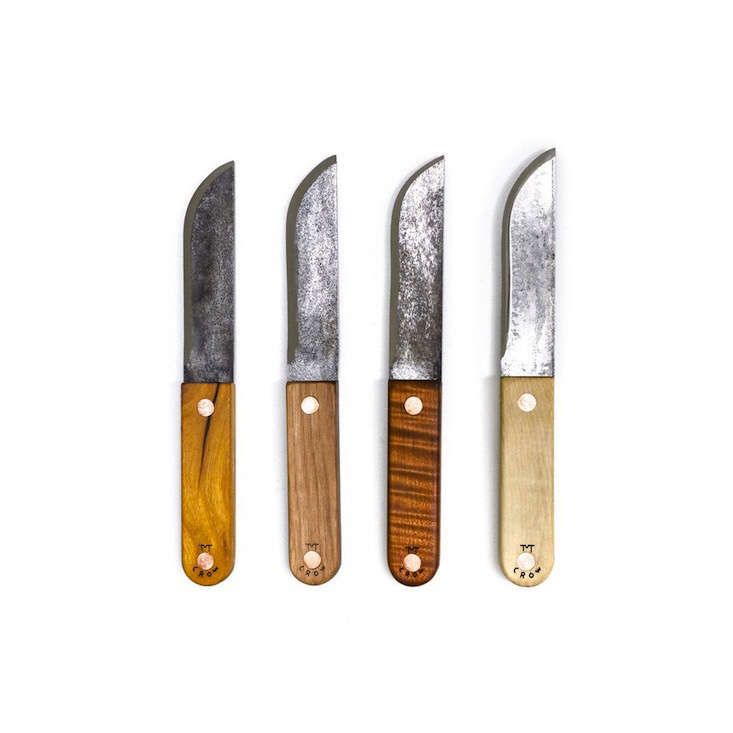
A bandsaw blade steak knife can look fantastic because it carries industrial DNA. The thin blade profile, subtle recycled-steel story, and handmade handle can create a knife that feels both rugged and elegant. The best designs usually keep the shape simple: a comfortable handle, a balanced blade, and a finish that looks intentional rather than rescued from a toolbox five minutes before dinner.
Some makers lean into a minimalist aesthetic, pairing reclaimed-looking steel with walnut, maple, micarta, or stabilized wood handles. Others prefer a more rustic design with visible character marks. For tableware, however, restraint usually wins. A steak knife should not look like it is about to announce a blacksmithing duel. It should sit comfortably beside a plate and quietly say, “I have a past, but I also know how to behave at dinner.”
Balance is another major part of the appeal. A steak knife should feel nimble, not bulky. Since bandsaw blades are naturally thin, the concept can produce a lightweight knife with a precise feel. That slimness is part of the charm, especially when paired with a handle that fills the hand without overwhelming the table setting.
Serrated or Plain Edge?
Many commercial steak knives are serrated because serrations can keep cutting even when the edge is not freshly maintained. They are useful for crusty steak surfaces, grilled meats, and casual dining situations where the knife may meet ceramic plates more often than it should. A plain-edge steak knife, by contrast, can feel smoother and more refined when properly maintained.
A bandsaw blade steak knife often attracts attention because bandsaw blades already have teeth. However, the original tooth pattern of a bandsaw is not automatically appropriate for dining. Industrial teeth are designed for machine cutting, not comfortable table use. A food-safe steak knife needs an edge geometry suitable for controlled hand cutting, not a miniature sawmill experience next to the mashed potatoes.
For editorial purposes, the key point is simple: the finished dining edge should be designed for steak, not merely inherited from a machine blade. Otherwise, the knife may feel gimmicky instead of graceful.
Pros and Cons of the Concept
Potential Advantages
The biggest advantage of a bandsaw blade steak knife is character. It offers a story, and story matters in handmade goods. A well-made example can be a conversation starter, a collector’s item, or a memorable gift for someone who loves tools, grilling, woodworking, or industrial design.
Another advantage is sustainability. Reusing material can reduce waste and give new life to steel that might otherwise be discarded. When done responsibly by skilled professionals, upcycled kitchenware can feel both practical and meaningful. It says, “This object had a job before, and now it has a new one.” That is more interesting than another generic knife set hiding in a drawer like it owes someone money.
Possible Drawbacks
The drawbacks are serious. Unknown bandsaw blades may not be food-safe. They may have been exposed to oils, coolants, chemicals, adhesives, metal dust, treated wood, or other contaminants. The steel may also behave unpredictably if its composition and heat treatment are unknown.
There is also the issue of corrosion. Many high-carbon steels can make excellent blades, but they require care and can rust if neglected. For kitchen use, that means drying, proper storage, and avoiding conditions that encourage staining. A steak knife that looks dramatic on day one but turns orange by day thirty is not exactly a culinary triumph.
Finally, comfort matters. A knife can be visually stunning and still feel terrible in the hand. Steak knives are used repeatedly through a meal, so handle shape, edge control, and balance are not decorative details. They are the difference between “nice knife” and “why does my hand feel like it filed a tax return?”
What to Look for in a Safe, Professional Version
If someone is interested in the concept as a collectible or professionally made utensil, the most important question is material transparency. A responsible maker should be able to explain what the blade material is, whether it is suitable for food contact, how the surface is finished, and how the handle is sealed. Vague answers are a red flag. “Trust me, bro” is not a certification program.
The handle should also be suitable for kitchen conditions. Wood can be beautiful, but it needs appropriate finishing and care. Synthetic materials such as micarta or stabilized composites may offer durability and moisture resistance. Regardless of the material, the handle should be smooth, secure, and free of gaps where food debris can collect.
Fit and finish are crucial. A good steak knife should have clean transitions, a stable handle, and a blade surface that can be washed effectively. Decorative roughness may look dramatic, but dining tools should not be difficult to clean. In the kitchen, grime does not respect artistic intent.
How It Compares With Regular Steak Knives
Compared with standard stainless steel steak knives, a bandsaw blade steak knife is more niche. Standard steak knives are predictable, easy to find, and usually made from materials chosen specifically for kitchen use. They may not have the same story, but they do not require a dinner guest to ask whether the knife once worked in a machine shop.
Compared with high-end custom steak knives, a bandsaw blade version competes more on narrative and aesthetic than on pure culinary performance. Premium culinary knives are typically made from known steels with carefully controlled production standards. A reclaimed-steel knife can be excellent, but only when the maker treats safety and performance as seriously as the backstory.
In short, the bandsaw blade steak knife is not for everyone. It is for people who appreciate craftsmanship, industrial design, and the charm of repurposed materials. For everyday households that want dishwasher-friendly simplicity, a conventional stainless set is probably the easier choice. For collectors and design lovers, the bandsaw blade concept can be a small piece of workshop poetryprovided it is made responsibly.
Care and Maintenance Considerations
Any handmade steak knife deserves thoughtful care. Many custom knives should be hand-washed and dried promptly rather than tossed into a dishwasher. Dishwashers can be harsh on edges, handles, adhesives, and finishes. They are convenient, yes, but convenience has ruined many beautiful kitchen tools with the emotional subtlety of a raccoon in a pantry.
For carbon steel blades, moisture is the main enemy. Acidic foods and salty juices can also encourage staining. Some owners appreciate the patina that develops on carbon steel over time, while others prefer the cleaner look of stainless steel. Either way, the user should understand the material before putting it into regular dinner rotation.
Storage matters too. A knife should not rattle loose in a drawer where it can damage its edge or surprise someone reaching for a spoon. A blade guard, dedicated tray, or display block can help protect both the knife and the person looking for dessert forks.
Best Uses for a Bandsaw Blade Steak Knife
The best use depends on how the knife was made. If it is decorative, keep it decorative. Display pieces can be wonderful, especially for workshops, barbecue rooms, cabins, or collections. If it is professionally made and verified for food use, it can serve as a unique steak knife for special meals, themed dinners, or gifts.
A set of bandsaw blade steak knives could be especially appealing in a rustic dining room, a barbecue restaurant concept, or a home kitchen owned by someone who loves craftsmanship. Imagine serving smoked ribeye with a knife that visually echoes the shop, the ranch, or the sawmill. That is branding with a bladequietly dramatic, not cartoonishly loud.
However, it should never be treated as a novelty toy. A steak knife is still a sharp kitchen tool. The charm is in the craftsmanship, not in careless handling. Good design should make dining feel smoother, safer, and more enjoyable.
The Sustainability Angle
Upcycled steel has emotional and environmental appeal. Instead of letting industrial material become scrap, a maker can transform it into something useful or beautiful. This fits a broader movement toward durable goods, repair culture, and buying fewer disposable products.
That said, sustainability should not override safety. Reuse is admirable only when the reused material is appropriate for its new purpose. Turning old wood into shelves is one thing. Turning unknown industrial steel into a food-contact utensil is another. Responsible upcycling asks two questions: Can this material be reused, and should it be reused for this specific job?
When the answer is yes, the result can be wonderful. When the answer is unclear, the safer path is to admire the idea without putting it next to a medium-rare New York strip.
Buying or Collecting: Questions Worth Asking
Collectors should focus on transparency, workmanship, and intended use. Is the knife decorative or food-safe? Is the steel identified? Is the handle sealed? Is the maker experienced with culinary tools? Does the finish look easy to clean? These questions are not picky; they are practical.
It also helps to look at the overall design. A good steak knife should have a comfortable handle, sensible blade shape, and refined finish. If the knife looks like it was designed mainly to win a “most dangerous table setting” contest, it may be better suited to display than dinner.
Price can vary widely depending on the maker, materials, and level of finish. A handmade object takes time, skill, and careful work. The right question is not simply “Is it cheap?” but “Is it properly made for the purpose being claimed?” A bargain is not a bargain if it makes you nervous every time someone cuts into a sirloin.
Common Myths About Bandsaw Blade Steak Knives
Myth 1: Any Bandsaw Blade Can Become a Steak Knife
No. Bandsaw blades differ in steel, coatings, use history, and cleanliness. Unknown material should not be assumed suitable for food contact.
Myth 2: Reclaimed Steel Is Always Better
Reclaimed steel can be meaningful, but “old” does not automatically mean “premium.” Performance depends on known material, proper processing, and skilled finishing.
Myth 3: Rustic Means Low Maintenance
Rustic style can hide complexity. Carbon steel and natural handles often need more care than basic stainless table knives.
Myth 4: If It Cuts, It Works
A dining knife must do more than cut. It should be safe, comfortable, cleanable, balanced, and appropriate for repeated contact with food.
Real-World Experience: What Using One Feels Like
The first thing people notice about a bandsaw blade steak knife is not usually the edge. It is the story. Put one beside a plate, and the conversation changes. Someone will ask about it. Someone else will pick it up carefully and inspect the handle. A third person will make a joke about needing safety glasses for dinner. This is part of the appeal. A normal steak knife is invisible until it fails. A bandsaw blade steak knife announces itself before the first bite.
In the hand, a well-designed version can feel surprisingly light. Because the source material is associated with thin blade stock, the finished knife may have a quick, precise character. That can make slicing steak feel controlled rather than heavy. The best examples do not require force. They reward a calm hand and a steady cut. When the geometry is right, the knife moves through the meat cleanly, leaving the plate looking like dinner instead of a crime scene from a tomato-based mystery novel.
The handle experience matters even more than expected. At first glance, people often focus on the blade because that is where the unusual backstory lives. But during an actual meal, the handle becomes the star. A handle that is too flat, too sharp at the edges, or too slippery quickly ruins the romance. A comfortable handle, on the other hand, makes the knife feel intentional. It turns the object from “interesting experiment” into “I would actually use this again.”
There is also an emotional difference. A reclaimed-material knife feels less disposable. You are more likely to wash it carefully, dry it properly, and put it away with respect. That may sound dramatic for a steak knife, but good tools have a way of improving behavior. People treat thoughtful objects thoughtfully. Cheap utensils get abandoned in sinks. Handmade knives get wiped down like tiny heirlooms with table manners.
For a backyard barbecue, the knife can fit beautifully into the atmosphere. Smoked brisket, grilled steak, cast iron sides, wooden boards, and a handmade-looking knife all speak the same visual language. It feels honest and grounded. At a formal white-tablecloth dinner, however, it may stand out too much unless the design is very refined. Context matters. The same knife that looks perfect beside a cowboy-cut ribeye may look slightly confused next to porcelain, crystal, and someone named Gregory explaining wine legs.
The biggest lesson from the user experience is that the concept works best when it is not treated as a gimmick. A bandsaw blade steak knife should not rely only on the phrase “made from a bandsaw blade.” The story gets attention, but performance earns respect. If the knife feels balanced, cleans easily, and looks finished rather than merely repurposed, it becomes memorable for the right reasons.
Care habits also become part of the experience. Owners quickly learn that handmade or carbon steel knives are not casual dishwasher items. They need hand washing, prompt drying, and sensible storage. That extra attention can be satisfying for tool lovers, but annoying for people who want everything to survive the dishwasher and emotional neglect. In other words, this kind of knife is best for someone who enjoys caring for objects with character.
As a gift, a professionally made bandsaw blade steak knife can be excellent for the right person: a woodworker, machinist, pitmaster, collector, or design enthusiast. It says, “I know you like things with a story.” But it should be presented honestly. If it is decorative, say so. If it is food-safe and made by a qualified craftsperson, include the care information. Mystery is great in novels, not in kitchen utensils.
Ultimately, the experience is a blend of function and folklore. A bandsaw blade steak knife can make a meal feel more personal, more tactile, and more connected to craft. It reminds us that tools have histories and that dinnerware does not have to be boring. But the best version of the idea respects the table as much as the workshop. It brings character to dinner without bringing uncertainty along for dessert.
Conclusion
A bandsaw blade steak knife is one of those rare objects that sounds odd at first and then becomes more interesting the longer you think about it. It combines industrial history, handmade design, upcycling, and culinary function into a single conversation-starting utensil. The idea has real charm, especially for people who love tools, barbecue, woodworking, metalworking, or custom kitchen gear.
But charm should never outrank safety. Not every bandsaw blade is suitable for a steak knife, and unknown industrial steel should not be used casually for food contact. The best examples come from skilled makers who understand materials, finishing, handle construction, and the expectations of real kitchen use. When done responsibly, the result can be beautiful, practical, and memorable. When done carelessly, it is just a sharp question mark with a handle.
For collectors, design fans, and lovers of handmade tableware, the bandsaw blade steak knife is worth appreciating. It is rugged but refined, practical but poetic, and just strange enough to make dinner more fun. Like a good steak, it works best when treated with respect.