
Note: In this article, “supervillain” is used as a pop-culture metaphor for men whose ambition, cruelty, deception, or obsession grew into something that feels disturbingly comic-book-like. This is not admiration. Real-life villain arcs leave real victims, real damage, and absolutely no cool post-credit scene.
The Real-Life Villain Arc Is Usually Not Stylish
Comic-book supervillains tend to have dramatic origin stories: toxic chemicals, tragic betrayals, secret laboratories, questionable fashion choices, and a budget for theatrical lighting. Real life is less cinematic but often much stranger. Some men become infamous through violence. Others through ego, deception, corruption, or an obsessive need to prove that the world has wronged them. They do not need capes. Sometimes they only need power, money, weapons, a fake job title, or a grudge big enough to need its own parking space.
The following list looks at real men who transformed themselves into supervillains in the cultural sense: criminal masterminds, rogue operators, violent strongmen, and ethically disastrous figures whose lives read like warnings disguised as thrillers. Some were convicted. Some were accused or investigated. Some operated in the gray machinery of politics and war. What connects them is not a secret volcano lair, but the same dangerous recipe: charisma, control, obsession, and a willingness to treat other people as props in their personal drama.
10 Real Men Who Became Real-Life Supervillain Figures
1. Adam Worth The Gentleman Mastermind
If real-life supervillains had a vintage division, Adam Worth would be the man adjusting his cufflinks at the front desk. A 19th-century criminal mastermind, Worth built an international network of thieves, safecrackers, and con artists while presenting himself as a refined gentleman. He did not look like a street criminal; he looked like the man who owned the street, the hotel, and possibly your horse.
Worth is often remembered as an inspiration for the “Napoleon of crime” archetype because he turned theft into management. His most famous exploit involved the theft of Thomas Gainsborough’s portrait of Georgiana, Duchess of Devonshire. Instead of quickly selling the painting, he reportedly kept it hidden for years. That is not just theft; that is Bond-villain-level attachment to interior decorating.
His supervillain trait was control. Worth understood image, planning, and distance. He preferred not to dirty his hands when strategy could do the job. In a world of smash-and-grab criminals, he built something closer to a corporation of crime.
2. Marvin Heemeyer The Bulldozer Revenge Plot
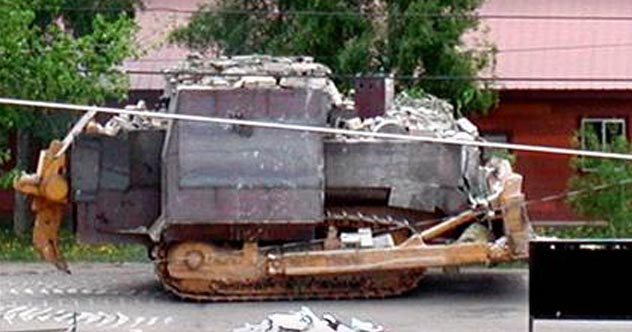
Marvin Heemeyer became infamous in 2004 after armoring a bulldozer and driving it through Granby, Colorado, destroying buildings connected to people and institutions he believed had wronged him. The machine was so heavily modified that the event quickly became known as the “Killdozer” rampage. It sounds like a rejected comic-book issue, except the damage was real, expensive, and terrifying.
Heemeyer’s story is often mythologized online as one man versus city hall. That version is too neat. The more disturbing truth is that a personal grievance hardened into a destructive mission. He prepared carefully, fortified the vehicle, mounted cameras, and turned construction equipment into a rolling symbol of revenge.
No one else was killed during the rampage, but that fact should not soften the story. It shows how close obsession can come to catastrophe. Heemeyer’s supervillain transformation was not about genius; it was about grievance with welding equipment.
3. Gerald Blanchard The High-Tech Cat Burglar
Gerald Blanchard is the kind of thief who makes security consultants reach for antacids. A Canadian criminal known for elaborate burglaries and fraud schemes, he became famous for stealing a jewel known as the Sisi Star from Austria’s Schönbrunn Palace. His alleged method involved research, disguise, surveillance, and the sort of planning usually reserved for heist movies with jazz soundtracks.
Blanchard’s supervillain flavor was technical elegance. He was not simply a burglar; he was a puzzle solver who used loopholes, gadgets, timing, and nerve. That makes his story fascinating, but it should not be confused with charm. The difference between a clever heist story and real crime is that the victims do not get to enjoy the soundtrack.
What makes Blanchard stand out among famous criminals is the theatrical contrast between risk and precision. While some real-life villains rely on brute force, he built his reputation on making secure systems look embarrassingly optimistic.
4. Jonathan Idema The Rogue War-Zone Operator
Jonathan “Jack” Idema seemed to step out of a paranoid thriller: a former soldier who moved through post-9/11 Afghanistan claiming counterterrorism connections and pursuing suspects. In 2004, Afghan authorities arrested him and others in connection with running a private detention operation. The case involved allegations of illegal imprisonment and abuse.
Idema’s story shows one of the most dangerous real-life supervillain patterns: self-authorization. In unstable environments, a man with enough confidence, tactical vocabulary, and patriotic branding can begin acting as if rules are for civilians and oversight is just a paperwork allergy.
His transformation was not into a mastermind with a secret island. It was into something more believable and therefore more unsettling: a rogue actor in a war zone, convinced that his mission placed him above normal boundaries. That is not heroism. That is a flashing red warning sign wearing camouflage.
5. Joshua Brady The Fake Spy Who Built a Criminal Fantasy
Joshua Brady’s case reads like someone tried to crowdsource a spy movie using lies, confusion, and extremely poor judgment. Federal authorities accused him of pretending to be connected to the CIA and using that false identity to recruit people into attempted bank robberies. It was less “master of espionage” and more “LinkedIn for bad decisions.”
The reason Brady belongs on a list of real-life supervillains is not scale, but performance. Many villains are not born from power; they are built from fantasy. Brady allegedly created an identity that made him seem important, dangerous, and official. That fake authority became the tool.
His story is a reminder that deception can be theatrical without being competent. A false badge, a confident voice, and a made-up mission can pull people into chaos. Sometimes the supervillain costume is just a lie worn with confidence.
6. Victoriano Álvarez The So-Called King of Clipperton Island
Clipperton Island’s history is already bleak: isolation, failed settlement, disease, hunger, and abandonment. In the early 20th century, after supplies stopped arriving and most of the adult men died, lighthouse keeper Victoriano Álvarez reportedly declared himself ruler over the surviving women and children. What followed became one of the darkest episodes associated with the island.
Álvarez’s “kingdom” was not power in the grand political sense. It was power at its most primitive: isolation plus fear. With no functioning government, no easy escape, and no rescue in sight, he allegedly turned a desperate survival situation into personal tyranny.
His story feels like a supervillain origin stripped of glamour. There is no empire, no army, no genius plan. There is only the horror of what one man may do when he believes nobody can stop him. In the end, the surviving women did stop him, and rescue eventually came, but the lesson remains chilling.
7. Rodrigo Duterte The Strongman as Punisher Figure
Rodrigo Duterte, former mayor of Davao City and later president of the Philippines, became internationally known for a brutal anti-drug campaign and a public persona built around punishment, fear, and defiance. Supporters saw him as a tough leader willing to confront crime. Critics, human rights groups, and international investigators pointed to alleged extrajudicial killings and a political culture that treated due process like an optional accessory.
Duterte’s case is politically and legally complex, and allegations should be described carefully. He has denied ordering certain killings, while also making public remarks that fueled controversy and investigation. International legal proceedings and human rights reporting have kept his record under intense scrutiny.
His supervillain archetype is the Punisher-style strongman: the leader who sells fear as efficiency and presents brutality as common sense. That may sound thrilling in fiction. In real governance, it risks turning citizens into targets and law into theater.
8. Edward Lansdale The Psychological Warfare Showman
Edward Lansdale was not a comic-book villain in the ordinary criminal sense. He was a U.S. military and intelligence figure associated with psychological warfare and Cold War covert operations. His name appears in discussions of propaganda, unconventional tactics, and Operation Mongoose, the U.S. effort aimed at undermining Fidel Castro’s government in Cuba.
Lansdale’s supervillain quality lies in the theatrical use of fear. Psychological operations depend on perception: rumor, myth, symbolism, and the manipulation of what people believe is possible. In the Philippines, he has been associated in historical accounts with folklore-inspired tactics designed to frighten insurgents. In Cuba-related planning, he was connected to schemes that sound like they came from a writers’ room where everyone needed more sleep.
He represents the bureaucratic supervillain: not a lone madman, but a strategist working inside institutions where imagination and state power can become a very strange mix.
9. Miguel Ángel Treviño Morales The Cartel Commander
Miguel Ángel Treviño Morales, also known as Z-40, became one of the most feared figures associated with Los Zetas, the Mexican criminal organization notorious for extreme violence, drug trafficking, and paramilitary-style operations. Authorities have described him as a ruthless leader within a group that helped redefine cartel brutality.
Unlike the gentleman thief or fake spy, Treviño’s supervillain profile is built on terror as administration. Cartel power does not simply come from money; it comes from making fear predictable. Violence becomes branding. Control becomes logistics. Communities become chessboards on which ordinary people pay the price.
Recent U.S. charges against Treviño and related defendants have alleged continuing criminal enterprise activity, murder conspiracies, drug trafficking, firearms violations, and money laundering. The legal process matters, but his public reputation already shows why cartel leaders occupy such a dark place in modern true crime stories: they turn organized crime into a machinery of intimidation.
10. Wouter Basson The Scientist in the Nightmare Lab
Wouter Basson, a South African cardiologist, became known by the nickname “Dr. Death” because of his association with Project Coast, apartheid South Africa’s chemical and biological weapons program. The program has been examined for its offensive research, poisons, drugs, and deeply unethical goals. Basson was acquitted in a criminal trial, but later faced professional misconduct findings related to his role.
His story fits one of the oldest supervillain archetypes: the doctor or scientist whose expertise becomes detached from ethics. In fiction, that person builds monsters in a lightning-lit lab. In real life, the horror is quieter: paperwork, procurement, experiments, secrecy, and the use of science in service of political cruelty.
Basson’s case is important because it warns against treating intelligence as virtue. Smart people can do monstrous things when systems reward obedience, secrecy, and results over conscience. The lab coat does not make the villain cleaner. Sometimes it only makes the crime look official.
What These Real-Life Supervillain Stories Have in Common
These ten men came from different countries, eras, and systems, but their stories share a few uncomfortable patterns. First, many built a personal myth. Worth became the elegant mastermind. Heemeyer became the wronged avenger. Brady allegedly became the fake spy. Duterte embraced the image of the punisher. A supervillain persona often begins when a man starts believing his own publicity.
Second, power magnified their worst instincts. Sometimes that power came from money. Sometimes from weapons, state authority, technical skill, secrecy, or simple isolation. Power does not create character; it reveals it with the volume turned up.
Third, the line between spectacle and harm is thinner than audiences like to admit. We enjoy stories about heists, masterminds, rogue agents, and revenge machines because they are dramatic. But when the credits never roll, the consequences are not entertaining. People lose homes, freedom, safety, dignity, and lives.
Conclusion: Real Villains Do Not Need Origin Music
The most unsettling thing about real-life supervillains is how ordinary the beginning can look. A thief wants status. A soldier wants relevance. A politician wants obedience. A technician wants to prove he is smarter than the system. A ruler wants fear to do the work of law. None of these stories require magic, aliens, or radioactive spiders. They require ego, opportunity, and a missing moral brake.
That is why these stories remain so fascinating. They are not just tales of crime or corruption; they are cautionary mirrors. They show what can happen when intelligence outruns empathy, when grievance becomes identity, and when authority forgets that human beings are not background characters.
Related Experiences: What These Stories Teach Writers, Readers, and True-Crime Fans
Spending time with stories like 10 Real Men Who Transformed Themselves Into Supervillains can be oddly educational, as long as we read them with the right lens. The best true-crime and dark-history writing does not ask, “Wasn’t this guy cool?” It asks, “How did this happen, who was harmed, and what warning signs did people miss?” That shift matters. Without it, a reader can accidentally turn a criminal into a celebrity with worse hobbies.
One useful experience is noticing how often the so-called villain arc begins with self-pity. Heemeyer’s case, for example, is often flattened into a revenge fantasy, but the real lesson is how grievance can become dangerous when a person treats compromise as humiliation. Many readers have felt wronged by a boss, a neighbor, a government office, or a parking ticket that seemed personally designed by goblins. The difference is whether frustration becomes conversation, legal action, therapy, or an armored bulldozer. Healthy adults choose the option with fewer sirens.
Another important lesson is that charisma is not character. Adam Worth and Gerald Blanchard remain compelling because they were clever and stylish in the public imagination. That makes them easy to fictionalize. But charm can hide exploitation, and cleverness can be morally empty. In content writing, this is especially important: describe the clever plan, but do not forget the damage. A heist may read like a puzzle, yet it is still a crime.
These stories also teach us to distrust fake authority. Joshua Brady’s alleged CIA act worked because people often respond to confidence, jargon, and secrecy. Real institutions have verification systems. Real professionals do not need to recruit strangers into bank robberies with spy-movie energy. In daily life, that lesson applies to scams, online manipulation, fake job offers, and anyone who says, “Do not ask questions” while asking you to break the law. Questions are not rude; sometimes they are survival equipment.
Political and military cases add a heavier lesson. Figures like Duterte, Lansdale, and Basson show how institutions can make questionable actions seem normal when they are wrapped in national security, public order, or scientific language. Readers should pay attention when leaders promise safety but remove accountability, or when experts claim that ethics are obstacles. History is full of people who did terrible things while using very official stationery.
For writers, the experience of covering real-life supervillains requires balance. Use vivid storytelling, but avoid turning suffering into decoration. Add humor carefully, mostly around absurdity, ego, or theatrical behaviornot around victims. Make room for legal nuance. If someone was accused rather than convicted, say so. If someone was acquitted but tied to a documented program, explain the difference. That precision does not weaken the story; it makes it trustworthy.
Finally, these stories are reminders that villainy is rarely a single dramatic switch. It is a staircase. One lie becomes a bigger lie. One abuse of power becomes policy. One fantasy becomes a plan. One plan becomes a headline. The best reason to study real-life villains is not to admire their darkness, but to recognize the first shadow before it grows teeth.