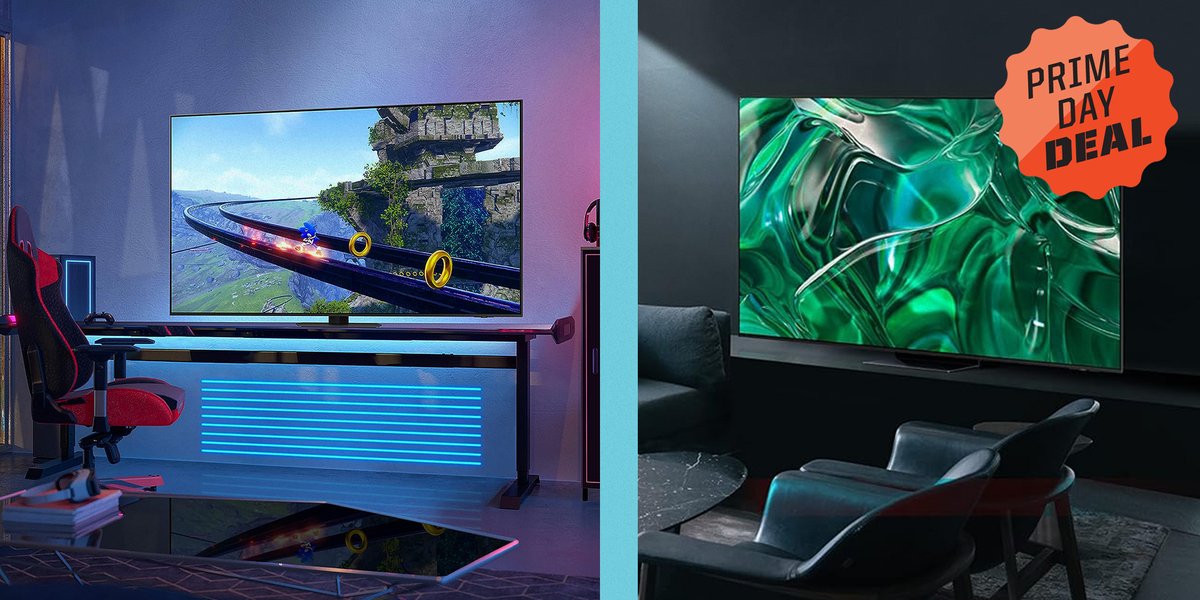

Note: Prime Day TV prices and availability can change quickly. The buying advice below is based on current deal patterns, real 2026 TV technology trends, and typical discounts from Amazon and major U.S. retailers.
Prime Day TV deals have officially entered the “refresh your living room before your neighbor does” stage. Whether you want a cinematic OLED, a bright Mini-LED monster for sports, a budget-friendly 4K TV for the guest room, or a giant screen that makes popcorn feel legally required, this is one of the best times of the year to shop.
Amazon Prime Day 2026 runs from June 23 through June 26, but early TV discounts are already appearing across Amazon, Best Buy, Walmart, Samsung, LG, TCL, Hisense, Sony, and other major retailers. The headline savings are big: select premium and large-screen TVs can see discounts of up to $1,500, especially on last year’s high-end models, oversized QLED and Mini-LED sets, lifestyle TVs like Samsung’s The Frame, and OLED models that retailers want to move before newer versions take over the spotlight.
The trick is not simply finding a TV with a red sale badge. Any retailer can slap “deal” on a screen and hope your wallet gets emotional. The real win is knowing which discounts are meaningful, which specs matter, and which Prime Day TV deals are just yesterday’s average price wearing a fake mustache.
Why Prime Day Is a Smart Time to Buy a TV
Prime Day has become more than an Amazon event. It is now a midyear retail boxing match. Amazon throws the first punch, then Best Buy, Walmart, Target, Samsung, LG, and other retailers respond with their own deals. That competition is excellent news for shoppers because it creates pressure on prices across the entire TV category.
For TVs, Prime Day is especially strong because it lands after many manufacturers have introduced their newest models. That means retailers often discount 2024 and 2025 TVs to clear inventory. In many cases, last year’s premium TV is still fantastic. A 2025 OLED, Mini-LED, or QLED model may offer nearly the same picture quality as the 2026 version, but with a much friendlier price tag. Your eyeballs probably will not notice that the remote has been slightly redesigned. Your bank account definitely will.
Prime Day is also a great moment for large-screen shoppers. Discounts tend to become more dramatic on 65-inch, 75-inch, 85-inch, and even 98-inch TVs. The bigger the screen, the bigger the original price, which gives retailers more room to offer eye-catching savings. This is where “up to $1,500 off” deals are most likely to appear.
Best Prime Day TV Deals to Watch
The best Prime Day TV deals usually fall into several categories: budget 4K TVs, midrange QLED TVs, bright Mini-LED TVs, premium OLED TVs, massive home-theater screens, and design-first lifestyle TVs. Each type serves a different buyer, so the smartest choice depends on your room, your habits, and how seriously you take movie night.
Best Budget 4K TV Deals
If you want a solid screen for streaming Netflix, YouTube, Hulu, Disney+, Prime Video, or live sports without spending luxury-car-tire money, budget 4K TVs are the easiest Prime Day win. Brands like TCL, Hisense, Toshiba, Roku, Amazon Fire TV, Insignia, and Pioneer often drop 43-inch, 50-inch, and 55-inch models into very attractive price ranges.
For casual viewers, a basic 4K smart TV can be more than enough. Look for 4K resolution, HDR support, built-in apps, Wi-Fi, and at least three HDMI ports. Fire TV, Roku TV, and Google TV interfaces are all common in this range. Roku is simple and friendly, Fire TV works well for Amazon households, and Google TV is strong for app discovery and voice search.
Do not expect perfect black levels, thunderous speakers, or elite gaming features from the cheapest TVs. Still, for bedrooms, dorms, kids’ rooms, kitchens, or anyone who mostly watches sitcoms and sports highlights, these deals can be excellent.
Best QLED TV Deals
QLED TVs are a sweet spot for shoppers who want better color and brightness than basic LED TVs but do not want to pay OLED prices. Samsung, TCL, Hisense, Amazon, and Roku all offer QLED models that can look punchy and vibrant in normal living rooms.
QLED technology uses quantum dots to improve color performance. In plain English, the picture usually looks brighter and more colorful. That makes QLED a strong choice for daytime viewing, sports, cartoons, reality TV, and bright living rooms where sunlight barges in like it pays rent.
Prime Day QLED deals are especially appealing in the 55-inch to 75-inch range. A good 65-inch QLED can be the best all-around TV for many households because it delivers size, color, smart features, and value without drifting into premium OLED pricing.
Best Mini-LED TV Deals
Mini-LED TVs are where the midrange starts getting serious. These TVs use many smaller backlights and local dimming zones to improve contrast, brightness, and control over dark and bright parts of the image. Compared with standard LED TVs, Mini-LED sets can produce deeper blacks, brighter highlights, and less distracting glow around subtitles or bright objects.
Mini-LED is a fantastic pick for sports fans, bright rooms, gamers, and anyone who wants a dramatic picture without going full OLED. TCL and Hisense have been aggressive in this category, often offering big-screen Mini-LED TVs at prices that make traditional premium brands sweat politely. Sony and Samsung Mini-LED models usually cost more, but they often bring stronger processing, motion handling, and upscaling.
During Prime Day, watch for deals on 65-inch and 75-inch Mini-LED TVs from TCL’s QM series, Hisense’s U-series, Samsung Neo QLED models, and Sony Bravia Mini-LED sets. These are some of the best candidates for serious discounts.
Best OLED TV Deals
OLED TVs are the favorite choice for movie lovers because every pixel can light itself independently. That means perfect black levels, excellent contrast, wide viewing angles, and a picture that can make a dark sci-fi scene look like art instead of a gray soup accident.
LG, Samsung, Sony, and Panasonic are among the biggest names in OLED. For U.S. shoppers, LG and Samsung models tend to appear most often in Prime Day deal roundups. LG’s B-series and C-series OLED TVs are popular because they balance premium picture quality with strong gaming features. Samsung’s QD-OLED models are known for vivid color and bright HDR highlights.
OLED deals are often strongest on previous-year models. For example, a 2025 OLED may drop sharply once the 2026 version is available. That does not make the older model outdated. It makes it interesting. In many cases, the real-world upgrade from one model year to the next is modest, while the price difference can be huge.
Best Big-Screen TV Deals
If your goal is to go big, Prime Day is your friend. Large TVs often receive the most dramatic discounts because their original prices are higher. A 75-inch, 85-inch, or 98-inch TV can turn a family room into a mini theater, a sports bar, or the kind of gaming cave where guests suddenly “drop by” every weekend.
Before buying a giant TV, measure your space. A huge screen sounds exciting until you realize your couch is three feet away and everyone looks like a weather balloon. For most living rooms, 65 inches is a comfortable upgrade, 75 inches feels cinematic, and 85 inches or larger needs enough viewing distance and wall space.
Also check delivery options. Big TVs are not fun to wrestle into a sedan. They are even less fun to carry upstairs while questioning every life decision that led to this moment. Look for retailers that offer scheduled delivery, room-of-choice delivery, or installation services.
Best Lifestyle TV Deals
Lifestyle TVs like Samsung’s The Frame are designed to look good even when they are not playing video. These models can display digital artwork and blend into home decor more gracefully than a standard black rectangle. They are especially popular in living rooms, bedrooms, apartments, and design-focused spaces.
Prime Day has historically produced strong discounts on Frame-style TVs, especially larger sizes. These are great for shoppers who care about both performance and aesthetics. The trade-off is that you may pay more for the design features than you would for a standard TV with similar picture performance. Still, if your TV lives above a fireplace or in a carefully decorated room, the style factor may be worth it.
How to Tell If a Prime Day TV Deal Is Actually Good
A real TV deal should pass three tests: the discount should be meaningful, the specs should match your needs, and the model should still be worth buying. Do not trust the original list price alone. Some TVs are advertised with inflated “was” prices that make the discount look more dramatic than it really is.
Check the price history when possible. Tools like CamelCamelCamel can help track Amazon pricing. You can also compare the same model at Best Buy, Walmart, Target, Samsung, LG, or the manufacturer’s own store. If every retailer has the TV at the same price, it may be a standard market adjustment rather than a rare Prime Day steal.
Next, read the model number carefully. TV model names are ridiculously confusing, as if someone spilled alphabet soup on a spreadsheet. A Samsung S90F is not the same as an S95F. A TCL QM7 is not the same as a lower-end Q6. A Hisense U8 is not the same as a U6. The small letters and numbers matter because they often identify panel quality, refresh rate, brightness, local dimming, processor, and gaming features.
Important TV Specs to Know Before You Buy
Screen Size
For most buyers, size is the first decision. A 55-inch TV works well for smaller rooms. A 65-inch TV is the modern living-room standard. A 75-inch TV feels premium and cinematic. Anything 85 inches or larger is for serious big-screen fans with enough room and enough wall strength to sleep peacefully.
Display Type
LED TVs are the most affordable. QLED TVs add better color and brightness. Mini-LED TVs improve contrast and brightness control. OLED TVs offer perfect blacks and beautiful contrast. QD-OLED TVs combine OLED black levels with especially vivid color. RGB Mini-LED is one of the newer premium technologies appearing in 2026, aiming for even better color performance in high-end LED TVs.
Refresh Rate
A 60Hz TV is fine for casual streaming. A 120Hz TV is better for sports, action movies, and gaming. Some newer TVs support 144Hz or higher refresh rates, which is useful mainly for PC gamers. For PlayStation 5 and Xbox Series X, 4K at 120Hz is the major feature to look for.
HDMI 2.1
If you game, look for HDMI 2.1 ports, variable refresh rate, auto low-latency mode, and 4K/120Hz support. If you do not game, HDMI 2.1 is less important, but extra HDMI ports are always useful for soundbars, consoles, cable boxes, and streaming devices.
HDR Support
HDR helps TVs show brighter highlights and richer contrast. Dolby Vision, HDR10, HDR10+, and HLG are common formats. Dolby Vision is popular across streaming services and 4K Blu-rays, while Samsung TVs typically support HDR10+ instead of Dolby Vision.
Best Prime Day TV Deal Strategy
Start by deciding what kind of buyer you are. Movie lovers should prioritize OLED or high-end Mini-LED. Sports fans should look for brightness, motion handling, and anti-reflection performance. Gamers should focus on HDMI 2.1, low input lag, VRR, and 120Hz or 144Hz support. Casual streamers should prioritize price, screen size, and an easy smart TV platform.
Then set a firm budget. Prime Day is designed to make you spend more than planned. You begin by shopping for a modest 55-inch TV and somehow end up considering an 85-inch screen, a soundbar, wall mounting, HDMI cables, blackout curtains, and a popcorn machine named “Theater Steve.” Stay calm. Buy the TV that fits your room and actual habits.
If a deal looks excellent, do not wait too long. Prime Day discounts can disappear, sell out, or change during the event. However, do not panic-buy a TV just because the timer is dramatic. A countdown clock is not a product review.
Should You Buy From Amazon or Another Retailer?
Amazon is the center of Prime Day, but it is not always the only place to find the best TV deal. Best Buy is often strong for TVs because it offers in-store pickup, installation services, extended warranties, and easy returns. Walmart can be competitive on budget and midrange TVs. Samsung and LG sometimes offer direct discounts, bundle offers, or special perks on their own websites.
Before you buy, compare total value. A TV that costs $50 more from one retailer may still be better if it includes better delivery, easier returns, free installation discounts, or a stronger protection plan. For large TVs, logistics matter almost as much as price.
Common Mistakes to Avoid During Prime Day TV Shopping
The first mistake is buying the cheapest giant TV you can find. A massive screen with poor brightness, weak contrast, and bad motion handling may disappoint you every time the camera pans across a football field. Bigger is fun, but better is better.
The second mistake is ignoring your room. OLED looks incredible in dark rooms, but a bright Mini-LED may be better in a sunny living room. A glossy screen can look beautiful at night and annoying at noon. If your room has lots of windows, brightness and reflection handling deserve serious attention.
The third mistake is forgetting sound. Thin TVs often have thin audio. If you are buying a large TV for movies, sports, or gaming, consider a soundbar. Even an affordable soundbar can make dialogue clearer and action scenes more exciting.
The fourth mistake is assuming every 2026 TV is better than every 2025 TV. Newer does not automatically mean better value. A discounted premium 2025 model can easily beat a budget 2026 model at the same price.
Real-World Experience: What It Feels Like to Shop Prime Day TV Deals
Shopping Prime Day TV deals can feel like walking into an electronics store during a fireworks show. Everything is flashing, everything claims to be urgent, and suddenly you are reading about local dimming zones at 1:13 a.m. like you are preparing for a graduate exam in television science. The good news is that the process becomes much easier once you stop looking for “the best TV” and start looking for the best TV for your actual life.
For example, a family that watches sports in a bright living room will usually be happier with a strong Mini-LED or QLED TV than a dimmer entry-level OLED. Football, basketball, soccer, and daytime broadcasts need brightness and motion clarity. A TV with good reflection handling can save you from seeing your own face during every dark scene, which is rarely the cinematic experience anyone requested.
On the other hand, a movie lover who watches at night may fall in love with OLED. The first time you watch a space scene on a good OLED, it can feel like someone finally cleaned the universe. Black levels are deep, colors feel precise, and contrast gives movies a premium look. If your room is darker and you value image quality over raw brightness, an OLED deal can be the most satisfying Prime Day purchase.
Gamers have another checklist. A TV can look beautiful and still be the wrong choice if it lacks HDMI 2.1, 4K/120Hz, VRR, or low input lag. If you play fast shooters, racing games, sports games, or use a gaming PC, smooth motion matters. A 120Hz or 144Hz TV can make gameplay feel more responsive. It will not magically improve your aim, but it will remove one excuse, which is emotionally dangerous.
Apartment shoppers often care about size and setup. A 75-inch TV may sound amazing until you remember the elevator is tiny, the wall is questionable, and your lease agreement is watching silently from a drawer. In smaller spaces, a great 55-inch or 65-inch TV can feel more balanced than an oversized screen. The best home theater is not the biggest one; it is the one you can actually live with.
One practical trick is to build a three-TV shortlist before Prime Day peaks. Pick one budget option, one ideal option, and one stretch option. Track prices for each. When one drops into your target range, you are ready. This prevents deal paralysis, which is when you stare at 37 open tabs until every sale ends and you somehow buy socks instead.
Another useful experience-based tip: read recent buyer reviews, but do not let one angry review scare you away. Every TV has someone claiming it ruined their life because the remote button felt “emotionally hollow.” Look for patterns instead. If many buyers mention poor brightness, software bugs, blooming, damaged delivery, or weak customer service, pay attention. If one person says the TV is too large after ordering a 98-inch screen, that is less a product flaw and more a tape-measure tragedy.
Finally, think about the total setup. A great TV deserves the right stand or mount, a soundbar if dialogue matters, and decent HDMI cables if you are connecting modern gaming consoles. You do not need to buy every accessory at once, but it is smart to budget for the full experience. Prime Day can be a great time to buy those extras too, especially soundbars, streaming sticks, wall mounts, and surge protectors.
Final Verdict: Are Prime Day TV Deals Worth It?
Yes, Prime Day TV deals are worth watching closely, especially if you are shopping for a previous-year OLED, a bright Mini-LED, a big-screen QLED, or a budget 4K smart TV. The best savings can reach up to $1,500 on select premium and oversized models, but the smartest deal is not always the biggest discount. It is the TV that fits your room, your habits, your budget, and your patience for remote-control menus.
Buy OLED for movie-night magic. Buy Mini-LED for brightness and versatility. Buy QLED for colorful value. Buy budget 4K if you just want a reliable streaming screen. Buy a giant TV only after measuring twice and imagining the delivery person’s facial expression.
Prime Day moves fast, but good shopping does not have to feel chaotic. Compare prices, check specs, understand the model number, and avoid being hypnotized by fake urgency. Do that, and you can walk away with a TV deal that still feels smart long after the sale banner disappears.