My 36 Comics About An Ice Cube Which I Created At The Lowest Point Of My Creative Career

Note: This is an original, SEO-ready article written in standard American English, based on real public background about CubeMelt, creative burnout, webcomics, and visual storytelling. No source links or citation placeholders are included in the publishable body.
A Tiny Ice Cube With a Surprisingly Big Philosophy
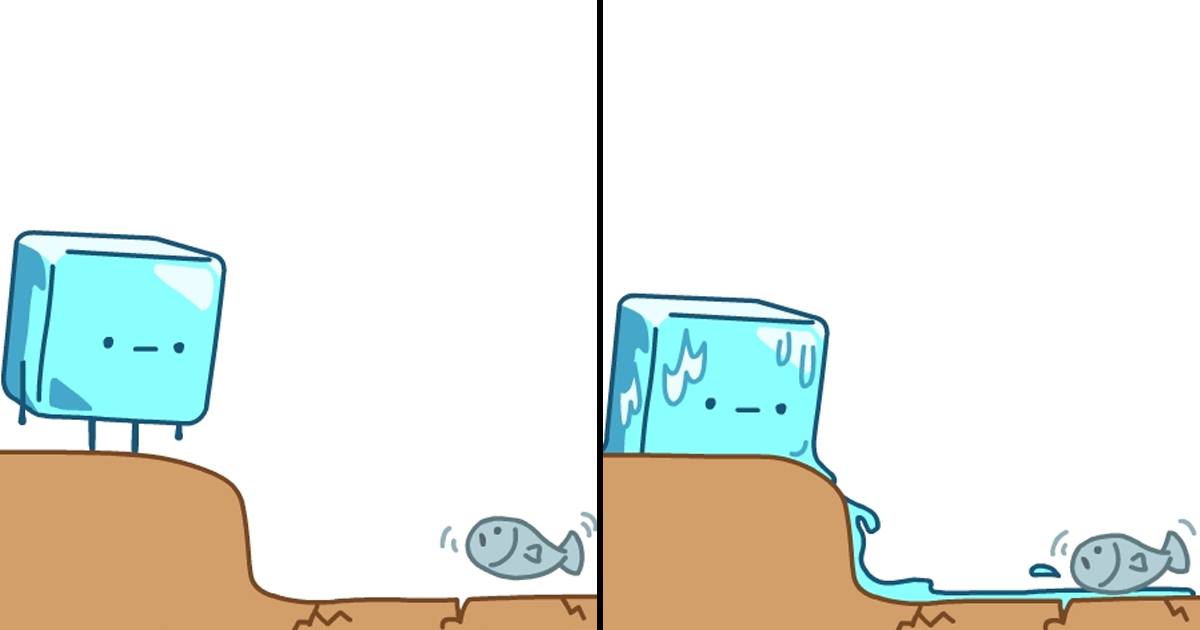
At first glance, a comic about an ice cube sounds like the kind of idea someone invents during a heat wave, a long meeting, or a very dramatic glass of soda. But that is exactly what makes CubeMelt comics so charming. The character is simple: a small living ice cube with a short lifespan, a big heart, and the unfortunate habit of melting at the worst possible time. In other words, he is all of us on a Monday morning, except colder and much more emotionally available.
The story behind “My 36 Comics About An Ice Cube Which I Created At The Lowest Point Of My Creative Career” is more than a funny internet art post. It is a reminder that creativity does not always arrive wearing a golden cape and shouting, “Behold, inspiration!” Sometimes it appears quietly, in a cup of soda, while an artist is questioning his direction, his purpose, and whether his career is slowly turning into room-temperature water.
Peng Ven Wong, the creator behind CubeMelt, has described the character as being born during a difficult period in his creative life. He was unsure where his work was going and felt the pressure many artists know too well: the feeling that time is passing, ideas are not landing, and the career path ahead looks less like a road and more like a foggy parking lot. Then came the image of an ice cube melting away. Instead of treating that image as a depressing symbol, he turned it into a character full of humor, optimism, and emotional honesty.
That is the magic of these ice cube comics. They take a universal feartime slipping awayand make it adorable enough to hug, though hugging an ice cube would be both uncomfortable and bad for the comic’s protagonist.
Why CubeMelt Works So Well
1. The Character Is Simple, but the Feeling Is Not
Some of the most memorable cartoon characters are visually simple. A few lines, a clear silhouette, and one strong emotional idea can do more than a page full of over-designed details. CubeMelt is basically a square with a face, limbs, and a rapidly approaching expiration date. Yet that simplicity gives readers room to project their own feelings onto him.
That is one reason minimalist comics often perform well online. A simple character is easy to understand in one second, which is perfect for social media feeds where readers scroll with the speed and attention span of a caffeinated squirrel. But simplicity does not mean laziness. It means the artist has removed everything unnecessary until only the emotional core remains.
CubeMelt’s design also matches his concept perfectly. He is not a superhero with ice powers. He is not a majestic frozen warrior. He is a cube. His greatest enemy is ambient temperature. His greatest strength is attitude. That contrast is the engine of the humor.
2. The Premise Has Built-In Tension
Every good comic character needs a problem. CubeMelt’s problem is brutally clear: the moment he leaves the freezer, he begins to disappear. That single rule creates endless comic possibilities. Want to go on an adventure? Better hurry. Want to help a friend? Hope it does not take too long. Want to enjoy life? Please do so before becoming a puddle.
This limitation makes the character funny, but it also gives the comics emotional weight. His time is short, so every choice matters. That is why the series can shift from silly to surprisingly meaningful without feeling forced. One strip may deliver a quick visual gag, while another may quietly ask readers how they are spending their own limited time.
In creative writing, constraints often make ideas stronger. A character who can do anything is usually less interesting than a character who wants everything but can only do a little. CubeMelt’s limitation is not a weakness in the concept. It is the concept.
The Humor of Melting Under Pressure
Part of the fun of funny webcomics is watching an absurd character deal with ordinary problems. CubeMelt takes everyday situations and filters them through one ridiculous but emotionally rich question: “How would this work if the hero were an ice cube?”
That question can turn almost anything into a joke. A long line becomes a survival challenge. A warm day becomes a horror movie. A small act of kindness becomes heroic because the character may literally melt while doing it. The stakes are tiny and enormous at the same time, which is a perfect recipe for comedy.
The best CubeMelt strips are not funny only because an ice cube melts. That would get old quickly, like a joke your uncle repeats at every family dinner while everyone suddenly becomes very interested in the salad. The comics work because melting becomes a metaphor. It can mean stress, aging, burnout, social pressure, embarrassment, sacrifice, or the slow drain of energy that happens when life keeps asking for “just one more thing.”
And because the tone is cute rather than cynical, the sadness never becomes too heavy. CubeMelt may be doomed by physics, but he is not defeated by it. He keeps showing up. He keeps trying. He keeps smiling. Honestly, for someone with no long-term structural integrity, he has an impressive work ethic.
From Creative Low Point to Original Character
Many artists imagine that their best work will come from peak confidence, perfect schedules, and a studio filled with natural light, expensive markers, and coffee that never gets cold. Reality is less glamorous. Some of the most honest creative ideas come from frustration, confusion, boredom, or emotional exhaustion.
CubeMelt’s origin story fits that pattern. The character was not born from a polished branding session. He came from self-doubt. The creator was facing a moment when his career felt uncertain, and instead of ignoring that feeling, he translated it into an image anyone could understand: an ice cube slowly melting away.
That is a powerful creative move. It turns a private fear into a public symbol. Readers may not know the exact details of an artist’s career struggle, but they understand the sensation of time slipping by. They know what it feels like to wonder, “Am I doing enough? Am I becoming who I wanted to be? Why does everyone else seem to have a five-year plan while I am still deciding what to eat for lunch?”
The genius of CubeMelt is that it does not answer those questions with a motivational poster. It answers them with a cute ice cube trying his best. Somehow, that feels more honest.
Why Readers Connect With Cute Comics During Hard Times
Comfort Without Pretending Everything Is Fine
Wholesome comics have a special place on the internet because they offer comfort without demanding too much emotional labor from the reader. You can understand the setup quickly, smile at the punchline, and still carry away a small thought that lingers after the scroll.
CubeMelt belongs to that category of relatable comics that feel light on the surface but are built on real feeling. The character’s optimism is not naive. He knows the world is warm. He knows he is melting. He still gets out of the tray.
That attitude resonates because many people are tired, uncertain, or creatively stuck. They do not always need a grand speech. Sometimes they need a tiny visual reminder that showing up still counts, even when you are not at full strength.
A Small Character Can Carry Big Ideas
Comics are excellent at compressing meaning. A few panels can show time passing, emotions changing, and a joke landing faster than a paragraph of explanation. With CubeMelt, the visual language is instantly clear. When he shrinks, sweats, or puddles, readers understand the emotional situation before reading a single line of dialogue.
This is why character-driven webcomics can become so memorable. A recurring character creates familiarity. Readers return not only for the jokes, but also to see how the character will handle the next small disaster. Over time, the character becomes a friend, a mascot, and a mirror.
CubeMelt’s adventures may be short, but they create a consistent emotional world. The rules are simple. Life is brief. Warmth is dangerous. Kindness matters. Humor helps. Bring napkins.
The Art of Turning an Object Into a Personality
One of the hardest things in character design is making an object feel alive. Anyone can draw eyes on a toaster, but not every toaster deserves a fan base. The trick is giving the character a clear desire, a weakness, and a recognizable emotional pattern.
CubeMelt succeeds because he is not just an ice cube with a face. He wants to live fully. He wants to help. He wants to experience the world outside the freezer, even when the world is not built for him. That desire creates empathy.
The character also benefits from strong visual contrast. Ice is associated with coldness, but CubeMelt is emotionally warm. Ice is hard, but he is soft-hearted. Ice is temporary, but his message is lasting. Those contradictions make the comic richer than its simple premise suggests.
For artists, this is a useful lesson: a strong character does not need a complicated backstory. It needs a clear emotional engine. CubeMelt’s engine is the tension between limited time and unlimited enthusiasm.
How the Comics Reflect Creative Burnout
Creative burnout is not just being tired of drawing, writing, designing, or making things. It can feel like losing the spark that once made the work exciting. For artists, that feeling can be especially scary because creativity is often tied to identity. When the ideas stop flowing, it can feel as if the self is melting too.
That is why CubeMelt’s origin story feels meaningful. The character does not deny burnout. He gives it a shape. He makes it visible, small, and even funny. By turning a difficult feeling into a comic, the artist creates distance from it. The problem is no longer a foggy emotional mess; it becomes a character, a scene, a joke, a story.
This is one of art’s quiet superpowers. It does not always fix life, but it can make life easier to look at. A comic can hold sadness and humor in the same square panel. It can say, “Yes, this is hard,” while also saying, “Look, the ice cube is trying to ride a bicycle before liquefying.”
That balance is difficult to achieve. Too much sadness, and the comic becomes heavy. Too much cuteness, and the message becomes shallow. CubeMelt finds a sweet spot: playful enough to entertain, thoughtful enough to stay with you.
Why “Life Is Short” Feels Different in Comic Form
The phrase “life is short” is familiar enough to appear on mugs, posters, and gym walls where people are already suffering. But CubeMelt makes the phrase visual. Instead of telling us time is limited, the comic shows a character losing time in every panel.
That makes the message more immediate. Readers do not need a lecture about mortality or productivity. They see the character’s body changing. They feel the clock ticking. They laugh because the situation is absurd, and then they recognize themselves in it.
The series also avoids turning “life is short” into pressure. It does not scream, “Optimize every second!” It suggests something gentler: spend your time with heart. Try things. Help people. Laugh when the plan fails. Accept that some days you will end up as a puddle, and maybe that puddle will still reflect the sky.
That is a healthier message than the usual hustle-culture slogan. CubeMelt is not trying to become a billionaire ice cube by waking up at 4 a.m. and networking with premium freezer brands. He is trying to make his brief time meaningful.
Lessons Artists Can Learn From CubeMelt
Start With One Strong Idea
The best webcomic concepts are easy to explain. “An ice cube tries to enjoy life before melting” is simple, memorable, and flexible. Artists often overcomplicate their projects because they fear simplicity will look amateur. But simplicity can be a sign of confidence. A clear idea gives readers a doorway into the work.
Let the Limitation Create the Joke
CubeMelt’s physical limitation generates story after story. That is much stronger than forcing random jokes onto a character. When the world and the character naturally clash, humor appears organically. The beach, the sun, hot coffee, long conversations, and warm hands all become potential punchlines.
Make the Personal Universal
The comic began with a personal feeling: creative uncertainty. But the finished character speaks to a much wider audience. That is what artists should aim for. You do not need to explain every detail of your private struggle. You need to find the image, joke, or metaphor that allows others to feel their own version of it.
Keep the Tone Honest
Cute art does not have to avoid serious ideas. In fact, cuteness can make serious ideas easier to approach. CubeMelt can talk about time, purpose, sacrifice, and stress because the visual style is friendly. The reader feels safe enough to think deeply without feeling ambushed.
The Internet Loves Characters With Heart
Online audiences are surrounded by noise. Every day brings new memes, trends, arguments, announcements, and videos of animals behaving with more confidence than most adults. In that environment, a small sincere character can stand out.
CubeMelt’s popularity reflects a larger appetite for comics that are quick to read but emotionally satisfying. Readers want humor, but they also want recognition. They want to see their awkwardness, stress, hope, and kindness reflected in a form that feels light enough to share.
That shareability matters. A single-panel or short-panel comic can travel quickly because it asks little from the audience at first. But the comics people remember usually offer something more than a joke. They offer a feeling. CubeMelt offers the feeling of trying to stay cheerful while slowly losing shape, which, frankly, is also a decent summary of adulthood.
Experience Notes: What This Ice Cube Taught Me About Creativity
There is something oddly comforting about a character who is always running out of time. Most creative people know that feeling, even if they are not made of frozen water. You sit down to make something and suddenly the clock becomes rude. The day melts. The idea melts. Your confidence melts. Then you look at the page and think, “Wonderful, I have produced one sentence and a suspicious doodle.”
That is why the CubeMelt idea feels so relatable. It captures the emotional temperature of creative work. When you are at a low point, every task can feel too big and every delay can feel like proof that you are falling behind. You may compare yourself to other artists who seem to be posting daily, selling products, winning awards, launching books, and somehow drinking enough water. Meanwhile, you are trying to remember whether your last good idea happened this month or during a previous geological era.
But the lesson of CubeMelt is not that we should panic because time is short. The lesson is that small efforts still matter. A short comic can matter. A tiny character can matter. A simple sketch made during a difficult season can become the doorway to a whole creative world. That is encouraging because many artists wait for the perfect moment before starting. They wait for confidence, clarity, money, equipment, a better desk, or a magical email that says, “Congratulations, your entire creative future has been approved.”
In practice, creativity often returns through small experiments. You draw one character. You write one joke. You test one idea that seems almost too simple. You do not need to know whether it will become a series, a brand, a book, or a beloved webcomic. You only need to notice whether it has life in it.
CubeMelt also reminds artists that vulnerability can be useful when it is transformed with craft. The comic does not dump raw frustration onto the reader. It shapes that frustration into rhythm, character, design, and humor. That is the difference between venting and storytelling. Venting releases pressure; storytelling gives pressure a form others can understand.
Another important experience connected to this topic is learning to respect creative limits. An ice cube cannot survive forever outside the freezer. Artists also need restoration. That does not mean quitting whenever work becomes hard. It means understanding that energy is part of the process. Rest, play, observation, and ordinary life are not distractions from creativity. They are often where the next idea is quietly forming.
Finally, CubeMelt teaches that a low point does not have to be the end of a creative career. It can become the strange beginning of something more honest. The very feeling an artist wants to escape may contain the metaphor that unlocks the next chapter. In this case, the metaphor happened to be an ice cube with a warm heart and terrible survival odds. That is the kind of creative contradiction worth paying attention to.
Conclusion: A Small Comic With a Long Aftertaste
“My 36 Comics About An Ice Cube Which I Created At The Lowest Point Of My Creative Career” is not just a collection of cute drawings. It is a story about turning uncertainty into art, pressure into humor, and a melting ice cube into a surprisingly durable symbol of hope.
CubeMelt works because the character is simple enough to understand instantly and meaningful enough to remember later. He is funny because he melts. He is touching because he keeps going anyway. He is small, but his message is not: life is short, creativity is fragile, and sometimes the best thing you can do is step out of the freezer with courage, even if the room is warmer than expected.
For readers, the comics offer a smile. For artists, they offer a reminder that low points can still produce bright ideas. And for anyone who has ever felt like they were slowly melting under the pressure of life, CubeMelt says, in his quiet little frozen way, “Same. But let’s try anyway.”
SEO Tags