
When people hear the word monopoly, they usually picture a top-hatted cartoon landlord, a railroad square, and someone flipping the board because Aunt Linda bought Boardwalk again. In real life, monopolies are less dramatic but much more annoying. They do not always arrive wearing a cape labeled “Market Power.” Sometimes they show up as a concert ticket fee, a $300 pair of glasses, a monthly internet bill, a domain renewal notice, or a “free” tax filing button that somehow develops a wallet-sized appetite.
The strangest part is that many modern monopolies and near-monopolies are hiding in plain sight. Normal people interact with them constantly, but the machinery behind the scenes is so boring, technical, or deliberately invisible that almost nobody notices. That is the trick. A monopoly does not need to own every store on Main Street. It can own the pipes, the platform, the contract, the data standard, the registry, or the one boring middle layer nobody thinks about until the bill arrives.
Before we begin, a quick reality check: not every company below has been legally declared a monopoly in a final court judgment. Some are alleged monopolies, some are regulated monopolies, some are facility-level monopolies, and some are giant gatekeepers with enough market power to make customers feel like they are choosing between “pay us” and “good luck living in society.” In everyday language, though, they all share the same uncomfortable feature: choice exists mostly as decoration.
What Makes a Monopoly “Hidden”?
A hidden monopoly is not necessarily secret. In fact, many are famous companies. What is hidden is the control structure. You may see ten brands on a shelf, but three of them may belong to the same parent company. You may compare ticket prices across websites, but the venue contract may still funnel you back to the same ticketing giant. You may choose a tax software product, but the entire filing process may have been shaped by years of lobbying, complexity, and private-sector dependence.
That is why hidden monopolies are so powerful. They do not always block the front door. They quietly own the hallway.
1. Live Nation-Ticketmaster: The Concert Ticket Maze
If you have ever tried to buy concert tickets and felt like you were negotiating with a slot machine that studied law, you have met one of America’s most famous alleged entertainment monopolies: Live Nation-Ticketmaster.
Ticketmaster sells tickets. Live Nation promotes concerts, manages artists, owns or controls venues, and operates across multiple layers of live entertainment. After the companies merged in 2010, the combined business became a giant in the concert ecosystem. The issue is not just that it sells a lot of tickets. The issue is vertical integration: promotion, venue relationships, artist management, ticketing, sponsorships, and fees can all connect inside one powerful system.
For fans, the experience is simple: you want two seats, and suddenly the checkout page looks like it was designed by a raccoon with a finance degree. Service fee. Facility fee. Processing fee. Convenience fee. A fee for the fee to consider becoming a fee. By the end, your $85 ticket has gone through puberty and become $143.
Regulators have argued that Live Nation-Ticketmaster used exclusive venue agreements and industry leverage to protect its position. The company has denied wrongdoing and has argued that ticket prices are driven by artists, demand, venues, and the broader market. Still, the reason this example resonates is obvious: most fans do not feel like they are shopping in a competitive marketplace. They feel like they are standing at one tollbooth on the only road to the show.
Why normal people miss it
Consumers usually see the artist, the tour poster, and the final checkout page. They do not see long-term venue contracts, promoter relationships, or the industrial plumbing of live entertainment. The monopoly is not hidden because nobody knows Ticketmaster exists. It is hidden because few people understand how many doors in the concert business may lead back to the same house.
2. EssilorLuxottica: The Eyeglasses Empire on Your Face
Eyeglasses seem like a market full of choice. Walk into a mall and you will see Ray-Ban, Oakley, Prada, Coach, Versace, LensCrafters, Sunglass Hut, Pearle Vision, Target Optical, and a galaxy of frames that make you wonder if seeing clearly is supposed to cost the same as a weekend vacation.
Here is the twist: many famous eyewear brands, retailers, and lens businesses are connected to EssilorLuxottica, the eyewear giant formed by the merger of Essilor and Luxottica. The company owns iconic brands such as Ray-Ban and Oakley, operates major retail chains, produces lenses, and licenses designer frames. That is not just selling glasses. That is controlling several steps of the journey from “I cannot read that street sign” to “please swipe your card.”
To be fair, the eyewear market also has competitors. Online sellers, independent opticians, Costco, Warby Parker, Zenni, and local shops have given consumers more options than they had in the old mall-only era. U.S. regulators also cleared the Essilor-Luxottica merger after review. So this is not a cartoon villain story where one company owns every lens on Earth.
But it remains one of the best examples of the “illusion of choice.” A consumer may think they are choosing between completely separate brands when many roads are connected through one corporate network. The result is a market where branding feels diverse, but ownership can be far more concentrated than the average shopper realizes.
Why normal people miss it
Eyewear hides market power behind fashion. People compare frame shapes, colors, celebrity styles, and logos. They rarely ask who owns the frame brand, who makes the lenses, who runs the store, and whether the vision insurance network nudges them toward certain providers. The monopoly is sitting on your nose, but it has great branding.
3. Verisign and the .com Registry: The Tollbooth Behind Websites
Most people know what a website is. Far fewer people know what a domain registry is. That boring knowledge gap is exactly where one of the internet’s strangest monopoly-like arrangements lives.
When you register a .com domain, you may buy it from GoDaddy, Namecheap, Google Domains’ successors, Squarespace, or another registrar. That feels competitive. But behind the registrar sits the registry operator for .com: Verisign. Verisign runs the authoritative registry for .com, which means it occupies a crucial infrastructure role for the world’s most popular domain extension.
Think of registrars as storefronts and Verisign as the warehouse every storefront must use for .com. You can shop at different counters, but the core registry function is centralized. That is why debates over .com pricing matter. Even small wholesale increases can affect millions of businesses, creators, publishers, and personal websites. A few extra cents or dollars may sound tiny until multiplied across a giant domain base. That is how boring infrastructure becomes very interesting to accountants.
This is not a normal consumer monopoly like “the only pizza place in town.” It is more like a regulated internet toll road. Verisign’s role exists through contracts and oversight involving ICANN and the U.S. government. Supporters can argue that stable registry operation is essential. Critics argue that the structure gives one company durable pricing power over a piece of internet real estate that businesses cannot easily abandon.
Why normal people miss it
Because nobody wakes up saying, “I wonder who operates the authoritative registry for my top-level domain.” People see a renewal bill from their registrar and blame the visible brand. The deeper registry layer stays invisible, quietly collecting its piece of the internet rent.
4. TurboTax and the Tax Filing Maze
The United States has turned tax filing into an annual escape room. The clues are confusing, the clock is ticking, and somewhere in the corner a software company is asking whether you would like to upgrade for “maximum confidence.”
Intuit’s TurboTax is not the only tax preparation product in America, but it has long been one of the most recognizable and influential. The hidden monopoly story here is not simply “one company owns taxes.” It does not. The deeper issue is that private tax preparation companies have benefited from a system where filing taxes is more complicated than many citizens think it needs to be.
For years, consumer advocates and journalists have criticized the private tax filing industry for shaping, defending, or benefiting from complexity. Regulators have also scrutinized TurboTax’s “free” advertising. The Federal Trade Commission found that many consumers were led to believe they could file for free when they did not qualify for the free product. Intuit disputed regulatory actions and legal outcomes have continued to shift, but the broader consumer frustration is easy to understand.
In many countries, the government already has much of the information needed to calculate simple taxes. In the United States, taxpayers often must buy software or hire help to tell the government information the government may partly already have. That is like paying a locksmith to open your own front door while the locksmith is also lobbying to keep doorknobs complicated.
Why normal people miss it
Tax software does not feel like a monopoly because there are multiple brands. But the real gatekeeper is the complexity itself. When an industry becomes essential because the system is too confusing to navigate alone, market power can hide inside paperwork.
5. Prison Phone and Video Calls: The Monopoly Families Pay For
This is one of the most painful hidden monopolies because the customers often have no practical choice. In many jails and prisons, incarcerated people and their families cannot shop around for phone or video call providers. The facility chooses the communications company. Families pay the rates.
That creates a facility-level monopoly. If a loved one is held in a particular jail, you cannot say, “Actually, I prefer the cheaper prison-call app across town.” The provider attached to that facility is the provider. For years, advocates and regulators have criticized high calling rates, fees, and commission structures that can make contact expensive for families already under stress.
The social stakes are larger than convenience. Maintaining family contact can support emotional health, parenting relationships, reentry, and community ties. Yet the market structure often looks upside down: the people who pay are not the people who choose the vendor, and the people who choose the vendor do not always feel the full consumer pain of the price.
This is monopoly power at its most literal. Not “I dislike this brand” monopoly. Not “this company is too big” monopoly. It is a closed environment where one provider can control access to an essential communication channel. For families, the bill can feel less like a service charge and more like a tax on love.
Why normal people miss it
Most people do not think about prison communications unless someone they love is inside the system. That distance keeps the monopoly politically quiet. It affects millions of families, but not always the loudest or wealthiest consumers. Hidden monopolies often survive because the people most affected have the least power to complain.
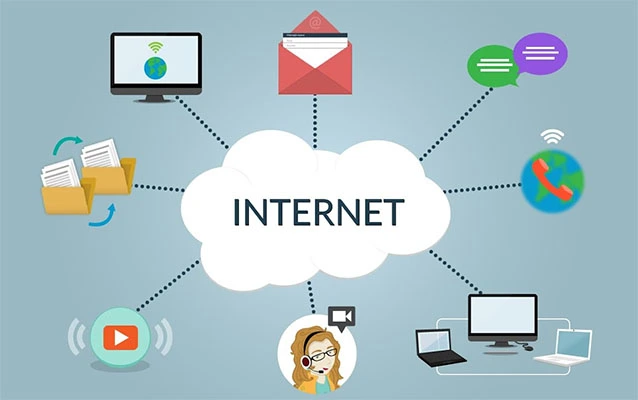
6. Local Broadband Providers: The Monopoly at Your Address
Internet service is marketed like a competitive wonderland. Commercials show lightning-fast downloads, smiling families, and routers glowing like sacred objects. Then you type in your address and discover your real options are: one cable company, one slow DSL line, maybe fixed wireless if the wind is feeling generous, and a satellite plan that treats latency like a personality trait.
Broadband monopolies are often local monopolies. Nationally, there may be many internet service providers. At your exact address, there may be only one realistic high-speed option. This matters because broadband is no longer a luxury. It is school, work, health care, banking, entertainment, job applications, government services, and the place where your printer chooses to betray you.
Local broadband market power comes from infrastructure economics. Building networks is expensive. Running fiber, cable, poles, trenches, permits, and neighborhood equipment requires large upfront investment. Once one company dominates an area, competitors may find it difficult to justify building a duplicate network. The result can be high prices, data caps, confusing promotional rates, equipment rental fees, and customer service that makes people whisper “representative” into the phone like a spell.
To be fair, broadband competition has improved in some places. Fiber expansion, municipal networks, fixed wireless, and satellite broadband have created alternatives in many markets. But millions of Americans still face limited choices, especially in rural areas, low-income neighborhoods, apartment buildings, and communities where infrastructure investment has lagged.
Why normal people miss it
People compare internet companies nationally, not locally. A city may appear competitive on paper while a specific apartment building has one practical provider. The monopoly is not in the country. It is at your address.
Why Hidden Monopolies Keep Winning
Hidden monopolies thrive because they control bottlenecks. A bottleneck is the narrow point everyone must pass through: the ticketing contract, the domain registry, the facility phone provider, the broadband wire, the tax software workflow, the eyewear supply chain. Once a company controls the bottleneck, it does not need to win every visible battle. It can collect value from the path itself.
They also benefit from complexity. The harder a market is to understand, the easier it is to hide market power. People understand a store shelf. They do not understand a registry agreement. They understand a ticket price. They do not understand venue exclusivity. They understand glasses. They do not understand vertical integration across frames, lenses, retail, and insurance networks.
Another advantage is consumer exhaustion. Nobody wants to spend three weekends researching whether their concert fee reflects anticompetitive conduct. Nobody wants to read a 90-page regulatory order before filing taxes. Nobody wants to become a broadband policy expert just to stream a movie without buffering. Hidden monopolies count on this fatigue. The modern consumer is busy, and complexity is a moat.
How Consumers Can Fight Back Without Becoming Antitrust Lawyers
You do not need a law degree to reduce the power of hidden monopolies in your own life. Start by identifying the bottleneck. Are you choosing between real competitors, or are several options connected behind the scenes? Are you paying the visible seller, or is a hidden infrastructure owner also taking a cut? Is the vendor chosen by you, or by a venue, prison, landlord, employer, school, or government agency?
For eyewear, compare independent shops, online sellers, warehouse clubs, and local opticians. Ask for your prescription and pupillary distance so you can shop around. For broadband, check municipal options, fiber availability, fixed wireless, and new providers at your exact address. For taxes, look at IRS Free File options and nonprofit filing assistance before assuming paid software is required. For domains, understand that registrars compete on service and markup, but .com registry pricing is a deeper layer. For tickets, compare official presales, venue box offices, fan-to-fan exchanges, and total checkout price before emotionally committing to seats.
The bigger solutions are policy solutions: stronger antitrust enforcement, simpler tax filing, open access broadband, transparent fees, fair prison communication rates, and contract rules that prevent gatekeepers from locking up entire markets. But individual awareness still matters. Hidden monopolies become less hidden when normal people learn where the tollbooths are.
Real-Life Experiences: What Hidden Monopolies Feel Like in Everyday Life
The weirdest thing about hidden monopolies is that they rarely feel dramatic in the moment. They feel like ordinary irritation. You are not thinking, “I am trapped in a concentrated market structure.” You are thinking, “Why did these tickets become 40 percent more expensive at checkout?” or “Why do my glasses cost more than my old laptop?” That is how monopoly power slips into daily life: not as a thunderstorm, but as a thousand tiny leaks in your wallet.
Think about buying concert tickets. The emotional journey starts with joy. Your favorite artist announces a tour. You text your friends. Everyone is excited. Then the sale begins and the website places you in a digital waiting room, which is basically purgatory with a progress bar. When you finally reach checkout, the ticket price has transformed. Fees appear late in the process, and by then you are already invested. You are not just buying admission anymore. You are paying a frustration ransom because the alternative is missing the show.
Eyeglasses create a different kind of experience. You walk into a store thinking this is a medical purchase. You leave wondering when vision became luxury jewelry. The frames have designer names, the lenses have coatings, the insurance has rules, and the final price feels suspiciously unrelated to the amount of plastic and metal involved. Later, you discover that many famous brands and retailers are connected through the same giant corporate ecosystem. Suddenly the wall of choices looks less like a marketplace and more like a family reunion.
Broadband is even more personal because it enters the home. A slow or overpriced internet plan affects homework, remote work, video calls, gaming, streaming, small businesses, and basic communication. The most annoying part is the address lottery. Your friend three blocks away may have fiber, while your building has one provider and a router that seems emotionally opposed to walls. Calling customer service does not feel like bargaining with a company that fears losing you. It feels like asking a landlord for permission to breathe faster.
Tax filing adds another flavor of helplessness. The government requires you to file correctly, but the process can be confusing enough that millions of people turn to paid software. The software may be helpful, but the experience raises a fair question: why is fulfilling a civic obligation so complicated that private companies can build empires around guiding us through it? That is not just a consumer inconvenience. It is a design choice with winners and losers.
Even domain names show how hidden monopolies affect creators and small businesses. A blogger, local restaurant, independent journalist, or small online shop may think a domain renewal is just another tiny web expense. But behind that renewal sits a registry structure most people never see. When the base price rises, the effect spreads widely because .com remains the default address for credibility. Nobody wants to explain to customers that they chose a strange domain extension because the normal one got too expensive.
The lesson from all these experiences is simple: hidden monopolies do not always remove choice completely. Sometimes they make the best choice expensive, the cheap choice inconvenient, and the alternative choice unrealistic. They narrow the road, add tolls, and then advertise how smooth the pavement is. Once you notice the pattern, you start seeing it everywhere.
Conclusion: The Monopoly Is Usually in the Middle
The most powerful monopolies are not always the brands shouting the loudest. They are often the companies controlling the middle layer: the registry behind domains, the ticketing system behind venues, the provider inside a correctional facility, the cable line into a neighborhood, the software layer between taxpayers and the IRS, or the eyewear giant behind a dozen stylish logos.
That is why normal people have no clue these monopolies exist. The modern economy is built from layers, and consumers usually see only the top one. But once you learn to look for bottlenecks, exclusive contracts, vertical integration, switching costs, and markets where the buyer is not the chooser, the picture changes. Suddenly, the annoying fee is not just an annoying fee. It is a clue.
Hidden monopolies matter because they shape prices, quality, innovation, and fairness in ordinary life. They decide whether a family can afford a prison call, whether a small business can maintain its web address, whether a fan can attend a concert, whether a student can get reliable internet, whether a taxpayer can file without paying, and whether a pair of glasses feels like health care or a luxury purchase.
The good news is that awareness is contagious. Once people understand where market power hides, they can ask better questions, support better policy, and make smarter buying decisions. The bad news is that Aunt Linda still owns Boardwalk, and she is absolutely charging you rent.