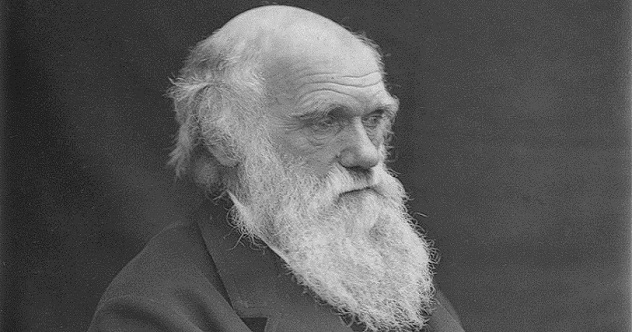

Charles Darwin is usually pictured as a solemn Victorian gentleman with a magnificent beard, a serious expression, and several heavy thoughts about finches. That image is accurate, but it leaves out the wonderfully peculiar details of his life. Darwin was not simply the quiet author of On the Origin of Species. He was also a seasick traveler, an enthusiastic beetle collector, an adventurous eater, a reluctant medical student, and a man who approached marriage with something resembling a business risk assessment.
Behind the famous theory of evolution by natural selection was a curious human being who made mistakes, changed careers, worried constantly, and performed surprisingly imaginative experiments. He studied everything from orchids and barnacles to facial expressions and earthworms. He also once used his mouth as temporary beetle storage, proving that even scientific legends occasionally make decisions that would concern a modern safety officer.
These strange and interesting facts about Charles Darwin reveal how observation, patience, uncertainty, and a healthy amount of eccentricity shaped one of history’s most influential naturalists.
1. Charles Darwin Shared a Birthday With Abraham Lincoln
Charles Robert Darwin was born in Shrewsbury, England, on February 12, 1809. On that exact day, across the Atlantic, Abraham Lincoln was born in Kentucky. The two men grew up in dramatically different surroundings and never met, yet each would profoundly alter the way later generations understood humanity.
Lincoln reshaped American history through his leadership during the Civil War and his role in ending legal slavery in the United States. Darwin transformed biology by explaining how populations change over generations through natural selection. One challenged a political and moral order; the other challenged long-established assumptions about the natural world.
The shared birthday is an extraordinary historical coincidence. Apparently, February 12, 1809, was an unusually productive day for world-changing babies.
2. He Was Supposed to Become a Doctor, but Surgery Horrified Him
Darwin came from a family with strong medical connections. His father, Robert Darwin, was a successful physician, while his grandfather Erasmus Darwin had also been a respected doctor, natural philosopher, and early writer on evolutionary ideas. The expected career path seemed obvious: young Charles would study medicine and join the family profession.
He enrolled at the University of Edinburgh in 1825, but the plan quickly began to wobble. Darwin found many lectures dull and disliked the sight of blood. Surgery was especially disturbing because effective modern anesthesia was not yet available. Operations could be fast, brutal, and terrifying for both patient and observer.
Instead of concentrating on medicine, Darwin became increasingly absorbed in natural history. He attended scientific societies, investigated marine organisms, collected specimens, and learned taxidermy. Eventually, he abandoned medical training entirely.
His Backup Career Was Even More Surprising
After medicine failed, Darwin went to Cambridge University with the intention of becoming an Anglican clergyman. At the time, a country parish could offer a gentleman enough stability and spare time to study nature. The future author whose work would ignite fierce religious debate was therefore once preparing for a life in the church.
3. His Famous Voyage Was His First and Only Trip Around the World
Darwin boarded HMS Beagle in December 1831 when he was 22 years old. The expedition was expected to last about two years but continued for nearly five. The ship surveyed coastlines, especially around South America, while Darwin collected plants, animals, fossils, and geological observations.
Although he is commonly called the ship’s naturalist, his position was unusual. He was a self-funded gentleman passenger who could conduct scientific work while also providing educated companionship for Captain Robert FitzRoy. Darwin’s family paid much of his personal expense, so this was not exactly a comfortable salaried research fellowship.
Life aboard the small, crowded ship was difficult. Darwin suffered badly from seasickness and often preferred long expeditions on land. Nevertheless, the journey took him through South America, the Galápagos Islands, Tahiti, New Zealand, Australia, and parts of Africa.
After returning to England in 1836, Darwin never left Britain again. The man whose ideas traveled around the planet completed his own global traveling before his 28th birthday.
4. He Joined a Club Dedicated to Eating Unusual Animals
Darwin did not merely observe wildlife. On occasion, he ate it.
While studying at Cambridge, he participated in a dining group commonly known as the Glutton Club. Its members sought out animals rarely found on an ordinary dinner table. Accounts associate the club with meals involving birds such as hawk and bittern. A particularly unpleasant brown owl reportedly reduced the members’ enthusiasm for further culinary exploration.
Darwin continued sampling unusual meat during the voyage of the Beagle. His travel writings mention animals including armadillo and puma. He compared puma meat to veal, which is useful information for the extremely small number of people who have ever wondered about that comparison.
One especially awkward incident involved a smaller species of rhea, a large flightless South American bird. Darwin had been searching for the animal as a scientific specimen. After part of one was served for dinner, he realized what the group had eaten. The remaining pieces were preserved and sent for study.
It was field science with a side order of accidental evidence consumption.
5. He Once Put a Beetle in His Mouth and Immediately Regretted It
As a young man, Darwin developed an intense passion for collecting beetles. The activity helped sharpen his powers of observation and brought him into contact with naturalists who influenced his career. It also produced one of the funniest episodes in scientific biography.
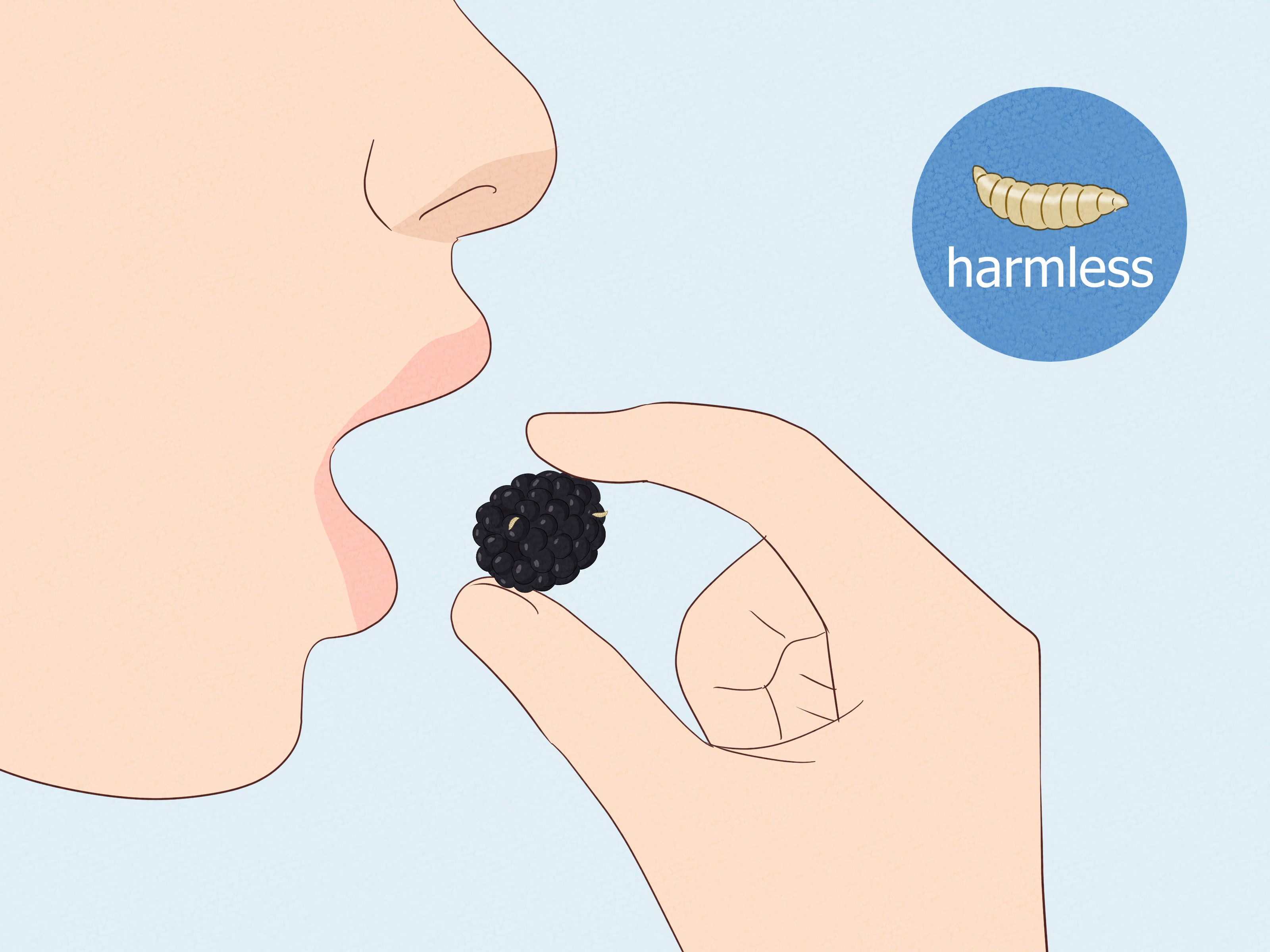
Darwin recalled finding two interesting beetles and grabbing one in each hand. He then spotted a third specimen that he did not want to lose. With both hands occupied, he placed one beetle in his mouth to free a hand.
The beetle responded by releasing an intensely acrid defensive fluid. Darwin spat it out, and in the confusion he also lost the third beetle. His attempt to collect three specimens therefore ended with fewer beetles, an irritated mouth, and an excellent story.
The precise species involved is not certain, so confident claims that it was a particular kind of bombardier beetle should be treated cautiously. What is certain is Darwin’s own description of the unpleasant fluid and his failed collecting maneuver.
The lesson is timeless: bring specimen containers, wear sensible field gear, and do not use your mouth as an extra pocket.
6. He Made a Pros-and-Cons List Before Getting Married
Darwin approached marriage with the same analytical instinct he applied to natural history. In 1838, he wrote notes comparing the advantages of marrying with the advantages of remaining single.
His reasons to marry included companionship, children, a home, music, conversation, and someone who would care about him in old age. In one famously unromantic but oddly affectionate phrase, he wrote that a wife would be “better than a dog anyhow.”
The disadvantages included responsibility, reduced freedom, visits to relatives, less time for work, and less money for books. Modern readers may recognize the basic structure as a spreadsheet created before spreadsheets had the decency to exist.
Darwin ultimately proposed to his cousin Emma Wedgwood. They married in January 1839 and had ten children, seven of whom survived into adulthood. Emma became an essential partner in his life, managing the household, raising their family, reading his manuscripts, and supporting him through long periods of illness.
Fortunately, human relationships are not always decided by whichever column contains the most entries.
7. He Experienced a Mysterious Illness for Decades
For much of his adult life, Darwin experienced recurring health problems. His symptoms included nausea, vomiting, abdominal discomfort, headaches, fatigue, skin conditions, trembling, and heart palpitations. At times, illness sharply limited his social activities and ability to work.
Darwin consulted numerous physicians and tried a variety of treatments, but no definitive diagnosis was established during his lifetime. Later researchers have proposed many explanations, including Chagas disease, Crohn’s disease, migraine, panic disorder, allergic illness, mitochondrial disease, and combinations of physical and psychological factors.
None of these retrospective diagnoses has achieved universal acceptance. The surviving records are detailed, but they cannot replace modern examinations and testing.
Darwin adapted by following a carefully organized daily routine at Down House, his family home in Kent. He worked in short periods, rested frequently, took regular walks, and relied heavily on Emma and their children. Despite chronic illness, he produced a remarkable body of scientific work covering evolution, geology, botany, animal behavior, human expression, domestication, and soil formation.
His career is a powerful reminder that productivity does not always look energetic. Sometimes it looks like disciplined work completed between necessary rests.
8. He Waited More Than 20 Years to Fully Publish His Evolutionary Theory
Darwin began privately developing his ideas about species change soon after returning from the Beagle voyage. By 1838, he had formulated the central mechanism of natural selection after considering how organisms produce more offspring than can survive and how inherited variations affect reproductive success.
He prepared an outline in 1842 and a much longer essay in 1844, yet he did not immediately publish a full account. The delay had several causes. Darwin wanted to assemble overwhelming evidence, continue experiments, study domesticated organisms, answer objections, and understand complicated subjects such as geographic distribution.
He also knew that his theory would be controversial. It challenged the belief that species had been separately created in their present forms.
Then Alfred Russel Wallace Entered the Story
In 1858, naturalist Alfred Russel Wallace sent Darwin an essay outlining a remarkably similar mechanism of evolution by natural selection. Wallace had developed the idea independently while conducting research in the Malay Archipelago.
The situation was handled through a joint presentation of writings by Darwin and Wallace. Darwin then worked rapidly to prepare On the Origin of Species, published in 1859. Wallace’s letter did not create Darwin’s theory, but it forced him to stop polishing the scientific silverware and finally invite the public to dinner.
9. Darwin Did Not Invent the Phrase “Survival of the Fittest”
Few phrases are more closely associated with Charles Darwin than “survival of the fittest.” However, Darwin did not coin it.
The expression was introduced by English philosopher Herbert Spencer after reading Darwin’s work. Spencer used it in his 1864 book Principles of Biology. Darwin later adopted the wording in the fifth edition of On the Origin of Species, published in 1869, because he thought it could sometimes clarify natural selection.
The phrase is also frequently misunderstood. “Fittest” does not necessarily mean strongest, fastest, largest, or most aggressive. In evolutionary biology, fitness concerns reproductive success in a particular environment. A small, quiet organism that leaves many surviving offspring may be more evolutionarily fit than a powerful animal that leaves none.
Darwin’s actual explanation emphasized variation, inheritance, competition, environmental conditions, and differential reproduction. That is less convenient for a motivational poster, but considerably better biology.
10. He Played Music to Earthworms in the Name of Science
Darwin’s final scientific book focused not on apes, dinosaurs, or dramatic predators, but on earthworms. Published in 1881, The Formation of Vegetable Mould Through the Action of Worms examined how worms gradually transform soil and reshape landscapes.
His experiments were wonderfully inventive. Darwin tested whether earthworms could hear by exposing them to whistles, shouting, musical instruments, and loud piano notes. The worms showed little response to sounds traveling through the air. However, when containers holding worms were placed on a piano, low notes produced vibrations that caused them to retreat into their burrows.
Darwin concluded that worms were highly sensitive to vibrations transmitted through solid objects, even though they did not respond to airborne sound in the same way humans do.
He also studied their food preferences, behavior, sensitivity to light, and ability to pull leaves into burrows. His work demonstrated that the cumulative activity of small organisms could have enormous geological effects over long periods.
It was a perfect ending to Darwin’s career. The scientist who explained major biological change through countless small differences finished by showing how humble worms can gradually move the earth beneath our feet.
What These Charles Darwin Facts Reveal
The strangest details of Darwin’s life are not merely entertaining trivia. They reveal the personality behind his scientific achievements. He was intensely curious but not automatically confident. He changed career paths, suffered embarrassing failures, delayed publication, depended on collaborators, and repeatedly revised his conclusions.
Darwin’s greatest strength was not that he always knew the answer. It was that he kept observing. Beetles, pigeons, orchids, barnacles, fossils, children, climbing plants, and earthworms all became pieces of a much larger investigation into how living things change.
His life also challenges the myth that important discoveries arrive in a single flash of inspiration. Natural selection grew from years of fieldwork, reading, correspondence, specimen analysis, breeding experiments, and careful argument. The famous theory was built gradually, much like the soil Darwin’s earthworms patiently created.
An Experiential Perspective: Spending a Day Like Darwin
Recreating Darwin’s life does not require boarding a cramped nineteenth-century ship, eating an owl, or placing an irritated insect between your lips. A safer and more useful experience begins with a notebook, a nearby park, and permission to move slowly.
Start With Observation, Not Identification
Walk through a garden, woodland trail, beach, or even an overgrown city lot. For the first 20 minutes, resist the urge to identify every organism with an app. Instead, write down visible differences. Are some leaves broader than others on plants that appear related? Do birds with different beak shapes feed in different places? Which insects remain in sunlight, and which immediately search for shade?
This exercise feels surprisingly difficult. Modern life trains us to label things quickly and move on. Darwin’s method asks a different question: what is actually happening here?
After a few minutes, an ordinary patch of ground becomes crowded with relationships. Ants follow routes that appear invisible until you kneel down. Some flowers attract several kinds of pollinators, while neighboring blossoms receive almost no attention. Fallen leaves display different stages of decomposition. The environment stops looking like scenery and begins looking like a network.
Keep a Field Notebook With Questions
Darwin filled notebooks with observations, sketches, possibilities, and doubts. Try recording questions without forcing immediate answers. Why is one side of a tree covered with moss? Why are certain leaves damaged while others remain untouched? Why do birds return repeatedly to one shrub?
The experience teaches intellectual patience. A good question can remain useful even when its first explanation turns out to be wrong. Darwin revised his ideas repeatedly because new evidence mattered more than defending his first guess.
Try a Harmless Earthworm Observation
After rain, look for earthworm castings or leaves partly drawn into small burrows. Avoid disturbing the animals unnecessarily. Notice how tiny movements, repeated over weeks and years, can alter soil structure. A single worm seems insignificant; a population working across generations becomes a geological force.
This is perhaps the most powerful Darwin-related experience. Evolution by natural selection can be difficult to imagine because it operates over vast spans of time. Earthworm activity offers a visible analogy: small actions accumulate. What looks negligible today may become transformative when repeated thousands or millions of times.
End the Day by Comparing Notes
Review your observations and separate what you saw from what you assumed. “A bird visited the red flowers six times” is an observation. “The bird prefers red” is a hypothesis that requires further testing. That distinction lies at the heart of careful science.
A day spent this way changes how familiar places feel. You may not discover a new theory of life, but you will experience the habit that made Darwin extraordinary: sustained attention. The natural world becomes less like a collection of fixed objects and more like an active history filled with variation, competition, cooperation, inheritance, and change.
That is the most valuable way to follow Darwin’s trailnot by copying his strangest behavior, but by practicing his curiosity. Keep the notebook. Observe the worms. Leave the beetles out of your mouth.
SEO Metadata