Jolene in London: 7 Simple, Budget Ideas to Steal from the Year’s Most Rustic Bakery

Some beautiful interiors enter a room wearing designer labels, custom millwork, and a chandelier that costs roughly the same as a dependable used car. Jolene takes a different route. The beloved London bakery and restaurant proves that a memorable space can emerge from humble materials, practical furniture, secondhand discoveries, and a willingness to let walls look a little wonky.
Located opposite Newington Green in North London, the original Jolene combines a daytime bakery with a restaurant serving an ever-changing menu. Bread and pastries are central to the operation, with flour milled in-house and baked into naturally characterful loaves, cakes, and savory goods. The same respect for simple ingredients appears in the interior: textured plaster, painted block walls, zinc surfaces, wooden chairs, linen, ceramic jugs, candlelight, and handwritten blackboards.
The design was not created by throwing an unlimited budget at an architect and saying, “Make it rustic, but expensive.” After the kitchen was equipped, the founders reportedly had about £30,000 left for the rest of the space. They turned that limitation into a design philosophy, sourcing vintage items, customizing inexpensive materials, and allowing utility to become decoration. The result earned Eater London’s 2018 design award and became a widely admired example of budget-conscious restaurant design.
Fortunately, you do not need to open a bakery, import French grain, or learn how to shape a flawless palmier to borrow Jolene’s best ideas. These seven affordable rustic design lessons can work in a kitchen, breakfast nook, dining room, café, studio, or any space currently suffering from a severe case of beige-box boredom.
1. Create a Better Interior Instead of Chasing a Perfect Shell
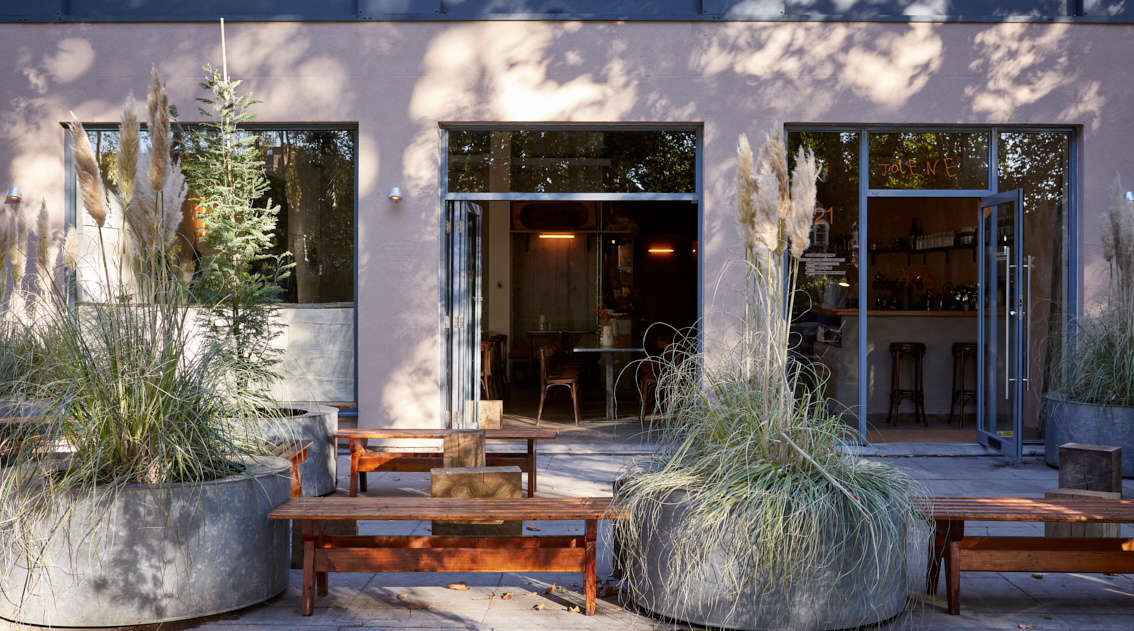
Jolene occupies the ground floor of a relatively ordinary residential building. Rather than disguising the site as a quaint countryside bakery, the designers embraced the contrast between its unassuming exterior and warm interior. That surprise is part of the experience: outside, practical city building; inside, bread, candlelight, textured walls, and the sudden urge to order something involving butter.
This is encouraging news for anyone decorating a rental, builder-grade kitchen, awkward storefront, or dining room with the architectural charisma of a waiting room. You do not need exposed beams, ancient brick, or a view of a Tuscan hillside. Concentrate your money and energy where people actually spend time.
Try the idea on a budget
Choose one interior focal point and make it noticeably inviting. It could be a breakfast table beneath a warm pendant, a bakery-style counter made from reclaimed boards, or a dining wall finished with textured paint. Leave less important areas simple. A modest entry can even make the transformation feel more dramatic once guests step farther inside.
The lesson is not to neglect curb appeal. It is to stop treating an imperfect shell as a design emergency. A room often becomes memorable because of atmosphere, proportion, texture, and hospitalitynot because the building arrived with photogenic bones.
2. Begin With Less and Let the Room Grow Slowly
One of Jolene’s smartest principles is starting with the essentials and adding only when a genuine need appears. The approach is influenced by Shaker design, which favors useful, well-made objects over decorative clutter. At Jolene, aprons hang from peg rails, daily dishes appear on a blackboard, and vessels earn their space by holding water, flowers, utensils, bread, or wine.
This is especially useful when decorating on a budget. Buying an entire “rustic bakery collection” in one afternoon usually produces a room that feels less like a neighborhood bakery and more like aisle seven of a home décor store. Slow decorating gives you time to find pieces with better proportions, lower prices, and actual personality.
Use an essentials-first shopping list
Start with seating, a sturdy table, useful lighting, and practical storage. Live with those pieces for a few weeks. Notice where coats pile up, where the room feels dark, and which surfaces collect clutter. Add a peg rail, shelf, lamp, or bench only when it solves a specific problem.
Shaker-style peg rails are particularly effective because they use vertical wall space without adding bulky cabinetry. They can hold aprons, baskets, towels, cutting boards, tote bags, or even lightweight folding chairs. Painted to match the wall, a simple wooden rail nearly disappears while quietly doing the work of several hooks.
3. Add Character With Texture Rather Than Expensive Decoration
Jolene’s walls are a major part of its rustic appeal. Instead of covering every surface with art or elaborate paneling, the designers used uneven mineral finishes, painted masonry, plaster, and a rough “mud wall” treatment incorporating debris and sawdust from the building process. The surfaces catch light differently throughout the day, giving the room depth without demanding dozens of decorative accessories.
At home, limewash or a limewash-style paint can create a similarly cloudy, aged appearance. Its visible brush movement makes flat drywall feel softer and more architectural. It is particularly effective in neutral shades such as warm white, mushroom, clay, oatmeal, or pale gray.
How to get the look without rebuilding the wall
Test the finish on a sample board before committing to a whole room. Apply it with a wide brush using overlapping, multidirectional strokes. The wet color may look darker and more dramatic than the final result, so allow the sample to dry fully before deciding whether your room has become charmingly European or accidentally resembles a thundercloud.
Pre-mixed products are generally easier for beginners than attempting to reproduce Jolene’s custom hydrolime and plaster formula. Preparation also matters because some mineral finishes require a compatible primer. Architectural Digest notes that limewash is valued precisely for the movement, richness, and depth created by freehand application, while The Spruce recommends checking the surface and desired opacity before beginning.
For renters, a less permanent alternative is to sponge two close shades of matte paint over a removable panel or large canvas. You will still get visual movement, and your security deposit will remain considerably less nervous.
4. Turn Everyday Tools Into the Decoration
Jolene does not separate function and beauty into different departments. A blackboard communicates the daily menu while becoming graphic wall art. Pegs hold aprons and bags. Open shelves display ceramics and ingredients. Wooden pastry tongs, glassware, branches, jugs, and serving pieces contribute to the room because they are visible, useful, and chosen with care.
You can apply the same idea by displaying ordinary kitchen objects with strong shapes and natural materials. Lean two or three wooden cutting boards against a backsplash. Store wooden spoons in a handmade-looking crock. Arrange drinking glasses on an open shelf. Hang a linen apron from a peg instead of hiding it in a drawer where it can mingle with seventeen mystery dish towels.
Make a low-cost bakery blackboard
Paint a smooth piece of plywood with chalkboard paint, frame it with narrow wood trim, and hang it near the kitchen or dining table. Use it for a weekly menu, grocery reminders, dinner-party dishes, or a cheerful announcement that the chef is accepting compliments.
Keep the lettering relaxed. Perfect typography would miss the point. A handwritten board feels temporary and alive, especially when its content changes regularly. To avoid clutter, combine it with only a few functional objects nearby: perhaps a peg rail below, one ceramic jug, and a small branch arrangement.
The goal is not to display every utensil you own. Edit visible items to a restrained palette of wood, clear glass, metal, linen, and pottery. Utility can be decorative, but a tower of mismatched plastic containers is still a tower of mismatched plastic containers.
5. Customize Cheap Materials Instead of Buying “Custom” Products
Some of Jolene’s most memorable details were made through improvisation. Vintage linen was used for simple curtains, hung from a eucalyptus branch fitted into wooden brackets. Embroidery added personality without requiring costly window hardware. Reclaimed wood was transformed into shelving, and rejected fashion-industry material became banquette upholstery.
This strategy works because customization does not always mean commissioning a craftsperson to fabricate something from scratch. It can mean altering an inexpensive or secondhand item until it fits your room better.
Affordable projects worth borrowing
Turn an old linen tablecloth into café curtains. Use clip rings, a tension rod, or a sanded wooden dowel for installation. Add a narrow embroidered line, contrasting hem, or simple stitched word if you want a handmade detail. House Beautiful notes that café curtains preserve natural light while providing privacy, and leftover fabric can be used for an easy do-it-yourself version.
Refresh an inexpensive bench with a cushion made from upholstery remnants. Refinish a thrifted shelf rather than buying a matching storage system. Attach wooden pegs beneath a basic board to create a combined shelf and hanging rail. Replace standard cabinet knobs with mismatched ceramic or aged-metal hardware collected gradually.
The secret is restraint. Choose one handmade gesture per area. A linen curtain looks thoughtful; linen curtains, hand-painted stools, decoupaged cabinets, twelve stenciled signs, and a macramé bread hammock may cause the room to request a brief vacation.
6. Pair Rustic Warmth With Industrial Structure
Jolene avoids becoming overly quaint by balancing rustic materials with industrial ones. Wooden bentwood-style chairs sit beside zinc-topped tables. Rough walls meet linear strip lighting. Vintage linen softens aluminum-framed windows. Exposed blockwork and metal surfaces are warmed by candles, pottery, wood, and seasonal branches.
This tension gives the room energy. An entirely rustic space can drift toward theme-restaurant territory, while an entirely industrial room may feel cold enough to store laboratory equipment. Combining the two creates a useful middle ground: practical but welcoming, sturdy but not severe.
Build the contrast with inexpensive pieces
Pair a secondhand wood table with metal café chairs, or place wooden chairs around a simple stainless-steel worktable. Install an industrial-style wall light above a rough wood shelf. Set handmade pottery against painted concrete block. Add a linen runner to a metal table or a galvanized tray to a wooden counter.
Better Homes & Gardens recommends introducing black metal and industrial finishes in small doses when combining farmhouse warmth with utilitarian design. A limited neutral palette allows wood, masonry, galvanized metal, zinc-like finishes, and textiles to coexist without competing for attention.
Lighting completes the balance. Use warm, dimmable bulbs in simple globe, strip, or schoolhouse-style fixtures. Add candles only where they can be used safely, away from curtains and dried plants. The room should feel softly illuminated, not prepared for an emergency landing.
7. Mix Materials, but Keep the Colors Quiet
Jolene combines an impressive list of materials: timber, zinc, plaster, masonry, linen, wool felt, clear glass, pottery, aluminum, and greenery. That could easily become chaotic. The reason it works is that the colors remain controlled. Soft whites, muted peach, gray metal, natural wood, dusty red, and earthy plant tones create a calm backdrop.
A neutral palette does not have to mean choosing one shade of beige and applying it to everything within reach. The interest comes from contrast in finish. Smooth glass reflects light beside chalky walls. Cool metal sharpens warm wood. Rumpled linen softens hard masonry. Matte pottery sits comfortably near polished tabletops.
Use a simple material formula
Choose one warm natural material, one cooler utilitarian material, one soft textile, and one handmade accent. For example:
- Oak or pine for warmth
- Galvanized steel or stainless steel for structure
- Washed linen or wool for softness
- Glazed pottery or a hand-painted board for personality
Repeat each material at least once so the choices feel connected. A metal table can relate to a metal pendant. Wooden chairs can echo a wood shelf. Linen curtains can connect with napkins or a bench cushion.
Finish with one restrained natural arrangement. Jolene frequently uses branches, dried flowers, or seasonal foliage rather than formal bouquets. Air-dried flowers are economical, long-lasting, and easy to reuse, while a single branch can create height without occupying half the table.
A Realistic Weekend Experience: Bringing the Jolene Mood Home
Imagine beginning on Friday evening with a kitchen or dining nook that is perfectly functional but emotionally comparable to a printer manual. The cabinets are fine. The table is fine. The walls are extremely fine. Nothing is wrong, yet nobody feels tempted to linger over coffee.
The first step is not shopping. It is editing. Clear the table, remove decorative objects that no longer earn their space, and gather everyday items that are already attractive: a wood cutting board, a glass bottle, a linen towel, a ceramic bowl, and perhaps a slightly battered tray. Once the excess disappears, the room immediately feels calmer. You may also discover a countertop beneath the mail, which is a thrilling bonus.
On Saturday morning, tackle one textural change. Paint a large sample panel with warm limewash-style paint rather than committing to every wall. As it dries, the visible brush marks begin to soften. The surface looks less manufactured and more like it has acquired a history, despite having been purchased at the hardware store approximately three hours earlier.
Next comes the treasure-hunting portion. Visit a thrift store, architectural salvage shop, flea market, or neighborhood resale listing. Do not search only for “rustic bakery furniture,” a phrase likely to add an unnecessary zero to the price. Look for simple shapes: a bentwood-style chair, an old stool, a narrow bench, a ceramic pitcher, or a solid piece of wood that could become a shelf.
Inspect furniture carefully. Sit on chairs, test joints, check for odors, and avoid pieces requiring repairs beyond your tools or patience. One good chair with a worn finish contributes more character than four flimsy chairs pretending to be antiques.
Saturday afternoon is for utility. Install a short peg rail and hang only the items used regularly. Add a plywood blackboard with the week’s meals written in chalk. Suddenly, meal planning looks less like household administration and more like the menu at a tiny neighborhood restaurant.
On Sunday, soften the space. Turn a leftover linen panel into a café curtain, place a cushion on the bench, and add one tall branch or loose bundle of dried foliage to a sturdy vessel. Set clear glasses and a ceramic water jug on the table. In the evening, switch off the harsh ceiling light and use a warm lamp or dimmed pendant instead.
The most noticeable change is not any individual object. It is the way the room begins to encourage slower behavior. Coffee lasts longer. Bread is served on a board instead of remaining in its plastic bag. Dinner feels slightly more intentional, even when dinner is scrambled eggs. Guests notice the atmosphere without being able to identify a single expensive centerpiecemainly because there is not one.
After living with the arrangement for a week, edit again. Remove anything that constantly needs repositioning. Add nothing merely because an empty corner exists. Jolene’s deeper lesson is that rustic design is not a collection of distressed objects. It is the visible result of useful materials, patient choices, and details that become better through handling.
Why Jolene’s Budget Design Still Feels Special
Jolene’s interior succeeds because it does not confuse cost with character. Its atmosphere comes from the relationship between surfaces, objects, light, food, and people. Secondhand chairs feel intentional beside zinc. Rough walls make simple ceramics look sculptural. Linen softens the building’s industrial framework. Handwriting, branches, and candlelight keep the room from feeling overdesigned.
The most useful takeaway is not to reproduce every detail exactly. Your home does not require a Hungarian meat trough, hundreds of discontinued lightbulbs, or enough reclaimed timber to open a small lumberyard. Borrow the method instead: begin simply, use what you have, search patiently, favor utility, add texture, and let different materials share a restrained palette.
Done well, the result will feel collected rather than purchased. It may also make an ordinary piece of toast seem surprisingly sophisticated, which is perhaps the highest achievement available to interior design.