
Before overnight shipping became so ordinary that people now complain when a package takes longer than a pizza, getting mail across America was a test of patience. Trains were fast for their day, but the country was huge, the distances were brutal, and “coast to coast” was less a delivery promise than a national endurance event. Then aviation arrived, wobbling onto the scene with canvas wings, loud engines, and the confidence of a teenager who just got a driver’s license.
The history of transcontinental air mail service is not just a postal story. It is a story about how the United States learned to trust airplanes, organize long-distance air routes, guide pilots through darkness, and build the foundations of the modern airline industry. What began as an experiment in moving letters faster became a giant leap for transportation, commerce, and communication. In many ways, airmail was the dress rehearsal for modern American aviation.
How American Airmail Took Off
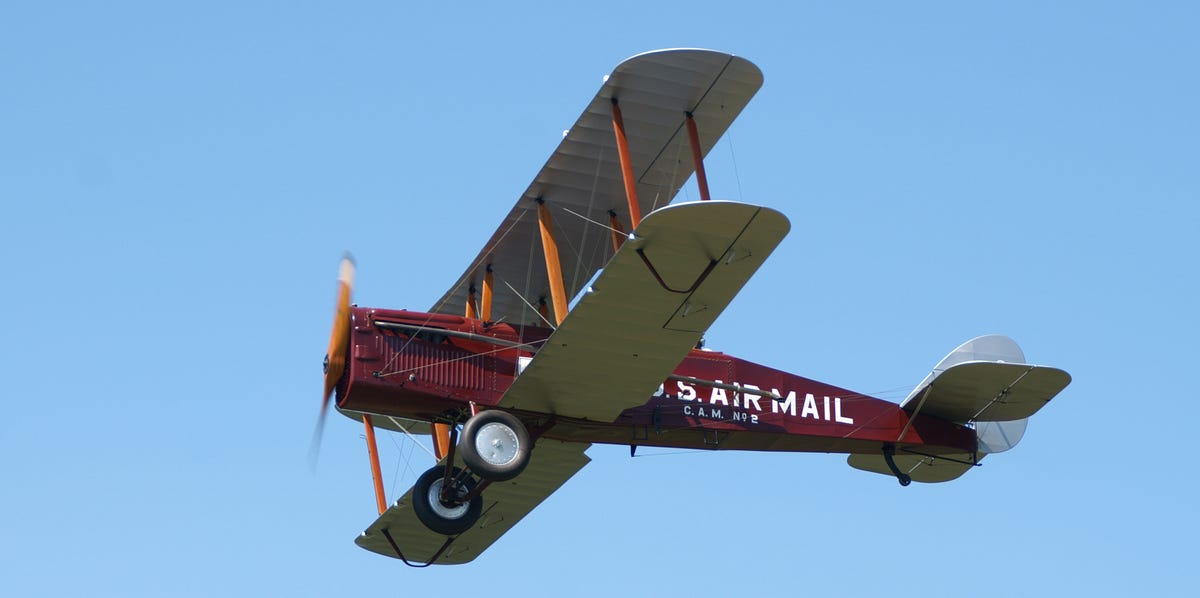
Scheduled U.S. airmail service officially began on May 15, 1918, on a route linking Washington, D.C., Philadelphia, and New York. At first, the operation was handled by Army pilots flying modified military aircraft. This was exciting, patriotic, and only slightly reassuring in the way that any brand-new technology is reassuring when the words “experimental” and “mail bag” are sharing the same sentence.
Those first flights were important because they proved that the federal government was serious about using aircraft for practical transportation. Within a few months, the Post Office Department took over the service with civilian pilots and mechanics. That shift mattered. It meant airmail was no longer just a military demonstration or a wartime stunt. It was becoming a civilian system with schedules, routes, standards, and a very specific mission: move the mail faster than the railroad could.
At first, the gains were modest. Flying a few hundred miles faster than trains was useful, but it was not yet revolutionary. The real prize was always bigger: a route that could connect the Atlantic and Pacific coasts. If the Post Office could make that work, aviation would stop being a novelty and start being infrastructure.
The Push Toward a Coast-to-Coast Route
In 1919, airmail routes expanded westward toward Chicago. By 1920, the Post Office had completed a transcontinental airmail route linking New York and San Francisco. That was the headline moment the nation had been waiting for. America now had a coast-to-coast air mail system. But there was a catch, and it was a big one: the trip was not yet fully airborne all the way through the night.
Early transcontinental service worked as a hybrid. Planes carried mail during daylight hours, and trains hauled it overnight. Even with that awkward handoff, the service was still faster than all-rail transportation. That sounds underwhelming until you remember what the aviation technology of the early 1920s actually looked like. Pilots were flying open-cockpit aircraft, navigating visually, dealing with unpredictable weather, and trying not to confuse “safe landing field” with “field that merely looks emotionally supportive from above.”
Still, the 1920 route was a turning point. It created a physical and administrative framework for national air transportation. Landing fields had to be established. Pilots had to be trained for long-distance operations. Schedules had to be coordinated across multiple segments. Maintenance had to become more systematic. The route did more than move mail; it forced the country to think like an aviation network.
Why the 1920 Milestone Matters
Some readers are surprised to learn that the “first transcontinental air mail service” and the “first regular day-and-night transcontinental air mail service” were not exactly the same milestone. The coast-to-coast route was completed in 1920, but regular all-air, day-and-night service came later. That distinction matters because it shows how aviation evolves in real life: not in one dramatic leap, but in stages. First you connect the map. Then you make it reliable. Then you make it practical. Then suddenly it is normal, and everyone forgets how miraculous it once seemed.
The Night-Flying Problem
If daylight-only flying was the limitation, then night flying was the obvious solution. Unfortunately, obvious solutions are often the rudest. Flying at night in the early 1920s was dangerous, disorienting, and far less romantic than vintage posters would have you believe. Pilots lacked modern cockpit instruments, radar, and dependable radio navigation. Their best tools were skill, nerve, and a willingness to stare into darkness over a country that had not yet been designed to help airplanes find their way.
One of the great legends of early airmail is the 1921 demonstration proving that night flying could make transcontinental service practical. Pilots relayed mail through difficult weather and darkness, and Jack Knight’s night leg became especially famous. His flight helped convince postal officials and the public that round-the-clock air mail was not a fantasy. It was hard, risky, and imperfect, but it could be done.
That proof of concept changed everything. Once the Post Office saw that night flying could cut delivery time dramatically, it began investing in the infrastructure needed to make it safer. This is where the story becomes even more impressive, because the solution was not just better pilots. It was a better system.
Beacons, Emergency Fields, and a Lit-Up Skyway
To support night operations, the Post Office and later federal aviation authorities developed a network of lighted beacons and emergency landing fields along the air route. Rotating beacons helped pilots follow the airway after dark. Auxiliary landing fields gave them places to set down in trouble. Radio stations and improved communications slowly added another layer of guidance.
By the mid-1920s, this system transformed the transcontinental route from a daring experiment into a dependable transportation corridor. The airway itself became an innovation. It was not just a line on a map; it was a built environment in the sky, stitched together by ground infrastructure. In modern terms, the beacons were like a glowing GPS made of steel towers, electricity, and federal determination.
Regular day-and-night transcontinental airmail service began in 1924. That change slashed coast-to-coast delivery times to roughly a day and a half. Compared with older methods, it felt like the country had discovered a cheat code.
The Human Cost of Early Airmail
It is impossible to tell the history of transcontinental air mail service honestly without acknowledging the danger. Early airmail pilots worked in one of the riskiest jobs in America. Weather forecasts were limited. Navigation aids were primitive. Engines failed. Landing fields could be rough, muddy, or poorly marked. Mountains, fog, snow, and darkness all had a vote, and none of them were polite.
That danger was not abstract. Many early pilots died on the job. Their work helped prove that aviation could serve the public, but the progress came at a cost. These pilots were not merely delivering letters. They were testing procedures, routes, aircraft, and survival itself. The airmail service advanced because they flew into uncertainty again and again until the system became safer for the people who came after them.
This is one reason airmail history still resonates. It reminds us that infrastructure does not appear by magic. Behind every “routine” service is usually a period when nothing was routine at all.
How Airmail Helped Build the Airline Industry
By the mid-1920s, the federal government had demonstrated that air mail could work. The next question was whether private companies could carry it. Congress answered with the Contract Air Mail Act of 1925, widely known as the Kelly Act. The law allowed the Post Office to contract mail routes to private operators. That decision became one of the most important policy moves in American aviation history.
Why? Because mail contracts gave early airlines revenue. Passenger traffic alone was not yet enough to sustain a national airline business. Mail provided the financial backbone. It paid companies to buy aircraft, hire pilots, build routes, and operate on a regular schedule. In other words, letters helped teach airlines how to become airlines.
Many major U.S. carriers trace part of their growth to these airmail contracts. The relationship between mail and commercial aviation was so strong that you could reasonably say the airline industry was raised, at least in part, by envelopes. That may sound funny, but it is historically accurate. Airmail did not just ride the rise of aviation. It financed and accelerated it.
The Air Commerce Act of 1926 added further structure by strengthening federal oversight of civil aviation. Together, these changes helped transform flight from a heroic gamble into a regulated industry. Routes became more dependable. Aircraft improved. Safety slowly advanced. The sky stopped being a frontier and started becoming a transportation system.
Transcontinental Airmail and the Making of Modern America
The transcontinental air mail network mattered for reasons beyond postal speed. It changed the national imagination. Before coast-to-coast airmail, distance still felt heavy. Communication moved at the pace of wheels and rails. Afterward, the country began to think differently about time, commerce, and reach. Business decisions could move faster. News could travel sooner. Remote places felt slightly less remote.
Airmail also pushed technical innovation. Better engines, stronger aircraft, improved navigation, marked airways, and organized weather support were not side effects. They were essential responses to the demands of the service. That is why historians often treat airmail as a bridge between the barnstorming era and the airline age. It provided the discipline, scheduling, route logic, and public purpose that aviation needed in order to grow up.
Even the setbacks became part of the larger story. Contract controversies in the early 1930s and the 1934 air mail crisis exposed weaknesses in the system, but they also pushed reforms that reshaped commercial aviation and government oversight. The industry that emerged was more mature, more structured, and better prepared for the passenger era that followed.
Why This History Still Matters Today
It is easy to look at early air mail and see nostalgia: old planes, leather helmets, dramatic photographs, maybe a commemorative stamp if you are feeling fancy. But the deeper lesson is about how national systems are built. The transcontinental airmail service showed that a transportation network needs more than vehicles. It needs policy, infrastructure, funding, trained people, maintenance, communications, and public trust.
That lesson still applies now, whether we are talking about aviation, shipping, broadband, or whatever futuristic system someone is currently pitching with suspicious confidence and excellent slide design. The success of airmail came from persistence. It improved through trial, failure, redesign, and investment. It succeeded because institutions kept solving the next problem rather than quitting after the first dramatic headline.
More than a century after the first scheduled airmail flights and more than a hundred years after the coast-to-coast route took shape, transcontinental air mail remains one of the great underappreciated stories in American history. It made the country smaller in the best possible way. It proved that speed could be organized. And it helped turn aviation from spectacle into service.
Conclusion
The history of transcontinental air mail service is really the story of America learning to move faster without falling apart. From the first scheduled airmail flights in 1918 to the coast-to-coast route of 1920, from the daring night-flying breakthroughs of 1921 to the regular day-and-night service of 1924, each step expanded the nation’s capacity to connect. Add in the Kelly Act of 1925, and the result was even bigger than better mail delivery: the rise of commercial aviation itself.
So yes, airmail history is about envelopes. But it is also about courage, engineering, policy, risk, and a country figuring out how to join its distant edges with something faster than steel rails. That is a pretty good legacy for a mailbag with wings.
Extended Section: The Experience of Airmail History Up Close
One of the most fascinating experiences of studying airmail history is realizing how physical it feels. Modern communication is often invisible. You tap a screen, hit send, and assume the universe will handle the rest. Airmail history does not let you get away with that illusion. It forces you to picture every mile. You start to imagine canvas-covered planes lifting off rough fields, pilots scanning railroad lines below, mechanics wrestling with engines, and postal workers timing every handoff like the whole country is leaning over their shoulders.
That is what makes this topic memorable: it is not only a timeline, but a sensory story. You can almost hear it. The engines were loud, the cockpits were open, the weather was not interested in being helpful, and the route itself was still a work in progress. Learning about transcontinental air mail gives you the strange experience of seeing the United States as early pilots saw it: not as one seamless nation, but as a chain of risky segments stitched together by nerve and logistics.
There is also something unexpectedly moving about the ordinary purpose behind the whole enterprise. These were not flights built mainly for luxury passengers or glamorous sightseeing. The mission was mail. Letters. Contracts. Newspapers. Messages that carried business, family news, and personal connection. That gives the history a democratic quality. Airmail was not just about inventing a new machine; it was about making a big country feel more reachable to ordinary people.
Visiting museum exhibits, reading pilot accounts, or studying old airway maps can make the story feel even more immediate. The route maps show that the transcontinental airway was not some abstract national dream. It was a sequence of real places: fields, towers, beacons, relay points, and emergency landing grounds. Each stop mattered. Each improvement made the next flight a little less uncertain. It is one thing to read that coast-to-coast delivery time dropped sharply. It is another to see how many pieces had to work together for that speed to become real.
The emotional experience of this history is a mix of admiration and disbelief. Admiration, because the pilots and postal planners were doing genuinely difficult work under intense pressure. Disbelief, because so much of it now seems wildly daring. When people today complain that technology is unreliable because a tracking page did not refresh fast enough, early airmail history offers a humbling reset. These crews were trying to cross mountains and prairie at night with minimal navigation support and still keep the mail moving on schedule.
There is also a broader lesson in spending time with this topic. Airmail history teaches patience with progress. Big systems are messy before they are smooth. They require experiments, failures, and stubborn improvements. The transcontinental air mail service did not become historic because it was flawless. It became historic because people kept refining it until the impossible started looking routine.
That may be the most lasting experience of all. By the end of the story, you are not just impressed by old airplanes. You are impressed by coordination, persistence, and public ambition. You come away understanding that airmail was one of the great connective projects in American history. It carried more than letters. It carried the idea that distance could be challenged, organized, and eventually mastered.