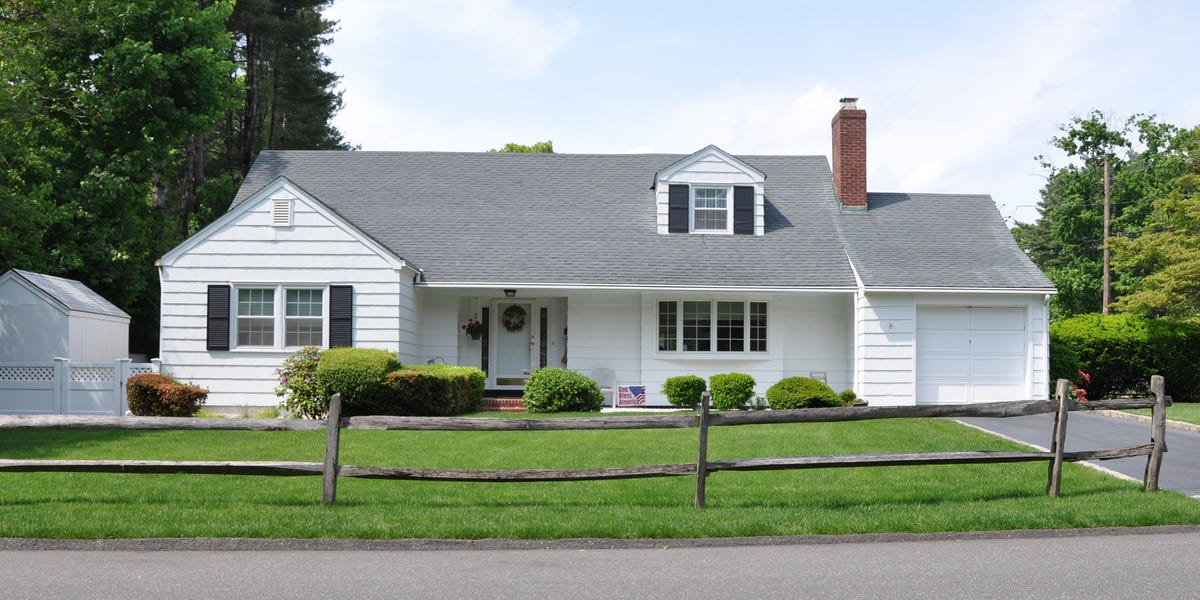

Once upon a time, a starter home was the humble little house with squeaky floors, questionable wallpaper, and a mortgage payment that did not require selling a kidney on the dark web. It was not glamorous, but it was yours. You bought it, painted the kitchen a color you later regretted, built some equity, and eventually moved up.
Today, many first-time buyers are asking a less romantic question: where did all the starter homes go? Across the United States, the entry-level housing market has been squeezed by high prices, higher mortgage rates, low inventory, construction costs, zoning limits, and homeowners who are staying put because they locked in ultra-low mortgage rates years ago. In other words, the starter home did not exactly disappear. It put on a fake mustache, moved to a more expensive ZIP code, and started calling itself a “cozy urban cottage.”
Experts say starter homes are not completely a thing of the past, but they are no longer the easy first step they once were. For many buyers, the new starter home might be a townhouse, condo, small older home, manufactured home, fixer-upper, or property farther from a major job center. For others, the starter home has been replaced by a longer period of renting, living with family, buying with a partner later in life, or skipping the starter-home stage entirely and waiting for a more permanent home.
What Is a Starter Home, Really?
A starter home is usually the first home a buyer can reasonably afford. Historically, that meant a small single-family house: maybe two bedrooms, one bath, a modest yard, and a garage full of mysteries left behind by the previous owner. It was not supposed to be perfect. It was supposed to be possible.
In today’s market, price matters more than size. A starter home is often defined as one of the lower-priced homes available in a local market, commonly the least expensive quarter of listings. That means the definition changes dramatically by location. A starter home in parts of Ohio or Oklahoma may still look like a traditional small house. In coastal California, Seattle, Boston, or New York, “starter home” may mean a compact condo, a townhouse, or a fixer-upper that requires optimism, cash reserves, and possibly a personal friendship with a contractor.
The emotional meaning has changed too. A starter home used to be a short stop on the way to the forever home. Buyers expected to stay three to five years, build equity, and move up. Now, with transaction costs, high rates, and limited options, many first-time buyers are looking for homes they can live in much longer. The starter home has become less of a stepping stone and more of a “please let this roof last ten years” decision.
Why Starter Homes Feel So Hard to Find
1. Prices Rose Faster Than Incomes
The biggest reason starter homes feel endangered is simple: prices went up faster than paychecks. In many markets, homes that used to be affordable to young households are now priced like luxury assets with lawns. Even when wages have risen, they have not kept pace with the combined force of higher home values, mortgage rates, insurance, taxes, and maintenance costs.
For first-time buyers, this creates a double bind. Renting is expensive, which makes saving for a down payment harder. Buying is expensive, which makes the needed down payment and monthly payment higher. It is like trying to fill a bucket while someone keeps making the bucket taller.
2. Mortgage Rates Changed the Math
A $300,000 home at a low interest rate and a $300,000 home at a much higher rate are not the same financial experience. The front door may look identical, but the monthly payment tells a different story. Mortgage rates have turned many once-attainable homes into budget-stretchers, especially for buyers without large down payments.
This matters because first-time buyers usually do not have equity from a previous home sale. Repeat buyers can often roll gains from an existing property into the next purchase. First-time buyers walk into the arena with savings, income, debt-to-income ratios, and hope. Hope is lovely, but lenders generally prefer documentation.
3. The “Lock-In Effect” Keeps Inventory Tight
Millions of homeowners refinanced or purchased homes when mortgage rates were historically low. Many of those owners would like more space, a different school district, or fewer stairs, but selling would mean giving up a low-rate mortgage and buying at a much higher monthly cost. So they stay.
This creates a traffic jam in the housing ladder. People who might normally sell smaller homes and move up are not listing. That leaves fewer starter homes for first-time buyers. It also keeps downsizers, investors, and cash buyers competing for the same smaller properties. The result is a market where the most affordable homes often attract the most attention.
4. Builders Have Not Produced Enough Entry-Level Homes
New construction can help, but builders face their own math problem. Land, labor, materials, financing, permitting, utility connections, and local rules all cost money. In many communities, it is more profitable to build larger homes than smaller, lower-priced homes. If a builder must spend a lot to buy land and secure approvals, the incentive often points toward bigger houses with higher sale prices.
Some builders are responding by shrinking floor plans, offering townhomes, building farther from city centers, or using incentives such as rate buydowns. Still, the country has a long-running housing supply shortage, and the entry-level segment has been one of the hardest hit. You cannot buy a starter home that was never built.
Are Starter Homes Dead? Experts Say “Not Quite”
The starter home is not dead, but it is definitely wearing a neck brace. Experts generally agree that the classic starter home has become rarer, especially in high-cost metros and close-in suburbs. But they also point out that starter homes still exist in certain regions, older neighborhoods, smaller metros, and markets where local wages and home prices are better aligned.
The more accurate answer is that starter homes have evolved. They are smaller, farther out, more likely to be attached housing, and more likely to require trade-offs. Buyers may need to compromise on commute, square footage, cosmetic updates, yard size, or neighborhood prestige. That does not mean settling for a bad home. It means being strategic about what matters most.
For example, a buyer who once expected a detached three-bedroom house may need to consider a two-bedroom townhouse. A buyer who wanted a move-in-ready property may consider a structurally sound home with outdated finishes. A buyer who focused on one hot neighborhood may widen the search to nearby suburbs or smaller cities with better affordability.
The New Starter Home: What Buyers Are Actually Buying
Condos and Townhomes
In many expensive markets, condos and townhomes have become the new starter homes. They are often less expensive than detached houses and may be located closer to jobs, transit, restaurants, and other amenities. The trade-off is monthly homeowners association fees, shared walls, rules, and sometimes less outdoor space.
Buyers should study HOA finances carefully. A low purchase price can become less attractive if monthly dues are high or special assessments are likely. The right condo can be a smart first step. The wrong one can feel like buying an apartment and then subscribing to surprise bills.
Older Small Homes
Older homes can offer better locations and lower prices, but they require realistic budgeting. A charming 1950s cottage may come with hardwood floors, mature trees, and electrical panels that have seen things. Buyers should not fear older homes, but they should get thorough inspections and price future repairs into the decision.
Fixer-Uppers
Fixer-uppers can be a path into competitive markets, but only when the buyer has enough cash, time, and patience. Cosmetic updates are one thing. Foundation problems, major plumbing work, roof replacement, or unsafe wiring are another. The phrase “needs TLC” can mean “paint and new cabinet pulls,” or it can mean “bring money and a helmet.”
Smaller Homes in Secondary Markets
Some buyers are finding starter homes by looking beyond the most expensive metro areas. Smaller cities in the Midwest and South often offer more reasonable price-to-income ratios. Remote and hybrid work have also made relocation possible for some households, although moving to a cheaper market is not a magic trick if local wages are lower or job options are limited.
Why First-Time Buyers Are Getting Older
One of the clearest signs of stress in the starter-home market is the rising age of first-time buyers. Many Americans are buying later because it takes longer to save, qualify, and compete. Student loans, childcare costs, rent, car payments, and general inflation all crowd the budget. Meanwhile, buyers who receive family help or have dual incomes often move faster, widening the gap between households with support and those without it.
This delay matters. Homeownership is not just about having a place to hang curtains without asking permission. It has historically been one of the main ways American households build wealth. When people buy later, they may have fewer years to build equity, fewer opportunities to move up, and less housing wealth later in life. That does not mean everyone should buy as soon as possible, but it does show why the shrinking starter-home pathway is such a big economic issue.
Should You Buy a Starter Home Now or Wait?
The honest answer is: it depends on your finances, timeline, market, and tolerance for chaos. Very glamorous, yes. But also true.
Buying can make sense if the monthly payment is comfortable, you have an emergency fund, you plan to stay long enough to absorb transaction costs, and the home meets real needs rather than social-media fantasies. Renting can make sense if buying would leave you house poor, your job or location may change, or your local market is wildly overpriced compared with rent.
Experts often recommend focusing less on timing the market and more on personal readiness. A lower mortgage rate in the future could help affordability, but it could also bring more buyers back into the market and push prices higher. A price decline could create opportunities, but not if lending standards tighten or your own financial situation changes. Waiting is not automatically wrong. Buying is not automatically smart. The right move is the one that keeps your life stable after the closing papers are signed.
Practical Tips for First-Time Buyers Searching for a Starter Home
Get Clear on the Monthly Payment, Not Just the Price
The listing price is only the opening act. Property taxes, insurance, HOA fees, mortgage insurance, utilities, repairs, and commuting costs all affect affordability. A cheaper house farther away may not be cheaper if transportation costs explode. A condo with a lower price may not be cheaper if the HOA fee is steep.
Look for “Good Bones,” Not Perfect Finishes
Paint colors, light fixtures, and ugly tile can be changed. Location, layout, structural issues, flood risk, and major systems are much harder. A starter home does not need to win a design award. It needs to be safe, financeable, livable, and financially sustainable.
Research Assistance Programs
Many states, cities, lenders, and nonprofit organizations offer down payment assistance, closing-cost help, first-time buyer education, or special loan programs. These programs do not solve every affordability problem, but they can help qualified buyers reduce upfront cash barriers.
Consider New Construction Carefully
Some builders are offering incentives, especially in markets where inventory has improved. Rate buydowns, closing-cost credits, and smaller floor plans can help. However, buyers should compare total costs, property taxes, HOA fees, commute times, and future resale potential before assuming a new build is the best deal.
What Could Bring Starter Homes Back?
Bringing back starter homes will require more than wishful thinking and inspirational refrigerator magnets. Experts point to several solutions: build more housing, allow more small homes and townhomes, reform zoning rules, speed up permitting, support manufactured and modular housing, expand down payment assistance, and encourage construction near transit and job centers.
Local policy matters. In some communities, zoning rules make it difficult to build duplexes, townhomes, accessory dwelling units, or smaller lots. In others, lengthy approval processes add time and cost. When the only easy thing to build is a large expensive single-family home, the market should not be shocked when large expensive single-family homes appear.
Private builders, public agencies, lenders, and local governments all have a role. Builders need projects that pencil out. Cities need housing that working households can afford. Buyers need financing options that do not create dangerous levels of risk. The starter-home problem is not just a buyer problem; it is a system problem.
Real-World Experiences: What Today’s First-Time Buyers Are Learning
Ask recent first-time buyers about the starter-home search, and many will tell you it felt less like a charming milestone and more like a competitive sport invented by caffeinated accountants. The process often starts with optimism. A buyer gets preapproved, opens a search app, and imagines a cute home with a porch, natural light, and enough kitchen storage to stop keeping pans in the oven. Then reality arrives wearing a blazer and carrying a spreadsheet.
The first lesson is that online affordability can be misleading. A home may appear within budget based on the listing price, but once taxes, insurance, HOA dues, mortgage insurance, and repairs are included, the payment can jump. One buyer might fall in love with a small bungalow only to learn that the roof has five years left, insurance is higher than expected, and the property taxes reset after purchase. Suddenly, the “affordable” home becomes a financial treadmill with shutters.
The second lesson is that compromise is not failure. Many successful buyers adjust their expectations without abandoning their goals. They choose a townhouse instead of a detached home, a smaller yard instead of a bigger commute, or an older kitchen instead of a larger mortgage. Some buyers widen their search by ten or twenty miles. Others prioritize school districts, transit access, or monthly payment over square footage. The winning strategy is often not finding the dream home; it is finding the home that supports a real life.
The third lesson is that patience and preparation matter. Buyers who have documents ready, understand their loan options, monitor local inventory, and know their maximum payment can move faster when the right home appears. In competitive markets, hesitation can cost the deal. In slower markets, patience can create room for negotiation. Either way, the buyer who knows the numbers has an advantage over the buyer operating on vibes, even if the vibes have excellent taste.
The fourth lesson is emotional: it is easy to feel behind. Watching friends buy homes, seeing renovated kitchens online, or hearing older relatives say “we bought our first house on one income” can make today’s buyers feel like they missed a secret meeting. But the market has changed. A delayed purchase is not a character flaw. Renting longer, saving more, buying smaller, or relocating are all rational responses to a tougher housing environment.
Finally, many buyers learn that the first home is not a personality test. It does not need to prove success, taste, adulthood, or moral worth. A starter home is a tool. If it provides stability, fits the budget, and gives the owner a foothold in the market, it is doing its job. The new starter home may be smaller, stranger, farther away, or less Instagram-ready than expected. But for buyers who approach it with clear math and flexible expectations, it can still be the beginning of a powerful financial chapter.
Conclusion: Starter Homes Are Not Gone, But the Old Playbook Is
So, are starter homes a thing of the past? Not entirely. But the starter home of today is not the starter home of previous generations. It is harder to find, harder to afford, and more likely to require trade-offs. The classic small detached home in a convenient neighborhood at a modest price is increasingly rare in many parts of the country.
Still, the door is not closed. Buyers who stay flexible, study the full monthly cost, explore assistance programs, and consider alternative property types may still find a path into ownership. At the same time, policymakers and builders need to address the deeper shortage of smaller, attainable homes. Without more supply and smarter housing policy, the starter home will remain less of a launchpad and more of a scavenger hunt.
The American starter home is not dead. It is just under renovation. Unfortunately, like many renovations, it is taking longer and costing more than expected.