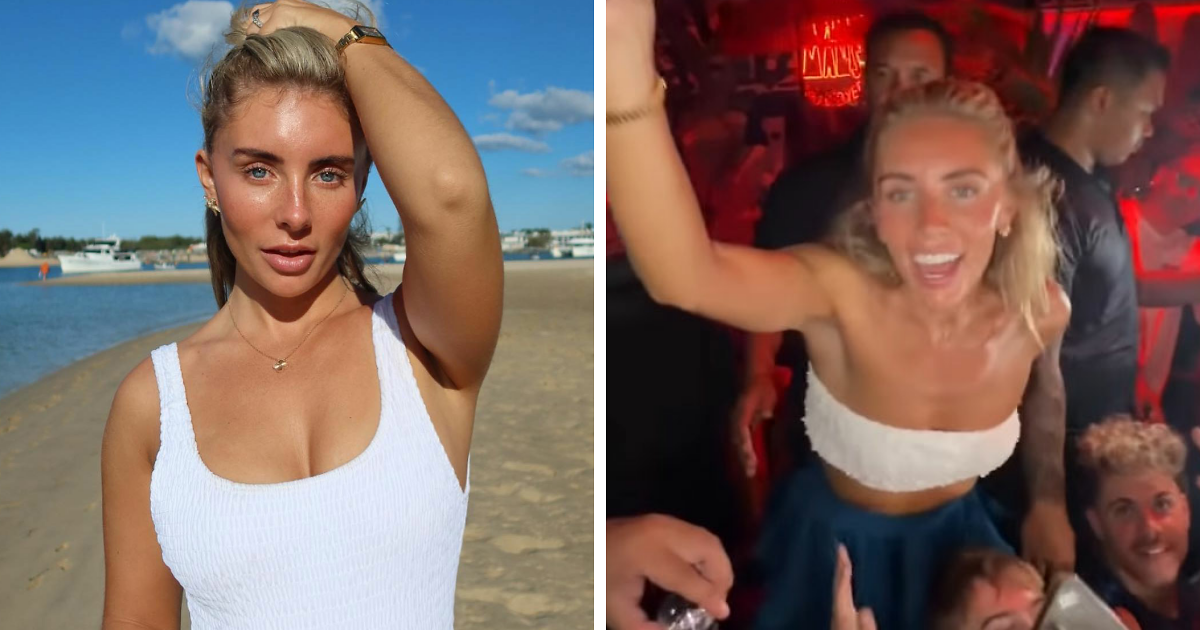
Bonnie Blue Faces 15-Year Sentence After Controversial Adult Video Filmed In Bali

Bali has always sold visitors a dream: turquoise water, dramatic cliffs, flower offerings, sunset cocktails, and enough scooter traffic to make your life flash before your eyes in flip-flops. But for British adult content creator Bonnie Blue, whose real name has been reported as Tia Billinger, the island reportedly became the setting for a legal and cultural controversy that moved far beyond ordinary travel drama.
The headline grabbing the internet by the collar was simple and dramatic: Bonnie Blue faced a possible 15-year sentence after allegedly filming controversial adult content in Bali. But the real story is more complicated than a viral headline. It sits at the messy intersection of influencer culture, adult content, immigration rules, Indonesian pornography law, social media outrage, local values, and the modern creator economy’s favorite bad habit: assuming every country is just a backdrop with better lighting.
According to public reports, Indonesian authorities investigated allegations that adult-themed commercial content had been produced during Blue’s trip. The case drew attention because Indonesia has strict laws around pornography, public morality, and visa use. While early reports focused on the possibility of severe penalties, later reporting indicated that the case did not end with a 15-year prison sentence. Instead, the reported outcome involved deportation, a fine related to traffic or vehicle violations, and a ban from entering Indonesia for a decade.
That distinction matters. “Could face” is not the same as “was sentenced to.” In legal reporting, those three words do a lot of heavy lifting. Still, the controversy remains important because it shows how quickly a stunt designed for clicks can become an international legal problem.
Who Is Bonnie Blue?
Bonnie Blue is a British adult content creator known for provocative online branding, public stunts, and controversy-driven publicity. Her name has circulated widely across entertainment, tabloid, and social media spaces, especially because her content strategy often blends shock marketing with travel, nightlife, and viral spectacle.
In the attention economy, this kind of persona can be powerful. The internet rewards the outrageous. Algorithms do not blush; they simply count engagement. But the Bali incident shows that what performs well online may perform very badly in front of immigration officers, police, judges, or local communities.
Blue’s Bali controversy reportedly centered on allegations of adult content production and commercial activity during a visit to Indonesia. The story intensified because Bali is one of the world’s most popular tourist destinations, but it is also part of a country with laws and cultural expectations that many foreign visitors underestimate.
Why Bali Became the Center of the Controversy
Bali is often marketed internationally as relaxed, spiritual, scenic, and welcoming. It is all of those things. It is also governed by Indonesian national law. That second sentence is where many tourists, influencers, and digital nomads occasionally trip over their own ring lights.
Indonesia’s legal framework includes strict rules on pornography and obscenity. Adult content production, distribution, and commercial sexual material can trigger serious legal scrutiny. Even if something is intended for a private subscription platform or overseas audience, producing it inside Indonesia may still raise legal and immigration issues.
Reports around Bonnie Blue’s Bali case suggested that authorities were concerned not only with the alleged nature of the content but also with whether her group had misused tourist visas for commercial production. That matters because a tourist visa is not a magic “do whatever earns money” card. It is permission to visit, not permission to run a mobile media business from a tropical location.
The 15-Year Sentence Claim Explained
The most explosive part of the story was the reported possibility of a 15-year prison sentence. That figure was tied to Indonesia’s pornography laws and the potential penalties that could apply if authorities pursued serious charges and secured a conviction.
However, a possible maximum sentence is not the same as an actual sentence. Legal exposure often describes the harshest penalty available under a statute, not the most likely result in a specific case. In Blue’s situation, later reports indicated that authorities did not move forward with the kind of criminal conviction that would result in a long prison term. Instead, the matter reportedly shifted toward immigration consequences and lesser violations.
This is where careful wording matters for SEO, journalism, and basic fairness. A headline can say “faces 15-year sentence” when discussing potential exposure, but the body of an article should explain what actually happened next. Otherwise, readers walk away thinking someone is currently sitting in a prison cell when the reported outcome may be deportation and blacklisting.
What Authorities Reportedly Did
Public reporting said Blue and members of her group were investigated in Bali after complaints and scrutiny over alleged adult content production. Items related to filming were reportedly examined, and authorities reviewed whether commercial content had been created in violation of local rules.
The later outcome appeared less dramatic than the earliest headlines suggested, but still serious. Reports said Blue was fined over vehicle-related violations, deported from Indonesia, and banned from re-entering the country for 10 years. For a creator whose brand depends on global movement, publicity, and access to international audiences, a decade-long ban is not exactly a souvenir you put on the fridge.
The case also served as a warning to other influencers and adult creators who travel for content production. Local law does not disappear because a camera is rolling. In fact, the camera may become the evidence.
Indonesia’s Strict Approach to Pornography and Public Morality
Indonesia is diverse, complex, and home to many cultures, religions, and regional identities. Bali itself has a Hindu-majority local culture, while Indonesia overall is the world’s largest Muslim-majority nation. The country’s laws around pornography and public morality reflect national political, cultural, and social debates that outsiders often oversimplify.
The key point for visitors is practical: Indonesia has strong restrictions on pornography, and violations can lead to severe consequences. Foreigners are not automatically shielded because they are tourists, influencers, or citizens of countries where adult content may be legal under different conditions.
Adult content laws also do not operate in isolation. Immigration rules, business licensing, public order concerns, digital distribution, and local complaints can all become part of the same case. That appears to be why Blue’s situation became more than a simple “video controversy.” It touched multiple pressure points at once.
The Role of Influencer Culture
Influencer culture loves a spectacle. A bus, a stunt, a shocking slogan, a crowd, a camera, a few teasing posts, and suddenly the internet starts feeding itself like a raccoon in a hotel buffet. But when the spectacle crosses borders, the risks multiply.
Many creators treat international destinations as aesthetic props. Bali becomes “content.” Tokyo becomes “content.” Dubai becomes “content.” The people who live there, the laws that govern there, and the values that shape public life there are too often treated as background noise. That attitude can create real consequences.
In Bonnie Blue’s case, the controversy became a reminder that social media fame does not translate into legal immunity. A creator may control the caption, but they do not control the statute book. They may control the edit, but they do not control immigration policy. And they may control their brand, but they cannot control public reaction once local residents feel disrespected.
Why the Story Went Viral
The story spread quickly because it had all the ingredients of a modern viral scandal: a controversial personality, adult content allegations, a beloved tourist destination, strict foreign laws, possible prison time, and a dramatic clash between personal branding and national rules.
It also tapped into a larger public frustration with badly behaved tourists in Bali. In recent years, local authorities have repeatedly warned foreign visitors about disrespectful behavior, visa misuse, traffic violations, public indecency, and content creation that offends local norms. Blue’s case landed in that already sensitive environment.
For many readers, the reaction was not just about one adult performer. It was about the growing sense that some visitors arrive in Bali for beauty, profit, and attention while forgetting that real communities live there. The island is not a studio lot. It is not a law-free sandbox. It is a place with customs, temples, families, courts, police, and consequences.
Legal Lessons for Creators Traveling Abroad
1. Research the Law Before You Film
If your income depends on filming content, research local laws before you land. This is especially important for adult content, pranks, political content, drone footage, street interviews, gambling-related material, and anything involving minors, alcohol, nudity, or public behavior.
2. A Tourist Visa Is Not a Work Permit
Many creators blur the line between vacation and business. But immigration departments may not see it that way. If you are earning money, hiring crew, staging shoots, or producing commercial content, you may need different permission.
3. Private Platforms Do Not Guarantee Privacy
Posting behind a paywall does not automatically protect a creator from local laws. Content can leak, be reported, be investigated, or be treated as commercial production depending on the circumstances.
4. Local Culture Is Not Optional
Cultural respect is not just a nice travel accessory, like linen pants or a reusable water bottle. It can directly affect how authorities and communities respond when controversy happens.
Public Backlash and Reputation Risk
The legal consequences were only part of the story. The reputational fallout was just as significant. Online audiences may cheer controversy for a day, but brands, platforms, governments, and travel authorities often respond differently.
A scandal can create short-term attention but long-term restrictions. It can boost search volume while damaging credibility. It can make someone famous in one market while making them unwelcome in another. That is the double-edged sword of outrage marketing: it cuts through the noise, but it may also cut off future options.
For Bonnie Blue, the Bali controversy reinforced an existing public image built around provocation. For critics, it confirmed concerns about disrespectful content tourism. For supporters, it became another example of a creator pushing boundaries. But for governments, the question was simpler: were laws or visa conditions violated?
What This Means for Bali Tourism
Bali depends heavily on tourism, but the island has increasingly pushed back against visitors who ignore rules. Authorities have reminded foreigners to respect sacred places, obey traffic laws, follow visa regulations, and avoid behavior that disrupts public order.
The Bonnie Blue case fits into that broader pattern. It was not simply about adult content. It was about Bali’s image, Indonesia’s laws, and the growing tension between tourism income and cultural preservation.
Bali wants visitors. It does not want to become a punchline, a playground for reckless stunts, or a content farm for people chasing engagement at the expense of local dignity. That message is becoming louder, clearer, and backed by enforcement.
Experience Notes: What Travelers and Creators Can Learn From the Bonnie Blue Bali Case
Anyone who has spent time in a major tourist destination knows the strange split personality of travel culture. On one side, there are people genuinely trying to experience a place: learning a few local phrases, asking before filming, dressing respectfully near temples, tipping fairly, and trying not to become the human version of a delayed flight. On the other side, there are travelers who behave as though the destination exists purely for their personal highlight reel.
The Bonnie Blue Bali controversy is a useful case study because it shows how fast that second attitude can become a problem. Imagine arriving somewhere beautiful and assuming that because the beach is open, everything else is open too: the roads, the laws, the people, the cultural boundaries, the business rules, the moral codes. That assumption is where many travel disasters begin.
For content creators, the experience-based lesson is simple: build a pre-production checklist before you build a shot list. Ask boring questions first. What visa do I have? Am I allowed to work here? Do I need a permit? Can I film in this location? Could this content violate obscenity, privacy, religious, traffic, or public-order laws? Are local people being treated as participants, props, or collateral damage?
Those questions may not sound glamorous, but neither does explaining your viral concept to immigration officials at midnight. Creative freedom is valuable, but it works best when paired with local awareness. The smartest creators are not the ones who avoid all risk; they are the ones who understand which risks are creative and which risks are just paperwork wearing sunglasses.
Travelers can learn from this too. You do not need to be an adult content creator to run into trouble abroad. Filming strangers without consent, disrespecting religious sites, driving without proper documents, working remotely on the wrong visa, or staging loud public stunts can all create consequences. In Bali especially, visitors should remember that beauty does not equal permission.
The better approach is not fear. It is respect. Respect the country enough to research it. Respect the people enough not to turn them into unwilling extras. Respect the law enough not to assume your passport gives you a force field. And respect yourself enough to know that not every attention-grabbing idea is worth the cleanup.
The irony is that respectful content often lasts longer than shock content. A thoughtful travel story, a well-made documentary, a responsible creator guide, or a culturally aware behind-the-scenes video can build trust with audiences. A stunt may go viral, but a reputation is what remains after the algorithm gets bored and wanders off to chase the next scandal.
Conclusion
Bonnie Blue’s Bali controversy is more than a celebrity-adjacent adult content scandal. It is a modern warning about what happens when viral ambition meets strict local law. The reported 15-year sentence reflected potential legal exposure under Indonesia’s pornography rules, but later reports indicated that the outcome involved deportation, a fine, and a 10-year ban rather than a long prison term.
Still, the larger lesson remains sharp. Creators who travel internationally must understand that local laws matter, visa rules matter, and cultural respect matters. Bali may look like paradise on camera, but it is not a legal loophole with palm trees. For influencers, adult performers, vloggers, and tourists alike, the safest content strategy is not silence or fear. It is preparation, respect, and the wisdom to know when a viral idea is about to become an expensive lesson.