
Note: This article is for educational purposes only and should not be read as personalized financial advice. Emerging markets can move faster than a cat near a cucumber, so investors should consider their goals, risk tolerance, time horizon, and professional guidance before making decisions.
Introduction: When Disaster Knocks, Emerging Markets Often Shake First
Buying emerging markets during a disaster sounds like the kind of idea that makes cautious investors spill coffee on their keyboard. A war breaks out, a currency tumbles, a pandemic freezes supply chains, or a natural disaster damages critical infrastructureand suddenly the phrase “long-term opportunity” feels suspiciously like something printed on a brochure in very small font.
Yet history shows that some of the most compelling emerging market investments have appeared when headlines were at their loudest and prices were at their ugliest. That does not mean every selloff is a bargain. Sometimes cheap markets are cheap for excellent reasons. But it does mean that disasters can create temporary mispricing, emotional selling, and long-term entry points for investors who understand the risks.
Emerging markets include countries with developing financial systems, expanding middle classes, improving infrastructure, and faster potential growth than many mature economies. They may include markets such as India, Brazil, Indonesia, Mexico, South Africa, Taiwan, South Korea, and others depending on index classification. These markets can offer exposure to technology manufacturing, commodities, banks, consumer growth, energy, infrastructure, and digital services. They can also bring currency swings, political instability, weak governance, capital controls, inflation shocks, and liquidity problems. In other words, emerging markets are not boring. They are the financial equivalent of riding a scooter through a rainstorm while carrying soup.
The real question is not whether emerging markets are risky. They are. The better question is whether disaster-driven fear can sometimes create prices that reward patient, diversified, disciplined investors. The answer is yesbut only when buying is done with a plan, not a panic button.
What Does “Buying Emerging Markets During a Disaster” Mean?
Buying emerging markets during a disaster means investing in emerging market stocks, bonds, funds, or exchange-traded funds when a crisis has pushed prices down sharply. The disaster may be local, regional, or global. It may be a financial crisis, pandemic, earthquake, war, political shock, banking panic, commodity crash, debt crisis, or currency devaluation.
Investors usually access emerging markets through diversified mutual funds, ETFs, American depositary receipts, local market funds, emerging market bond funds, or actively managed global strategies. For most individual investors, broad funds are usually safer than trying to pick one country or one company during a crisis. Picking a single distressed stock in a fragile market can feel heroic, but so can wrestling an alligator. Neither is recommended without serious expertise.
Common Disaster Scenarios That Hit Emerging Markets
Emerging markets may be affected by several types of disasters:
- Currency crises: A local currency falls rapidly against the U.S. dollar, making foreign debt harder to repay.
- Geopolitical conflict: Wars or regional tensions disrupt trade, energy prices, and investor confidence.
- Natural disasters: Floods, earthquakes, droughts, and storms damage infrastructure and reduce economic output.
- Health crises: Pandemics can pressure healthcare systems, reduce tourism, slow manufacturing, and trigger capital outflows.
- Debt crises: Governments or companies struggle to refinance debt, especially when global interest rates are high.
- Commodity shocks: Oil exporters and importers can both suffer depending on the direction and speed of price changes.
Disasters often cause investors to sell first and analyze later. That emotional selling can create opportunity, but it can also reveal real weaknesses. The trick is telling the difference between a temporary shock and a permanent impairment.
Why Emerging Markets Fall Hard During Global Stress
Emerging markets often decline sharply during disasters because international investors tend to reduce risk when uncertainty rises. Money flows toward perceived safe assets, including U.S. Treasuries and the U.S. dollar. When the dollar strengthens, emerging market currencies may weaken, making imported goods more expensive and increasing the burden of dollar-denominated debt.
Capital flows matter. If foreign investors suddenly withdraw money from an emerging economy, the local stock market, bond market, and currency may all fall at once. This triple punch can make even solid companies look frightening on a price chart. During extreme periods, good businesses may trade down simply because investors need liquidity, not because the business has collapsed.
The Dollar Problem
The U.S. dollar is a major force in emerging markets. Many emerging market governments and corporations borrow in dollars. When the dollar rises, repayment becomes more expensive in local currency terms. This can pressure budgets, squeeze corporate profits, and raise default risk.
A strong dollar can also reduce foreign investor appetite for local-currency bonds and equities. On the other hand, when the dollar weakens and global financial conditions improve, emerging markets often get a tailwind. That is why serious emerging market investors watch currencies, central bank policy, inflation, reserves, and current account balancesnot just stock prices.
Liquidity: The Exit Door Gets Narrow
Emerging markets can be less liquid than developed markets. In calm times, this may not matter much. During disasters, it matters a lot. When everyone wants to exit at the same time, bid-ask spreads widen and prices can gap lower. A fund may be forced to sell what it can sell, not what it wants to sell. This is one reason broad diversification and position sizing are essential.
Why Disasters Can Create Opportunity
The main reason disasters create opportunity is simple: fear can overshoot reality. Investors may price an entire country as if every business inside it is doomed. That rarely turns out to be true. Banks, exporters, utilities, telecom providers, technology manufacturers, consumer staples companies, and infrastructure operators may continue to operate even during chaos.
When markets fall quickly, valuations may become attractive. Price-to-earnings ratios, price-to-book ratios, dividend yields, and bond spreads can all move to levels that compensate investors for taking risk. But valuation alone is not enough. A cheap market with collapsing institutions, runaway inflation, and poor rule of law can stay cheap for years. Bargain hunting must be paired with quality control.
Historical Example: The Asian Financial Crisis
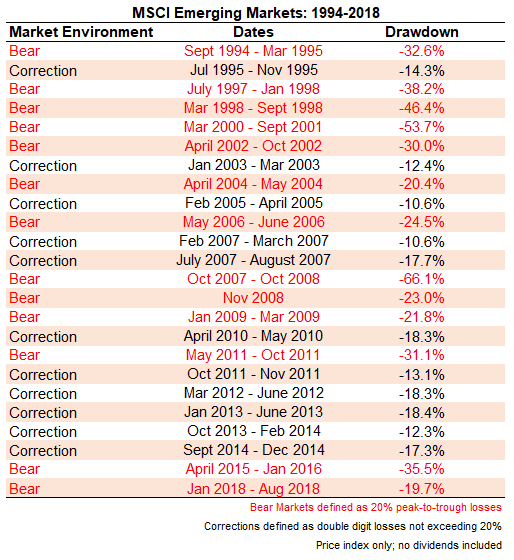
The Asian financial crisis began in 1997 after Thailand abandoned its currency peg. The crisis spread across East Asia and eventually affected markets beyond the region. Currencies plunged, corporate debt burdens soared, and investor confidence evaporated. For investors, it was brutal. For disciplined long-term buyers, however, the crisis eventually created opportunities in countries that later repaired balance sheets, strengthened reserves, improved banking systems, and returned to growth.
The lesson is not “buy every crash.” The lesson is that crises can force reforms. Countries that respond with credible policy, institutional repair, and financial discipline may emerge stronger. Countries that deny problems, burn reserves, or punish investors may remain value traps.
Historical Example: COVID-19 and the 2020 Selloff
During the early COVID-19 panic, emerging markets suffered deep drawdowns as investors rushed to safety. Yet many markets recovered as global stimulus, low interest rates, technology demand, and reopening expectations improved sentiment. Some countries benefited from semiconductor demand, digital adoption, e-commerce growth, and export recovery. Others lagged because of weaker healthcare systems, tourism dependence, or policy uncertainty.
This episode showed that emerging markets are not one single trade. Taiwan is not Brazil. India is not South Africa. Indonesia is not Mexico. Each country has different drivers, vulnerabilities, and recovery paths. Buying “emerging markets” blindly can hide important differences under one convenient label.
How to Analyze Emerging Markets During a Disaster
Before buying, investors should ask a practical question: Is the disaster damaging prices more than fundamentals, or fundamentals more than prices?
If prices have fallen because investors are temporarily afraid, that may create opportunity. If prices have fallen because cash flows, institutions, and financial stability are permanently impaired, the market may deserve the discount. A strong emerging market strategy separates panic from structural decline.
1. Check the Country’s Balance Sheet
Look at foreign exchange reserves, government debt, fiscal deficit, current account balance, inflation, and external debt. Countries with large reserves, manageable debt, credible central banks, and diversified exports usually have more room to survive shocks. Countries dependent on short-term foreign borrowing are more fragile.
2. Study the Currency
A falling currency can help exporters but hurt companies with dollar debt. It can also raise inflation by making imports more expensive. If a country imports oil, food, or industrial inputs, a weaker currency can quickly squeeze households and businesses.
3. Watch Policy Response
Good policy does not eliminate disaster, but bad policy can turn a disaster into a sequel nobody asked for. Investors should watch whether leaders protect property rights, support financial stability, maintain central bank credibility, and communicate clearly. Emergency controls, surprise taxes, forced conversions, or arbitrary rules can damage investor confidence.
4. Compare Valuation With Earnings Reality
A market may look cheap based on last year’s earnings. But if profits are about to collapse, the apparent bargain may disappear. Investors should look at forward earnings, margins, debt service, dividend sustainability, and industry exposure. A bank-heavy market during a credit crisis deserves different analysis than a tech-export market during a temporary logistics shock.
5. Separate Exporters From Domestic Businesses
Exporters may benefit from a weaker currency if they earn revenue in dollars and pay costs in local currency. Domestic retailers, utilities, or banks may suffer if consumers are squeezed by inflation and unemployment. During disasters, sector selection can matter as much as country selection.
Best Ways to Invest Without Betting the Farm
Emerging market investing during a disaster should be done with humility. Nobody rings a bell at the bottom. If someone claims they can perfectly time emerging market crashes, check whether they also sell magic beans.
Use Dollar-Cost Averaging
Instead of investing all at once, consider spreading purchases over weeks or months. Dollar-cost averaging reduces the risk of buying right before another sharp decline. It also helps investors stay calm because the plan is already written before emotions take over.
Choose Broad Diversification
A diversified emerging market ETF or mutual fund can reduce single-country and single-company risk. Broad funds may include exposure to Asia, Latin America, Europe, the Middle East, and Africa. They may also hold companies across technology, financials, consumer goods, energy, materials, and industrials.
Investors who want more control may consider regional funds, country funds, or active managers. However, narrower exposure increases risk. A single-country ETF can rise dramatically if conditions improve, but it can also behave like a roller coaster designed by someone with a personal grudge.
Consider Quality and Low-Debt Companies
During disasters, balance sheets matter. Companies with low leverage, strong cash flow, export revenue, essential products, and good governance often survive better than highly indebted firms. In emerging markets, corporate governance can vary widely, so investors should be careful with companies that have opaque ownership structures or weak shareholder protections.
Do Not Ignore Emerging Market Bonds
Emerging market bonds can offer income and diversification, but they carry credit, currency, liquidity, and interest-rate risk. Dollar-denominated bonds reduce local currency exposure but still depend on the borrower’s ability to earn or access dollars. Local-currency bonds may benefit when local rates fall or currencies recover, but they can be painful during devaluation.
What Not to Do During a Disaster
Disaster investing rewards patience, not adrenaline. The worst mistakes usually come from confusing “down a lot” with “safe,” or confusing “popular on social media” with “an investment thesis.”
Do Not Buy Only Because Prices Fell
A 50% decline does not guarantee a 100% rebound. Sometimes a market falls because earnings are vanishing, debt is unmanageable, or political risk has permanently changed. A falling price is an invitation to research, not an automatic green light.
Do Not Overconcentrate
Emerging markets are already volatile. Concentrating too much in one country, sector, or currency can turn a portfolio into a stress test with Wi-Fi. Keep position sizes reasonable and make sure your overall asset allocation can survive another leg down.
Do Not Borrow to Invest
Leverage and emerging market disasters are a dangerous mix. A market can become irrational longer than a leveraged investor can remain solvent. Forced selling during a crash destroys the main advantage of long-term investing: time.
Do Not Ignore Taxes and Fees
International funds may involve foreign withholding taxes, expense ratios, spreads, and transaction costs. These details may seem small, but they compound over time. Low-cost, tax-aware implementation can improve long-term results.
When Buying Emerging Markets Makes Sense
Buying emerging markets during a disaster may make sense when several conditions line up. Valuations should be attractive compared with history and expected earnings. The country or region should have a credible path to recovery. Policy response should be reasonable. Currency pressure should be manageable. The investment should fit your long-term allocation, not hijack it.
It also helps when global conditions are improving. A weakening U.S. dollar, falling inflation, lower global interest rates, and recovering trade can all support emerging markets. Strong domestic consumption, infrastructure spending, manufacturing growth, and technology investment can provide additional support.
Signs of a Better Entry Point
- Valuations are below long-term averages but earnings are not permanently damaged.
- Currency weakness appears excessive relative to reserves and fundamentals.
- Policy makers are responding credibly rather than blaming everyone except the weather.
- Foreign investors have already reduced exposure significantly.
- High-quality companies remain profitable despite the crisis.
- The investment fits a long-term plan of at least five to ten years.
When It May Be Better to Wait
Waiting can be wise when the disaster is still accelerating and information is poor. Investors should be cautious when governments impose capital controls, inflation is unanchored, institutions are weakening, or conflict risk is expanding. It may also be better to wait when valuations are not actually cheap after adjusting for earnings declines.
There is no shame in missing the exact bottom. Most successful long-term investors do not need perfect timing. They need good prices, adequate diversification, emotional discipline, and enough patience to let recovery unfold.
A Practical Strategy for Investors
A sensible approach might look like this: decide your target emerging market allocation, compare it with your current exposure, and rebalance gradually during selloffs. If your long-term target is 10% of your equity portfolio and the disaster has reduced your exposure to 6%, buying back toward target can be more disciplined than making a dramatic all-in bet.
For more aggressive investors, a crisis reserve can be useful. This means keeping a small portion of cash or short-term bonds available for severe selloffs. The key is to define rules before disaster strikes. For example, an investor might add one-third of planned exposure after a 20% decline, another third after a 30% decline, and the final third when policy conditions improve. The exact numbers matter less than having a system.
Sample Checklist Before Buying
- What caused the selloff?
- Is the damage temporary, cyclical, or structural?
- How exposed is the country to the U.S. dollar?
- Are reserves and fiscal resources adequate?
- Are valuations attractive after adjusting for lower earnings?
- Is the fund diversified across countries and sectors?
- Can I hold through another 20% decline without panicking?
Experiences and Lessons From Buying Emerging Markets During a Disaster
One of the most valuable experiences investors learn from emerging market disasters is that the first headline is rarely the full story. At the beginning of a crisis, every chart looks dramatic and every commentator sounds certain. Then the situation evolves. Some countries stabilize. Some companies adapt. Some policy makers surprise investors with competence. Others, unfortunately, respond like someone trying to fix a leaking pipe with confetti.
Investors who have lived through emerging market selloffs often describe the same emotional pattern. First comes disbelief. Prices fall faster than expected. Then comes bargain-hunting excitement. Everything looks cheap. Then comes the second decline, when the market reminds everyone that “cheap” can become “cheaper” with impressive enthusiasm. Finally, for those who remain diversified and patient, the recovery may arrive quietly before the news turns positive.
A practical lesson is to buy in stages. During a disaster, uncertainty is not a bug in the system; it is the system. Investors rarely know the final cost of a war, pandemic, or debt crisis while it is happening. Buying gradually allows room for mistakes. It also reduces emotional pressure. Instead of needing to be right today, the investor only needs to follow a thoughtful process over time.
Another lesson is that country headlines can hide company-level resilience. A country may be in crisis while certain businesses continue generating cash. Exporters, payment networks, telecom companies, consumer staples producers, and globally competitive manufacturers may prove stronger than the national headlines suggest. However, the opposite is also true. A country may recover while weak companies fail. That is why fund quality and portfolio construction matter.
Investors also learn to respect currency risk. A stock can rise in local terms while a foreign investor earns little or loses money after currency depreciation. This is especially important for U.S.-based investors measuring returns in dollars. In emerging markets, the exchange rate is not background music. It is often the lead singer, drummer, and occasionally the person who knocks over the speakers.
Patience is another hard-earned lesson. Emerging market recoveries can be uneven. A market may rally sharply, then give back gains when inflation data disappoints or global interest rates rise. Investors who expect a smooth rebound may become frustrated and sell too early. Those who understand that recovery often comes in waves are better prepared.
Perhaps the most important experience is learning that disaster investing should never depend on bravery alone. Bravery without research is just expensive confidence. The better approach is structured courage: a diversified portfolio, staged buying, valuation discipline, risk limits, and a willingness to admit when the thesis is wrong.
For example, an investor buying a broad emerging market fund during a global selloff may not know which country will recover first. But they can know their time horizon, target allocation, fund expense ratio, rebalancing rule, and maximum position size. That structure turns chaos into a process. It does not eliminate risk, but it keeps risk from driving the bus while blindfolded.
Experienced investors also learn that emerging markets are not merely “cheap developed markets.” They have different political systems, demographic trends, commodity exposures, capital markets, and governance standards. Some are innovation leaders. Some are resource exporters. Some are manufacturing hubs. Some are domestic consumption stories. Treating them as one giant bucket labeled “risky stuff” misses the point.
The final lesson is humility. Buying emerging markets during a disaster can be rewarding, but it is never guaranteed. The goal is not to catch the bottom, impress strangers, or prove fear wrong. The goal is to buy durable assets at reasonable prices while managing the possibility that conditions may worsen. In investing, survival comes before victory. You cannot compound wealth if you panic-sell your portfolio into a crater.
Conclusion: Disaster Can Be a Door, Not a Signal to Sprint
Buying emerging markets during a disaster can be a powerful long-term strategy, but only for investors who understand what they own and why they own it. Disasters create fear, and fear can create discounts. But not every discount is a bargain. Some are warnings with flashing lights and very loud sirens.
The smartest approach is disciplined, diversified, and patient. Study the country, currency, policy response, valuation, and fund structure. Buy in stages. Avoid leverage. Keep position sizes reasonable. Focus on quality. Most importantly, make sure emerging markets fit your overall financial plan rather than becoming an emotional bet on dramatic headlines.
Emerging markets can reward investors who are willing to endure volatility, but they do not reward carelessness. During disasters, the opportunity is realbut so is the risk. Walk in with open eyes, a sturdy plan, and maybe a strong cup of coffee.