
There are television shows with behind-the-scenes drama, and then there is Community, a sitcom so meta that even its workplace chaos eventually felt like it had been assigned a seat at the study room table. At the center of one of the show’s most famous real-life storms were creator Dan Harmon and comedy legend Chevy Chase, whose uneasy partnership became almost as discussed as paintball wars, blanket forts, and Abed’s suspiciously accurate understanding of sitcom structure.
The title sounds like a Hollywood magic trick: Dan Harmon turned Chevy Chase’s bad behavior into Community gold. But the real story is less about rewarding bad behavior and more about how a sharp writing room transformed tension, ego, generational conflict, and creative frustration into one of the show’s most unforgettable characters: Pierce Hawthorne. Pierce was not simply “the old guy” in the group. He was the human pop-up ad of Greendale Community Collegeloud, outdated, desperate to be loved, and frequently one sentence away from making everyone stare at the floor.
In the hands of a less daring show, that kind of character might have become a flat punchline. On Community, Pierce became a strange comedic engine. He was the villain, the wounded child, the bad example, the accidental truth-teller, and sometimes the only person in the room honest enough to say the ugly thing the episode wanted to examine. That is where Harmon’s gift comes in. He did not just write around the chaos. He metabolized it.
Why Chevy Chase Was a Big Deal Before Greendale
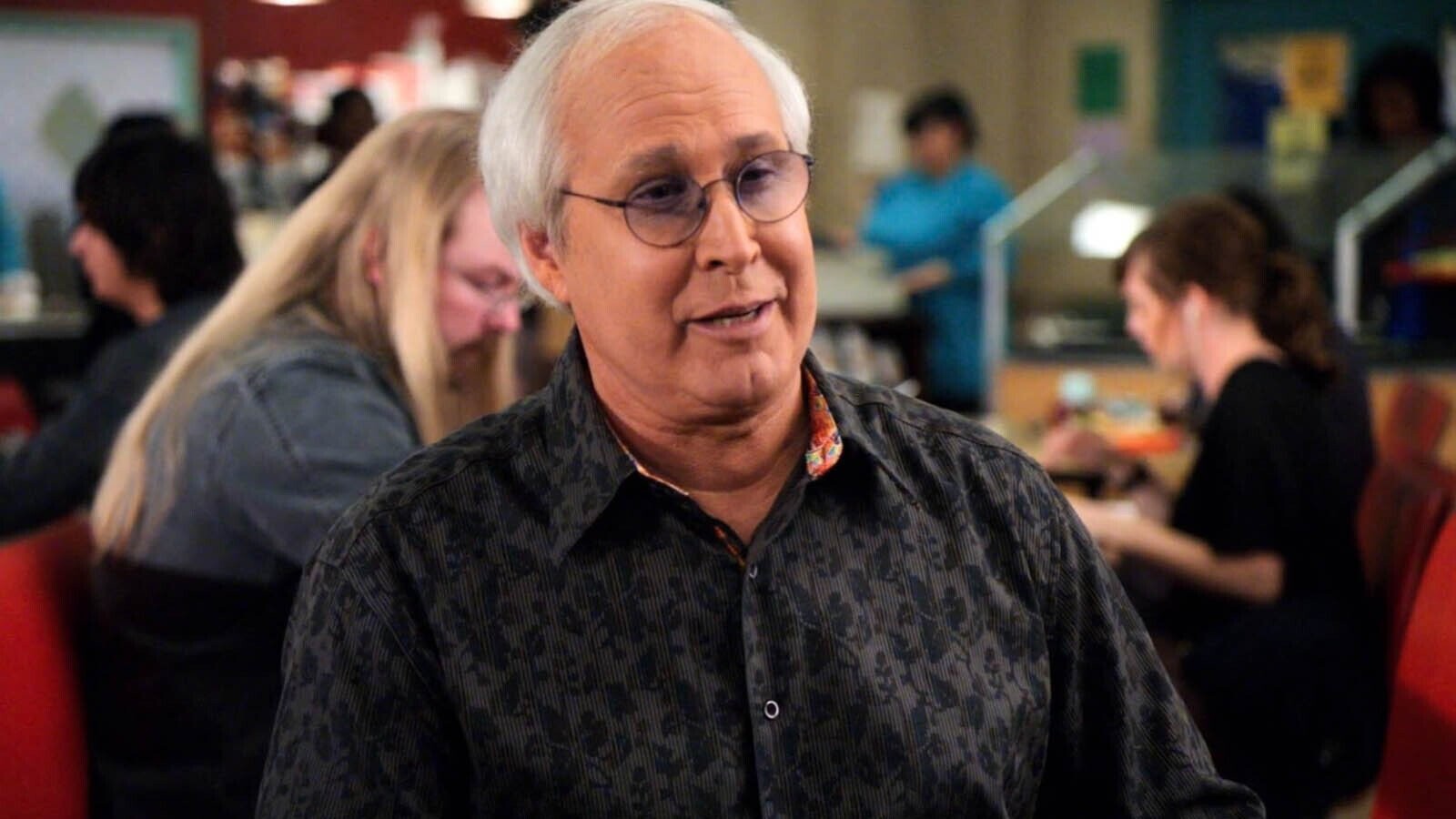
Before he became Pierce Hawthorne, Chevy Chase was already a comedy institution. He was part of the original Saturday Night Live generation and starred in films such as Caddyshack, Fletch, and National Lampoon’s Vacation. Casting him in Community gave the NBC sitcom instant history. It also gave the show a walking contrast: a performer from an earlier comedy era dropped into a fast, self-aware, emotionally nerdy ensemble built for the internet age.
That contrast was useful. Community was never just a college comedy. It was a machine that turned pop culture, insecurity, friendship, and failure into jokes that somehow came with footnotes. Pierce, meanwhile, represented a different comic language. He was broad, physical, vain, and proudly confused by the modern world. When he worked, he worked beautifully. Chase’s timing, facial reactions, and ability to look foolish without blinking gave Pierce a weird electricity.
But comedy chemistry does not always mean workplace harmony. Reports over the years described Chase as unhappy with the writing, frustrated by long hours, and increasingly uncomfortable with how bigoted Pierce became. His clashes with Harmon became public, especially after a leaked voicemail and Harmon’s later apology for airing private dirty laundry. The feud became one of those Hollywood stories that fans discussed like a bonus episode no one asked for but everyone watched.
Pierce Hawthorne: The Character Who Turned Friction Into Fuel
Pierce Hawthorne begins as a rich, lonely, out-of-touch older student who wants friends but has the emotional tools of a malfunctioning vending machine. He can be childish, jealous, offensive, needy, and oddly vulnerable. That combination made him more interesting than a simple “problematic old man” stereotype. Pierce was not funny because he was wrong; he was funny because he was wrong with Shakespearean confidence.
Dan Harmon’s genius was recognizing that Pierce could disturb the group dynamic in ways that revealed everyone else. Jeff Winger’s superiority looked shakier when Pierce mirrored his vanity. Britta’s moral certainty became funnier when Pierce misunderstood every social cause within a five-mile radius. Troy and Abed’s innocence felt warmer when Pierce tried and failed to join their games. Shirley’s patience was tested. Annie’s politeness was weaponized. The whole study group became clearer because Pierce kept throwing emotional furniture around the room.
In other words, the writers did not merely use Pierce as a joke dispenser. They used him as pressure. Every great ensemble sitcom needs a source of friction. Cheers had barroom ego. The Office had Michael Scott’s bottomless neediness. Community had Greendale itself, but Pierce often served as the personal version of that chaos: a reminder that found family is beautiful until one of your found relatives starts talking like a cursed newspaper editorial from 1974.
How Real Tension Made the Fiction Sharper
The phrase “turned bad behavior into gold” should not be misunderstood. Bad behavior on a set can hurt people, damage trust, and make creative work harder than it needs to be. The more accurate point is that Harmon and the writers found a way to make Pierce’s fictional flaws feel alive. The character’s bitterness, insecurity, and fear of irrelevance grew sharper as the real-life tension around Chase became more public.
That is why Pierce’s best episodes often feel dangerous. In “Advanced Dungeons & Dragons,” Pierce becomes cruel in a way that pushes the group to define what kindness actually means. In the paintball episodes, his betrayal turns a campus game into a personal war. In “Intermediate Documentary Filmmaking,” he uses the idea of dying as an emotional trap for the study group. These stories are funny, but they are not soft. They understand that comedy sometimes comes from watching people fail to love each other correctly.
The show also knew how to use Chase’s strengths. Pierce falling, grinning, sulking, or suddenly acting proud of a terrible idea could still be hilarious. Harmon did not erase Chase’s comic talent because of the difficulties. He found ways to channel it. Pierce’s worst impulses became the setup; Chase’s old-school physical confidence often became the punchline.
The Donald Glover Contrast
The most painful part of the Chase conversation involves Donald Glover, who played Troy Barnes. Public reporting has included Harmon’s claim that Chase made racially insensitive jokes toward Glover during filming. Glover later responded with a strikingly calm perspective, describing Chase as someone “fighting time,” a phrase that perfectly explains why the conflict became so symbolically loaded.
Troy was the future: young, strange, emotionally open, and played by a performer who would later become a major force in television, music, and film. Pierce was the past: famous, insecure, and unsure how to exist inside a comedy world no longer built around him. That contrast gave Community one of its deepest accidental themes. The show was not just about students at Greendale. It was about what happens when different eras of comedy sit together and only some of them are willing to learn.
That is why the Troy-and-Pierce dynamic could be so fascinating. At times, Pierce wants Troy’s approval. At times, he resents Troy’s youth and ease. At times, he seems to recognize talent and respond to it badly. The comedy lands because it is specific, but the discomfort lingers because it feels bigger than the joke.
Dan Harmon’s Messy Creative Superpower
Dan Harmon has never been marketed as a perfectly polished showrunner. Part of his public identity is his bluntness, self-criticism, and tendency to turn his own flaws into story material. That complicated quality is all over Community. The show is full of characters who know they are broken and still insist on bringing a whiteboard to the breakdown.
Harmon’s storytelling style made him unusually equipped to turn conflict into narrative. He loves patterns, emotional loops, and the question of whether people can change without pretending they were never wrong. Pierce fits directly into that worldview. He is not redeemed in a clean, inspirational way. He is not punished in a simple, satisfying way either. He remains messy, funny, irritating, and occasionally heartbreaking.
This is where Community differs from many sitcoms. It does not ask viewers to ignore ugliness for the sake of a joke. It often drags the ugliness into the center of the room, makes everyone look at it, and then somehow adds a monkey, a Dean costume, and a fake college announcement over the loudspeaker.
When the Feud Became Part of the Show’s Mythology
By the time Chase left Community, the off-screen drama had become part of the show’s mythology. His departure was announced as a mutual exit during Season 4, a season already unusual because Harmon was no longer running the show. When Harmon returned for Season 5, Pierce was handled with a strange mix of finality and mischief.
In the Season 5 premiere, Pierce appears as a hologram, a bizarre and perfectly Community-style solution. It is both a cameo and a joke about absence. Then “Cooperative Polygraphy” turns Pierce’s death into one of the show’s strongest bottle episodes. The study group sits in the library while a polygraph examiner delivers Pierce’s posthumous questions and gifts. Even dead, Pierce is still annoying everyone into self-discovery. Honestly, if Greendale had a motto, that might be it.
The episode works because it does not pretend Pierce was easy to love. Instead, it admits he mattered anyway. That is a more honest kind of sitcom goodbye. Some people leave warmth behind. Pierce leaves emotional landmines, frozen sperm canisters, and one last reminder that a found family can be both healing and deeply exhausting.
Why Pierce Still Matters to Community Fans
Fans still debate Pierce because he represents one of the show’s hardest balancing acts. Can a character be offensive and still narratively valuable? Can a performance be funny even when the actor’s behavior creates discomfort? Can a show turn a toxic presence into useful art without excusing the toxicity?
Community never offers a neat answer, which is probably why the conversation has lasted so long. Pierce is not beloved in the same clean way as Troy, Abed, or Annie. He is not aspirational. Nobody watches Pierce and thinks, “Finally, my lifestyle guru.” But he is important because he tests the group’s ideals. It is easy to preach acceptance when everyone is cute, clever, and emotionally available. It is harder when Pierce is standing there in a ridiculous outfit, saying the wrong thing with the confidence of a man who owns too many bathrobes.
That friction made the show better. Pierce forced Community to ask what belonging really means. Does everyone deserve a chair at the table? What happens when someone abuses that chair? How many chances become too many? These are serious questions hiding inside a sitcom where the school mascot is a nightmare made of fabric and poor decisions.
The Art of Turning Chaos Into Comedy
Great comedy often begins with pain, but not all pain automatically becomes great comedy. The difference is craft. Harmon and the Community writers did not simply point at Chase-related tension and say, “Well, this is awkward, let’s film it.” They shaped it. They gave it structure. They turned ego into character, resentment into conflict, and generational panic into jokes that also moved the story forward.
That is why “Dan Harmon turned Chevy Chase’s bad behavior into Community gold” remains such a compelling idea. It captures the strange alchemy of television writing. The raw material may be unpleasant. The process may be messy. But when talented writers understand character deeply enough, even a difficult situation can become part of a show’s identity.
Still, the lesson is not that every production needs a difficult star. Please, no. Television crews deserve peace, lunches that happen on time, and adults who understand group projects. The lesson is that art sometimes survives imperfection by refusing to waste it. Community did not become great because of the Chase conflict. It became great because its creative team knew how to transform conflict into meaning.
Experience-Based Lessons From the Community Situation
1. Difficult personalities can reveal the real culture of a team
Anyone who has worked on a creative team knows that one difficult personality can change the temperature of the entire room. It does not have to be television. It can be a school project, a startup, a band, a content team, or a group chat planning one birthday dinner with the intensity of a military operation. The loudest person often exposes what the group is willing to tolerate.
The Community situation is useful because it shows how conflict can clarify values. Pierce, as a character, constantly pushes the study group to decide whether they are a real community or just a collection of people who like saying they are one. In real life, workplace conflict does something similar. A team’s values are not proven by inspirational posters. They are proven by what happens when someone behaves badly and everyone else has to respond.
2. Creative tension is not the same as toxic behavior
There is a popular myth that great art requires chaos. It sounds dramatic, and dramatic things are very good at wearing sunglasses indoors. But the truth is more practical. Healthy creative tension can improve work. People disagree, challenge lazy ideas, and push each other toward sharper choices. Toxic behavior, however, drains energy that should be going into the art.
What makes Harmon’s handling of Pierce interesting is that the show turned tension into fiction without pretending the tension was harmless. That distinction matters. Writers can use frustration as material, but leaders still have a responsibility to protect people. A good joke is not worth making a workplace miserable. Greendale may run on chaos, but real sets need boundaries.
3. The best characters are not always likable
Pierce is a reminder that “likable” and “watchable” are not the same thing. Some of the most memorable characters in television are fascinating because they cause problems. They say the wrong thing, want the wrong prize, or misunderstand the emotional assignment. The trick is that their flaws must generate story, not merely noise.
That is where Community succeeded. Pierce’s flaws affected everyone. He was jealous of Troy, threatened by Jeff, confused by Abed, and desperate for the group’s attention. His bad behavior was rarely random. It came from loneliness, ego, fear, and a deep need to matter. That made him more than a walking punchline. It made him a comic problem with emotional roots.
4. Turning pain into art requires distance
When people are in the middle of conflict, everything feels urgent. Every comment becomes evidence. Every meeting becomes a trial. But art usually needs distance. The strongest Community episodes about Pierce do not feel like gossip. They feel like stories about exclusion, insecurity, aging, and the fear of becoming irrelevant.
That is the real creative lesson. Do not write the argument; write what the argument means. Do not simply copy a difficult person; understand what makes that person difficult. The difference between revenge and art is perspective. Revenge says, “Look what this person did.” Art asks, “Why does this keep happening, and what does it reveal about everyone?”
5. A messy legacy can still produce meaningful work
Chevy Chase’s time on Community remains complicated. Many fans still laugh at Pierce. Many also understand why the behind-the-scenes stories changed how people view the character. Both reactions can be true. Comedy history is full of work that becomes more complicated as we learn more about how it was made.
The best way to watch Pierce now may be with two ideas in mind at once. First, Chase gave a genuinely funny performance that helped shape the show’s early identity. Second, the reported behavior around that performance cannot be waved away with a laugh track. Holding both truths is not ruining the comedy. It is watching it like an adult, or at least like a Greendale student who accidentally signed up for Ethics of Sitcom Consumption 101.
Conclusion: Community Gold Came From Craft, Not Chaos
Dan Harmon did not turn Chevy Chase’s bad behavior into Community gold by pretending everything was fine. He did it by understanding how comedy can expose insecurity, how ensemble storytelling can absorb conflict, and how a flawed character can make a fictional family feel more real. Pierce Hawthorne remains one of the show’s most uncomfortable and useful creations: a man who wanted love, demanded attention, caused damage, and somehow still made the study room funnier.
The result is a strange piece of television history. A difficult working relationship became part of a brilliant sitcom’s texture. A comedy legend’s friction with a modern, meta writing room helped sharpen a character who still sparks debate years later. And Community, being Community, found a way to turn even that into one more joke, one more wound, and one more reason fans keep returning to Greendale.
That is the gold: not the bad behavior itself, but the writing that refused to let chaos be meaningless.