
Editorial note: This article is an original, fully rewritten design analysis prepared for web publication. It synthesizes real product and designer information into a fresh SEO-focused feature.
A Pendant Light That Arrives Like Fashion
Some lights enter a room like background actors. They do their job, keep quiet, and hope nobody notices the dust on top. Alain Berteau’s Couture Light for the Belgian lighting brand Dark is not that kind of fixture. It has the confidence of a runway garment, the practicality of a flat-pack object, and the softness of a textile shade that knows exactly how to flatter a room after sunset.
The Couture Light is one of those clever design objects that sounds almost too simple when described: a floating piece of fabric that can be zipped into a lamp shade. But that is exactly where the charm lives. Instead of treating a pendant light as a rigid metal or glass object, Berteau approached it like a piece of clothing. It comes flat, transforms through a zipper, and becomes a triangle or cylinder-shaped shade depending on the model and configuration. In other words, it is lighting with a wardrobe change.
Designed for Dark and introduced around the late 2000s, the Couture 01 and Couture 02 pendant lights sit at the intersection of Belgian design, textile experimentation, and smart domestic function. The idea is playful, but not gimmicky. It solves real problems: shipping volume, storage, assembly, atmosphere, and the eternal question of how to make a room feel designed without making it feel like a furniture showroom where nobody is allowed to eat soup.
Who Is Alain Berteau?
Alain Berteau is a Brussels-based architect and product designer known for work that favors functional clarity over decorative noise. His studio has developed products, interiors, buildings, creative strategies, lighting, furniture, tableware, textiles, and office systems for residential and contract markets. That range matters because the Couture Light does not feel like a one-off decorative experiment. It feels like the work of someone who understands both architecture and the small human rituals that happen inside it.
Berteau’s design language often leans toward smart, efficient solutions: objects that are convenient, versatile, and quietly innovative. His career includes collaborations with well-known European brands and recognition such as Designer of the Year at Interieur Kortrijk in 2006, along with international awards connected to product and industrial design. He has also taught product design, which may explain why so many of his projects feel like elegant lessons in how an object should justify its own existence.
The Couture Light fits neatly into that philosophy. It is not merely a shade pretending to be fashionable. It uses fashion logic to rethink a product category. A lamp shade becomes something cut, folded, zipped, worn by the room, and changed by light. That is the fun of it: the object borrows from couture without becoming precious. It is “high design,” but it does not act like it needs a velvet rope.
Why the Couture Light Still Feels Fresh
Many pendant lamps date themselves quickly. One year they are “iconic,” the next they look like they belong above a smoothie bar that closed in 2017. The Couture Light has aged better because its core idea is not a trend. It is based on transformation, texture, and atmosphere. Those three ingredients never really leave interior design; they simply change clothes every decade.
1. It Uses Fabric as Structure
Fabric is usually the soft part of a lamp: the shade, the diffuser, the polite little hat sitting on a metal skeleton. Berteau’s Couture design gives fabric a more active role. The shade is not just wrapped around a form; it helps create the form. The zipper becomes both construction method and visual clue. You can read the object almost instantly: flat textile becomes volume, volume becomes lamp, lamp becomes mood.
This is where the “couture” name earns its keep. Couture, in fashion, suggests craft, tailoring, and the shaping of fabric around a body. Here, the body is light. The room becomes the wearer. The result is a pendant that feels softer than metal, warmer than plastic, and more casual than crystal. It is chic without clicking its heels too loudly on the floor.
2. It Makes Flat-Pack Feel Elegant
Flat-pack design often gets treated as a compromise: convenient, affordable, and mildly threatening when the instructions contain one sad-looking Allen key. The Couture Light flips that idea. Its flat delivery is part of the concept, not an apology. Because the shade arrives like clothing on a hanger, the packaging story becomes poetic instead of purely logistical.
That matters in contemporary interiors. Consumers increasingly care about storage, transport, material use, and whether an object can move gracefully through modern life. A lamp that can begin flat and become sculptural is not just cute; it is efficient. It reduces unnecessary bulk and gives the owner a small moment of participation. You do not simply install it. You dress it.
3. It Softens the Room
The Couture Light diffuses illumination through a special fabric, creating an atmosphere that is more glow than glare. That distinction is important. Harsh lighting can make even beautiful interiors feel like a dentist’s waiting room with better chairs. Diffused lighting, especially from textile shades, adds warmth, visual comfort, and a sense of intimacy.
In a dining room, it can make a table feel gathered and calm. In a bedroom, it can replace hard overhead brightness with something gentler. In a hallway, it can turn a pass-through zone into a small design moment. The fixture is especially suited to interiors that want softness without clutter: minimalist apartments, warm modern homes, compact studios, boutique hospitality spaces, and creative offices where the lighting should not look like it came from a server room.
The Belgian Design Mood: Smart, Quiet, and a Little Witty
Belgian design is difficult to summarize, which is probably why it remains interesting. It often balances restraint with eccentricity, pragmatism with poetry, and seriousness with a tiny wink. The Couture Light captures that mood beautifully. It is not loud. It does not shout for attention across the room. But once you understand what it is doing, you notice the intelligence behind the gesture.
The name “Dark” adds another small layer of irony. A lighting brand called Dark already has a sense of humor baked into its business card. Pair that with a lamp called Couture, and the object starts to feel like a design-world punchline delivered with excellent tailoring. But beneath the wit is a real product idea: make lighting lighter, softer, more flexible, and easier to live with.
Berteau’s broader work often questions existing typologies. That means he is not simply styling familiar objects; he is asking why they must behave the way they do. Why should a pendant shade be rigid? Why should shipping a lamp involve moving a large empty volume through space? Why should assembly be hidden when it can become part of the object’s identity? The Couture Light answers those questions with a zipper.
How to Style the Alain Berteau Couture Light
The Couture Light works best when you let it breathe. Because it has a textile presence and a distinctive silhouette, it does not need to compete with too many other statement pieces. Think of it as the well-cut jacket in the room. It can handle attention, but it looks even better when the rest of the outfit is edited.
Over a Dining Table
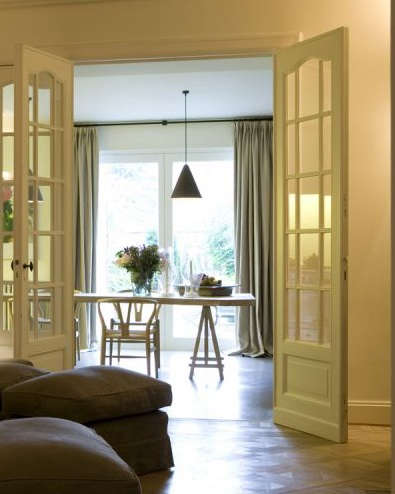
A dining table is one of the most natural places for a fabric pendant light. The Couture Light’s diffused glow can soften faces, warm the table surface, and make dinner feel more intentional. Pair it with wood, matte ceramics, linen napkins, and simple glassware. The goal is not to create a museum display. The goal is to make Tuesday pasta feel like it has a lighting designer.
In a Minimalist Living Room
Minimalist spaces can sometimes become too hard-edged, especially when they rely on white walls, straight sofas, and polished floors. A textile pendant introduces softness without adding visual mess. The Couture Light can act as a bridge between architecture and comfort. It gives the eye something tactile to rest on, which is helpful when the room otherwise contains enough clean lines to make a ruler nervous.
In a Bedroom or Reading Corner
Bedrooms benefit from lighting that behaves gently. A Couture pendant can work well where a sculptural fixture is desired but glare is not. In a reading corner, it can add a crafted accent above a chair or side table. Add a warm bulb, a textured rug, and a chair you actually want to sit in, not just photograph. The result feels quiet, useful, and grown-up without becoming boring.
In Boutique Commercial Interiors
The lamp also makes sense in cafés, small hotels, design shops, salons, and creative studios. Its fashion-inspired concept gives commercial spaces an easy story. People notice it, ask about it, and remember it. That is valuable in hospitality and retail design, where atmosphere is part of the brand. A Couture Light does not just illuminate the space; it gives the space a line of dialogue.
What Makes It Different From Ordinary Pendant Lighting?
Most pendant lamps compete through shape, finish, size, or material luxury. The Couture Light competes through process. The interesting part is not only how it looks when finished, but how it becomes finished. The zip-up construction turns assembly into an act of transformation. That makes the product more memorable than a conventional shade that simply arrives as a fixed form.
It also brings together two design languages that do not always overlap: lighting and apparel. Fashion understands drape, seam, fold, and silhouette. Lighting understands diffusion, shadow, proportion, and placement. The Couture Light borrows from both. The lamp is not trying to look like a dress, but it clearly understands what clothing can teach product design.
This cross-disciplinary thinking is the main reason the fixture remains worth discussing. It reminds us that a good design idea can come from looking sideways. A lamp does not have to learn only from other lamps. It can learn from jackets, tents, sails, paper lanterns, origami, packaging, or even the humble zipper that has been quietly holding civilization together since breakfast.
Practical Buying and Decorating Considerations
Because the Couture Light is a design piece from a specific period and European manufacturer, availability may vary depending on the market. Some listings identify Couture 01 and Couture 02 as pendant lights by Dark, with past pricing shown through design and product archives. If sourcing one today, buyers should check condition, shade fabric, zipper function, electrical compatibility, socket type, canopy hardware, and whether the fixture meets local installation standards.
For interiors in the United States, professional installation is a smart idea, especially if the lamp was originally wired for European use. This is not the glamorous part of design, but it is the part that keeps your ceiling from becoming performance art. A licensed electrician can help verify voltage, wiring, mounting, and bulb compatibility.
Scale also matters. A fabric pendant should feel generous enough to create atmosphere but not so large that it overwhelms the room. Over a dining table, allow enough clearance for conversation and sight lines. In a hallway, consider ceiling height and walking paths. In a bedroom, avoid placing it where sleepy people may encounter it forehead-first. Design is wonderful; surprise head bumps are less so.
Why Designers and Homeowners Still Love Ideas Like This
The Couture Light belongs to a category of objects that feel clever without being cold. It has a strong concept, but the concept serves comfort. It is intellectual enough for design lovers and approachable enough for people who simply want their room to look better at night. That balance is harder than it sounds.
Good lighting is not just about brightness. It affects mood, color, proportion, and even how long people want to stay in a space. A pendant like Couture can make a room feel more finished because it introduces a visible center of gravity. It says, “This area matters.” In open-plan homes, that can help define zones without building walls. In smaller apartments, it can add character without stealing floor space.
The best part is that the lamp does not rely on luxury clichés. It is not impressive because it is heavy, shiny, or made from a rare material with a name that sounds like an expensive cheese. It is impressive because the idea is clean. Fabric plus zipper plus light equals atmosphere. That formula is simple, but simplicity is often where design either succeeds beautifully or collapses in public. Here, it succeeds.
Experience Notes: Living With a Couture-Inspired Lighting Idea
Spending time with a light like Alain Berteau’s Couture, or even with a similar textile pendant, changes how you think about atmosphere. At first, you may focus on the object itself: the shape, the seam, the clever zipper, the fact that it seems to have wandered out of a fashion studio and into the ceiling plan. But after a few evenings, the object becomes less important than the light it produces. That is when the design starts doing its real job.
In a dark room, fabric lighting behaves differently from glass or metal. It does not announce illumination with a hard edge. It lets light arrive gradually, almost like the room is waking up from the inside. Shadows become softer. Corners become less severe. Wood tones look warmer, white walls look less clinical, and even a modest table can suddenly appear more composed. It is the interior design equivalent of finding the right filter, except it happens in real life and does not require pretending your coffee is a lifestyle.
The tactile quality also matters. A textile shade makes a room feel inhabited. Hard surfaces are useful, but too many of them can make a home feel like an airport lounge designed by someone who dislikes ankles. Fabric introduces a domestic signal. It says comfort, touch, softness, and human scale. The Couture concept adds another layer because the fabric is not passive. The zipper tells you there is a process behind the form. You can imagine the lamp being flat, then shaped, then suspended. That small story makes the object feel more personal.
There is also a practical pleasure in lightweight design. Heavy statement fixtures can be beautiful, but they often bring anxiety: complicated installation, reinforced ceilings, special cleaning rituals, and the constant fear that one day gravity will develop an opinion. A fabric-based pendant feels more relaxed. It can still be sculptural, but it does not dominate the room with physical weight. This makes it especially appealing for apartments, rentals with careful installation options, small dining areas, and creative spaces where flexibility matters.
One of the best experiences with this kind of lamp is seeing how it changes throughout the day. In daylight, the shade reads as an object: a textile form, a suspended volume, a design detail. At night, it becomes a mood engine. The fabric catches the glow, the silhouette becomes more graphic, and the room feels less like a set of furniture pieces and more like a scene. That transformation is exactly what good lighting should do. It should not simply help you find your keys. It should help the space become itself.
For homeowners, the lesson is broader than one specific lamp. The Couture Light teaches that a memorable interior does not require every object to be expensive or dramatic. It requires a few smart choices with strong ideas. A lamp can be a conversation starter, a softener, a space-maker, and a piece of functional sculpture. When the idea is as clear as Berteau’s zip-up shade, the room gains personality without shouting. And frankly, any design object that can make a zipper feel poetic deserves a little applause.
Conclusion: The Beauty of a Lamp That Knows How to Dress
Alain Berteau’s Couture Light for Dark remains a fascinating design sleuth discovery because it turns a familiar object into something freshly considered. It is a pendant lamp, yes, but it is also a textile object, a flat-pack idea, a fashion reference, and a small lesson in how design can be clever without becoming annoying. The zipped fabric shade gives the lamp its identity, while the diffused glow gives it everyday value.
For design lovers, the Couture Light is worth remembering because it demonstrates Berteau’s ability to question typologies with humor and restraint. For homeowners, it offers a practical reminder: lighting is not the final accessory you add after the “real” decorating is done. Lighting is the atmosphere. It is the mood, the softness, the visual punctuation, and sometimes the thing that saves a room from looking like a spreadsheet with chairs.
Whether installed over a dining table, in a serene bedroom, or in a boutique interior, the Couture Light proves that a lamp can be both useful and witty. It arrives like clothing, zips into architecture, and glows like a well-kept secret. That is not just good lighting. That is good design, dressed for dinner.