
A DIY bird bath may be one of the easiest backyard projects with the biggest wildlife payoff. You do not need a masonry degree, a designer garden, or a fountain that looks as if it was stolen from an Italian palace. In many cases, birds are perfectly happy with a shallow container, clean water, a few stones, and a location where they do not feel as though the neighborhood cat has booked them for lunch.
Providing water can attract birds that rarely visit seed feeders, including species that are more interested in insects, fruit, nectar, or whatever mysterious item they just pulled from your lawn. A well-designed homemade bird bath gives backyard birds somewhere to drink, cool off, bathe, and maintain their feathers while giving you a front-row seat to some surprisingly enthusiastic splashing.
The best part? Building one can cost almost nothing. Here is how to create a safe, attractive, easy-to-maintain bird bath using ordinary materials.
Why Birds Need a Backyard Bird Bath
Birds need reliable fresh water for drinking as well as bathing. Feather care is serious business for a bird. Clean, properly aligned feathers help with insulation, weather protection, and flight, so bathing and preening are not simply bird spa treatments.
Water can also broaden the range of species visiting your yard. Feeders primarily attract birds interested in the foods being offered. Water has much wider appeal because every bird needs it.
During hot, dry weather, a dependable backyard water source may become particularly useful. In colder regions, accessible liquid water can also attract winter visitors when natural shallow sources are frozen.
What Makes a Good DIY Bird Bath?
Humans tend to judge bird baths by decoration. Birds have a different review system. Their five-star criteria are closer to: shallow, stable, clean, grippy, and preferably not surrounded by predators.
Keep the Water Shallow
Depth is one of the most important considerations. Many backyard songbirds prefer water approximately 1 to 2 inches deep. A basin with shallow edges and a slightly deeper center works especially well because birds of different sizes can choose a comfortable spot.
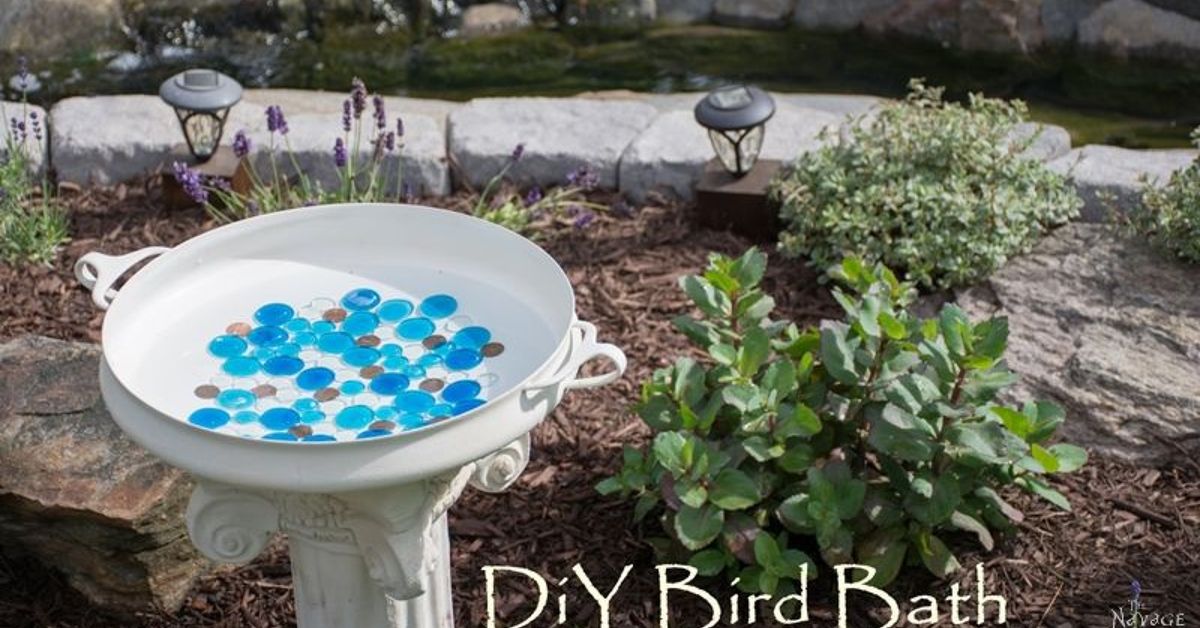
If your chosen container is deeper, you do not necessarily need another one. Add flat stones, gravel, or pebbles to create shallower standing areas. The stones also make the water depth easier for visiting birds to judge.
Give Birds Secure Footing
A beautifully glazed bowl may look wonderful on the patio but feel like an ice rink under tiny bird feet. Natural water sources usually have mud, sand, gravel, rocks, and other textured surfaces.
Choose a basin with a slightly rough interior whenever possible. Terra-cotta, textured stone, and unglazed materials can work well. For smooth plastic, ceramic, or metal containers, add several stones that rise above or just below the waterline.
Choose a Wide Basin
A broad, shallow bowl offers more usable bathing space than a narrow, deep container. Birds need room for the entire performance: crouch, flap, splash, shake, repeat, soak everything within a three-foot radius.
A container roughly 12 to 24 inches across is practical for many yards, although there is no requirement that your homemade bird bath match a particular diameter.
Easy DIY Bird Bath Materials
You can build a bird bath from surprisingly ordinary objects. Useful options include:
- A large terra-cotta plant saucer
- A shallow ceramic bowl
- An old cake pan
- A shallow metal pan
- A sturdy plastic plant tray
- A wide container lid
- A shallow basin placed on an old tree stump
- A plant saucer mounted on an inverted flowerpot
The ideal material is durable, stable, easy to scrub, and free from sharp edges or peeling coatings. Repurposing an existing item is perfectly acceptable. Your local robin is unlikely to complain that its new bathroom was formerly located beneath a geranium.
How to Make a Simple DIY Bird Bath
Step 1: Choose Your Basin
Select a shallow container that can safely hold water. Test it on a level surface before doing anything decorative. If it rocks when gently pushed, fix the stability problem first.
Do not choose a container merely because it looks impressive. A simple plant saucer that can be lifted, emptied, and scrubbed easily is often more practical than a giant decorative basin requiring the strength of three neighbors to clean.
Step 2: Build a Stable Base
A bird bath can sit directly on the ground, on a stump, or on a pedestal.
For a quick pedestal version, turn a large heavy flowerpot upside down and place the saucer on top. You can also stack two sturdy pots, provided the finished structure cannot tip easily.
For permanent installations, make sure the soil underneath is firm and level. Heavy stone or concrete models need especially solid support.
Step 3: Add Stones
Place several clean rocks in the basin. Flat or gently sloping stones are particularly useful because they provide secure landing and standing spots at different water depths.
At least one rock can extend above the surface. Small birds may use it for drinking without needing to step completely into the bath.
Step 4: Add Fresh Water
Fill the basin with fresh water until the deepest area is roughly 1 to 2 inches deep for a typical songbird-friendly setup.
You do not need additives, fragrances, decorative chemicals, or anything promising to turn the water Caribbean blue. This is drinking water for wildlife, not a resort swimming pool.
Step 5: Watch and Adjust
Birds may discover a new bath quickly, or they may spend several days suspiciously examining your construction from a nearby branch.
If nothing visits, do not immediately conclude that your artistic career is over. Try changing the location, reducing the water depth, adding stones, or introducing gentle water movement.
Where Should You Put a Bird Bath?
Location can determine whether your bird bath becomes a neighborhood attraction or an attractive bowl of water used exclusively by falling leaves.
Provide Nearby Escape Cover
Trees and shrubs provide convenient perches where wet birds can retreat and preen. Nearby vegetation can therefore make a bathing site more appealing.
However, dense vegetation immediately beside a ground-level bath can also conceal cats and other predators. Aim for a balance: useful cover nearby, but enough open space around the basin for birds to see danger approaching.
Use Partial Shade When Possible
Summer shade can slow evaporation and keep water cooler. It may also help control excessive algae growth compared with a basin sitting in intense sun all day.
A location receiving morning sun and some afternoon shade can be particularly convenient in hot climates.
Avoid Placing It Directly Under Feeders
Bird seed, hulls, feathers, and droppings can quickly turn fresh bathwater into something resembling experimental soup.
Keep your bird bath reasonably separate from busy feeding stations and from branches that constantly drop large amounts of debris.
Put It Where You Can See It
This project is partly for the birds and partly because watching a cardinal perform an aggressive five-minute bath is excellent entertainment. Position the bath somewhere visible from a window, patio, kitchen, or other frequently used area.
Add Moving Water to Attract More Birds
Moving water can make a DIY bird bath substantially more noticeable. Birds can detect the sight and sound of dripping, splashing, or gently moving water, and water movement also reduces the appeal of the basin as a mosquito nursery.
Make a Simple DIY Dripper
Take a clean plastic bottle or small container and create a tiny opening near the bottom. Fill it with water and suspend it safely above the bird bath so droplets fall slowly into the basin.
Experiment with the hole size. You want a patient drip, not a miniature fire hose that empties the container during your coffee break.
Try a Small Fountain or Bubbler
A small recirculating pump or suitable solar fountain can provide movement without requiring a complicated installation. Keep the spray gentle and make sure plenty of shallow, calm water remains available.
Misters can be another interesting option, particularly around gardens visited by hummingbirds.
How to Keep a Bird Bath Clean
A bird bath is not a fill-it-once-and-forget-it garden ornament. Birds drink from the same water in which other birds bathe, shed feathers, drop dirt, and occasionally leave less charming biological souvenirs.
Change the Water Frequently
In warm weather, replacing the water every day or two is an excellent routine when practical. At minimum, never allow dirty water to sit indefinitely.
Frequent dumping and refilling also disrupts mosquito development. Public-health agencies routinely recommend regularly emptying standing water from bird baths and other small outdoor containers.
Scrub the Basin Regularly
Use a dedicated stiff or nylon brush to remove algae, droppings, and debris. Smooth plastics can scratch easily, so avoid an overly aggressive wire brush on softer materials.
For deeper cleaning, a diluted white-vinegar solution is commonly used, followed by thorough rinsing and drying before the basin is refilled.
Avoid leaving soap, disinfectant, or cleaning-product residue where birds will drink or bathe.
Create a Simple Maintenance Routine
An easy schedule might look like this:
- Daily: Check water level and visible contamination.
- Every 1–2 days: Dump old water and refill.
- Weekly: Scrub the basin thoroughly.
- As needed: Remove leaves, feathers, algae, seed hulls, and droppings.
If the weather is extremely hot or the bath receives heavy traffic, clean it more often.
How to Prevent Mosquitoes in a Bird Bath
A backyard bird bath does not have to become a mosquito factory. The easiest strategy is surprisingly low-tech: replace the water frequently.
Mosquitoes require standing water for part of their life cycle. Regularly emptying and cleaning the basin interrupts that process before a neglected bird bath can become productive breeding habitat.
Moving water from a dripper, bubbler, or fountain may also make the basin less attractive for egg-laying, but circulation is not an excuse to stop cleaning it.
DIY Bird Bath Ideas for Different Backyard Styles
Terra-Cotta Pot Bird Bath
Turn a large terra-cotta pot upside down and place a matching saucer on top. This classic project is inexpensive, easy to customize, and blends naturally with garden containers.
For stability, use a broad, heavy pot and position it on level ground.
Tree-Stump Bird Bath
If you have a flat old stump, transform it into a pedestal by placing a shallow basin on top. The combination fits nicely into woodland-style landscaping and saves you from trying to remove a stubborn stump with questionable tools and increasing levels of anger.
Ground-Level Bird Bath
Simply put a wide plant saucer on level ground and add stones. Ground baths resemble the shallow puddles and pools birds encounter naturally.
They can be wonderfully effective, but predator awareness is especially important. Keep the surrounding area open enough that visiting birds can notice approaching cats.
Stone Bird Bath
A shallow depression in a broad natural stone can become an exceptionally durable garden feature. Stone construction takes more effort and weight management than the plant-saucer method, but the result can look as if it has always belonged in the landscape.
Upcycled Bird Bath
Old pans, sturdy serving dishes, wide lids, and other shallow waterproof objects can all be candidates. Before repurposing anything, make sure the object has no sharp edges, toxic residue, peeling material, or unsafe coatings.
Common DIY Bird Bath Mistakes
Making the Water Too Deep
A deep decorative bowl may intimidate smaller songbirds. Reduce the depth using rocks, gravel, or a different basin.
Using an Extremely Slippery Surface
Birds need traction. Add textured stones or choose a rougher basin.
Forgetting Stability
Pedestals should not wobble. A bird landing weighs very little, but wind, squirrels, raccoons, pets, and enthusiastic children are another matter.
Letting the Water Turn Green
If algae is thriving well enough to qualify for its own ZIP code, the bath has gone too long without cleaning.
Putting Beauty Ahead of Maintenance
A complicated bird bath that you hate cleaning will eventually become a dirty bird bath. Design the project so the basin can be emptied and scrubbed without dismantling half the garden.
Making Your Entire Yard More Bird-Friendly
A bird bath becomes even more valuable when it is part of a larger bird-friendly garden. Native trees, shrubs, flowers, and grasses can supply natural food, insects, nesting opportunities, shelter, and escape cover.
Think of water as one component of a habitat rather than an isolated decoration. A yard containing clean water, native vegetation, safe cover, and reduced pesticide use can serve far more wildlife than a lawn containing nothing except grass and one lonely feeder.
What You Learn After Living With a DIY Bird Bath
The construction phase of a homemade bird bath may take 20 minutes. The interesting part begins afterward. Once a bath becomes part of the yard, several practical lessons tend to emerge that are difficult to appreciate when you are merely choosing a pretty basin at the garden center.
The first lesson is that simple designs are often the easiest to live with. A shallow plant saucer may not win a landscape architecture award, but being able to pick it up with one hand, dump the water, scrub it, and refill it in a few minutes is enormously valuable. After a summer of leaves, pollen, feathers, dirt, and enthusiastic robins, ease of cleaning becomes more impressive than decorative scrollwork.
The second lesson is that birds have opinions. Put out a gorgeous pedestal bath and they may ignore it. Place a cheap shallow saucer nearby and suddenly there is a waiting line. Water depth, footing, visibility, and location can matter much more than price. Experimenting with stones or moving the basin a few feet can completely change activity.
Another common discovery is how quickly birds establish routines. Once they recognize a reliable water source, repeat visitors may appear at surprisingly predictable times. Mornings can become busy, while warm afternoons may produce energetic bathing sessions. A single bird splashing can also attract the attention of others nearby.
You soon learn to appreciate strategically placed rocks. They seem insignificant when building the bath, but birds use them constantly. Smaller visitors can approach the edge without entering deep water, while wet birds get a convenient spot to stand before flying to a branch to preen.
Then comes the maintenance reality check. Fresh water can become dirty remarkably quickly. One energetic bird may transform a clear bowl into a collection of grass fragments and mud in minutes. A nearby feeder accelerates the problem because seed debris finds its way into everything. After experiencing this, many backyard birders naturally move the bath away from the feeder and closer to a hose.
That leads to perhaps the most useful design lesson of all: put your bird bath somewhere that is easy for you to maintain. A supposedly perfect location at the far end of the property becomes less perfect when carrying a bucket there every afternoon feels like an expedition. Convenience increases the odds that water stays fresh.
Moving water can produce another satisfying surprise. Adding an inexpensive dripper or gentle fountain often creates noticeable curiosity. Even birds that have not landed may pause in nearby branches to investigate the sound.
Finally, a DIY bird bath tends to change how you watch your backyard. You start noticing species you previously overlooked, differences in bathing styles, territorial squabbles, juvenile birds learning where to drink, and the elaborate preening session that follows a soaking. The project stops being merely a container of water and becomes a small wildlife observation station.
And that may be the biggest advantage of building one yourself. A DIY bird bath costs little, requires very little space, and gives you an everyday reason to pay closer attention to the living world right outside your door.
Conclusion
The best DIY bird bath is not necessarily the fanciest one. Birds primarily need shallow, clean, accessible water with secure footing and a reasonably safe place to escape after bathing.
Start with a plant saucer, shallow pan, stone basin, or another sturdy container. Add a few rocks, keep the water around 1 to 2 inches deep, place the bath thoughtfully, and refresh it frequently. If you want to increase the attraction factor, add a gentle drip or fountain.
Most importantly, build something you can clean easily. A sparkling $10 saucer filled with fresh water is far more useful to wildlife than an elaborate $300 garden sculpture containing last month’s algae collection.
Make it simple, keep it clean, and prepare for splashing. The birds will handle the rest.