People Share What They Found Thrown Away, And The Phrase ‘One Man’s Trash Is Another Man’s Treasure’ Has Never Been So Real (40 New Pics)

There are two kinds of people in this world: people who walk past a perfectly good chair on the curb, and people who stop, gasp, text three friends, check for bed bugs, and somehow carry it home like they just rescued a baby deer. This is the magic behind curbside finds, thrifted treasures, and the ever-growing culture of “one man’s trash is another man’s treasure.” What looks like junk to one person might be a vintage bar cart, a working lamp, a mid-century dresser, or a plant stand with more personality than your last landlord.
The internet has made this treasure hunt even more addictive. Communities dedicated to stooping, freecycling, thrifting, and neighborhood gifting have turned discarded items into miniature public events. Someone posts a photo of a velvet chair sitting beside a trash bag, adds a cross street, and suddenly half the neighborhood is walking faster than they do during cardio. The thrill is real, the savings are real, and sometimes the furniture is shockingly real wood.
But beyond the funny photos and dramatic “claimed!” comments, there is a bigger story here. In the United States, millions of tons of furniture, textiles, electronics, and household goods are discarded every year. Many items still have years of life left in them. Reuse keeps usable products out of landfills, saves money, reduces demand for new materials, and gives ordinary objects a second act. Basically, it is recycling’s cooler cousinthe one who shows up wearing a vintage jacket and carrying a free mirror.
Why People Love Finding Things Thrown Away
Finding something valuable on the curb hits several happy buttons in the human brain at once. First, it feels like winning a tiny lottery. You did not pay retail. You did not even pay clearance. You paid zero dollars and possibly one awkward elevator ride. Second, curbside treasures often have character. A new flat-pack table may be useful, but a rescued wooden desk with brass handles has a story, even if that story is “someone moved out in a hurry and underestimated how heavy desks are.”
Third, these finds turn ordinary walks into adventures. A person heading out for coffee might come home with a framed print, two stools, and a mysterious ceramic duck. This is how living rooms become museums of luck. The best finds are not always expensive. Sometimes the treasure is a bookshelf that finally solves your “books stacked on the floor like an intellectual landslide” problem. Sometimes it is a plant stand, a lamp shade, or a perfectly good storage bin. The joy comes from possibility.
The Rise of Stooping, Freecycling, and Neighborhood Gift Culture
“Stooping” refers to the habit of leaving unwanted but usable items outside for someone else to take, especially in dense cities where sidewalks become unofficial swap meets. New York City helped make the trend famous, partly because people move often, apartments are small, and hauling furniture across five flights of stairs builds strong opinions. Social media accounts dedicated to stooping now share real-time curb alerts, turning abandoned chairs and tables into local celebrity sightings.
But the idea is not limited to New York. Buy Nothing groups, Freecycle communities, local Facebook groups, Craigslist free sections, neighborhood apps, and nonprofit thrift networks all serve the same basic purpose: move useful items from people who no longer need them to people who do. The Buy Nothing Project describes its model as a community for giving and getting things for free. Freecycle’s mission focuses on reducing waste and easing landfill burdens through local gifting. Habitat ReStores accept many donated home goods and building materials, selling them to support housing work. These systems prove that “trash” is often just an item waiting for better matchmaking.
40 Types of Thrown-Away Finds That Make People Stop in Their Tracks
Every great curbside gallery has its stars. Here are 40 common kinds of finds that make people say, “Who throws this away?”usually while already measuring their car trunk.
- Vintage bar carts: The official furniture of “I have never hosted a cocktail party, but now I might.”
- Solid wood dressers: Heavy, sturdy, and often better built than new budget furniture.
- Bookcases: Especially popular in cities where books breed in corners.
- Accent chairs: From elegant to bizarre, including chairs shaped like hands, shells, or questionable decisions.
- Working lamps: A quick bulb change can turn curb junk into cozy lighting.
- Mirrors: Large mirrors are expensive new, which makes free ones feel illegal in a good way.
- Coffee tables: The unsung heroes of remote controls and snacks.
- End tables: Small enough to rescue, useful enough to justify.
- Kitchen islands: Rare, glorious, and usually gone in minutes.
- Stools: Perfect for breakfast counters, plant corners, or pretending you have a home bar.
- Framed art: Sometimes tasteful, sometimes haunted-looking, always conversation-starting.
- Houseplants: The most emotional curb finds, because nobody wants a fern to end its days beside a garbage bin.
- Record collections: Occasionally full of classics; occasionally full of polka. Either way, respect.
- Musical instruments: Pianos, guitars, keyboards, and drums have all been found waiting for new homes.
- Storage cabinets: A blessing for anyone whose closet currently looks like a laundry avalanche.
- Vintage trunks: Useful storage with instant “mysterious grandparent attic” energy.
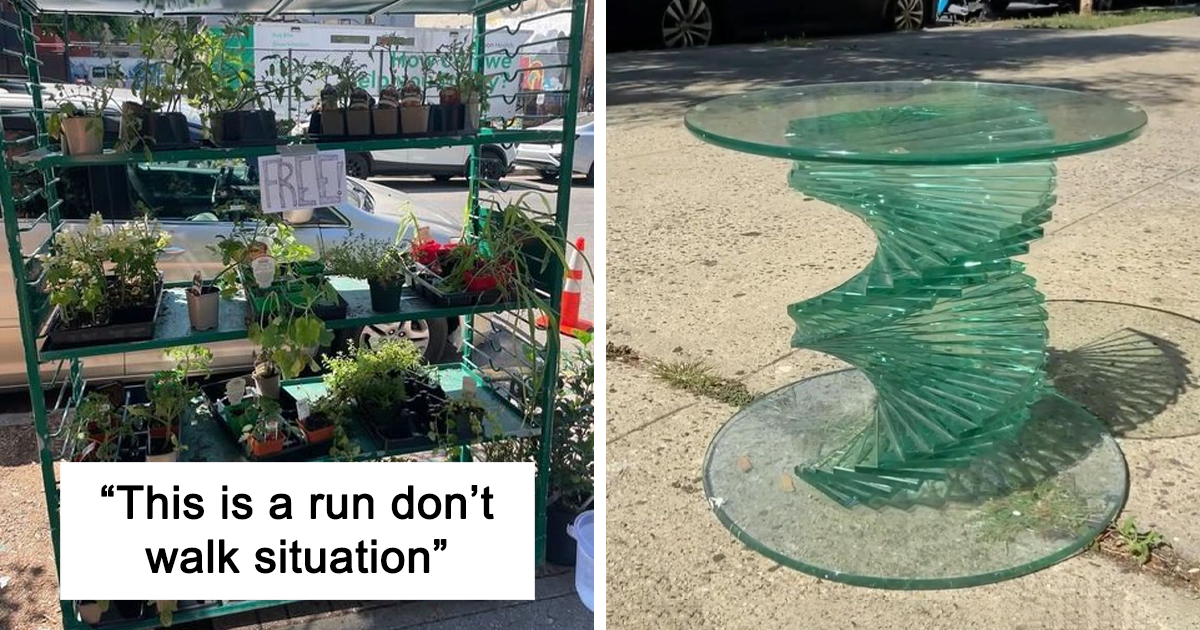
- Designer-looking glass tables: Beautiful, fragile, and a test of friendship during transport.
- Children’s toys: Great when clean and safe, but recalls must be checked.
- Office chairs: Some need wheels; some need therapy; some are ergonomic miracles.
- Desks: Especially popular as remote work made home offices non-negotiable.
- Toolboxes: Even empty ones feel like a promise to become handier.
- Garden pots: Often expensive new and easy to clean.
- Outdoor furniture: A little scrubbing can revive metal or plastic patio pieces.
- Bicycles: Sometimes a tune-up is all that stands between trash and transportation.
- Fans: Functional finds that become heroes during summer.
- Small appliances: Toaster ovens, coffee makers, and mixers can be treasures if tested safely.
- Rugs: Riskier than hard furniture, but tempting when clean and high quality.
- Frames: Easy to repurpose for prints, photos, or DIY art.
- Pet supplies: Crates and carriers can be useful if sanitized properly.
- Seasonal decor: Holiday items are often discarded simply because storage space ran out.
- Collectibles: Figurines, posters, toys, and oddities can become resale gold.
- Ceramics: Vases, bowls, and decorative objects often survive years of style cycles.
- Exercise equipment: Dumbbells, benches, and bikes appear when motivation moves out.
- Wine racks: Also useful for towels, magazines, or pretending to be organized.
- Headboards: Great DIY material for benches, signs, or actual beds.
- Crates: Rustic storage with farmhouse attitude.
- Electronics: Worth checking, but best handled with caution and proper recycling if broken.
- Vintage suitcases: Decorative storage that says, “I may travel, or I may store blankets.”
- Display shelves: Perfect for plants, books, collectibles, and tiny objects with no job.
- Odd statement pieces: The weirder the find, the faster the internet loves it.
The Environmental Side of “Trash Treasure”
The funny thing about curbside finds is that they are entertaining and practical, but they are also quietly environmental. The U.S. Environmental Protection Agency has reported that furniture and furnishings make up millions of tons of municipal solid waste, with most discarded furniture ending up in landfills rather than being recycled. That is a lot of sofas, tables, mattresses, dressers, and chairs taking a final bow too early.
Reuse is often better than recycling because it keeps the entire product in service. Recycling breaks materials down; reuse simply says, “You still have work to do, buddy.” A rescued dresser does not require new lumber, new hardware, factory energy, packaging, or delivery emissions. A donated appliance that still works can serve another household. A secondhand lamp can light a room without creating demand for a new one. Multiply that by millions of people and the humble curb find starts looking less like a quirky habit and more like a practical climate action with excellent decor potential.
How to Tell Treasure From Trouble
Not every free item deserves a ride home. Some things are curbside because they are broken beyond repair, unsafe, recalled, infested, moldy, or carrying a smell that can legally be described only as “history.” Smart treasure hunters know that the best find is not just freeit is safe, usable, and worth the effort.
Check for pests before celebrating
Upholstered furniture, mattresses, rugs, and fabric headboards deserve extra suspicion. Bed bugs can hide in seams, folds, cracks, and tufts. Before bringing anything soft indoors, inspect it carefully with a flashlight. Look for tiny dark stains, shed skins, live insects, eggs, or suspicious residue. Hard-surface items like wood, metal, glass, and plastic are usually easier to clean and inspect, which is why many experienced stoopers prefer them.
Look up recalls and safety issues
Secondhand does not automatically mean unsafe, but some products should be checked carefully. The U.S. Consumer Product Safety Commission has warned that recalled products can reappear in secondhand markets. This is especially important for children’s products, cribs, car seats, electrical items, heaters, appliances, helmets, and anything with moving parts or wiring. Free is not a bargain if it comes with a fire hazard and a surprise trip to urgent care.
Test before you trust
For electronics and appliances, examine cords, plugs, cracks, rust, missing parts, and strange smells. If something sparks, smokes, buzzes angrily, or looks like it last worked during the dial-up internet era, leave it alone or recycle it properly. For furniture, check wobbling, broken joints, water damage, mold, and structural cracks. A chair should support a human body, not your optimism.
How to Clean and Refresh a Curbside Find
A good rescue usually needs a small welcome-home ritual. For hard furniture, start with a vacuum or brush to remove dust and grit. Wipe it down with a mild cleaner appropriate for the material. For wood, avoid soaking it; too much water can cause swelling or finish damage. For metal, check for rust and tighten screws. For glass, clean both sides and inspect edges for chips. For plastic, soap and warm water can do wonders.
If the item smells musty, let it air out in a dry, ventilated space. Baking soda can help absorb odors in drawers. Sunlight can freshen some items, though too much direct sun can fade finishes. For furniture with drawers, remove them and clean inside the frame. This is also the moment when you may discover bonus objects: coins, old receipts, mystery keys, and occasionally one very confused spider.
Paint, new hardware, peel-and-stick wallpaper, fabric, or a careful sanding job can completely transform a rescued item. A scratched dresser can become a nursery piece. A boring side table can become a bold accent. A chipped frame can become a gallery wall hero. The best part is that experimentation feels less scary when the item was free. If your first DIY attempt goes wrong, you have not ruined a $900 consoleyou have created “learning.”
Why Secondhand Finds Are Also a Budget Win
Furniture, decor, tools, and home goods are expensive, especially for renters, students, new homeowners, young families, and anyone furnishing a place after a move. Curbside rescues and free community exchanges can reduce the cost of setting up a home dramatically. A free desk might make remote work possible. A donated crib may not be safe unless it meets current standards, but a free bookshelf, lamp, or table can be a perfectly practical solution.
The resale economy has also moved into the mainstream. Shoppers now browse secondhand platforms for clothing, furniture, decor, and collectibles not just to save money, but to find pieces with personality. Younger consumers, in particular, often see secondhand shopping as normal, smart, and stylish. The old stigma around used goods has faded. Now, saying “I found it on the curb” can earn more admiration than saying “I paid full price.”
The Social Magic: Free Stuff Builds Community
One underrated part of the trash-to-treasure movement is how social it becomes. People tip each other off. They post photos. They ask, “Is this still there?” They help strangers carry a cabinet. They celebrate before-and-after makeovers. In a world where neighbors can live ten feet apart and never speak, a free bookshelf can become an icebreaker.
Gift economies also change how people think about ownership. Instead of asking, “Can I sell this for $12?” people ask, “Who could use this?” That tiny shift matters. A parent may pass along a toddler table. A student may claim a desk. A plant lover may save a neglected monstera. A home cook may receive a stack of mixing bowls. The object moves on, and the giver gets space without sending something useful to a landfill.
Tips for Successful Treasure Hunting
Good curbside hunting is part luck, part timing, and part common sense. Moving days, end-of-month weekends, college move-out periods, and neighborhood bulk pickup days often produce more finds. Dense apartment areas tend to generate more curb alerts because people move frequently and lack storage. Bring gloves, a tape measure, hand sanitizer, a flashlight, and a realistic understanding of your upper-body strength. Many people have learned, too late, that a “small dresser” becomes a “wooden boulder” after three blocks.
Always respect local rules. Do not block sidewalks when giving items away. Label items clearly as free. Do not take anything that appears to be temporarily placed outside, such as a delivery, stroller, or someone’s moving pile. If in doubt, ask. When posting free items online, describe the condition honestly. A wobbly table may still be useful to someone who can repair it, but surprise wobble is not a love language.
Experiences Related to Finding Thrown-Away Treasures
The best stories about thrown-away finds usually begin with disbelief. Someone is walking home after a long day, carrying groceries, answering a text, or mentally negotiating with themselves about dinner, when they see it: a beautiful chair, a clean dresser, a stack of art books, or a lamp that looks like it escaped from a boutique hotel. At first, they assume something must be wrong. Surely nobody would throw this away. Then comes the inspection. Then comes the quick calculation: distance to home, available hands, elevator status, and whether a friend with a car owes them a favor.
Many people describe their first curbside rescue as a gateway experience. Maybe it was a mirror that made a tiny apartment feel bigger. Maybe it was a coffee table that only needed new screws. Maybe it was a plant that looked nearly dead but bounced back after water, pruning, and a dramatic pep talk. Once someone has saved one good item, the sidewalk changes forever. Trash night becomes treasure night. A walk around the block becomes a scouting mission. The phrase “I’ll just take a quick look” becomes suspiciously flexible.
There is also a special pride in transforming something unwanted. A scratched table can be sanded and stained. A dresser can be painted forest green and fitted with brass knobs. A plain stool can become a plant perch. A damaged frame can become wall art. These projects offer a sense of creativity without the pressure of perfection. The item already had one foot in the dump, so every improvement feels like a bonus round. Even the mistakes become part of the charm. A slightly uneven paint job? That is not a flaw; that is “hand-finished character,” thank you very much.
Of course, the experiences are not always glamorous. Some finds are heavier than expected. Some smell weird. Some reveal problems only after arriving home. Many treasure hunters have a story about carrying a chair six blocks only to realize it did not fit through the door. Others have learned the hard way that “free couch” should trigger a full detective-level inspection. The wisest rescuers develop rules: avoid mattresses, be cautious with upholstery, check electronics, measure first, and never let excitement overpower common sense.
Still, the appeal remains powerful because these finds feel personal. Anyone can buy a lamp. Not everyone can say, “I rescued this lamp from certain doom on a Tuesday night while wearing pajama pants under a trench coat.” That story becomes part of the object. Guests ask about it. The owner retells the adventure. The item becomes more than furniture; it becomes proof that value is often hiding in plain sight.
In the end, thrown-away treasures remind us that our culture gives up on things quickly. We replace, upgrade, declutter, and discard. But sometimes the old thing is not useless. It is just between chapters. The person who sees that possibility gets more than a free object. They get a little thrill, a better room, a smaller waste footprint, and a story worth telling.
Conclusion: The Treasure Was There All Along
People love photos of unbelievable curbside finds because they prove something hopeful: value is not always obvious at first glance. A dusty chair, a scratched table, a lonely plant, or a box of records can become someone else’s favorite thing. The phrase “one man’s trash is another man’s treasure” survives because it keeps proving itself true on sidewalks, in thrift stores, in Buy Nothing groups, and in the back seats of cars that were absolutely not designed to transport dressers.
The trick is to balance excitement with care. Rescue what is safe, cleanable, and useful. Leave behind what is hazardous, infested, recalled, or beyond repair. Share what you no longer need. Donate when possible. Post a curb alert when appropriate. And when you find that perfect free mirror, lamp, or vintage bar cart, take a victory photo. Future you will want evidence of the day the universe said, “Here, have furniture.”
Note: This article is written as original web content in standard American English and is based on real information about reuse culture, curbside finds, secondhand safety, resale trends, waste reduction, and community gifting.