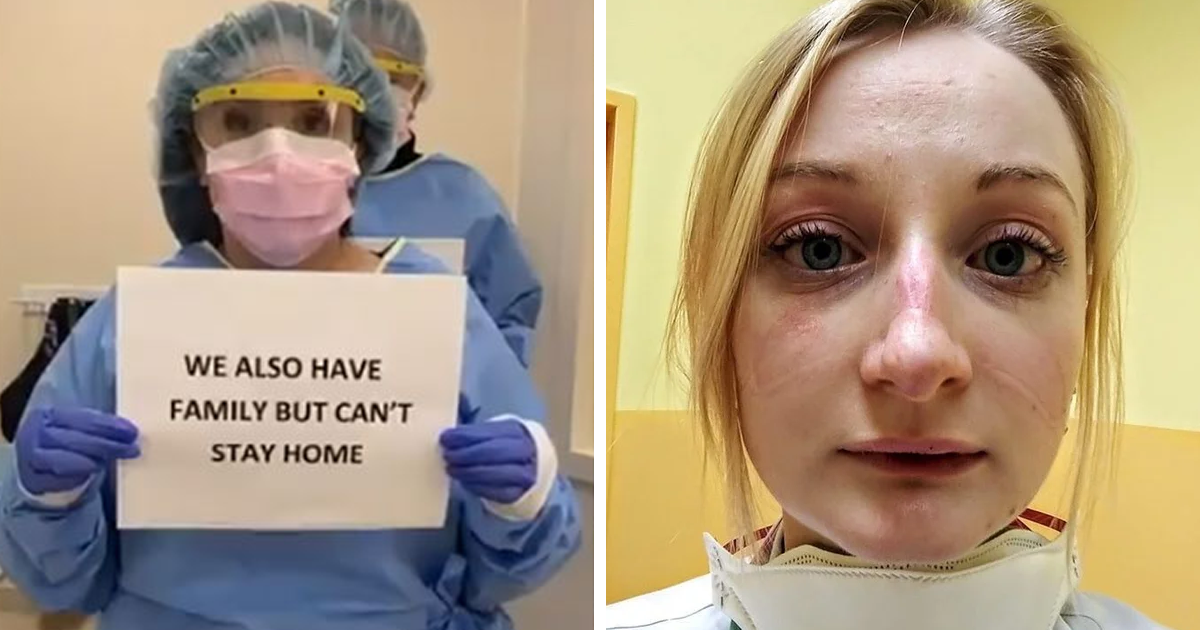

There are normal public-service announcements, and then there are doctors holding handmade signs after exhausting hospital shifts, practically pleading with the rest of us to put on sweatpants and stay on the couch. During the height of the COVID-19 emergency, that was the mood: physicians, nurses, respiratory therapists, emergency-room teams, and hospital leaders were not asking for applause first. They were asking for space, time, and fewer preventable infections.
The message was simple enough to fit on cardboard: We stay here for you. Please stay home for us. It spread across social media because it was emotional, direct, and impossible to misunderstand. No complicated chart. No ten-page policy memo. Just tired faces, scrubs, masks, and a reminder that every unnecessary trip could turn into someone else’s emergency.
This article looks at why those photos mattered, what doctors were trying to explain, and why the lesson still deserves a permanent spot in our common-sense health habits. Today, “stay at home” does not always mean lockdown. In everyday life, it means staying home when sick, avoiding crowded indoor spaces during outbreaks, protecting vulnerable people, and remembering that public health is not only about personal risk. It is also about not turning your sniffles into someone else’s crisis.
Why Doctors Begged People To Stay Home
When hospitals became crowded, health care workers faced a brutal math problem. A virus could spread faster than hospitals could add beds, equipment, staffing, and protective gear. That is why doctors and nurses were not simply saying, “Don’t get sick.” They were saying, “Help us slow this down so we can take care of everyone who needs care.”
The phrase “flatten the curve” became popular because it translated a scary public-health concept into something people could visualize. If infections rise too quickly, hospitals may become overwhelmed. If infections spread more slowly, medical teams have a better chance to treat patients, protect staff, and preserve supplies. Staying home, physical distancing, masking in high-risk situations, and washing hands were never glamorous. But neither is a fire extinguisher, and everyone is very grateful when it works.
The doctors in those viral photos were also trying to correct one of the most dangerous misunderstandings of the pandemic: “I feel fine, so I cannot spread anything.” Respiratory viruses can spread before symptoms become obvious, and some infected people may have mild or no symptoms. That reality made everyday choices matter. A quick visit, a crowded party, or one “I’m probably fine” errand could create a chain of exposure.
The Human Story Behind the Signs
The most powerful thing about the “stay home” photos was not the handwriting. It was the people holding the signs. Doctors appeared with bruised faces from tight masks. Nurses stood in hallways after long shifts. Emergency workers held messages outside hospitals. Some wrote from intensive care units. Others posted from break rooms, cars, or front steps before heading back into another shift.
The photos worked because they replaced abstract numbers with human stakes. “Hospital capacity” became the nurse who had not hugged her kids in days. “Protective equipment” became the doctor reusing gear longer than anyone wanted. “Community spread” became a paramedic wondering how many calls would come in overnight. In other words, the photos gave the public a face to go with the warning.
They also revealed a strange imbalance. Many people could help by doing less: fewer outings, fewer gatherings, fewer unnecessary risks. Health care workers had to do more: longer hours, higher stress, more exposure, and emotional strain. That is why the request felt so urgent. Staying home was not laziness. It was participation.
15 Pics That Captured the Message
If you are building a photo-based version of this story, these 15 image moments show the emotional range behind the message. Each one represents a real type of scene that became common during the emergency phase of the pandemic.
1. The Doctor Holding “We Stay Here For You”
This became the unofficial anthem of the movement. A physician in scrubs holds a sign reminding people that medical workers cannot stay home, so the public should do its part to reduce preventable exposure.
2. Nurses Standing Six Feet Apart
A group of nurses spaced across a hallway delivers a visual lesson in physical distancing. It is the kind of image that says, “Yes, we miss normal life too. No, that does not make the virus care.”
3. The Exhausted ER Team After a Shift
Emergency rooms became the front door of the crisis. A photo of an ER team holding a stay-home message shows how quickly community choices can land inside hospital walls.
4. A Respiratory Therapist With a Simple Plea
Respiratory therapists played a crucial role in caring for patients with breathing problems. Their signs carried extra weight because they saw firsthand what severe respiratory illness could do.
5. A Doctor Showing Mask Marks
Images of mask marks on faces became symbols of endurance. They also reminded viewers that protective equipment is not a costume. It is uncomfortable, necessary, and worn for hours by people trying to save lives.
6. Hospital Workers in a Parking Lot
Outdoor group photos from hospital parking lots often looked ordinary at first glance. Then the signs made the message unmistakable: staying home was one way to keep hospitals from becoming even more overwhelmed.
7. A Pediatric Team Asking Families to Be Careful
Pediatric clinicians helped families understand that children, parents, grandparents, and caregivers are connected. A small household decision could ripple outward to schools, relatives, and communities.
8. A Surgeon Between Cases
Even when elective procedures paused or shifted, urgent surgeries continued. A surgeon with a stay-home sign represented the hidden pressure on hospitals trying to handle emergencies while managing infection risk.
9. A Rural Clinic Team Sending the Same Message
The stay-home plea was not limited to big-city hospitals. Rural clinics faced special challenges, including limited staff, long travel distances, and fewer nearby specialty resources.
10. A Nurse Holding a Sign for Her Family
Some of the most emotional images came from workers who isolated from their own families to protect them. Their message was personal: “I am staying away from the people I love so I can care for yours.”
11. A Lab Worker Behind the Scenes
Testing, processing, and lab work rarely get the spotlight, but they are essential. A lab worker’s sign reminded people that a pandemic response depends on many professionals the public may never meet.
12. A Hospitalist Asking for Time
Hospitalists coordinated care for admitted patients, often under fast-changing conditions. Their plea was not dramatic for attention. It was practical: fewer infections meant more time to care well.
13. A Medical Student Holding a Handmade Poster
Medical students and trainees saw history happening in real time. Their photos often carried a hopeful tone: the next generation of doctors was learning that medicine includes public communication, not just diagnosis.
14. A Team Thanking People Who Stayed Home
Not every sign was a warning. Some were thank-you notes. Those mattered too because public health works best when people feel included, not scolded into numbness.
15. A Final Sign: “Please Don’t Make Us Choose”
The most haunting messages focused on the fear of scarce resources. Doctors did not want to choose who received care based on shortages. Staying home helped reduce the chance that hospitals would face impossible decisions.
What “Stay Home” Really Meant
The phrase sounded simple, but it carried several layers. First, it meant avoiding nonessential trips during periods of high transmission. Second, it meant skipping gatherings that could turn into spreading events. Third, it meant staying away from others when experiencing symptoms such as fever, cough, fatigue, chills, headache, or a runny nose that could signal a respiratory virus.
Modern public-health guidance has become more flexible than the strict emergency messages of 2020. In general, people with respiratory symptoms are advised to stay home and away from others until symptoms are improving and, if fever was present, it has been gone for at least 24 hours without fever-reducing medicine. After returning to normal activities, extra precautions may still be useful for several days, especially around older adults, immunocompromised people, babies, and anyone at higher risk.
That is the grown-up version of the original cardboard signs. It is not “panic forever.” It is “do not donate your germs to the community like a terrible raffle prize.”
Why the Message Worked So Well Online
The stay-home photos became shareable because they combined urgency with intimacy. A chart might explain risk, but a doctor’s handwritten sign creates eye contact. It feels like a person speaking across the internet, saying, “I am doing my part. Please do yours.”
The images were also easy to understand across age groups, languages, and political opinions. They did not require advanced medical knowledge. They asked for one behavior change at a time. During a confusing crisis, that clarity mattered.
Another reason they worked: they made staying home feel active. People often want to help during a disaster, but not everyone can donate equipment, work in a hospital, or run a relief program. Staying home gave ordinary people a role. Cooking dinner, canceling a party, moving a meeting online, or skipping a crowded store became small acts of protection.
The Public Health Lesson That Still Matters
Even outside a pandemic emergency, the message has value. Respiratory viruses spread through droplets and tiny particles released when people breathe, talk, cough, or sneeze. Crowded indoor spaces, poor ventilation, close contact, and ignoring symptoms can all increase risk. That does not mean life should stop every time someone sneezes. It means people should use judgment instead of pretending germs respect calendar plans.
Staying home when sick protects more than one person. It helps coworkers avoid losing income, keeps classmates from missing school, protects older relatives, and reduces pressure on clinics and hospitals. It also signals respect. Few things say “I care about this team” like not showing up to a meeting with a fever and the confidence of a coughing fog machine.
Employers, schools, and communities also have responsibilities. It is easier for people to stay home when sick if policies make room for it. Flexible attendance rules, remote work options, paid sick leave, clear communication, and practical support can turn public-health advice into realistic behavior.
Common Mistakes People Made
Thinking “Just One Visit” Does Not Count
Many outbreaks begin with ordinary moments: a dinner, a ride, a quick meeting, a family visit, or a casual hangout. One visit can matter when a virus is spreading.
Assuming Mild Symptoms Are Harmless
Mild illness in one person can become serious illness in another. A healthy adult may recover quickly, while an older neighbor or immunocompromised relative faces a much higher risk.
Treating Staying Home as Fear Instead of Courtesy
Staying home when sick is not dramatic. It is basic hygiene with better Wi-Fi. It is the social version of covering a cough or washing your hands.
Forgetting Health Care Workers Are Human
Doctors and nurses are trained for pressure, but training does not make them invincible. Burnout, grief, staffing shortages, and repeated exposure can take a lasting toll.
How to Practice the Lesson Today
The best modern version of the stay-home message is practical, balanced, and humane. If you feel sick, stay home when possible. Rest, hydrate, monitor symptoms, and contact a health professional if symptoms are severe, worsening, or concerning. If you must be around others, consider wearing a well-fitting mask, improving ventilation, keeping distance, and washing your hands often.
If someone in your household is ill, reduce close contact when realistic, clean high-touch surfaces, avoid sharing cups or utensils, and pay attention to people at higher risk. If you are planning an event during a wave of respiratory illness, offer flexible options. Let guests skip without guilt. The party will survive. Aunt Linda’s immune system may appreciate the courtesy.
For workplaces and schools, the lesson is equally clear: do not reward people for dragging themselves in sick. A culture that praises “perfect attendance” can accidentally create perfect transmission. Encouraging rest is not weakness; it is prevention.
Experiences Related to “Doctors Are Uniting In Begging People To Stay At Home”
One of the most memorable experiences from that period was how quickly ordinary homes turned into tiny command centers. Kitchen tables became offices. Bedrooms became classrooms. Living rooms became gyms, therapy corners, video-call studios, and occasionally snack crime scenes. People joked about baking too much bread or forgetting what day it was, but underneath the humor was a serious adjustment. Staying home was not always easy. It could feel lonely, frustrating, boring, or stressful. Yet for many people, it also became the first time they understood how personal routines connect to public health.
Families learned to check on grandparents by phone instead of dropping by. Friends celebrated birthdays through screens, singing slightly out of sync like a choir trapped in a toaster. Neighbors left groceries on porches. Teachers rebuilt lesson plans overnight. Parents discovered that “working from home” with children nearby is less a lifestyle and more an Olympic event with juice boxes. Those experiences were messy, but they showed how communities adapt when the stakes are high.
For health care workers, the experience was very different. Many left home before sunrise and returned exhausted. Some changed clothes before entering the house. Some slept separately from family members to reduce risk. Many carried emotional weight that the public could not fully see: patients isolated from loved ones, families waiting for updates, colleagues getting sick, and constant uncertainty about what the next shift would bring. The “stay home” photos were not marketing. They were distress signals wrapped in professionalism.
Another lasting experience was the sudden appreciation for invisible labor. Before the crisis, many people rarely thought about respiratory therapists, lab teams, cleaners, ambulance crews, hospital food service workers, supply teams, and front-desk staff. During the emergency, it became obvious that health care is an ecosystem. A doctor cannot do much without clean rooms, working equipment, accurate tests, stocked supplies, safe transport, and a coordinated team. Staying home helped protect that entire system, not just individual doctors.
The period also taught people how hard behavior change can be. Even when guidance is clear, real life complicates everything. Some workers could not stay home without losing income. Some people lived in crowded homes. Some lacked paid leave, reliable health care, or internet access. That is why public-health messages must be paired with support. Telling people to do the right thing works better when society makes the right thing possible.
Perhaps the biggest lesson is that staying home is not only about fear of illness. It is about timing, compassion, and shared responsibility. When you stay home while contagious, you may never know whose week, paycheck, treatment, pregnancy, surgery, or immune system you protected. That is the strange beauty of prevention: when it works, nothing dramatic happens. No headline. No emergency. No hospital rush. Just a normal day that stayed normal because someone made a careful choice.
Conclusion
“Doctors Are Uniting In Begging People To Stay At Home” captured one of the clearest public-health messages of the COVID-19 era. The signs were emotional because the situation was emotional. Health care workers were not asking the public to be perfect. They were asking people to understand that small choices could protect hospitals, families, and vulnerable neighbors.
Years later, the message has evolved, but it has not disappeared. We do not need to live in emergency mode forever. We do need to keep the useful lesson: when you are sick, stay home when possible; when illness is spreading, be thoughtful; when doctors and nurses warn that the system is strained, listen before the cardboard signs come back out.