
Spoiler note: This article discusses Pennywise lore from Stephen King’s It, the It films, and It: Welcome to Derry. If you have not wandered into Derry yet, consider this your red balloon warning.
The Deadlights in It: Welcome to Derry are not just a flashy horror effect, a demonic flashlight, or Pennywise’s version of mood lighting. They are the closest human beings can come to seeing what “It” truly is: an ancient, cosmic, reality-bending force that exists beyond normal human understanding. Pennywise the Dancing Clown is only a mask. The Deadlights are the monster behind the mask, the terrifying truth hiding inside the grin.
In Stephen King’s mythology, the Deadlights are tied to the entity’s real form, a blazing, otherworldly presence that can drive people insane, freeze them in a trance, or destroy them entirely. In It: Welcome to Derry, the series uses the Deadlights to deepen the horror of Pennywise and to remind viewers that Derry’s evil is not merely local. Yes, the town has creepy sewers, cursed history, and enough trauma to make a therapist buy a second notebook. But the thing feeding on Derry is much older and much stranger than one haunted town.
What Are the Deadlights?
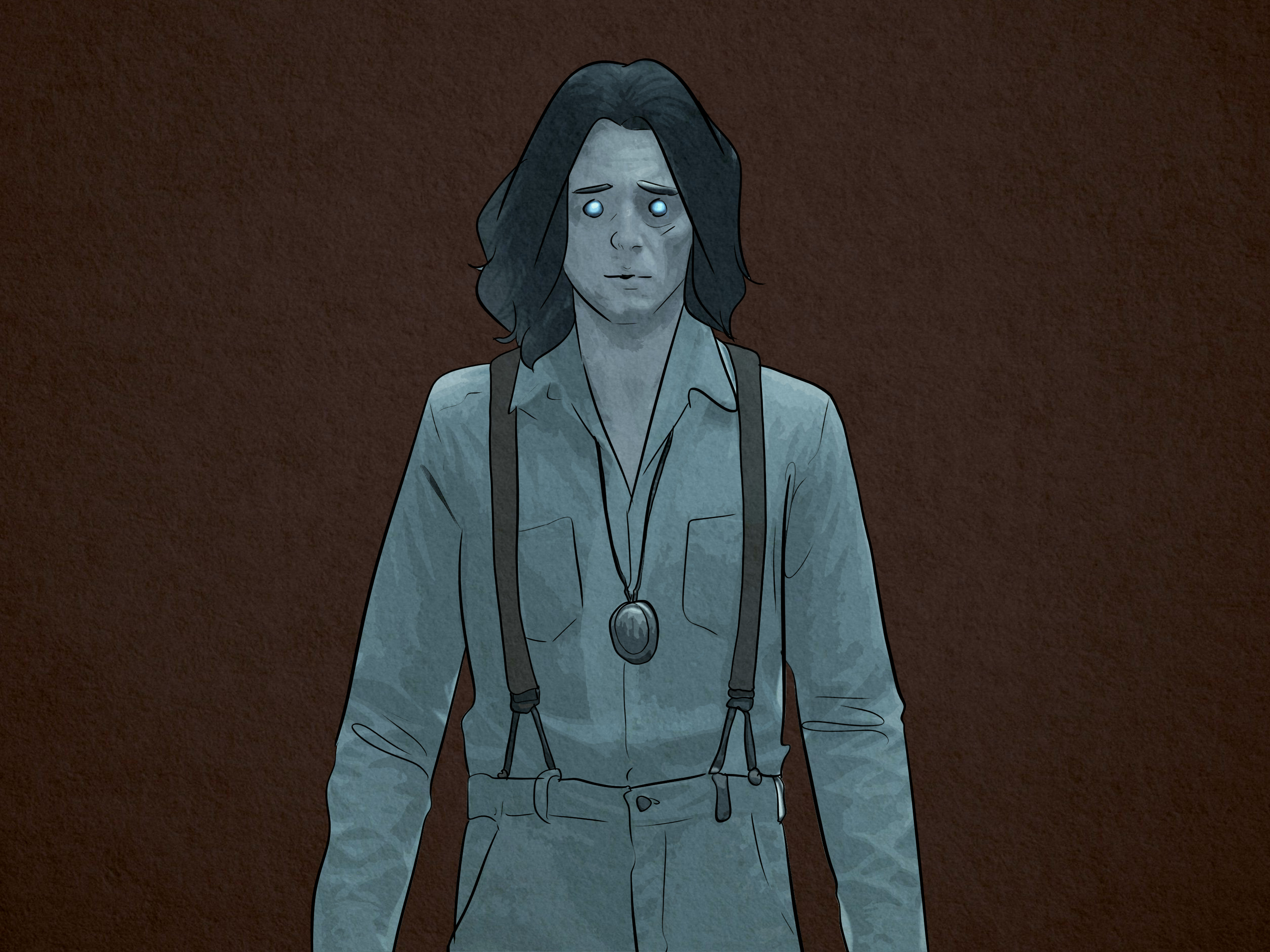
The simplest explanation is this: the Deadlights are Pennywise’s true essence. They appear as intense, hypnotic, supernatural lights, often glowing from within the creature’s mouth or body. When victims look into them, they are not simply seeing “bright lights.” They are glimpsing a cosmic entity that the human mind was never built to process.
That is why the Deadlights are so dangerous. They are not a weapon in the ordinary sense, like claws, teeth, or a balloon that definitely did not pass any safety inspection. They are exposure to a reality beyond reality. Looking into them is like opening a browser tab called “The Universe Is Not What You Think” and then discovering it has 7,000 pop-ups, all screaming.
In the broader It mythology, Pennywise is a shapeshifter. It becomes clowns, monsters, dead relatives, lepers, giant insects, and whatever shape will harvest the most fear from a victim. But those forms are performances. The Deadlights are the raw thing underneath. They are the entity without costume, personality, or theatrical timing.
Why Do the Deadlights Matter in It: Welcome to Derry?
It: Welcome to Derry works as a prequel to the modern It films while expanding Stephen King’s Derry mythology. Set decades before the Losers’ Club faces Pennywise, the series explores earlier cycles of violence, disappearance, fear, and supernatural manipulation in the town. The Deadlights matter because they move the story beyond “killer clown in Maine” and into full cosmic horror.
That distinction is important. Pennywise is frightening because clowns are unsettling, especially when they appear in sewers and offer children paper boats. But the Deadlights explain why Pennywise is more than a scary disguise. The entity is not evil because it wears clown makeup. It wears clown makeup because evil has excellent branding instincts.
When Welcome to Derry brings the Deadlights into focus, the show tells viewers that the monster’s power is not limited to physical attacks. It can paralyze minds, distort perception, manipulate memory, and turn human fear into a buffet. The Deadlights are the ultimate reminder that Pennywise does not merely kill bodies. It invades consciousness.
Pennywise Is Not the True Form
One of the biggest misunderstandings about It is that Pennywise is the villain’s real identity. Pennywise is famous, yes. Pennywise is iconic, absolutely. Pennywise has done more damage to the public image of clowns than any birthday party magician in history. But Pennywise is not the true form of It.
Pennywise is a chosen mask. It often uses the clown because the form can attract children while also terrifying them. That double effect is part of the entity’s strategy. It likes fear. It feeds on fear. Children are especially vulnerable because their imaginations are vivid, flexible, and powerful. In King’s horror universe, imagination is not just a cute childhood feature; it can shape what terror looks like.
The Deadlights strip away the performance. They reveal that behind Pennywise’s jokes, dances, voices, and big painted smile is something alien, ancient, and fundamentally inhuman. This is why characters who encounter the Deadlights often do not react as if they have seen a monster. They react as if their minds have been unplugged from reality.
Are the Deadlights a Place, a Power, or a Being?
The answer is wonderfully unpleasant: they are a bit of all three. The Deadlights can be understood as the entity’s true form, but they also function like an energy, a dimension, and a weapon. Stephen King’s cosmic horror often blurs these categories. A thing can be a creature, a force, a realm, and a nightmare all at once. Convenient? No. Terrifying? Very.
In the It mythology, the entity comes from outside normal reality, often associated with the Macroverse, a vast cosmic plane beyond ordinary human experience. The Deadlights are what human beings perceive when that impossible being intrudes into our world. In other words, the lights are not necessarily the full thing. They may be the human mind’s best, broken attempt to interpret the full thing.
Think of it like staring at the sun through a cracked mirror while someone whispers your worst memory into your ear. That is not a scientific explanation, but in Derry, science packed a suitcase and left around the time the sewer clown started quoting nursery rhymes.
What Happens When Someone Looks Into the Deadlights?
Looking into the Deadlights can cause paralysis, madness, catatonia, soul-deep trauma, or death. Different versions of It show the effect in slightly different ways, but the core idea stays the same: the human mind cannot safely comprehend what it is seeing.
In the films, Beverly Marsh is exposed to the Deadlights and enters a floating, trance-like state. She survives, but the experience changes the atmosphere of the story. It shows that Pennywise can do more than frighten people with illusions. It can suspend them between life and death, awareness and oblivion. The Deadlights are a spiritual and psychological trap.
In Welcome to Derry, the Deadlights carry similar weight. They are not used casually. When the entity reveals them, the moment feels like escalation. This is the monster saying, “Enough masks. Here is the nightmare without makeup.” And because the show is a prequel, viewers already know Derry’s evil will continue. That makes every exposure to the Deadlights feel less like a final boss fight and more like an early warning from a cosmic disaster that still has decades of damage ahead.
Why Do the Deadlights Look Like Lights?
The Deadlights appear as glowing, swirling, often orange or yellowish light because human perception needs something to hold onto. The real form of It is beyond ordinary shape. The lights are a visual translation of something that cannot truly be translated.
Horror works best when it gives the audience just enough to imagine the rest. A rubber monster can become less scary if the camera stares at it too long. Cosmic horror operates differently. It suggests that the worst thing is not what you see, but what seeing it does to you. The Deadlights are scary because they are not fully explainable. They are not a puzzle box with a neat instruction manual. They are the answer to a question no sane person should ask.
How the Deadlights Connect to Derry’s Fear Cycle
Derry is not just a setting in It. It is part of the horror machine. The town has a long history of disappearances, violence, denial, and silence. Pennywise feeds during cycles, then disappears into dormancy. The adults forget. The town moves on. Children keep vanishing. The library probably has overdue notices from people who were eaten in 1908.
The Deadlights help explain how this cycle feels bigger than ordinary evil. Pennywise is not merely hiding in Derry; it is woven into the town’s emotional and historical rot. The entity exploits fear, racism, grief, abuse, loneliness, and guilt. Welcome to Derry highlights that the monster’s power is strongest where people refuse to face what is happening around them.
This is one reason the Deadlights are thematically powerful. They are not only cosmic horror. They are also a metaphor for unbearable truth. To look into the Deadlights is to confront something too large, too awful, and too real for the mind to accept. Derry survives by looking away. Victims suffer when they are forced to look too closely.
Are the Deadlights the Same as Pennywise’s Soul?
Calling the Deadlights Pennywise’s “soul” is close, but not perfect. Pennywise is a persona. The Deadlights belong to It, the larger entity. If Pennywise is a puppet, the Deadlights are the thing holding the strings, building the stage, selling the tickets, and eating the audience.
The Deadlights are more accurately described as It’s true essence. They are the living core of the being, or at least the part of that core that can be perceived by humans. That is why they feel more final than any single monster form. A werewolf can be fought. A clown can be attacked. A giant spider can be wounded. But how do you fight a cosmic light that can turn your brain into pudding? Carefully, one hopes.
Why the Deadlights Are Scarier Than Pennywise
Pennywise is scary because he is personal. He talks. He teases. He knows what hurts. He knows what you fear. He weaponizes childhood, memory, and vulnerability. But the Deadlights are scary because they are impersonal. They do not need to taunt you. They do not need a joke. They simply exist, and that existence is enough to break you.
That makes the Deadlights one of the best horror ideas in the It universe. They combine supernatural danger with psychological collapse. They suggest that the deepest horror is not being chased by a monster. It is learning that the monster is only the shadow of something much larger.
How Welcome to Derry Expands the Meaning of the Deadlights
It: Welcome to Derry gives the Deadlights new dramatic context by placing them inside earlier chapters of Derry’s history. Instead of waiting for the Losers’ Club era, the series shows how generations before them encountered the same ancient evil. This makes the Deadlights feel less like a single shocking reveal and more like a recurring wound in the town’s timeline.
The show also benefits from the audience’s existing knowledge. Viewers know Pennywise will return. They know the town will keep suffering. They know the horror does not end neatly. So when the Deadlights appear, they carry tragic weight. They are not just a monster effect. They are proof that Derry has been staring into the same impossible nightmare for a very long time.
Deadlights vs. Shapeshifting: What Is the Difference?
Shapeshifting is how It communicates fear. The Deadlights are what It is. That is the cleanest distinction.
When It becomes a clown, a corpse, a creature, or a familiar face, it is selecting a form that will produce maximum emotional damage. These forms are customized nightmares. They are tailored horror. Very boutique, very evil.
The Deadlights are not tailored. They are overwhelming. They do not need to resemble a victim’s fear because they bypass ordinary fear altogether. They attack perception itself. The victim is not scared because they recognize a monster. They are destroyed because they recognize, for one terrible instant, that reality is much larger and darker than they believed.
Can Anyone Survive the Deadlights?
Survival is possible, but it is rare and never casual. Characters who survive exposure to the Deadlights do not simply shake it off and say, “Well, that was weird,” before grabbing a sandwich. The experience leaves marks. It changes them. It suggests they have touched something beyond death and returned with part of the cold still clinging to them.
In King’s world, survival often depends on belief, connection, courage, and imagination. The Losers’ Club succeeds not because they are physically stronger than It, but because they unite against it. This is crucial. Pennywise isolates. The Deadlights overwhelm. Human connection pushes back. That emotional logic is one of the reasons It remains more than a monster story.
What the Deadlights Symbolize
The Deadlights symbolize forbidden knowledge, trauma, cosmic evil, and the terror of seeing too much. They are what happens when the curtain lifts and the universe is not comforting, orderly, or human-centered. They also represent the truth Derry refuses to face: evil thrives when communities deny it, normalize it, or bury it beneath polite small-town routines.
That is why the Deadlights work so well in Welcome to Derry. The series is not just asking, “Where did Pennywise come from?” It is asking, “Why does Derry keep letting this happen?” The Deadlights answer with a horrifying glow: because some truths are so terrible that people choose blindness, and blindness is exactly where monsters grow.
Viewing Experience: Why the Deadlights Hit So Hard
Watching the Deadlights in It: Welcome to Derry is a different experience from watching Pennywise pop out of a shadow or grin from a storm drain. A jump scare makes you flinch. The Deadlights make the room feel colder. They create the uneasy sensation that the story has moved from haunted-house horror into something more ancient and less merciful.
For many viewers, the most unsettling part is not the brightness itself. It is the helplessness. When a character looks into the Deadlights, normal horror rules stop working. Running does not help. Bargaining does not help. Sarcasm, sadly, does not help, which is devastating news for half the internet. The victim is trapped inside an experience they cannot understand, and the audience feels that loss of control.
This is why the Deadlights are so effective on screen. They give visual shape to the feeling of being overwhelmed by fear. Anyone who has ever frozen during a nightmare, a panic spiral, or a moment of terrible realization can understand the emotional language of the scene. The Deadlights exaggerate that feeling into supernatural horror. They turn “I cannot process this” into a literal monster attack.
The Deadlights also reward longtime fans. Readers of Stephen King’s novel know that Pennywise is only one face of a much larger being. Movie fans remember Beverly’s trance and the cosmic implications hinted at in the films. Welcome to Derry brings those ideas back with new context, giving the audience the pleasure of recognition and the discomfort of knowing what is coming. It is fan service with teeth.
Another powerful part of the experience is how the Deadlights change the scale of the story. Derry may look like a town of schools, movie theaters, military secrets, family homes, and rainy streets, but the Deadlights reveal a cosmic trapdoor beneath all of it. Suddenly the local horror becomes universal. The monster is not only in the sewer. It is connected to something outside the boundaries of ordinary existence.
That shift is what makes the Deadlights linger after the episode ends. Pennywise’s clown form is memorable because it is theatrical. The Deadlights are memorable because they feel unknowable. They are not a villain speech. They are not a chase. They are a glimpse into the engine of the nightmare. By the time the glow fades, viewers understand that the clown is only the invitation. The Deadlights are the destination.
Conclusion: The Deadlights Are the Real Nightmare
The Deadlights in It: Welcome to Derry are the true essence of It: a cosmic, mind-breaking force that hides behind Pennywise and every other form the entity takes. They are not merely lights, not merely magic, and not merely a spooky visual effect. They are the raw presence of an ancient being that feeds on fear and exists beyond human understanding.
By using the Deadlights, Welcome to Derry expands Pennywise from a terrifying clown into something much bigger: a cosmic predator whose influence stretches across generations. The series reminds us that Derry’s horror is not just about monsters appearing in the dark. It is about what happens when a town, a family, or a person refuses to face the thing glowing right in front of them.
So, what are the Deadlights? They are Pennywise without the costume. They are the truth behind the teeth. They are the part of the nightmare that does not need to chase you because one look is enough. And in Derry, one look has always been far too much.
Note: This article is written as an original SEO-focused synthesis based on Stephen King’s established It mythology, the HBO series It: Welcome to Derry, the modern film adaptations, and reputable entertainment reporting available at the time of writing.