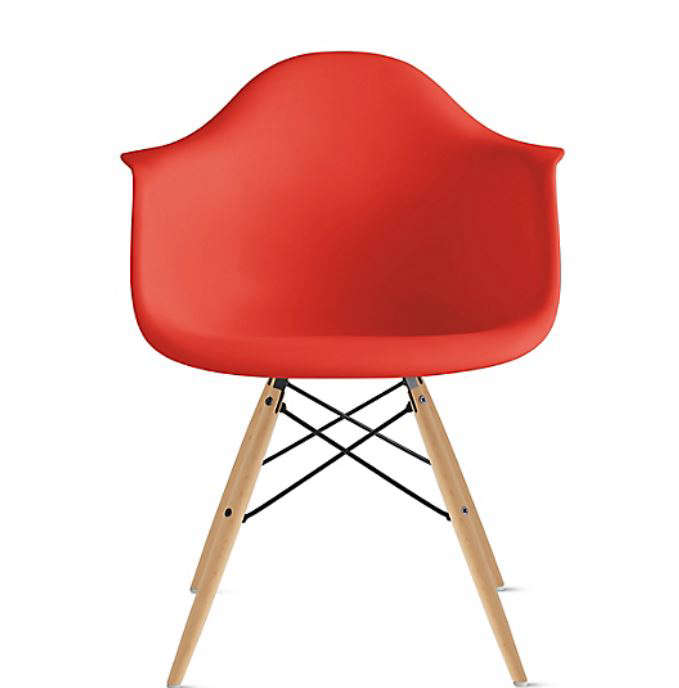

The Eames Molded Plastic Dowel-Leg Armchair (DAW) is the kind of chair that quietly walks into a room, adjusts its imaginary bow tie, and makes everything around it look more intentional. Designed by Charles and Ray Eames, the DAW belongs to one of the most recognizable families of mid-century modern chairs ever made. It has a curved one-piece shell, welcoming arms, a sculptural wooden dowel base, and the rare ability to look equally at home beside a walnut dining table, a laptop-filled studio desk, or a plant that has somehow become the emotional center of the living room.
But this chair is more than a pretty silhouette. The Eames Molded Plastic Armchair represents a major moment in furniture history: the dream of making a comfortable, durable, mass-produced chair that could serve ordinary homes without looking ordinary. The DAW version, short for Dining Height Armchair Wood Base, adds warmth and architectural energy through its wooden legs and metal cross supports. It is modern, but not cold; playful, but not silly; iconic, but still useful enough to survive breakfast crumbs, homework sessions, and the occasional dramatic Zoom call.
What Is the Eames Molded Plastic Dowel-Leg Armchair?
The Eames Molded Plastic Dowel-Leg Armchair is an armchair version of the famous Eames molded shell chair. Its seat is shaped as a continuous molded shell with integrated arms and a gently curved back. The dowel base combines wood legs with steel cross bracing, creating a dynamic structure that looks light but feels stable. In current authorized U.S. production, Herman Miller offers the chair in durable plastic shell options, including recyclable polypropylene and recycled-plastic configurations.
The genius of the design is that it solves several problems at once. The shell cradles the body without relying on heavy upholstery. The waterfall seat edge helps reduce pressure behind the thighs. The armrests make the chair more relaxed than a side chair. The wood base softens the modern plastic form, giving the chair a warmer, more residential personality. In short, it is a practical chair with cheekbones.
A Brief History of the Eames Molded Shell Chair
Charles and Ray Eames were not interested in making design objects that only looked good in museum photographs. They wanted furniture that worked for real people, in real rooms, at real budgets. Their experiments with molded forms grew out of wartime and postwar material innovation, including their work with molded plywood and later fiberglass-reinforced plastic. The molded shell chair concept was connected to the Museum of Modern Art’s postwar interest in low-cost furniture design, a challenge that encouraged designers to rethink furniture for smaller homes and modern living.
The original molded shell chairs arrived in the early 1950s and quickly became landmarks of American modernism. They were light, colorful, versatile, and relatively easy to produce in quantity. Rather than treating a chair as a heavy frame plus padding, the Eameses imagined the seat as a single continuous surface that could receive the body. That idea sounds simple now because the design world copied it enthusiastically. At the time, it was closer to furniture witchcraft, minus the hat.
What Does DAW Mean?
The abbreviation DAW is commonly understood as Dining Height Armchair Wood Base. Each letter describes a key part of the chair’s identity. “D” refers to dining height, “A” means armchair, and “W” points to the wooden base. In the Eames shell chair family, similar abbreviations identify other versions, such as side chairs, wire bases, rod bases, and rocker bases.
This naming system may sound like secret furniture-agent code, but it is actually useful. If you are shopping for an Eames chair, “DAW” tells you that you are looking at the armchair shell with wood dowel legs at dining height. That matters because a DAW has a different visual and functional character from a DAR wire-base armchair, a DSW side chair, or an upholstered shell version.
Design Features That Make the DAW Special
1. The One-Piece Molded Shell
The shell is the heart of the chair. Its curves support the back, arms, and seat in one continuous form. Instead of using separate pieces that compete visually, the shell creates one clear gesture. This is why the chair still looks fresh decades after its debut. It is not overloaded with decorative tricks. It simply has a strong shape that understands the human body better than many chairs understand basic manners.
2. The Waterfall Seat Edge
The rounded front edge of the seat is often called a waterfall edge. It slopes down gently rather than cutting sharply into the thighs. This detail is easy to overlook until you sit in a badly designed chair and begin negotiating with your legs for mercy. On the DAW, the waterfall edge helps make the chair more comfortable for dining, working, or lingering after dinner while pretending you are “just about to help with the dishes.”
3. The Dowel-Leg Base
The wood dowel base gives the DAW its friendly, architectural stance. The legs angle outward, while metal rods add visual rhythm and structural support. This base creates a lively contrast: organic wood below, smooth molded plastic above. That mix is one reason the DAW works in so many interiors. It can warm up a minimalist room, sharpen a casual dining nook, or add a mid-century accent without shouting, “I own a record player and have opinions about walnut.”
4. Versatile Color and Finish Options
Modern versions of the Eames Molded Plastic Armchair are available in multiple shell colors and base finishes, depending on the authorized retailer and configuration. Neutral colors such as white, black, gray, and warm earth tones tend to be easiest to place. Brighter colors can turn the DAW into an accent piece, especially in kitchens, creative studios, children’s rooms, and cheerful breakfast corners.
Materials: From Fiberglass to Recyclable Plastic
The early Eames shell chairs were famously made with fiberglass-reinforced plastic, a material that helped make the one-piece shell practical for mass production. Over time, environmental and manufacturing concerns led to changes in how the chair was made. Herman Miller later reintroduced the molded plastic shell in polypropylene, a durable and recyclable material with a matte texture. More recently, select versions have incorporated post-industrial recycled plastic, continuing the Eames tradition of improving a design through better materials.
This evolution matters because the DAW is not frozen in the past. It is an old design that keeps adapting. That is very Eames. Charles and Ray were not sentimental about materials for their own sake; they were interested in performance, comfort, production, and usefulness. If a newer material could preserve the spirit of the chair while improving durability or environmental responsibility, that was not a betrayal of the design. That was the design doing push-ups.
Comfort: Is the Eames DAW Actually Comfortable?
Yes, with a realistic understanding of what kind of chair it is. The Eames DAW is not a lounge chair, recliner, or nap station for ambitious cats. It is a dining-height armchair intended for sitting upright with support. The shell’s curves, armrests, and waterfall edge make it more comfortable than many hard dining chairs, especially for meals, meetings, reading, or desk use.
That said, comfort depends on body type, sitting habits, and expectations. Some people love the clean feel of the molded shell. Others may prefer an upholstered version or a seat pad for longer sessions. If the chair will be used as an eight-hour office chair, it may not replace a true ergonomic task chair. But as a dining chair, accent chair, guest chair, or occasional work chair, it delivers an excellent balance of comfort and style.
Where the DAW Works Best in the Home
Dining Rooms
The DAW’s dining height and armchair shell make it a natural fit around a dining table. It works especially well at the ends of a table, paired with armless Eames side chairs or simpler wooden chairs along the sides. This mix creates visual hierarchy without making the room look like a furniture showroom that refuses to relax.
Home Offices
For a compact writing desk or creative workspace, the DAW brings personality without bulk. The arms are useful for short work sessions, and the molded shell is easy to wipe clean. It is ideal for people who want a desk chair that looks beautiful from the living room, not a black mesh contraption that appears to have been assembled by a committee of robots.
Bedrooms and Reading Corners
In a bedroom, the DAW can serve as a stylish landing spot for books, bags, or tomorrow’s outfit. In a reading corner, it pairs nicely with a small side table and floor lamp. Add a cushion or throw, and it becomes inviting without turning into a bulky lounge chair.
Entryways
The DAW is also useful in an entryway, where a good chair can help with shoes, bags, and brief moments of existential reflection before leaving the house. Its sculptural form makes a strong first impression, while the plastic shell is forgiving in high-traffic areas.
How to Style the Eames Molded Plastic DAW
For a classic mid-century modern look, pair the DAW with walnut, teak, brass, wool rugs, and simple globe lighting. For a Scandinavian-inspired interior, choose a pale shell with a natural wood base and surround it with soft textures, light oak, and neutral walls. For a more eclectic room, use a bold shell color and let the chair act as the visual punctuation mark.
The DAW also works well in contrast. Place it beside a rustic farmhouse table, and the chair makes the table feel more current. Use it in a clean contemporary apartment, and the wood base prevents the room from feeling too sterile. Mix it with vintage art, ceramic lamps, or a chunky woven rug, and suddenly the chair looks less like a design icon and more like part of an actual life.
Authentic vs. Replica: Why It Matters
Because the Eames Molded Plastic Armchair is so famous, it is also widely copied. Replicas may capture the general silhouette, but they often miss important details: shell proportion, material quality, base geometry, finish, hardware, and long-term durability. An authentic Herman Miller Eames chair in the U.S. typically includes official documentation or an authenticity certificate, depending on the retailer and configuration.
Buying authentic is not only about bragging rights, although design people do enjoy a tasteful brag whispered over coffee. It is about supporting licensed production, preserving design integrity, and getting a chair made to tested standards. A replica might look acceptable in a small online photo, but the difference often shows up in the sit, the finish, the wobble, and the way the chair ages.
Care and Maintenance Tips
The DAW is refreshingly low-maintenance. Dust the shell regularly with a soft cloth. For spills, wipe promptly with a damp cloth and dry the surface afterward. Avoid harsh abrasives, aggressive solvents, or cleaning products that could dull the finish. For the wooden dowel legs, use care appropriate for finished wood: keep them dry, avoid dragging the chair roughly across floors, and check glides if the chair is used frequently.
If the chair sits on hardwood, consider protective pads or suitable glides to reduce scratches. If it lives in a dining room with children, congratulations: the plastic shell is one of your better design decisions. It handles everyday use far better than delicate upholstery, and it does not panic when faced with pasta sauce.
Is the Eames DAW Worth It?
The Eames Molded Plastic Dowel-Leg Armchair is worth considering if you want a chair with historic design value, everyday usefulness, and long visual life. It is not the cheapest dining chair available, but cheap chairs often become expensive when they wobble, crack, stain, or make your room look like a waiting area for tax paperwork. The DAW offers a rare mix of function, comfort, beauty, and cultural credibility.
Its strongest value is versatility. One DAW can move from dining room to office to bedroom to entryway over the years and still make sense. That adaptability is part of the Eames magic. The chair does not demand a perfect room. It improves imperfect rooms, which is much more useful.
Buying Tips for the Eames Molded Plastic Dowel-Leg Armchair
Before buying, decide how the chair will be used. For dining, measure table height and check arm clearance. Armchairs can be wider than side chairs, so make sure several DAWs will fit comfortably around your table. For desk use, measure the desk opening and confirm that the arms can slide under or beside the desktop without awkward collisions.
Next, choose a shell color that fits your long-term style. White and neutral tones are flexible, while saturated colors create more personality. Consider whether you want the chair to blend in or become a focal point. Finally, purchase from an authorized Herman Miller, MillerKnoll, or Design Within Reach source in the U.S. if authenticity, warranty support, and correct specifications matter to you.
Real-Life Experience: Living With the Eames Molded Plastic DAW
The first thing you notice about the Eames DAW in daily life is that it does not behave like a fragile design trophy. Some famous chairs make you feel as if you should sit down only after signing a waiver and removing all sharp emotions from your pockets. The DAW is different. It looks important, yes, but it also feels ready for breakfast, email, homework, coffee, and the small chaos of normal home life.
In a dining area, the chair has a relaxed authority. The arms make it feel more generous than a basic side chair, especially during long meals. Guests tend to gravitate toward it because it looks comfortable before anyone even sits down. Once seated, most people notice the supportive curve of the shell and the easy posture it encourages. It is upright enough for eating, but not so stiff that dinner starts to feel like a board meeting with better bread.
One practical experience worth mentioning is the chair’s visual lightness. Even with arms, the DAW does not feel bulky. The angled dowel base leaves open space beneath the seat, which helps smaller rooms feel less crowded. This is especially useful in apartments, breakfast nooks, and multipurpose rooms where every piece of furniture has to earn its square footage like it is auditioning for a tiny-house reality show.
The plastic shell is also forgiving. If you have ever owned upholstered dining chairs, you know the quiet terror of red sauce, coffee, or children holding markers with suspicious confidence. The molded shell wipes clean easily in everyday situations, which makes the DAW a smart choice for people who want good design without living in fear of lunch. A seat cushion can add softness, but many users prefer the clean simplicity of the original shell.
As a desk chair, the DAW performs best for shorter work blocks, writing sessions, video calls, or creative tasks. It makes a home office look polished, especially if the desk is in a visible living space. However, for all-day computer work, a dedicated ergonomic task chair will usually provide more adjustability. The DAW is better understood as a beautiful, supportive occasional work chair rather than a full-time corporate survival device.
Styling the chair is surprisingly easy. A white shell with a natural wood base feels crisp and classic. A black shell looks graphic and architectural. A warm neutral shell can soften a room with wood floors, linen curtains, and textured rugs. Brighter colors add charm in a child’s room or studio. The chair’s secret power is that it rarely looks out of place. It has enough history for design lovers and enough simplicity for people who just want a good-looking chair.
Over time, the DAW tends to become a flexible household piece. It may start at the dining table, move to a bedroom corner, then end up beside a desk or near the entryway. That mobility is part of its value. Some furniture is purchased for one exact spot and gets confused anywhere else. The Eames DAW is more adaptable. It has the calm confidence of a chair that knows it was designed properly the first time.
Conclusion
The Eames Molded Plastic Dowel-Leg Armchair (DAW) remains one of the most beloved examples of mid-century modern furniture because it does what great design should do: it solves a real problem beautifully. It is comfortable enough for everyday use, elegant enough for design-focused interiors, durable enough for busy homes, and historically important without feeling trapped in a museum case.
Its molded shell, waterfall edge, integrated arms, and dowel-leg base create a chair that is both practical and poetic. Whether used around a dining table, beside a desk, in a bedroom, or as an accent chair, the DAW brings warmth, intelligence, and unmistakable Eames character to a space. In a world full of chairs that merely exist, this one participates.
SEO Metadata