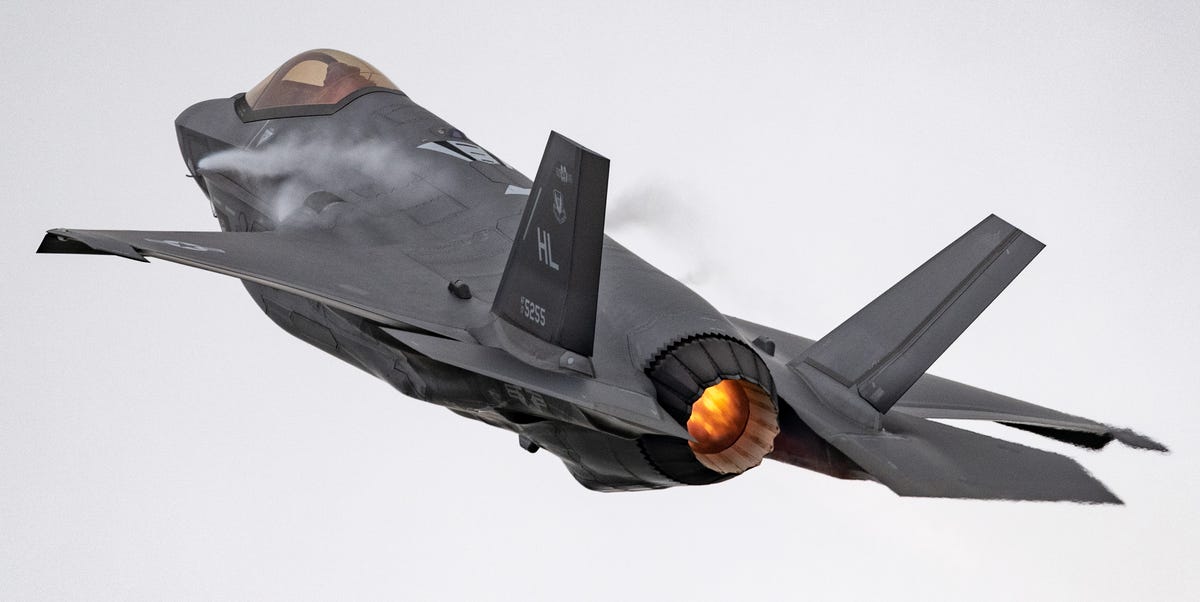

The F-35 Lightning II is often described as a flying supercomputer, a stealth fighter, a sensor hub, and, depending on who is talking, either the future of airpower or the Pentagon’s most expensive group project. But even the smartest jet on the planet has a very old-fashioned problem: it needs an engine that is available, healthy, repairable, and delivered on time. That is where the F-35 engine shortage begins.
The issue is not simply that the Pratt & Whitney F135 engine is “bad.” In fact, the F135 is one of the most powerful fighter engines ever fielded, and it powers all three F-35 variants: the conventional takeoff F-35A, the short takeoff/vertical landing F-35B, and the carrier-based F-35C. The real problem is more complicated, and more interesting. The F-35 engine shortage is the result of accelerated wear, limited depot repair capacity, delayed parts, supplier bottlenecks, rising cooling demands, and a modernization plan that is arriving later than the fleet would like.
In plain English: the jet is asking more from its engine than originally expected, while the sustainment system is still catching up. That is a bit like buying a high-performance sports car, adding a recording studio, three gaming PCs, a refrigerator, and a radar suite, then wondering why the cooling system is sweating through its shirt.
What Engine Does the F-35 Use?
The F-35 uses the Pratt & Whitney F135, a low-bypass afterburning turbofan derived from the F119 engine used in the F-22 Raptor. It comes in different configurations depending on the F-35 variant. The F-35A and F-35C use conventional versions, while the F-35B uses a version connected to a shaft-driven lift fan system for vertical landing.
The F135 is not just a thrust machine. It also helps support the aircraft’s electrical and thermal needs. Modern fighters are packed with heat-producing electronics: radar, electronic warfare systems, sensors, mission computers, communications equipment, and data-processing hardware. The F-35’s advantage comes from these systems working together, but all that digital wizardry creates heat. Heat must be managed. If it is not, performance suffers, components age faster, and maintenance crews get another reason to mutter into their coffee.
So, Why Is There an F-35 Engine Shortage?
The F-35 engine shortage is best understood as two overlapping shortages: a shortage of newly delivered engines arriving on schedule and a shortage of usable engines or modules available for aircraft already in service. Both matter. A late engine can slow production. A missing spare engine or power module can ground a jet that otherwise looks perfectly ready from the outside.
1. F135 Engines Have Been Delivered Late
Recent public oversight reporting has shown that Pratt & Whitney delivered all 123 F135 engines late in calendar year 2024. The delays were linked to production and supply chain problems, including suppliers delivering parts late enough to push back the start of engine production by months. Engine deliveries also worsened compared with the previous year, with average lateness increasing from 2023 to 2024.
That does not mean every late engine immediately grounded an aircraft on the flight line. In some cases, aircraft production delays were driven more by Technology Refresh 3, or TR-3, the hardware and software package tied to the F-35’s broader Block 4 modernization. Still, late engine deliveries are a warning light. The F-35 enterprise is trying to expand, modernize, and support a global fleet, and engines cannot be treated like optional accessories. A fighter jet without its engine is not a fighter jet. It is expensive lawn art.
2. The Power Module Became a Maintenance Bottleneck
One of the most important pieces of the F135 engine is the power module, which includes key rotating engine components exposed to extreme temperatures and stress. For several years, engine sustainment problems centered on the availability and repair of these modules. F-35 squadrons removed engines for unscheduled maintenance more often than expected, and depot repair capacity struggled to keep up.
When power modules are removed faster than they can be repaired, the math gets ugly. Aircraft wait for engines. Engines wait for modules. Modules wait for repair slots, technicians, tooling, spare parts, and technical data. Nobody wins, except perhaps the spreadsheet industry.
The Department of Defense and the F-35 Joint Program Office have taken steps to improve the situation, including expanding depot work, increasing shifts, maturing inspection methods, and building more repair capacity. Those efforts helped, but the broader lesson remains: buying aircraft is only half the story. If sustainment planning lags behind fleet growth, the shortage shows up later in the least glamorous place imaginablethe maintenance queue.
3. The F-35 Runs Hotter Than Expected
A major reason behind F-35 engine stress is the aircraft’s demand for cooling. The F-35 was designed around advanced sensors, stealth, networking, and electronic warfare. Over time, those systems grew more capable and more power-hungry. The aircraft’s power and thermal management system has had to handle greater loads than originally expected.
Public oversight reports have noted that the program recognized years ago that the F-35’s design would not meet future cooling needs without changes. Program officials chose not to redesign the engine earlier because of cost and schedule concerns. That decision kept the program moving, but it also created a long-term bill: more wear, more maintenance, reduced engine life, and higher life-cycle costs.
This is one of the central reasons the F-35 engine shortage is not merely a factory problem. It is also a design-margin problem. The aircraft has evolved, but its propulsion and cooling systems must evolve with it.
The Role of Block 4: More Capability, More Heat
Block 4 is the F-35’s big modernization package, intended to improve weapons, sensors, electronic warfare, computing power, and mission systems. It is essential to keeping the aircraft relevant against advanced threats. Unfortunately, better electronics usually mean more electrical demand and more heat. In fighter design, heat is not a small annoyance. Heat is a villain with a clipboard.
The F-35’s future combat power depends on upgrades that require more cooling and electrical power. That is why the engine conversation is tied so closely to Block 4. The jet’s stealth and sensors may get the headlines, but the less glamorous power and thermal systems decide whether all those upgrades can operate reliably in the real world.
When the engine must provide more bleed air or power than expected, it can increase strain. More strain can mean shorter life for expensive components. Shorter component life means more removals. More removals mean more depot work. More depot work means more demand for spare modules. Follow the chain far enough and you arrive at the phrase nobody likes: engine shortage.
Why Not Just Build a New Engine?
There has been a long-running debate over whether the F-35 should receive a completely new adaptive engine or an upgrade to the existing F135. A new engine could theoretically offer major gains in range, cooling, and efficiency. However, the F-35 program has three variants, and the F-35B’s vertical-lift requirements make engine compatibility especially difficult.
The Pentagon chose to move forward with the F135 Engine Core Upgrade, often called ECU, rather than immediately fielding a completely new engine. Pratt & Whitney’s ECU is designed to improve durability, restore engine life, and provide added performance to support Block 4 capabilities. One of its major selling points is that it can support all three F-35 variants and use existing production and sustainment infrastructure.
That matters because a new engine is not just an engine. It is a new supply chain, new testing burden, new integration risk, new training requirement, new spare-parts ecosystem, new depot workload, and new opportunity for everyone involved to discover that “plug and play” is a phrase rarely spoken in military aviation without sarcasm.
The Power and Thermal Management Upgrade
The engine is only part of the solution. The F-35 also needs improvements to its power and thermal management system, commonly called PTMS. This system combines several functions, including auxiliary power, emergency power, environmental control, and thermal management. It helps start the engine, provides aircraft power, and manages heat from mission systems.
Honeywell, the PTMS supplier, has demonstrated an upgrade path that can increase cooling capability. Meanwhile, the F-35 program has been analyzing power and thermal management options under a broader engine and power modernization effort. The timing matters: if power and cooling upgrades arrive too late, the aircraft may have modernized sensors and weapons waiting on the less glamorous plumbing and heat-management side of the house.
This is why the F-35 engine shortage cannot be solved by yelling “make more engines” at a factory wall. More engines help, but so do better cooling, longer component life, faster repairs, more spares, reliable suppliers, smarter contracting, and realistic production planning.
Supply Chain Problems: The Invisible Enemy
Fighter engines are not built from parts you can grab at a hardware store between paint rollers and lawn chairs. They require high-temperature materials, precision manufacturing, specialized castings, advanced coatings, tight tolerances, and a qualified supplier base. If one supplier is late, the delay can ripple across the entire production schedule.
The F-35 program has repeatedly faced parts shortages affecting both production and sustainment. Suppliers also support maintenance needs, meaning the same industrial base must feed new aircraft, spare parts, depot repairs, and international customers. As the global F-35 fleet grows, demand rises. If capacity does not rise at the same pace, the system becomes tight.
That tightness is visible in late deliveries, repair backlogs, and pressure on spare inventories. It also complicates planning. The program may want to buy more aircraft, but if suppliers cannot support current demand reliably, higher production targets can create more stress rather than more readiness.
How the Engine Shortage Affects Readiness
Readiness is the practical measure that matters to pilots and commanders. Can the aircraft fly? Can it perform its assigned mission? Can enough jets be generated for training, deterrence, and combat operations? Engine shortages directly affect those questions.
If an F-35 lacks an operating engine, it cannot fly. If spare modules are scarce, repairs take longer. If depot capacity is limited, engines wait. If parts are late, maintainers improvise within strict rules or aircraft sit idle. Even when the shortage does not stop new aircraft from leaving the production line, it can still weaken the fleet by making sustainment harder.
The F-35’s mission capable rates have been a recurring concern. Engine problems are not the only cause; software, spare parts, maintenance training, technical data, support equipment, and contractor-heavy sustainment all play roles. But engine availability is one of the most visible and consequential pieces. A stealth fighter can have the finest radar in the world, but if the engine is waiting for a module, the radar is not going anywhere.
What Is Being Done to Fix the F-35 Engine Shortage?
More Production Contracts
Pratt & Whitney continues to receive major F135 production contracts, including recent multibillion-dollar awards for Lot 18 engines and related spares, modules, and support. These contracts are intended to keep aircraft production moving for U.S. services, international partners, and foreign military sales customers.
Engine Core Upgrade
The F135 Engine Core Upgrade is the most important propulsion modernization effort currently moving forward. It is intended to increase durability and performance, support Block 4 capabilities, and reduce long-term maintenance pressure. If it arrives as planned and performs as expected, it should help address the root cause of accelerated engine wear.
Depot Repair Expansion
The program has also worked to expand repair capacity at facilities such as Tinker Air Force Base and other depot locations. Faster depot turnaround is critical because a repaired power module can be just as important to readiness as a newly built engine.
Power and Cooling Improvements
Upgrades to the PTMS and related thermal management systems are expected to help the aircraft support future capabilities without overburdening the engine. The key challenge is schedule. The F-35 needs enough cooling not only eventually, but soon enough to support the modernization roadmap.
Better Supply Chain Management
Oversight agencies have called for better alignment between planned production rates and what contractors and suppliers can actually deliver. That sounds obvious, but in large defense programs, optimism can become a scheduling strategy. The F-35 engine shortage shows why evidence-based planning matters.
Is the F-35 Engine Shortage a Crisis?
It depends on how the word “crisis” is used. The F-35 fleet is not grounded worldwide, and the F135 remains a capable engine. The aircraft continues to serve across the U.S. Air Force, Marine Corps, Navy, and allied fleets. However, the engine shortage is a serious readiness and cost problem. It affects availability, maintenance planning, modernization schedules, and confidence in production targets.
The bigger risk is cumulative. A late engine here, a power module backlog there, a cooling upgrade delay over there, and suddenly the program is carrying a heavy sustainment backpack uphill. The F-35 was designed to be the backbone of allied airpower for decades. A backbone needs more than impressive brochures. It needs spare parts, depot throughput, durable engines, and cooling capacity that does not behave like it just ran a marathon in July.
Experience-Based Perspective: What the F-35 Engine Problem Teaches
Looking at the F-35 engine shortage from a practical, real-world maintenance and program-management perspective, one lesson stands out: advanced technology does not eliminate ordinary logistics. It multiplies the importance of logistics. The more sophisticated the machine, the more disciplined the support system must be.
Anyone who has worked around complex equipmentaircraft, ships, industrial machines, hospital systems, or even high-performance carsunderstands that reliability is not just about the main product. It is about the ecosystem. You need trained people, spare parts, diagnostic tools, repair manuals, supplier stability, realistic schedules, and enough budget to keep everything moving. A fighter engine may be far more complex than a race car engine, but the basic truth is familiar: if parts are late and repairs are slow, availability drops.
The F-35 case also shows the danger of small compromises becoming large costs over time. Early in a program, leaders often face brutal choices. Redesigning an engine or thermal system can delay production and increase near-term costs. Continuing with the existing design can preserve momentum. That choice may look reasonable at the time. But if future upgrades increase heat and power demands, the program eventually pays in maintenance hours, shorter component life, and higher sustainment costs. The bill arrives later, usually with interest.
Another experience-based lesson is that production success and operational success are not the same thing. A factory can deliver jets, but squadrons need flyable aircraft. If sustainment capacity is not ready, the fleet grows faster than the repair network. That creates a strange situation: more aircraft on paper, but not enough healthy aircraft on the ramp. In defense planning, numbers matter, but usable numbers matter more.
There is also a human side. Maintainers are often asked to solve problems created years earlier by design decisions, contracting choices, and supply chain assumptions. They are the people who face the grounded aircraft, the missing module, the late shipment, and the operational schedule that still expects miracles by Tuesday. When a program depends on heroic maintenance effort to meet routine goals, the system needs redesign, not just applause.
The F-35 engine shortage is therefore not a simple scandal or a simple engineering failure. It is a case study in how modern weapons programs age. The aircraft becomes more capable, the threat environment changes, software grows, sensors improve, and the original support assumptions start to creak. The solution is not panic. It is disciplined modernization: upgrade the engine core, improve thermal management, expand depot capacity, fund spares realistically, and stop pretending that late deliveries can be fixed by optimistic PowerPoint slides.
The good news is that the path forward is visible. The bad news is that it is expensive, technical, and not especially glamorous. But that is airpower. Victory may be won by stealth, sensors, and pilots, but it is enabled by depot bays, supply chains, turbine blades, and people with torque wrenches who know exactly which part is ruining everyone’s week.
Conclusion
The F-35 engine shortage exists because the aircraft’s propulsion and sustainment ecosystem is under pressure from multiple directions. F135 engines have faced late deliveries. Power module repairs have strained depot capacity. Spare parts and supplier delays have slowed production and maintenance. The aircraft’s growing power and cooling needs have accelerated engine wear. Meanwhile, modernization efforts such as the Engine Core Upgrade and power thermal management improvements are still working their way through development and integration.
The F-35 remains one of the most important combat aircraft in the world, but its engine problems reveal a basic truth about modern military aviation: capability is only as good as availability. A stealth fighter that cannot fly is not a strategic asset; it is a very expensive reminder that logistics always gets a vote.
Note: This article is based on publicly available information from U.S. government oversight reports, congressional research, defense industry reporting, aerospace company statements, and reputable U.S. business and defense news sources current through May 2026.