
Editor’s note: This article is based on publicly available defense reporting, official U.S. defense material, and open-source analysis. It discusses military aviation at a strategic and historical level only, without technical or operational guidance.
China’s long-rumored H-20 stealth bomber has been treated in some corners of the internet like the aviation equivalent of a dragon waking up from a nap. It is said to be secretive, long-range, stealthy, and potentially nuclear-capable. In other words, the sort of aircraft that gets dramatic background music in documentaries and makes defense analysts reach for their strongest coffee.
And yet, when American defense officials have discussed the H-20, the reaction has often sounded less like panic and more like a polite shrug. The mood is not “nothing to see here,” exactly. China’s military modernization is very real, very expensive, and very much aimed at narrowing the gap with the United States. But the specific idea that the H-20 will suddenly cancel decades of American stealth bomber experience? That is where Washington’s response becomes, in spirit, “Meh.”
The reason is simple: building a stealth bomber is not like building a sleek mock-up, releasing a shadowy teaser, and waiting for applause. It is a brutal engineering marathon involving low-observable design, advanced materials, engines, sensors, mission systems, software, weapons integration, production quality, pilot training, maintenance culture, and the unglamorous business of keeping the thing ready to fly. The United States has been living inside that problem set since the B-2 Spirit. China is trying to enter the club. America is saying: welcome to the expensive part.
What Is the H-20 Stealth Bomber Supposed to Be?
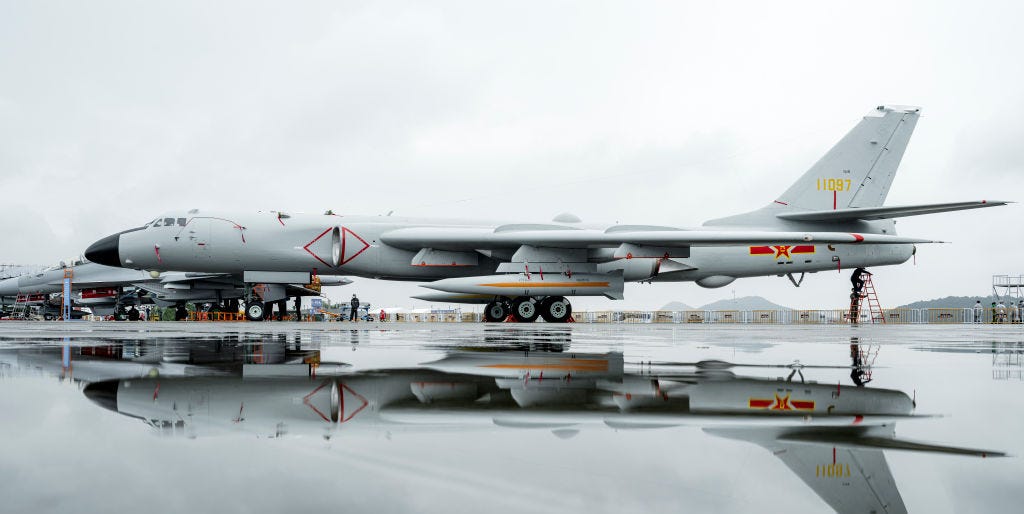
The H-20 is widely understood to be China’s next-generation strategic stealth bomber, developed to give the People’s Liberation Army Air Force a deeper long-range strike capability than its current bomber fleet. China’s existing H-6 family, descended from the old Soviet Tu-16 design, has been modernized repeatedly, but it is still not a true clean-sheet stealth bomber. The H-20 is expected to change that by giving Beijing a platform designed for longer reach, reduced radar visibility, and both conventional and nuclear missions.
Open-source assessments commonly describe the aircraft as a flying-wing bomber, a layout associated with the U.S. B-2 Spirit and B-21 Raider. That shape is attractive because it can help reduce radar signature and improve efficiency for long-range missions. But looking like a stealth bomber and performing like one are two very different hobbies. One is a silhouette. The other is an entire industrial civilization with wings.
The Pentagon’s public assessments have described China’s bomber development as part of a broader effort to become a more “strategic” air force, able to project power farther from mainland China. The H-20, if completed and fielded successfully, would help China reach farther into the Pacific and strengthen the airborne leg of its nuclear deterrent. That matters because China is also modernizing its missile forces, submarines, air defense networks, and command-and-control systems.
Why the United States Is Not Hyperventilating
American officials are not dismissing China’s military rise. That would be foolish, and U.S. planners are many things, but they are rarely allergic to threat briefings. What they appear to be dismissing is the idea that the H-20 automatically equals the B-2 or B-21 just because it belongs to the same aircraft category.
Reports from defense outlets have quoted U.S. officials suggesting that China has faced significant engineering challenges with the H-20 and that its low-observable performance may not match advanced American platforms. That is a big deal. In stealth aviation, “close enough” is not always close enough. A bomber designed to survive against advanced air defenses needs more than a smooth outer shape. It needs carefully managed heat, radar, electronic, and communications signatures. It needs coatings and structures that can be maintained at scale. It needs mission planning systems. It needs an ecosystem.
The U.S. Air Force also has a comfortable head start. The B-2 first flew decades ago, and the United States has spent years learning the painful lessons of stealth bomber operations: maintenance demands, upgrade cycles, mission planning, base infrastructure, and cost control. The B-21 Raider was designed with many of those lessons in mind. In defense terms, that is like taking a very expensive class twice and finally understanding why the first exam was so mean.
The B-21 Raider Changes the Conversation
The B-21 Raider is the aircraft that makes the American “Meh” easier to understand. It is not merely a replacement for old bombers. It is intended to become the backbone of the future U.S. bomber force alongside the upgraded B-52. The Air Force describes it as a penetrating strike aircraft capable of delivering both conventional and nuclear weapons. Translation: it is meant to get through heavily defended airspace, hold high-value targets at risk, and remain relevant as threats evolve.
One of the most important ideas behind the B-21 is not just stealth, but adaptability. Modern aircraft are no longer judged only by speed, altitude, and payload. They are flying computer networks. A bomber that cannot absorb new sensors, software, weapons, and electronic warfare improvements will age like milk in a desert. The B-21 was designed to be more maintainable and upgradeable than previous stealth bombers, which matters because the U.S.-China military competition is not a one-round boxing match. It is a long tournament with no snack break.
The Raider also benefits from the larger American military ecosystem: global bases, aerial refueling, satellite communications, combat-tested logistics, intelligence networks, and decades of experience operating across oceans. A bomber is never just a bomber. It is the visible tip of a giant invisible iceberg made of tankers, satellites, maintainers, planners, software engineers, supply chains, and people with clipboards who know exactly which bolt is late.
China’s Real Problem: The H-20 Is Only One Piece of the Puzzle
Even if the H-20 turns out to be a capable aircraft, China still has to solve the bigger puzzle of long-range power projection. The United States has spent generations building the boring-but-essential systems that make global airpower possible. China is making progress, especially with tankers, transports, advanced fighters, missiles, and naval aviation, but its experience operating long-range bomber forces outside its immediate region remains limited compared with the United States.
That does not mean China is weak. It means the H-20 should be judged in context. Beijing may not need to match the United States globally to create serious problems regionally. A bomber that can threaten Guam, U.S. bases in the Pacific, allied facilities, or maritime forces would still matter enormously. In a Taiwan crisis or a broader Western Pacific confrontation, even a limited number of stealthy or semi-stealthy long-range aircraft could complicate U.S. planning.
But that is different from saying China has suddenly built an equal to the B-21. The H-20 could be dangerous without being revolutionary. It could be strategically useful without being technologically superior. It could be a major milestone for China and still fall short of American stealth bomber standards. Two things can be true at once, which is inconvenient for headlines but useful for reality.
Why Stealth Bomber Development Is So Difficult
Stealth aircraft are not invisible. They are designed to reduce detection across certain sensors and conditions. That distinction matters. The internet sometimes talks about stealth as if it were a magic cloak from a fantasy novel. In reality, it is an exhausting compromise among aerodynamics, materials, heat management, radar reflection, internal weapons carriage, communications, maintenance, and cost.
A flying-wing bomber can help reduce radar return, but it also creates stability and control challenges. Advanced flight computers help, but software must be reliable. Special materials and coatings help reduce radar visibility, but they must survive weather, maintenance, and repeated operations. Internal weapon bays preserve stealth, but they complicate design and payload planning. Every solution creates another engineering invoice.
This is where America’s confidence comes from. The United States does not believe stealth bombers are easy because it already discovered how hard they are. The B-2 was a technological marvel, but it was also famously expensive and maintenance-intensive. The B-21 is an attempt to keep the strategic value of a stealth bomber while improving cost, production, and sustainment. China, meanwhile, is trying to leap into a field where the entrance fee is measured in decades.
The H-20 Still MattersEven If America Shrugs
The “Meh” reaction should not be mistaken for indifference. If the H-20 enters service, it will mark a major step in China’s military development. It would likely strengthen China’s nuclear triad by adding a more survivable airborne option. It could also support conventional deterrence by threatening targets at longer distances, forcing the United States and its allies to spend more attention and money on air defense, dispersal, hardening, and resilience.
In strategy, forcing your rival to worry is itself a capability. Even if the H-20 is not equal to the B-21, it may still make U.S. planners allocate resources differently. More sensors, more shelters, more runway repair kits, more air defense layers, more tanker planningthese things add up. A weapon does not have to be perfect to be disruptive. Sometimes it only has to be credible enough to make the other side bring extra homework.
There is also a political dimension. For Beijing, the H-20 would be a prestige symbol. It would signal that China is not merely copying older platforms or extending Soviet-era designs, but building the kind of strategic aircraft historically associated with superpower status. Military technology is not only about combat; it is also about messaging. A stealth bomber says, “We can reach farther than before.” It also says, “Please notice how expensive and advanced we are.”
Why the “America Says Meh” Line Works
The phrase works because it captures a very specific strategic attitude: respect the trend, question the hype. America is deeply concerned about China’s growing military power, especially in the Indo-Pacific. But it is less impressed by single-platform drama. U.S. defense planners know that wars are not won by one shiny aircraft. They are shaped by networks, training, readiness, logistics, alliances, intelligence, industrial capacity, and the ability to adapt under pressure.
That is why the H-20 story should not be read as “China builds bomber, America laughs.” It is more like “China builds bomber, America checks the spreadsheet.” The spreadsheet includes stealth quality, production numbers, engine reliability, mission systems, basing, tanker support, pilot training, maintenance cycles, weapons integration, and whether the aircraft can perform under real operational stress. It is less cinematic than a dramatic flyover, but far more important.
The U.S. attitude also reflects confidence in its own next-generation systems. The B-21 is already in flight testing and moving toward operational use. The U.S. bomber force is being reshaped around penetrating strike, standoff weapons, nuclear modernization, and long-range operations across the Pacific. China’s H-20 may be a milestone, but the United States is not standing still and staring at the sky with binoculars and hurt feelings.
What This Means for the Indo-Pacific
The Indo-Pacific is the real stage for this competition. China’s military modernization is designed largely around denying or complicating U.S. access near China’s coastline and across the island chains of the Western Pacific. Long-range missiles, air defenses, naval forces, cyber capabilities, and aircraft all contribute to that strategy. The H-20 would add another layer by giving China a more flexible long-range airpower option.
For U.S. allies such as Japan, Australia, South Korea, and the Philippines, the bomber’s development reinforces an uncomfortable reality: the region is entering an era where distance provides less protection than it used to. Bases, ports, runways, fuel depots, and command centers must be harder to find, harder to hit, and faster to repair. The answer is not panic. The answer is resilience.
That is why the H-20 is important even if it is not a B-21 killer. It contributes to a broader pressure campaign in which China seeks to make U.S. intervention more difficult, costly, and risky. The United States, in turn, is investing in dispersed operations, hardened infrastructure, stealth aircraft, submarines, long-range missiles, and allied cooperation. The bomber race is only one lane on a very crowded strategic highway.
The Smart Take: Don’t Laugh, Don’t Panic
The best way to understand the H-20 is to avoid two bad habits. The first is hype. Not every secret aircraft is a world-changing superweapon. Defense marketing, nationalist media, and online speculation can turn a blurry image into a flying myth before the landing gear is even confirmed.
The second bad habit is complacency. China has repeatedly shown that it can modernize quickly, produce at scale, and learn from foreign designs and domestic experimentation. The fact that the H-20 may not match the B-21 does not mean it can be ignored. A less capable stealth bomber can still create serious strategic problems if used intelligently within a broader missile, sensor, and air defense network.
So the correct response is neither “game over” nor “nothing burger.” It is something more adult, and therefore less viral: the H-20 is a significant Chinese program that deserves close attention, but it does not erase America’s long experience, current bomber modernization, or broader power-projection advantage. That may not fit neatly on a dramatic thumbnail, but it has the advantage of being sane.
Experience Notes: What Watching the H-20 Debate Teaches Us
One useful experience from following defense technology debates is that the first public reaction is almost always too loud. When a new aircraft appears, especially one wrapped in secrecy, people rush to declare it either a masterpiece or a failure. The H-20 discussion has followed that familiar pattern. Some observers treat it as proof that China has caught up with the United States overnight. Others dismiss it as vaporware with wings. Real life usually lives in the less exciting middle.
The first lesson is that military capability is not the same as appearance. A flying-wing aircraft can look intimidating, but the true test is how it performs repeatedly, in poor weather, under maintenance pressure, with trained crews, integrated weapons, and reliable support. This is true far beyond bombers. In aviation, the brochure is the easy part. The hard part is making the aircraft useful on a Tuesday morning when a sensor is misbehaving, a part is delayed, and the mission still has to launch.
The second lesson is that public information is incomplete by nature. Stealth bomber programs are secretive for obvious reasons, so open-source analysis has to work with fragments: official statements, satellite imagery, parade hints, budget signals, industrial clues, and cautious comments from defense officials. That makes humility important. Anyone claiming total certainty about the H-20’s final performance is probably selling confidence by the gallon.
The third lesson is that strategy is bigger than hardware. People love comparing aircraft because it feels simple: this bomber versus that bomber, this range versus that range, this design versus that design. But real military power depends on systems. A bomber connected to better intelligence, better logistics, better training, and better command networks may outperform a more impressive-looking aircraft that lacks support. The aircraft matters, but the ecosystem decides how much.
The fourth lesson is that “not worried” does not mean “not watching.” When U.S. officials sound unimpressed by the H-20, that does not mean the Pentagon has forgotten where China is on the map. It means officials are placing the aircraft inside a larger assessment. They are weighing timelines, production scale, design maturity, and operational context. In other words, they are not judging the dragon by the smoke machine.
Finally, the H-20 debate is a reminder that technological competition is often psychological. Nations build advanced weapons partly to gain military options and partly to shape perceptions. A stealth bomber can deter, threaten, reassure domestic audiences, and signal status. America’s “Meh” is also a signal: a way of saying that prestige does not equal parity. China may indeed be building a stealth bomber. The more important question is whether it can build, field, maintain, and integrate enough of them to change the balance. That is where the real story begins.
Conclusion
China’s H-20 stealth bomber is not a joke. It represents ambition, modernization, and Beijing’s desire to push its airpower farther into the Pacific and beyond. If it becomes operational, it could strengthen China’s nuclear and conventional strike options and force U.S. allies to think harder about defense, dispersal, and resilience.
But America’s muted reaction makes sense. The United States has decades of stealth bomber experience, a global support network, and the B-21 Raider moving into the future bomber role. The H-20 may be important, but importance is not the same as superiority. For now, the smartest reading is this: China is building something serious, but America has seen this movie beforeand it already bought the sequel.