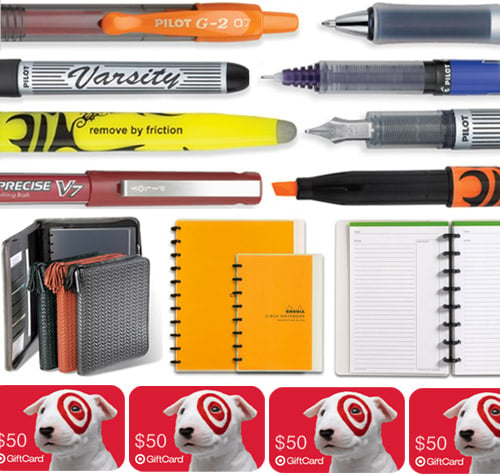

Note: The original “Fab Freebie: This Is Your Pilot Writing” giveaway is closed. This article is written as an original, evergreen feature inspired by the idea behind that promotion: the simple joy of good pens, better notebooks, and the kind of organization that makes your desk look like it has finally decided to become an adult.
Why a Writing Freebie Still Feels Surprisingly Fabulous
There are freebies, and then there are freebies that make people unexpectedly emotional. A free sample of shampoo is nice. A coupon for toothpaste is useful. But a bundle of quality pens, notebooks, organizers, and a gift card? That is not just a prize. That is a personality upgrade with ink.
“Fab Freebie: This Is Your Pilot Writing” taps into something wonderfully ordinary: people love good writing tools. Even in a world where phones buzz, laptops glow, and voice assistants patiently mishear “buy bananas” as “my pajamas,” the humble pen still has a firm grip on daily life. We use pens to jot grocery lists, label storage bins, sign birthday cards, plan projects, sketch ideas, underline recipes, doodle during meetings, and write notes that say, “Do not eat this,” which somehow still get ignored.
The original giveaway centered on Pilot writing products, notebooks and organizers, and a Target gift card. That combination worked because it covered the entire writing ecosystem: the tool, the place to write, and the freedom to buy whatever helps complete the setup. It was not just “Here, have a pen.” It was more like, “Here, go become the organized version of yourself who remembers appointments and owns matching highlighters.”
The Appeal of Pilot Pens: Smooth Writing, Everyday Reliability
Pilot is one of those brands that many people recognize without needing a dramatic introduction. You have probably used a Pilot pen at school, at work, at home, or while signing a receipt on a tiny counter that somehow makes every signature look like a seismograph reading. Pilot’s product family includes gel pens, ballpoint pens, rollerball pens, erasable pens, markers, highlighters, fountain pens, mechanical pencils, and refills.
The reason people become loyal to a pen is rarely complicated. A good pen writes smoothly, starts without a fight, feels comfortable in the hand, and does not turn a quick note into a wrestling match. The Pilot G2, FriXion, Precise, Acroball, and Dr. Grip lines all speak to different writing personalities. Some people want bold gel ink. Others want fine-point control. Some need erasable ink because they live boldly and spell “Wednesday” incorrectly under pressure. Others want a grip that keeps long writing sessions from feeling like a finger workout designed by a villain.
What Makes a Pen Feel “Right”?
A pen may be small, but it affects the entire writing experience. The right one can make a to-do list feel manageable, a journal entry feel satisfying, and a handwritten card feel polished. The wrong one skips, smears, blobs, or disappears into the couch cushions, where it joins missing socks and your motivation to clean the garage.
When choosing a writing tool, people usually care about four things: ink flow, tip size, grip comfort, and purpose. A fine-point pen is great for detailed notes, planner boxes, and tiny handwriting. A medium gel pen is ideal for everyday writing. A bold rollerball can make headings and labels stand out. An erasable pen works beautifully for planners, calendars, school notes, and anyone whose first draft is basically a polite suggestion.
Why Handwriting Still Matters in a Digital World
Typing is fast, convenient, and often necessary. Nobody wants to write a 30-page report by hand unless they are either extremely committed or trapped in a historical drama. Still, handwriting offers benefits that screens do not always provide. Writing by hand slows the mind just enough to help with focus, processing, and memory. It also creates a physical connection between thought and action.
When you write something down, you are not just recording words. You are selecting, organizing, and shaping them. That is why handwritten notes can feel more personal and more memorable than typed notes. A shopping list written on paper has a strange authority. A planner entry written in blue ink feels more official than a digital reminder that politely appears, gets dismissed, and vanishes forever like it never cared about you.
Handwriting also supports creative thinking. A blank page does not send notifications. It does not open seventeen tabs. It does not ask whether you want to update software at the worst possible moment. It simply waits. That quiet space can help ideas unfold naturally, whether you are planning a home project, outlining a blog post, drafting a letter, or listing every room you need to clean before guests arrive.
The Notebook Is the Unsung Hero
A pen needs a place to perform. That is where notebooks and organizers come in. The original freebie included a notebook-and-organizer component, which was smart because pens alone can only do so much. Without paper, even the finest pen is just a very confident stick.
Good notebooks help turn scattered thoughts into visible systems. A daily planner can hold appointments, meals, reminders, and deadlines. A discbound notebook lets users rearrange pages, add sections, and customize layouts. A simple lined journal can become a home for ideas, gratitude lists, project plans, meeting notes, or that one brilliant business idea you had at 11:47 p.m. and forgot by breakfast.
Popular Ways to Use a Writing Freebie Bundle
A writing bundle becomes more valuable when each piece has a purpose. Use gel pens for journaling and long notes. Use fine-point pens for calendars and detailed planners. Use highlighters to color-code deadlines, family schedules, school tasks, or home projects. Use sticky notes for quick reminders, but do not let them multiply across your desk like neon paper mushrooms.
One effective system is the “capture, sort, act” method. First, capture every idea or task in one notebook. Next, sort those notes into categories such as work, home, errands, bills, creative ideas, and personal goals. Finally, act by moving the most important items into a weekly plan. This keeps your notebook from becoming a beautiful graveyard of abandoned intentions.
Why Freebies Work So Well for Brands and Readers
Freebies are powerful because they lower the barrier to discovery. A person may not buy a full set of pens they have never tried, but they will happily test one if it arrives as part of a giveaway. If the pen becomes their favorite, that free sample can turn into long-term loyalty. This is especially true for writing tools because people develop strong preferences. Once someone finds “their pen,” they guard it like a tiny plastic family heirloom.
Giveaways also create excitement because they combine usefulness with surprise. A writing freebie is practical, but it still feels like a treat. It says, “Here is something you will actually use,” rather than “Here is a novelty item that will live in a drawer until 2031.” Pens, notebooks, and gift cards are not flashy in the way a giant television might be, but they fit into everyday routines immediately.
For publishers and bloggers, a freebie can build engagement. Readers comment, share, tell stories, and connect over small habits. A prompt asking people how they take notes can spark surprisingly charming responses: purse pens, pocket notebooks, sticky notes, envelopes, phone apps, voice memos, color-coded planners, and emergency crayons borrowed from children. Suddenly, a giveaway becomes a conversation about how people organize their lives.
Digital Notes vs. Paper Notes: The Friendly Showdown
The best note-taking system is the one you actually use. Digital tools are excellent for searchable lists, shared calendars, cloud storage, and reminders. Paper tools are excellent for brainstorming, memory, focus, and satisfying checkmarks. The goal is not to declare one winner and send the other home in shame. The smartest system often combines both.
For example, use your phone for time-sensitive reminders and shared family events. Use a paper planner for weekly priorities. Use a notebook for messy thinking, drafts, ideas, sketches, and project planning. Use a digital document when something needs to be edited, stored, or sent. This hybrid method gives you the speed of technology and the grounding power of handwriting.
A Simple Hybrid Writing System
Start with one main notebook for daily capture. Keep one reliable pen nearby at all times. At the end of each day, transfer appointments and urgent reminders into a digital calendar. Once a week, review your handwritten notes and pull out action items. This prevents important ideas from getting trapped between “buy paper towels” and “look up why the dishwasher sounds haunted.”
Color can help too. Use black or blue ink for regular notes, red for deadlines, green for money-related tasks, and a highlighter for priorities. Keep the system simple enough that you will stick with it. The moment organization requires a training manual, most people quietly return to scribbling on receipts.
How to Build Your Own “Fab Freebie” Writing Kit
Even if there is no active giveaway, you can create your own affordable writing kit. The best setup does not have to be expensive. It just needs to be useful, comfortable, and easy to reach.
1. Choose Three Everyday Pens
Pick one smooth gel pen for general writing, one fine-point pen for detailed notes, and one erasable pen for planners or calendars. This gives you flexibility without turning your desk drawer into a pen jungle.
2. Add One Notebook You Actually Like
The notebook matters. If the paper feels flimsy or the layout annoys you, you will avoid using it. Choose lined, dotted, grid, blank, or planner-style pages based on how your brain works. Dotted pages are excellent for people who want structure without feeling bossed around by lines.
3. Include Sticky Notes and Page Flags
Sticky notes are perfect for temporary reminders, labels, and quick messages. Page flags help you find important sections without flipping through your notebook like a detective in a low-budget mystery.
4. Keep a Portable Version
A small notebook and pen in a bag, backpack, or car can save ideas before they evaporate. Many great thoughts arrive when you are nowhere near your desk. Unfortunately, so do grocery needs, appointment reminders, and the name of that one paint color you swore you would remember.
5. Make It Visible
The best tools are the ones within reach. Keep your writing kit on your desk, kitchen counter, nightstand, or entry table. If you hide it in a drawer, it may become one with the batteries, old keys, and mysterious cables nobody can identify.
What This Freebie Says About Productivity
Productivity is often sold as something complicated: apps, dashboards, systems, hacks, timers, templates, and color-coded strategies that require more maintenance than a houseplant with trust issues. But sometimes productivity begins with one pen and one page.
A good writing tool helps you externalize your thoughts. Instead of carrying every task in your head, you put it somewhere visible. That frees up mental space. You do not have to remember the grocery list, the school form, the birthday card, the meeting idea, and the three things you need from Target. The paper remembers. Your brain can go back to doing higher-level work, like deciding whether “quick kitchen cleanup” means five minutes or an emotional journey.
Writing also adds friction in a good way. Because handwriting is slower than typing, it encourages you to prioritize. You are less likely to copy everything and more likely to capture what matters. That makes handwritten notes useful for learning, planning, and reflection.
Experience Section: What a Writing Freebie Feels Like in Real Life
The best way to understand the charm of “Fab Freebie: This Is Your Pilot Writing” is to imagine the ordinary moments where a writing kit quietly saves the day. It is not dramatic. No one bursts through the door shouting, “Thank goodness you had a medium-point gel pen!” But the usefulness is real.
Picture a busy Monday morning. The coffee is doing its best, but morale is still under review. You open a notebook, grab a smooth pen, and write the day’s top three priorities. Suddenly the fog lifts. Not completely, because Monday is still Monday, but enough. The act of writing turns a vague cloud of responsibilities into a short list you can handle. The pen glides. The page behaves. Your brain exhales.
Now imagine planning a home project. Maybe you are organizing a closet, refreshing a workspace, or preparing for guests. Digital notes are useful, but paper lets you sketch, measure, circle, cross out, and add arrows with wild confidence. You can write “buy bins,” underline it twice, then add “not ugly bins” because aesthetics matter. A good pen makes the process feel intentional rather than chaotic.
There is also a personal side to writing tools. A handwritten thank-you note feels warmer than a text. A lunchbox note can make a kid smile. A reminder taped to the front door can prevent someone from forgetting cleats, paperwork, or the very important reusable grocery bags that somehow only get remembered in the parking lot. Pens become part of family routines, work habits, school days, and creative rituals.
For writers, bloggers, students, teachers, parents, office workers, and list-makers, the right tools can create momentum. A blank notebook can feel like a fresh start. A new pen can make old tasks feel slightly more exciting. Is it magical? Not exactly. But if a pen makes you more likely to write the plan, and the plan makes you more likely to do the thing, that is close enough to magic for most of us.
The experience also reveals something funny about human nature: people have strong opinions about pens. Some love fine points. Some demand bold ink. Some only write in blue. Some want erasable ink because commitment is hard. Some keep “good pens” hidden from family members who treat pens like communal wildlife. A writing freebie works because it understands this tiny but intense loyalty.
In real life, the best writing setup is not the fanciest one. It is the one that reduces friction. A pen that writes smoothly. A notebook that opens easily. A planner that makes sense. A highlighter that helps important details stand out. A small system that supports your day without requiring a weekend retreat and a label maker. That is the heart of this fab freebie idea: give people tools they can use immediately, and they may feel a little more prepared, a little more creative, and a little less likely to write important reminders on the back of envelopes they will absolutely lose.
Conclusion: A Small Freebie With Big Everyday Energy
“Fab Freebie: This Is Your Pilot Writing” works as a topic because it celebrates something practical, nostalgic, and still relevant: the joy of writing things down. Pilot pens, notebooks, organizers, and gift cards may sound simple, but together they represent clarity, productivity, creativity, and the satisfying feeling of crossing an item off a list.
In a digital world, handwriting still has a place. It helps people slow down, think clearly, organize ideas, and make daily life feel more manageable. Whether you are a student, a professional, a parent, a blogger, a planner lover, or someone who writes reminders on whatever paper is closest, a good writing kit can make everyday tasks feel a little less scattered.
The giveaway may be over, but the lesson remains: never underestimate the power of a great pen, a clean page, and a small nudge toward organization. Sometimes the simplest tools are the ones that keep life moving. And if they happen to make your handwriting look better? That is just ink-flavored bonus joy.