
Let’s be honest: a freezer is basically a tiny, humming time machine. You put in groceries, leftovers, and a heroic stash of ice cream,
andif everything goes rightyou get to enjoy them later without any “mystery thaw” plot twists. But freezers don’t always go right.
Doors get left cracked. Coils ice up. Power blips happen at 2:00 a.m. And the first sign of trouble is often… you discovering soup where
your sorbet used to be.
That’s where freezer monitoring comes in. Whether you’re a home cook protecting a freezer full of bulk buys, a restaurant
guarding expensive inventory, or a clinic protecting temperature-sensitive supplies, monitoring turns your freezer from “hope-based storage”
into a system you can actually trust. And yes, it also saves ice cream from becoming an accidental milkshake.
What Freezer Monitoring Really Means
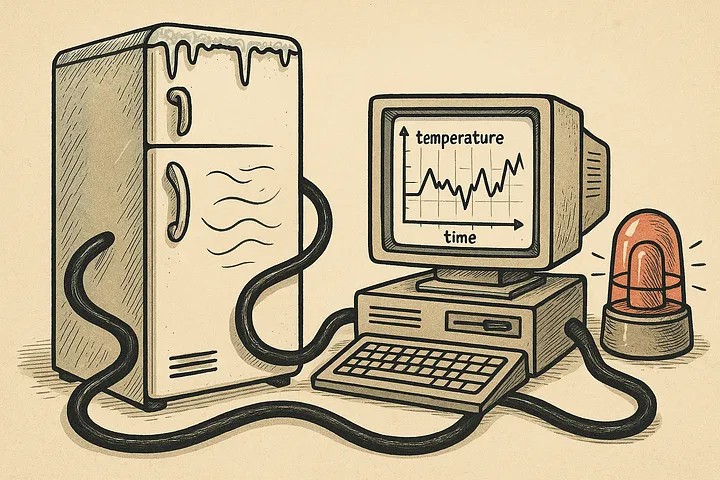
Freezer monitoring is the practice of measuring, recording, and responding to freezer temperature conditions over time.
It can be as simple as a basic thermometer you check daily, or as advanced as a cloud-connected system that logs temperatures continuously,
sends alerts, and stores data for compliance and trend analysis.
The goal isn’t to obsess over every tiny fluctuation. The goal is to catch the stuff that matters: sustained warming, repeated excursions,
equipment struggling to recover, or conditions that quietly ruin qualitylike ice cream softening and refreezing until it tastes like sweetened
gravel.
Why Monitoring Matters (Even If You “Never Open the Freezer Much”)
1) Food safety is not a guessing game
For home and commercial kitchens alike, a key baseline is keeping frozen foods at 0°F (-18°C) or below. Continuous freezing
keeps food safe indefinitely from a safety standpoint (quality is a different story, and your taste buds will definitely file a complaint sooner).
If your freezer drifts warmer for long stretches, you move from “frozen storage” to “refrigerated limbo,” which is exactly where confusionand risklives.
2) Quality loss is sneaky (and expensive)
Most freezer disasters don’t show up as dramatic puddles. They show up as:
- Freezer burn that turns your steak into a wind-chapped regret
- Ice cream that’s icy, grainy, and mysteriously “off”
- Frozen fruit that becomes a mushy science experiment after thawing
- Repeated softening/refreezing that wrecks texture long before anything looks “spoiled”
Monitoring helps you spot patternslike daily warm spikes during deliveries or a freezer that takes longer and longer to recover after the door opens.
3) Power outages have a clock
During a power outage, time matters. If you keep the door closed, a full freezer can hold a safe temperature for about 48 hours
(about 24 hours if it’s half full). Monitoring (and a simple appliance thermometer) can tell you whether you stayed in the safe zone,
instead of relying on the “it still feels cold-ish” methodalso known as “the method that ruins weekends.”
4) Some settings require proof, not vibes
In many professional environmentsfood service, labs, and clinicsmonitoring isn’t just helpful; it’s often tied to
internal policies, inspections, and quality systems. For example, vaccine storage guidance includes specific expectations around
digital data logging, buffered probes, alarms, and calibration documentation. Monitoring becomes your paper trail, your early-warning system,
and your way to avoid tossing valuable inventory.
Who Should Monitor a Freezer?
Short answer: anyone who would be sad if their freezer failed. Longer answer: monitoring is especially useful for:
- Home kitchens (bulk shoppers, meal preppers, hunters, gardeners freezing harvests, parents storing breast milk)
- Restaurants and bakeries (inventory protection, consistency, fewer surprise losses)
- Grocery and convenience stores (display freezers, frequent door openings, higher excursion risk)
- Ice cream shops (texture is everything; temperature swings are the enemy)
- Clinics and pharmacies (temperature-sensitive products that need reliable logs and quick responses)
- Labs (samples, reagents, and equipment that can’t be replaced with a trip to aisle seven)
What You Actually Monitor (Hint: It’s More Than One Number)
Temperaturemeasured the right way
Air temperature changes fast. Product temperature changes slower. That’s why many professional temperature monitoring setups use a
buffered probe (often glycol, beads, sand, etc.) to better reflect what’s happening to what you’re storingnot just the air that
gets blasted when the compressor kicks on.
Door events
Door-open sensors sound simple, but they’re shockingly useful. If your temperature spikes line up perfectly with “door open for 6 minutes,”
you’re not dealing with a mysterious freezer failureyou’re dealing with a human being who stared into the freezer like it was going to reveal
the meaning of life.
Power and equipment behavior
Some systems track power status, compressor run time, or recovery time. That matters because freezers often “fail gradually.” A unit that
used to bounce back in 15 minutes might start taking 35 minutesan early clue that maintenance is needed before you lose everything.
Freezer Monitoring Options: From Simple to “Text Me If My Gelato Sweats”
Option A: Appliance thermometer + routine checks
The simplest approach is a reliable freezer thermometer and a routine: check it daily (or at least several times a week), log if needed, and
investigate if it drifts above your target. It’s low cost and surprisingly effective when paired with consistency.
Option B: Min/Max thermometer
This helps catch overnight peaks and dips. You don’t just see “it’s 0°F right now,” you see what happened while you were asleep and innocent.
Option C: Digital data logger (DDL)
A DDL records temperatures at set intervals and lets you review the full story: excursions, duration, and patterns. In healthcare-style
monitoring guidance, recommended features often include alarms, a detachable buffered probe, min/max display, configurable logging intervals,
and documentation showing calibration testing.
Option D: Wireless/cloud monitoring with alerts
This is where monitoring becomes a true safety net. If a freezer warms above a threshold, you get an alert (text/email/app), so you can act fast:
move product, close a door, reset a breaker, call maintenancewhatever prevents a total loss. If you’re protecting high-value inventory, this is often
the “worth it” category.
Ice Cream-Specific Monitoring: Protecting Texture, Not Just Temperature
Ice cream is dramatic. It doesn’t just “stay fine” through temperature swings. It changes texture, grows ice crystals, and becomes less creamy
every time it softens and refreezes. If you’ve ever opened a pint and found it gritty, icy, or oddly hollowed out, you’ve met the consequences
of temperature fluctuation.
Monitoring helps because it reveals the pattern behind the pain. Common culprits include:
- Storing ice cream in the door (the warmest, most swingy spot)
- Overloading the freezer so air can’t circulate
- Frequent browsing (also known as “just looking,” which your freezer does not believe)
- Weak door seals that leak cold air
Practical tip: keep ice cream toward the back of the freezer where temperatures are more stable, and return it quickly after serving.
Your future self will thank you with smooth, scoopable happiness.
How to Set Up a Monitoring Plan That Works
Step 1: Pick your target temperature and thresholds
For general frozen food storage, 0°F (-18°C) or below is the standard target. For specialized items (like certain medical supplies),
always follow the product’s required range and your program’s rules.
Set alert thresholds with real-world behavior in mind. For example:
- A high-temp alert above your normal range (with a short delay to avoid nuisance alarms during brief door opens)
- A critical alert for sustained warming (longer duration, higher temperature)
- A low-temp alert only if extreme cold could damage what you store (more relevant to some clinical settings than food)
Step 2: Place the sensor smartly
Don’t place probes right against cooling vents or where they’ll get hit by a blast of cold air. Aim for a location that reflects the typical storage
environmentoften near the warmest practical spot inside the unit, and consistent with what you’re trying to protect.
Step 3: Decide who gets alerts and what they do
Alerts without action are just expensive notifications. Define a simple response plan:
- Confirm the reading (check the display/secondary thermometer)
- Check the basics (door seal, door ajar, power, breaker, unusual frost)
- Protect inventory (move to backup freezer, add cold packs/dry ice if appropriate)
- Document and fix the root cause (maintenance, gasket replacement, airflow changes)
Step 4: Review trendsnot just emergencies
A good monitoring system doesn’t only save you during a crisis; it helps you prevent the next one. Look for:
- More frequent small excursions
- Longer recovery times after door openings
- Gradual warming over days/weeks
- Seasonal stress (hot weather, heavy use, delivery days)
Step 5: Don’t ignore calibration and accuracy
If you’re using a digital loggerespecially in a professional settingmake sure you can trust it. That may include keeping a
current certificate of calibration testing and recalibrating on a set schedule. Even at home, it’s wise to sanity-check: if one device
says your freezer is 18°F, and the ice cream is melting, the ice cream is probably the more honest witness.
Common Mistakes (And How to Avoid Them)
- “Set it and forget it” monitoring: If nobody checks data or responds to alerts, it’s just a fancy thermometer.
- Bad probe placement: Sensors in weird airflow spots produce misleading numbers.
- Alert fatigue: Too many nuisance alarms train people to ignore the real ones. Use delays and sensible thresholds.
- No backup plan: One freezer is not a plan; it’s a single point of failure with a plug.
- Overpacked freezers: Crowding blocks circulation and raises warm spots. Full is good; stuffed is chaos.
Conclusion: Keep It Cold, Keep It Simple, Keep the Ice Cream Happy
Freezer monitoring isn’t about becoming a temperature detective with a clipboard and a suspicious squint. It’s about protecting what matters:
food safety, quality, money, and peace of mind. A basic thermometer and a routine can cover many households. A data-logging, alerting system
can be a lifesaver for businesses and anyone storing high-value or temperature-sensitive items.
And if you needed one more reason: the only tragedy worse than running out of ice cream is opening the freezer and realizing your ice cream
has been living through repeated thaw cycles like it’s training for a reality show. Monitor smart, respond fast, and let dessert stay cold and glorious.
Bonus: Real-World Experiences & Lessons Learned (Because Freezers Love Plot Twists)
If you ask people why they started monitoring their freezers, you’ll rarely hear, “Because I love spreadsheets.” You’ll hear stories. Usually the kind
that start with, “So… it was a weekend,” and end with someone discovering that a freezer can, in fact, betray you quietly.
One common scenario is the door that didn’t fully close. In homes, it’s often a bag of frozen peas wedged in the wrong place. In restaurants,
it’s a busy shift where someone grabs ingredients quickly and the latch never catches. The freezer keeps running, but the temperature slowly climbs.
By the time anyone notices, the ice cream has softened and refrozen into a gritty brick, and anything delicatelike seafoodmay be questionable.
Monitoring changes this story because you don’t find out the next day; you find out in minutes, with a notification that basically says, “Hey, your freezer
is having feelings and they’re warm.”
Another classic is the power blip that isn’t obvious. Maybe the lights flicker and come back, and everyone assumes the appliances are fine.
But a tripped breaker, a loose plug, or a reset switch can leave a freezer off for hours. Government food-safety guidance often reminds people that a full
freezer can hold safe temps for roughly two days if unopenedbut that’s not a guarantee. It depends on how full it is, how often it’s opened, and how warm
the room is. People who had a thermometer inside could make decisions confidently: “Still below the safe cutoff? Great.” Without it, it becomes a nervous
guessing game and a heartbreaking disposal of food “just in case.”
In small businesses, you hear a lot about the gradual failure. A unit still “works,” but it’s struggling: it runs longer, takes longer to recover,
and has bigger temperature swings during busy periods. Owners often don’t notice because it’s not dramaticuntil it suddenly is. Monitoring data can show the
slow trend: recovery time increasing week over week, or warm excursions appearing more often on delivery days. Those patterns can trigger a maintenance call
before the freezer face-plants during a holiday rush.
Clinics and pharmacies have their own version of freezer drama: the documentation scramble. When temperature-sensitive items are involved, it’s not
enough to say, “Pretty sure it stayed cold.” They need logs that show what happened, when it happened, and how long the excursion lasted. This is where digital
logging, alarms, and calibration documentation become more than “nice extras.” They turn a stressful event into a managed process: identify the excursion, quarantine
product if needed, consult storage guidance, and document actions. Monitoring doesn’t eliminate problemsbut it prevents panic from becoming the main strategy.
And yes, ice cream shops have a special heartbreak: the texture catastrophe. Even if ice cream stays technically frozen, repeated warming can grow ice
crystals and wreck that smooth mouthfeel customers expect. Operators who moved their “most sensitive” products away from door zones, added monitoring alerts,
and trained staff to minimize browsing time often report a simple outcome: fewer complaints and better consistency. It’s not glamorous, but neither is serving
“crunchy vanilla.”
The lesson across all these stories is surprisingly hopeful: most freezer disasters are preventable. Monitoring doesn’t have to be complicated. It just has to be
reliable, checked, and paired with a response plan. Because when you treat “keeping things frozen” like a system instead of a wish, your freezer becomes boring
againand boring is exactly what you want from the appliance guarding your ice cream.