
If a piece of furniture could wink, the Offcut Stool by Tom Dixon would do it the moment you realized what it is made from. Here is a stool that takes the so-called leftovers of timber productionthe irregular, knotted, bark-side pieces most factories would politely escort to the waste binand turns them into a sturdy, sculptural, oddly charming seat. It is proof that good furniture design does not always begin with perfect materials. Sometimes it begins with the bits everyone else ignored.
The Offcut Stool is not loud in the way a neon sofa is loud, although the fluorescent version certainly knows how to enter a room wearing sunglasses. Its real drama is quieter: solid wood, splayed legs, a round seat, visible grain, and a construction method that invites the owner to participate. It is flat-pack furniture, yes, but not the kind that makes you question your life choices somewhere around step 17. Tom Dixon’s design challenges the idea that flat-pack must be cheap, flimsy, or destined for a curbside farewell after one apartment move.
For anyone interested in modern furniture, sustainable design, compact seating, or designer stools that carry a story without needing a megaphone, the Offcut Stool remains one of Tom Dixon’s most memorable small pieces. It is practical enough to use every day, handsome enough to leave out, and clever enough to make design nerds nod with the solemn approval usually reserved for espresso machines and perfectly aligned bookshelves.
What Is the Offcut Stool by Tom Dixon?
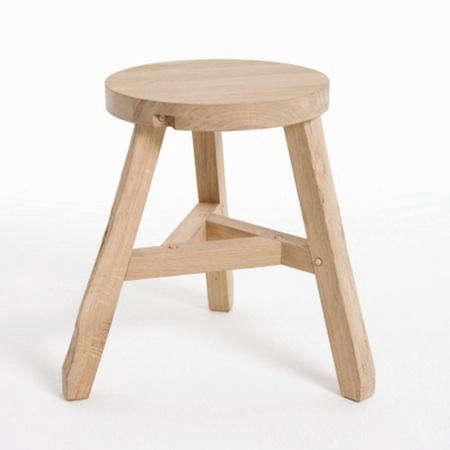
The Offcut Stool is a compact, three-legged wooden stool designed by British designer Tom Dixon. It was created around the idea of using “offcuts,” especially the irregular waney-edge sections of timber that sit near the bark of a tree. These pieces are often discarded because they do not fit neatly into standard industrial production. Dixon saw personality where others saw inconvenience.
The stool typically appears in natural oak or painted birch versions, including black, gray, and the instantly recognizable fluorescent orange. Depending on the version, the stool may come as a low stool or taller bar-style stool. The low version sits comfortably as a side seat, bedside perch, plant stand, or occasional table, while the taller version works around counters and casual dining spaces.
One of its best design tricks is that it arrives disassembled. The owner puts it together by joining chunky wooden parts with dowels, traditionally without the need for screws or glue. That hands-on assembly is part of the charm. Instead of hiding how furniture is made, the Offcut Stool lets you feel the structure coming together. It is a small furniture project disguised as a finished designer object.
Tom Dixon’s Design Philosophy: Industrial, Playful, and Human
Tom Dixon is known for designs that combine industrial curiosity with bold material character. His work often has a tactile quality: metal looks like metal, wood looks like wood, and reflective surfaces gleam with unapologetic confidence. The Offcut Stool fits into this broader philosophy because it refuses to pretend. The wood grain, the irregular edges, and the simple structure are not cosmetic decorations. They are the point.
Dixon’s career has long been associated with experimentation, from welded furniture to lighting, accessories, and interiors. He has a habit of making objects that feel both modern and slightly primitive, as if they were sketched in a workshop rather than fussed over in a committee meeting. The Offcut Stool has that feeling. It does not beg for attention, but it rewards anyone who looks closely.
There is also a democratic note in the design. Flat-pack furniture is often associated with budget convenience, but Offcut elevates the format. The stool asks a simple question: Why should assembly-based furniture be disposable? Why can’t it be solid, desirable, and built to last? In that sense, the Offcut Stool is less about saving a few inches in a shipping box and more about rethinking how value is created.
Why the Offcut Stool Still Feels Fresh
Furniture trends can age faster than avocados, but the Offcut Stool has a staying power that comes from honesty. It is not trying to imitate luxury through glossy surfaces or unnecessary flourishes. It is a solid wooden stool with visible logic. You can understand it in seconds, but you can appreciate it for years.
The round seat softens the visual weight of the chunky timber. The three-legged base gives it a stable, almost camp-stool clarity. The splayed legs make it look ready for duty without appearing stiff. It is casual, but not careless. It is rustic, but not farmhouse cosplay. It is modern, but not cold enough to make your living room feel like a dentist’s waiting area.
Another reason it remains relevant is its connection to sustainable furniture design. Today, buyers are increasingly interested in how products are made, what materials are used, and whether an object has a meaningful lifespan. The Offcut Stool checks many of those boxes without sounding preachy. It uses overlooked timber, ships efficiently, and relies on a straightforward construction method. It is eco-conscious without wearing a giant green badge on its seat.
The Beauty of Waney-Edge Wood
The term “waney edge” refers to the irregular edge of a board that comes from the outer part of a tree, close to the bark. In mass production, this irregularity is usually a problem because factories prefer predictable shapes. In furniture with personality, however, irregularity can be a gift.
On the Offcut Stool, these natural curves and textures make each piece feel less anonymous. The stool may have a simple silhouette, but the material brings warmth and variation. The grain patterns, knots, and edges remind you that the object began as a tree, not as a perfect rectangle in a catalog spreadsheet.
This is where the stool becomes more than a seat. It becomes a small argument for imperfection. In a home filled with smooth screens, sharp appliances, and perfectly printed surfaces, the Offcut Stool adds a welcome note of natural irregularity. It says, “Relax. Not everything has to look like it was designed by a robot with a ruler.”
Materials and Finishes
Natural Oak
The natural version of the Offcut Stool is usually associated with oak and a light, soaped finish. This finish keeps the stool feeling warm and approachable. Oak gives the design weight and durability, while the pale tone works beautifully in Scandinavian-inspired interiors, modern apartments, and homes that lean toward natural textures.
Painted Birch
The painted versions are commonly made from birch. Black and gray finishes make the stool more graphic and architectural, while fluorescent orange gives it a punchy, almost exhibition-like energy. The fluoro version is especially Tom Dixon: practical at heart, but not afraid to be a little theatrical.
Solid Wood Construction
Unlike lightweight stools that feel temporary, the Offcut Stool has a satisfying physical presence. Its chunky wooden components help it feel dependable. It is the kind of stool that can hold its own beside a bed, in an entryway, at a small desk, or next to a lounge chair with a stack of books and one suspiciously ambitious reading list.
Assembly: The Joy of Building Without the Panic
Many flat-pack products arrive with a bag of tiny hardware pieces and instructions that appear to have been translated through seven languages and a toaster. The Offcut Stool takes a more direct route. Its pieces are joined with wooden dowels, and the construction process is meant to be simple and physical.
This matters because assembly becomes part of the ownership experience. You are not just receiving a finished object; you are completing it. That small ritual creates attachment. Once you have tapped the joints together and watched the stool take shape, it feels less like something you bought and more like something you helped bring into being.
Of course, this does not mean it is a craft project in the messy sense. You do not need a garage, a table saw, or an uncle named Gary who owns every tool ever invented. The design is controlled, refined, and made for easy construction. The result is a designer stool that gives you the satisfaction of making without requiring you to become a carpenter by lunchtime.
How to Use the Offcut Stool at Home
As Extra Seating
The most obvious use is as a stool. It works well in living rooms, bedrooms, creative studios, entryways, and casual dining corners. Because it is compact, it can slide into spaces where a full chair would feel bossy. It is especially useful for homes that need flexible seating but do not want to look like they are preparing for a town hall meeting.
As a Bedside Table
The low Offcut Stool makes a charming bedside table. Its round seat is large enough for a book, phone, lamp, or glass of water. The wooden texture adds warmth near the bed, especially when paired with linen bedding, white walls, or soft lighting. Just do not overload it with twelve novels and a ceramic vase the size of a toddler. It is a stool, not a load-bearing bookshelf.
As a Plant Stand
Plants and wooden stools are natural roommates. A leafy plant on the Offcut Stool creates a simple, layered vignette. The organic shape of the wood pairs nicely with greenery, while the height helps lift the plant visually. It is an easy way to make a corner feel designed without spending the weekend rearranging your entire personality.
As an Occasional Table
Next to a lounge chair, the Offcut Stool can function as a small side table. It is perfect for a coffee cup, a notebook, or a remote control that otherwise disappears into the sofa dimension. Its compact footprint makes it useful in apartments, reading nooks, and small rooms where every square foot has to earn its keep.
Styling the Offcut Stool in Different Interiors
Modern Minimalist Rooms
In minimalist spaces, the natural oak version brings warmth without visual clutter. Pair it with neutral rugs, matte ceramics, and clean-lined seating. Its irregular timber character keeps the room from feeling too sterile.
Industrial Interiors
The black or gray painted versions work beautifully with concrete floors, exposed brick, steel shelving, and leather furniture. The stool’s chunky form and honest construction feel right at home among industrial materials.
Scandinavian-Inspired Homes
Natural wood, simplicity, and usefulness are central to Scandinavian interiors, which makes the Offcut Stool an easy fit. Use it beside a pale sofa, under a wall hook in an entryway, or as a small table near a reading chair.
Eclectic Spaces
The fluorescent version is ideal for homes that enjoy a little mischief. It can become a bright accent in a neutral room or join a more colorful mix of art, books, and collected objects. Think of it as a design exclamation point with legs.
Why Designers Love Small Furniture With Big Ideas
Small furniture pieces often carry the clearest design ideas because they do not have room to hide. A sofa can distract you with cushions, fabric, and scale. A stool has nowhere to run. It must be useful, balanced, strong, and visually resolved. The Offcut Stool succeeds because every decision is visible.
The seat is round because the offcut material naturally supports that shape. The legs are splayed for stability. The joints are doweled because the construction celebrates assembly. The material is not disguised because the wood’s irregularity is the story. Nothing feels arbitrary.
This is why the stool works as both furniture and conversation piece. You do not need to explain it for it to function, but once someone asks about it, there is plenty to say. It turns waste reduction, timber character, flat-pack construction, and modern design into one compact object.
Sustainability Without the Lecture
The Offcut Stool is often discussed in relation to sustainability because it uses timber sections that might otherwise be discarded. That is important, but the stool’s real sustainability argument is broader. It suggests that material value depends on imagination. A piece of wood does not become waste simply because it has an irregular edge. It becomes waste when nobody bothers to design with it.
There is also a lifespan issue. Disposable furniture is not just a materials problem; it is an emotional problem. People throw away objects they do not value. By creating a stool that is sturdy, distinctive, and enjoyable to assemble, Dixon increases the chance that the owner will keep it. A beloved object is often the most sustainable object because it does not need replacing every season.
The stool does not solve the entire furniture industry’s waste problem, and it does not pretend to. But it offers a smart, tangible example of how design can redirect materials and challenge assumptions. For a small stool, that is a pretty impressive résumé.
Buying Considerations: Is the Offcut Stool Right for You?
The Offcut Stool is best for people who appreciate design with a story. If you want a perfectly anonymous seat that disappears into the background, there are simpler options. But if you enjoy furniture that combines function, material honesty, and a little design history, this stool is worth attention.
Before buying, consider height, finish, and intended use. A low stool is more versatile for bedrooms, living rooms, and entryways. A taller version is better for counters or bar-height surfaces. Natural oak offers warmth and texture, while painted versions feel more modern and graphic. Fluorescent orange is for the brave, the stylish, and anyone whose home could use a friendly jolt of caffeine without the coffee stains.
Because availability can vary, buyers may find the Offcut Stool through design retailers, vintage platforms, or secondary markets. Prices may differ depending on condition, finish, and whether the piece is new, discontinued, or collectible. Always check dimensions carefully, especially if you are choosing between low and bar-height versions.
Care and Maintenance
Like most solid wood furniture, the Offcut Stool benefits from simple care. A soft damp cloth is usually enough for cleaning. Avoid abrasive cleaners, harsh chemicals, and excessive water. Painted finishes should be treated gently to prevent scratches, while natural wood should be kept away from prolonged moisture or direct heat.
If using the stool as a plant stand, place a saucer beneath the pot and avoid letting water sit on the surface. If using it as a bedside table, be mindful of mugs, oils, and cosmetics. Wood has a good memory, and it may remember your midnight tea more clearly than you do.
Experience Notes: Living With the Offcut Stool by Tom Dixon
Living with a stool like the Offcut is a reminder that the best furniture does not always announce itself on day one. At first, it may seem like a simple wooden seat. Then it slowly becomes useful in all the little ways that make a home work better. It catches a tote bag in the entryway. It holds a book by the sofa. It becomes the place where guests sit while putting on shoes. It briefly becomes a table for snacks during movie night, which is an important job and should be respected.
What stands out most is its flexibility. Many furniture pieces are fussy about where they belong. A dining chair wants a dining table. A nightstand wants a bed. A coffee table wants a sofa and, preferably, a magazine arranged at a suspiciously perfect angle. The Offcut Stool is less demanding. It can move from room to room and still look intentional. That makes it especially valuable in smaller homes, apartments, studios, and creative spaces where furniture has to multitask.
The tactile quality also changes the experience. Smooth plastic or metal stools can be practical, but they rarely invite touch. The Offcut Stool has a material warmth that makes it feel grounded. You notice the grain. You notice the thickness of the legs. You notice that the object has a physical confidence, as if it knows exactly why it exists. That may sound dramatic for a stool, but good design has a way of making ordinary objects feel slightly more alive.
The assembly experience adds another layer. Putting the stool together creates a small bond with it. Even if the process is quick, it gives you a sense of structure. You understand where the strength comes from. You see how the dowels work. You feel the pieces lock into place. In a world where many products arrive sealed, finished, and mysterious, that transparency feels refreshing.
There is also a visual pleasure in its imperfections. The Offcut Stool does not have the sterile perfection of mass-produced furniture that tries to look identical in every home. The natural version, in particular, carries subtle variations that make it feel personal. Those variations are not flaws. They are evidence. They show that the material had a life before becoming furniture.
In daily use, the stool’s compact size is one of its greatest strengths. It is easy to move without feeling flimsy. It can tuck into a corner without disappearing completely. It can add height to a room arrangement without blocking sightlines. It is the type of object you start using casually and then wonder how you managed without it.
The Offcut Stool also teaches a design lesson that is easy to apply elsewhere: useful objects do not need to be boring, and sustainable ideas do not need to look like homework. The stool is responsible, but it is not dull. It is simple, but not plain. It is small, but not forgettable. That balance is difficult to achieve, which is why the piece continues to be discussed long after many trendier objects have wandered off into the design archives wearing last season’s upholstery.
Conclusion: A Small Stool With a Big Design Brain
The Offcut Stool by Tom Dixon is a compact example of what happens when smart design meets overlooked material. By turning waney-edge timber and wood offcuts into a sturdy, flat-pack stool, Dixon created a piece that feels practical, sustainable, and quietly witty. It is not just a place to sit; it is a statement about waste, craftsmanship, and the beauty of imperfection.
Whether used as extra seating, a bedside table, a plant stand, or a sculptural accent, the Offcut Stool brings warmth and intelligence into a room. Its appeal lies in its honesty. The wood looks like wood. The structure makes sense. The assembly has purpose. And the finished stool proves that leftovers, when handled by the right designer, can become the main course.
Note: This article is written for editorial publication and is based on verified product information, design context, and widely documented details about the Offcut Stool by Tom Dixon.