Illustrator Shows Unapologetic Women Being Themselves That Society Doesn’t Want To See

There are plenty of women in art, advertising, movies, and social media. The catch? A suspicious number of them look like they’ve never had a bloated afternoon, a rogue chin hair, a stress breakout, or the primal urge to rip their bra off the second they get home. They are polished, posed, and somehow always one soft breeze away from a shampoo commercial.
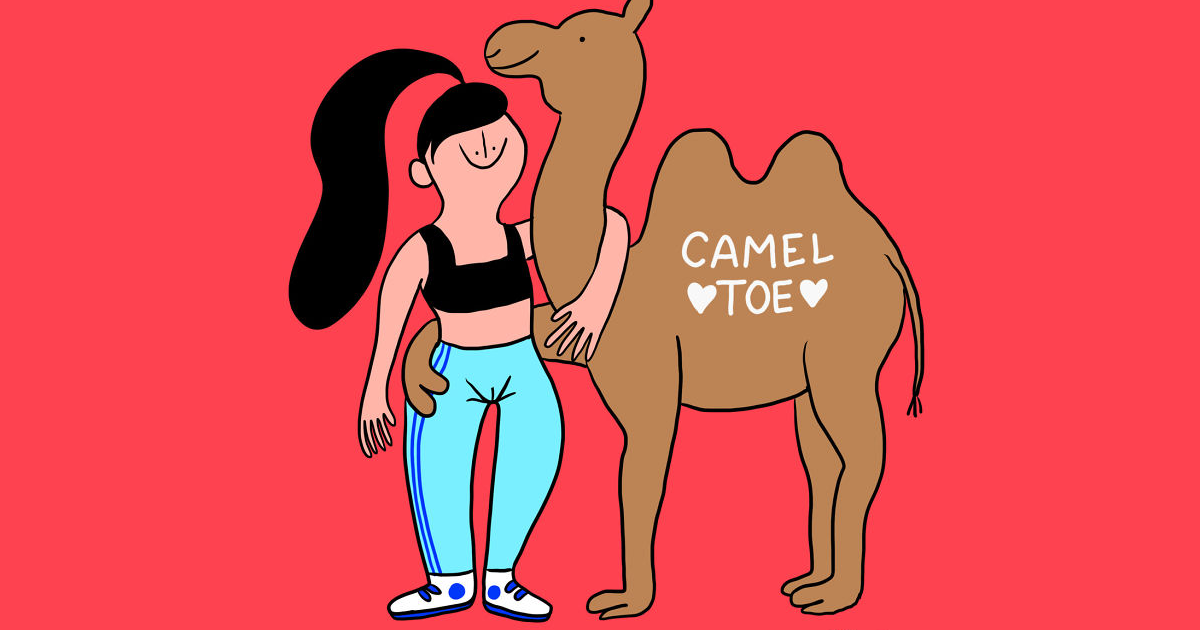
That is exactly why illustrations of women being gloriously, inconveniently, unmistakably human hit so hard. The title “Illustrator Shows Unapologetic Women Being Themselves That Society Doesn’t Want To See” points to the work of artist Cécile Dormeau, whose images of women with belly rolls, body hair, slouched posture, acne, sweat, appetite, and attitude feel less like fantasy and more like a long-overdue return to reality. Her art is funny, bright, a little cheeky, and refreshingly uninterested in asking permission.
And that is the real magic here: these drawings do not simply show women. They show women off duty. Women uncurated. Women before the filter, before the flattering angle, before the inner voice says, “Sit up straight, suck it in, smile prettier, and whatever you do, do not look too comfortable.”
In a culture that still rewards women for being attractive, agreeable, hairless, youthful, and somehow effortless about all of it, unapologetic illustration feels almost rebellious. Not because it is loud, but because it refuses the old script. It does not ask women to be prettier for the audience. It lets them exist for themselves.
Why These Illustrations Feel So Refreshing
The most striking thing about this kind of art is not that it is “shocking.” It is that it is familiar. The woman with the soft stomach hanging over her jeans? We know her. The woman examining a breakout in the mirror like it personally betrayed her? We know her too. The woman lounging in a way magazines would never call “flattering”? Absolutely iconic. These scenes are ordinary, which is exactly why they matter.
For decades, mainstream images of women have been shaped by a painfully narrow definition of beauty. Even when the industry claims it is celebrating “real women,” the results often look suspiciously airbrushed, carefully diverse, and focus-grouped into submission. Real enough to market. Not real enough to unsettle anybody.
Dormeau’s style, and the larger movement around body-positive and body-neutral art, breaks that pattern by depicting details women are often trained to hide: cellulite, back folds, facial hair, sagging, uneven breasts, stretch marks, messy emotions, and the deeply uncinematic act of simply taking up space. These images do not frame those details as problems to solve. They frame them as parts of a life being lived.
That distinction matters. There is a world of difference between “you are beautiful despite your flaws” and “these are not flaws in the first place.” One is a pat on the head. The other is freedom.
The Parts of Womanhood Society Prefers to Crop Out
Body Hair, Belly Rolls, and Other Crimes Against the Beauty Industry
Let’s start with the obvious: society has a very weird relationship with women’s bodies. Not women, exactly. Women’s bodies. They are expected to be visible, desirable, and publicly available for commentary, but only under very specific conditions. Smooth but not fake. Sexy but not vulgar. Thin but not “trying too hard.” Curvy but only in approved locations. Natural, but also somehow professionally maintained.
This is why drawings of women with hairy legs, thick thighs, armpit stubble, visible stomachs, or slouchy posture land like tiny acts of resistance. They expose how arbitrary the rules are. Body hair is normal. Skin folds are normal. Looking tired is normal. Eating a sandwich without performing femininity around it should also be normal, but here we are.
The beauty economy has long profited from convincing women that their natural state is a rough draft. Fix the skin. Flatten the stomach. erase the pores. Brighten the under-eyes. Tame the hair. So when an illustrator shows a woman doing none of that and still grants her humor, confidence, and presence, the image short-circuits the old sales pitch.
Women Are Policed for More Than Appearance
These illustrations are not only about what women look like. They are also about how women are expected to behave. Society does not just want women to be beautiful; it wants them to be palatable. Pleasant. Light. Not too angry, not too loud, not too sexual, not too hungry, not too hairy, not too old, not too real.
That is why the emotional tone of this art matters as much as the visual content. Many of these women are not smiling like they are auditioning to be chosen. They look bored, irritated, smug, exhausted, self-possessed, or blissfully unconcerned. In other words, they look like people. It should not be radical to show women with a full emotional range, and yet it still feels radical because so much culture continues to confuse femininity with niceness.
When a woman in a drawing sprawls on a couch, ignores the gaze, scratches her skin, zones out, or takes up the center of the frame without trying to charm anyone, the image quietly asks a delicious question: what if women were allowed to exist without performing likability every second of the day?
Humor Is Doing a Lot of Heavy Lifting Here
One reason Dormeau’s work resonates is that it is funny without being cruel. That is harder than it sounds. Too much commentary about women’s bodies has been built on ridicule. Mock the cellulite. Mock the razor burn. Mock the “bad” bikini body. Mock the aging face. Mock the woman who tries too hard, then mock the woman who supposedly gave up. It is a rigged game, and women are expected to clap politely from inside it.
But humor can also be a survival tool. In this kind of illustration, the joke is not that women are imperfect. The joke is that culture ever expected perfection in the first place. The comedy comes from recognition. From seeing a private struggle turned public in a way that says, “Yes, this happens. No, you are not gross. Yes, we can laugh.”
That laughter is powerful because shame hates company. Shame loves isolation. It wants every woman to think she is the only one whose thighs rub together, the only one who stares at a bra digging into her back, the only one who panics about being seen in daylight wearing nothing but honesty. Art like this ruins that isolation. It says the quiet part out loud, then puts it in color.
Why Representation Still Matters
It is fashionable in some corners of the internet to roll one’s eyes at phrases like “representation matters,” as if visibility were a shallow concern. But representation is never just decoration. It tells people what kinds of bodies, faces, ages, moods, and lives are considered normal, desirable, respectable, or even visible at all.
When women repeatedly see only one type of femininity reflected back at them, the message is not subtle. It teaches them which bodies get attention, which features get softened, which identities get cropped, and which forms of womanhood are treated like punchlines. That kind of repetition sinks deep. It shapes self-image, social expectations, and the exhausting habit of self-surveillance.
Illustration can interrupt that cycle because it has room for exaggeration, symbolism, and emotional truth. A drawing does not have to mimic glossy realism to tell the truth. In fact, it can sometimes tell the truth better. A slumped pose, a confrontational stare, a proudly unshaven limb, an unapologetic stomach fold, or a messy bathroom mirror can communicate the pressure of womanhood more honestly than a thousand polished campaign images.
That is why art that normalizes real bodies and real moods is more than aesthetic preference. It expands the vocabulary of what women are allowed to look like on the page and, by extension, in life.
From Body Positivity to Body Honesty
There is also something timely about this work because public conversations have evolved. A few years ago, body positivity became the dominant language of resistance. It offered an important correction to shame by insisting that all bodies deserve dignity, beauty, and visibility. That mattered, and it still does.
But many women eventually found that constant positivity could become its own performance. Loving your body every minute of every day is a tall order when your body is also bloated, cramping, aging, sweating through a meeting, or simply refusing to resemble a wellness ad.
That is where the newer conversation around body neutrality and body honesty enters the picture. You do not have to write your thighs a love letter before breakfast. You do not have to gaze at your pores like they are sacred poetry. Sometimes the most liberating thing is not “I love every inch of myself.” Sometimes it is “This is my body. It exists. It gets me through the day. It is not a public relations problem.”
Illustrations of unapologetic women fit beautifully into that shift. They do not demand perfection, and they do not demand nonstop self-worship either. They simply refuse disgust. They reject the idea that a woman must earn peace with her body by becoming decorative enough.
What Makes This Art Culturally Important
At first glance, these drawings may seem playful, even casual. But their cultural bite is sharper than it looks. They challenge the male gaze without turning women into sterile symbols. They challenge beauty standards without pretending women are unaffected by them. They recognize insecurity, but they do not kneel before it.
Most importantly, they return complexity to women’s lives. A woman can feel self-conscious and still be funny. She can be soft and irritated. She can be attractive and uninterested in performing attractiveness on command. She can be tired, sweaty, horny, hungry, moody, joyful, or gloriously unbothered. She can be all those things in one week, one afternoon, or one terrible group photo.
That kind of permission is what makes art like this more than a passing social-media favorite. It gives viewers a way to see themselves outside the usual before-and-after narrative. Not as a problem to optimize. Not as a makeover waiting to happen. Just as a person.
Experiences Women Recognize Immediately, Even If Nobody Says Them Out Loud
One reason this topic keeps resonating is that women do not need a lecture to understand it. They have lived it. They have stood in a dressing room under cruel fluorescent lighting and renegotiated their entire self-esteem in six minutes. They have crossed their arms over their stomach in group photos without even thinking about it. They have bought clothes based not on joy, but on camouflage.
They have learned the strange etiquette of existing in a female body in public. Sit, but not too wide. Laugh, but not too loud. Eat, but make it look accidental. Be confident, but not conceited. Wear makeup, but do not let anyone know how much time it took. Remove the hair, hide the sweat, tame the frizz, fix the skin, smooth the line, cover the bruise, and whatever you do, do not reveal the labor behind the illusion.
Then there are the tiny everyday negotiations. Deciding whether you have enough energy to shave before a beach day. Wondering if people will think you “let yourself go” because you wore your hair natural, skipped mascara, or looked your actual age. Feeling oddly guilty for having visible hunger. Feeling rebellious for ordering dessert. Feeling self-conscious when your body takes up more physical room than the chair, the trend, or the expectation allowed.
There is also the emotional experience of realizing how early all this starts. So many women can trace it back to girlhood: the first comment about their legs, their chest, their weight, their skin, their body hair, their posture, their “prettiness.” The first time they understood that their body had become a project with an audience. The first time they sensed that being seen and being judged were, in the culture’s eyes, basically the same thing.
That is why seeing unapologetic women in illustration can feel weirdly moving. Not because a drawing solves everything, but because recognition is powerful. It lowers the temperature in the room. It says, “Yes, the pressure is real. No, you are not imagining it. Also, you are allowed to be a person while living through it.”
And maybe that is the deepest appeal of all. These images do not tell women to become fearless superheroes who transcend insecurity forever. They offer something gentler and more believable: the possibility of being imperfect in plain sight without collapsing from shame. The possibility of existing without editing every square inch of yourself into acceptability. The possibility of a life where your body is not your full-time job.
That is not a small thing. That is a cultural correction.
Final Thoughts
Illustrations of unapologetic women matter because they expose the absurdity of the rules women are still asked to follow. They show that beauty standards are not natural laws. They are social habits, commercial strategies, and inherited expectations dressed up as common sense. And what can be constructed can also be challenged.
Cécile Dormeau’s work stands out because it does not challenge those norms with a sermon. It does it with wit, color, familiarity, and the kind of visual honesty that makes viewers feel both seen and slightly called out. It reminds us that there is nothing shameful about bodies that look lived in, emotions that are not decorative, or women who refuse to shrink themselves into something easier to consume.
In the end, the women society “doesn’t want to see” are not actually invisible. They are everywhere. They always have been. The real shift happens when culture stops treating them like a mistake and starts recognizing them as the main character.