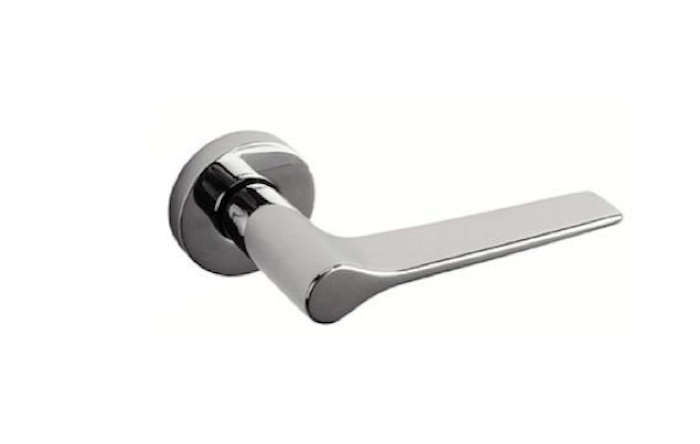

Some design objects shout. Others whisper. The Gio Ponti Door Lever at Izé belongs to the second group, but do not mistake its quietness for shyness. This is the kind of architectural hardware that can make a plain door feel like it has read a few important books, taken a weekend in Milan, and returned with better posture.
At first glance, a door lever may seem like a small detail. It is not a sofa, not a chandelier, not a marble island the size of a polite canoe. But good designers know that the objects touched every day carry an unusual amount of power. A handle is the handshake of a room. It is the first physical conversation between a person and a space. When that handle comes from a design language associated with Gio Ponti, the conversation becomes especially interesting.
Izé, known for architectural ironmongery and designer door hardware, offers a Gio Ponti lever that channels the elegance of Italian modernism into a highly usable, beautifully restrained object. The result is a piece of luxury door hardware that feels both historic and current, refined and practical, serious and just a little bit glamorous.
What Is the Gio Ponti Door Lever at Izé?
The Gio Ponti Door Lever at Izé is a slender architectural door handle inspired by the refined modernist vocabulary associated with the legendary Italian architect and designer. The lever is listed with the reference code GPL01, with dimensions that include a projection of 60 mm, a rose diameter of 50 mm, and a length of 120 mm. It is available in Izé finishes, making it adaptable for different interior schemes, from crisp contemporary apartments to carefully restored historic homes.
What makes the lever special is not only its shape, but also its sense of proportion. It avoids the heavy-handed look that many “statement” handles fall into. Instead, it has a long, lean, architectural profile. It looks precise without feeling cold. It is minimal, but not bland. In other words, it has learned the difference between being simple and being boring, which is more than we can say for many beige conference rooms.
Who Was Gio Ponti?
Gio Ponti was one of the great creative forces of 20th-century design. Born in Milan in 1891, he worked across architecture, furniture, ceramics, glassware, publishing, interiors, and industrial design. His career stretched across more than six decades, and he helped shape what many people now recognize as modern Italian design: elegant, inventive, optimistic, and never afraid of beauty.
Ponti was not the sort of designer who believed architecture stopped at the exterior wall. He cared about the whole environment. Buildings, chairs, tiles, lamps, handles, windows, colors, and light were all part of the same performance. A room was not just a container; it was a composition. A handle was not merely a tool; it was a small architectural gesture.
He also founded Domus, the influential architecture and design magazine, in 1928. Through publishing, teaching, designing, and building, Ponti became a powerful advocate for the union of craft, industry, art, and everyday life. His philosophy still feels fresh today because it rejects the idea that useful objects must be dull. Ponti seemed to ask: why should daily life not be beautiful?
The Pirelli Tower Connection
The Gio Ponti lever is often discussed in relation to the Pirelli Tower in Milan, one of Ponti’s most celebrated architectural works. Designed with engineer Pier Luigi Nervi and other collaborators, the tower became a postwar symbol of Italian ambition, technical skill, and aerodynamic elegance. Its slim profile and disciplined geometry made it one of the most recognizable modern buildings in Milan.
The importance of the Pirelli Tower is not only in its height or engineering. It is also in its total design approach. Ponti paid attention to the building as a complete experience, including the smaller components that shaped how people moved through it. The door lever associated with this design world reflects that same disciplined elegance. It is long, tapered, balanced, and almost aerodynamic, as if the spirit of the building has been reduced to the scale of the hand.
Why Izé Is the Right Home for This Lever
Izé has built its reputation around the idea that architectural hardware deserves serious design attention. The company produces and supplies door handles, door furniture, and ironmongery that sit at the intersection of architecture, art, design, and manufacturing. Its catalog includes contemporary designers as well as revived or adapted designs connected to important figures in modern architecture.
That makes Izé a natural setting for the Gio Ponti door lever. This is not mass-market hardware pretending to be fancy by wearing a shiny finish and charging a suspiciously confident price. It is hardware with architectural DNA. The kind of object that architects, interior designers, and design-conscious homeowners notice because it affects the feeling of a room without demanding applause.
Design Analysis: Why the Shape Works
1. The lever is slender but not fragile
The first thing you notice is the lever’s slimness. It has a stretched, linear form that gives it visual speed. But it does not look weak. Its proportions are controlled, and its rose gives the handle a stable architectural anchor. This balance is important: a handle must look elegant, but it must also convince the hand that it knows what it is doing.
2. The profile feels sculptural
The Gio Ponti lever is not a decorative flourish pasted onto a door. It is more like a miniature sculpture designed for use. The geometry creates a sense of movement even when the handle is still. This is where Ponti’s genius becomes visible. He could make functional objects feel alive without making them fussy.
3. It respects the door
Many door handles try too hard. They bulge, twist, sparkle, or perform little acrobatics that nobody asked for. The Gio Ponti Door Lever at Izé does the opposite. It respects the flat plane of the door and adds just enough visual tension. On a painted door, it becomes a crisp accent. On a timber door, it provides a clean modern counterpoint. On a dark door, it can look wonderfully cinematic.
Best Interior Styles for the Gio Ponti Lever
The beauty of this lever is its flexibility. It has a modernist pedigree, but it does not need to live only in a museum-grade mid-century home where everyone whispers around the furniture. It can work in many interiors because the form is disciplined and the mood is adaptable.
Mid-Century Modern Homes
This is the most obvious match. In a mid-century modern interior, the Gio Ponti lever feels right at home with walnut panels, terrazzo floors, low furniture, warm neutrals, and sculptural lighting. It supports the period mood without looking like a costume prop.
Contemporary Minimalist Spaces
In minimalist interiors, every detail matters because there are fewer distractions. A poor handle can suddenly look like the villain of the hallway. The Gio Ponti lever works well here because it has enough character to be noticed, but enough restraint to avoid visual noise.
Luxury Apartments and Boutique Hotels
For hospitality projects, details shape memory. Guests may not consciously remember every piece of hardware, but they do remember how a room feels. A finely made lever contributes to that feeling of polish. It says, quietly, that the designer did not stop caring at eye level.
Historic Renovations With Modern Updates
In older homes, the lever can create a sophisticated contrast. Pairing a refined modern handle with restored doors, plaster walls, or traditional millwork can create a layered look. The trick is to let the handle feel intentional rather than random. Think tailored jacket with vintage denim, not sneakers at a black-tie wedding unless you are very, very famous.
Material and Finish Considerations
Choosing a finish is where the design becomes personal. A polished finish can create a crisp, gallery-like effect. A matte or darker finish may feel more architectural and understated. Stainless or stainless-style finishes can suit contemporary spaces, while warmer metallic tones can bring out the lever’s more luxurious side.
The best finish depends on the door color, surrounding hinges, lighting, wall tones, and nearby fixtures. In a room with black steel windows, a dark or blackened finish can feel cohesive. In a bright white interior, polished or satin metal can add a clean accent. In a warm wood hallway, a brass or bronze-toned finish may soften the overall effect.
Why Designer Door Hardware Matters
Door hardware is one of the most frequently used elements in a building. People touch it every day, often without thinking. That daily contact is exactly why the quality matters. A handle that feels balanced, smooth, and well-proportioned adds a small moment of pleasure to routine movement.
Designer door hardware also has a visual role. Doors are repeated throughout a home or project, so hardware becomes a rhythm. A well-chosen lever can unify bedrooms, bathrooms, offices, closets, and hallways. It becomes part of the architectural language. Cheap hardware, unfortunately, can do the same thingbut in the way a kazoo can unify an orchestra.
How to Use the Gio Ponti Door Lever in a Project
For a successful installation, think beyond the handle alone. Consider the entire door set: hinges, locks, latches, bathroom turns, escutcheons, and finishes. A beautiful lever paired with mismatched, low-quality accessories can look unfinished. The goal is harmony.
For residential projects, the Gio Ponti lever can be used on primary interior doors where touch and visibility matter most: bedrooms, studies, powder rooms, and formal living areas. For commercial or hospitality projects, it can elevate suites, private offices, meeting rooms, and refined public spaces.
Before specifying, confirm door thickness, lock compatibility, handing requirements, privacy needs, fire-rating requirements if applicable, and finish durability. The glamorous part of design may be the final photo, but the successful part is making sure the handle actually works on Tuesday morning when someone is late for a meeting.
Gio Ponti’s Design Spirit in One Small Object
The reason this lever remains compelling is that it captures a large design philosophy in a compact form. Ponti believed in elegance, but not stiffness. He believed in modernity, but not sterility. He believed in craft, but also in industry. The Gio Ponti Door Lever at Izé sits precisely in that territory.
It is practical enough for everyday use and refined enough for serious design projects. It does not rely on ornament, yet it has personality. It is a reminder that modern design is not about removing everything until a room feels like an airport lounge. It is about reducing an object until only the right things remain.
Experience Notes: Living With a Gio Ponti Door Lever at Izé
Imagine approaching a door fitted with the Gio Ponti Door Lever at Izé. The experience begins before touch. From a few feet away, the lever reads as a slim horizontal line. It does not interrupt the door; it sharpens it. On a smooth painted surface, it becomes a punctuation mark. On wood, it feels like a deliberate contrast between natural grain and architectural precision.
Then comes the hand. A good lever should not require thought. You should not have to negotiate with it. The Gio Ponti design has the kind of form that invites use naturally. The hand finds the lever, the wrist turns, and the door opens with a sense of mechanical clarity. It is a small moment, but interiors are built from small moments. That is why cheap handles can make an expensive renovation feel oddly disappointing, while a thoughtful handle can make an ordinary door feel considered.
In a home, this lever can change the character of transitional spaces. Hallways often suffer from design neglect. They are treated as tubes for moving humans from one better-decorated room to another. But hardware gives hallways rhythm. When each door carries the same refined lever, the hallway begins to feel designed rather than merely assembled. It is subtle, but powerful.
In a work setting, the Gio Ponti lever can communicate professionalism without corporate blandness. Many offices choose hardware that is durable but visually forgettable. That is understandable, but not always inspiring. A lever like this introduces a note of culture and precision. It suggests that the organization values details, and details are often where trust begins.
For designers, the lever is also a useful bridge between eras. It can sit comfortably beside contemporary lighting, stone floors, limewash walls, custom millwork, vintage Italian furniture, or quiet Scandinavian interiors. Its modernist identity is strong, but not bossy. It does not force the entire room to become a Gio Ponti tribute act. Instead, it adds a layer of design intelligence.
One of the best ways to use it is with restraint. Let the lever be part of a larger composition of clean lines, good materials, and carefully chosen textures. Pair it with doors that have excellent proportions. Avoid surrounding it with too many competing finishes. If the handle is the jewelry, the door is the outfit. They should speak to each other, not argue across the room.
The everyday pleasure of this hardware is its biggest argument. You do not buy a Gio Ponti-inspired lever only to impress guests, although design-savvy guests may absolutely notice it and then pretend they were not inspecting your doors. You choose it because you want the ordinary act of entering a room to feel better. That is the secret of great design: it improves life without making a speech.
Conclusion
The Gio Ponti Door Lever at Izé proves that architectural hardware can be much more than a finishing touch. It can be a design signature, a tactile pleasure, and a small daily reminder that beauty belongs in practical things. With its slender profile, modernist heritage, and refined proportions, this lever brings the spirit of Gio Ponti into the everyday act of opening a door.
For homeowners, architects, and interior designers looking for luxury door hardware with real design depth, the Gio Ponti lever is a strong choice. It is elegant without being flashy, historic without feeling old-fashioned, and minimal without becoming invisible. In a world full of forgettable fixtures, this one has the confidence to be quietand that may be its most stylish move of all.